
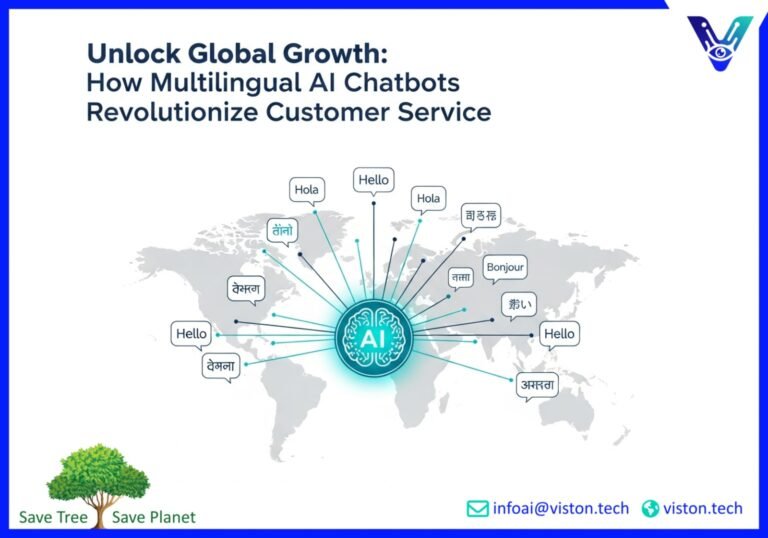
AI Chatbots with Multilingual Support: Breaking Language Barriers in Customer Service
In today’s global marketplace, delivering exceptional customer experience (CX) is paramount. Businesses are increasingly turning to artificial intelligence to gain a competitive edge. AI-powered agents and chatbots are revolutionizing customer service, with the ability to autonomously resolve up to 70% of customer queries. This technology is not just about answering questions; it is a strategic tool that can reduce shopping cart abandonment by approximately 40% and, when deeply integrated, has the potential to increase conversions by 2 to 3 times. The customer service and virtual assistant sector has consequently emerged as the largest application segment for Agentic AI.
For enterprise C-suite executives, AI and machine learning engineers, IT leaders, and product managers, understanding the transformative power of multilingual AI chatbots is no longer optional—it is critical for future success. This post delves into the advanced capabilities of today’s AI chatbots, the key metrics they impact, seamless integration strategies, and best practices for implementation.

The Evolving Landscape of Customer Experience in 2025
The expectations of modern consumers have evolved. They demand instant, personalized, and seamless support across all channels and in their native language. By 2025, it is projected that AI will handle a significant majority of customer interactions, moving from a novel technology to an essential component of the customer service ecosystem. This shift is driven by the need for businesses to scale their operations, enhance efficiency, and cater to a global customer base without proportionally increasing their support teams.
Multilingual AI chatbots are at the forefront of this transformation. They are designed to understand and respond in multiple languages, effectively breaking down communication barriers and enabling businesses to offer consistent, high-quality support to a diverse audience. This capability is crucial for companies looking to expand their global footprint and build strong, lasting relationships with customers worldwide.
Core Capabilities of Modern AI Chatbots
Today’s AI chatbots are far more sophisticated than their rules-based predecessors. They leverage advanced technologies like Natural Language Processing (NLP) and machine learning to offer dynamic and context-aware interactions. Here are some of their core capabilities:
Advanced Multilingual Support
The most significant advantage of modern AI chatbots is their ability to communicate fluently in numerous languages. This is not just about direct translation; these bots understand regional nuances, dialects, and cultural context, which is vital for effective communication. This allows businesses to provide localized experiences that resonate with customers on a personal level, fostering trust and loyalty. By offering support in a customer’s native language, companies can significantly improve clarity and reduce misunderstandings, leading to a more positive and effective service experience.
- Global Reach Without the Overhead: Expand into new markets without the need to hire support staff for every language.
- Consistent Brand Voice: Ensure your brand’s tone and messaging are consistent across all languages and regions.
- Enhanced Customer Trust: Communicating in a customer’s native language shows respect and a commitment to their needs.
Seamless Omnichannel Experience
Customers interact with businesses across a multitude of channels—websites, mobile apps, social media, and messaging platforms. An omnichannel AI chatbot provides a unified and consistent experience across all these touchpoints. The chatbot can retain context from one channel to another, meaning a customer can start a conversation on a website and continue it on WhatsApp without having to repeat themselves. This creates a frictionless journey for the customer, improving satisfaction and reducing frustration. Learn more about creating a seamless customer journey with omnichannel strategies.
- Unified Customer View: Consolidate interactions from all channels into a single, cohesive customer profile.
- Effortless Transitions: Allow customers to switch between channels without losing the conversation history.
- Consistent Service Quality: Deliver the same high level of support regardless of the platform the customer chooses to use.
Sentiment-Aware Interactions
Advanced AI chatbots are equipped with sentiment analysis capabilities. This allows them to detect the emotional tone behind a customer’s message—be it frustration, satisfaction, or confusion. By understanding the customer’s sentiment, the chatbot can tailor its response accordingly. For an upset customer, it might adopt a more empathetic tone and prioritize escalating the issue to a human agent. This emotional intelligence leads to more human-like and empathetic interactions, which can de-escalate negative situations and strengthen the customer relationship.
- Proactive Issue Resolution: Identify and address customer frustration before it escalates.
- Personalized Responses: Adapt the conversation style based on the user’s emotional state.
- Data-Driven Insights: Gather valuable feedback on customer sentiment to improve products and services.
Key Metrics to Measure AI Chatbot Success
Implementing an AI chatbot is not just about deploying new technology; it is about achieving measurable business outcomes. Here are the key performance indicators (KPIs) to track:
Customer Satisfaction (CSAT)
CSAT is a crucial metric that directly reflects how happy customers are with the support they receive. AI chatbots can positively impact CSAT scores by providing immediate, 24/7 support and resolving issues quickly and accurately. The ability to offer support in a customer’s preferred language also plays a significant role in improving satisfaction. Studies have shown that effective AI chatbot implementations can lead to a notable increase in CSAT scores by ensuring consistent and high-quality service.
First Contact Resolution (FCR)
FCR measures the percentage of customer inquiries that are resolved during the first interaction, without the need for follow-up. A high FCR rate is a strong indicator of an efficient support operation. AI chatbots excel at this by accessing a vast knowledge base to provide comprehensive answers instantly. By resolving a high percentage of queries on the first contact, businesses can reduce the workload on human agents and improve overall operational efficiency.
Case Deflection Rate
Case deflection refers to the percentage of customer inquiries that are successfully handled by the chatbot without needing to be escalated to a human agent. A higher deflection rate means that human agents have more time to focus on complex and high-value issues that require a human touch. This not only reduces operational costs but also improves the job satisfaction of support agents by allowing them to engage in more meaningful work.
Deep Integration with CRM and ITSM Systems
To unlock the full potential of AI chatbots, they must be deeply integrated with your existing business systems, such as Customer Relationship Management (CRM) and IT Service Management (ITSM) platforms. This integration creates a powerful, unified ecosystem for managing customer interactions and support tickets.
Personalization at Scale
When integrated with a CRM, an AI chatbot can access customer data in real-time. This includes purchase history, previous interactions, and personal preferences. With this information, the chatbot can provide highly personalized responses and recommendations. For example, it can proactively inform a customer about the status of their order or suggest products based on their past purchases. This level of personalization makes the customer feel valued and understood, significantly enhancing their experience.
Streamlined Workflows and Automation
Integration with ITSM systems allows chatbots to automate a wide range of processes. For instance, a chatbot can create a support ticket, assign it to the correct department, and track its status without any human intervention. This streamlines internal workflows, reduces manual effort, and ensures that issues are resolved in a timely manner. For employees, an integrated chatbot can serve as a single point of contact for IT support, from resetting passwords to requesting new hardware.
A Single Source of Truth
By integrating your chatbot with CRM and ITSM systems, you create a single source of truth for all customer and support-related data. Every interaction is logged and tracked, providing valuable insights that can be used to improve business processes, identify trends, and make data-driven decisions. This holistic view of the customer journey is essential for delivering a truly cohesive and exceptional customer experience.
Best Practices for Implementing Multilingual AI Chatbots
A successful AI chatbot implementation requires careful planning and a strategic approach. Here are some best practices to follow:
- Define Clear Objectives: Before you begin, identify what you want to achieve with your chatbot. Are you looking to reduce response times, increase sales, or improve customer satisfaction? Having clear goals will guide your implementation process.
- Start with a Pilot Program: Begin with a small-scale pilot project to test the chatbot’s performance and gather feedback. This allows you to make necessary adjustments before a full-scale rollout.
- Choose the Right Technology Partner: Select a vendor that has proven expertise in developing and deploying enterprise-grade AI chatbots. Look for a partner that offers robust technology, deep industry knowledge, and ongoing support. For more insights on selecting the right AI, see this guide from Harvard Business Review.
- Train Your Chatbot Continuously: An AI chatbot is not a “set it and forget it” solution. It needs to be continuously trained with new data to improve its accuracy and effectiveness over time. Regularly review conversation logs to identify areas for improvement.
- Ensure a Seamless Human Handoff: While chatbots can handle a majority of inquiries, there will always be situations that require human intervention. Ensure that your chatbot can seamlessly escalate complex or sensitive issues to a human agent with the full context of the conversation intact.
- Promote Your Chatbot: Let your customers know that you have a new and improved support channel available. Promote the chatbot on your website, in your app, and through your marketing communications to encourage adoption.
The Future is Conversational
As we look ahead, the role of AI in customer service will only continue to grow. We can expect to see more advanced capabilities, such as voice recognition and multimodal interactions, becoming mainstream. The future of customer experience is conversational, and businesses that embrace this trend will be well-positioned to build stronger customer relationships and drive sustainable growth. AI chatbots with multilingual support are no longer a futuristic concept but a present-day reality that is delivering tangible results for businesses across the globe.
Frequently Asked Questions (FAQs)
- 1. What is a multilingual AI chatbot?
- A multilingual AI chatbot is a conversational AI program designed to understand and respond to users in multiple languages. It uses Natural Language Processing (NLP) to interpret user intent and provide accurate, context-aware responses in the user’s preferred language.
- 2. How does a multilingual chatbot improve customer experience (CX)?
- It improves CX by offering personalized and immediate support in a customer’s native language. This breaks down communication barriers, reduces misunderstandings, and makes customers feel valued, leading to higher satisfaction and loyalty.
- 3. Can AI chatbots handle complex customer queries?
- Yes, modern AI chatbots can handle a wide range of queries, from simple FAQs to more complex issues. For highly sensitive or intricate problems, they are designed to seamlessly escalate the conversation to a human agent, providing the agent with the full conversational context.
- 4. What is an omnichannel chatbot?
- An omnichannel chatbot provides a consistent and unified customer experience across various communication channels, such as a website, mobile app, social media, and messaging platforms. It maintains the context of the conversation as the user moves between channels.
- 5. How does sentiment analysis work in a chatbot?
- Sentiment analysis allows a chatbot to detect the emotional tone of a user’s message (e.g., happy, frustrated, confused). By understanding the user’s sentiment, the chatbot can adapt its communication style to be more empathetic and effective, and know when to escalate to a human.
- 6. What are the key benefits of integrating a chatbot with a CRM system?
- Integrating a chatbot with a CRM enables highly personalized interactions by giving the bot access to customer history and preferences. It also automates data entry, streamlines workflows, and ensures all customer interaction data is centralized for a complete customer view.
- 7. How much can a business save by implementing AI chatbots?
- Cost savings can be significant. By automating the handling of a large volume of routine queries, businesses can reduce the need for a large human support team, leading to lower operational costs. Gartner predicts that conversational AI will reduce contact center agent labor costs by $80 billion by 2026.
- 8. Is it difficult to implement a multilingual AI chatbot?
- With the right technology partner, implementation can be a streamlined process. Modern chatbot platforms often offer low-code or no-code interfaces that simplify development and deployment. A phased approach, starting with a pilot, is recommended to ensure a smooth rollout.
Transform Your Customer Service with Viston AI
Ready to break down language barriers and deliver a world-class customer experience? The future of customer service is here, and it’s powered by intelligent, multilingual AI. Don’t let your business fall behind. Take the next step in your digital transformation journey.
Contact Viston AI today to discover how our enterprise-grade AI-powered solutions can revolutionize your customer service operations, drive efficiency, and unlock new growth opportunities. Let us help you build smarter, more engaging connections with your customers across the globe.
