
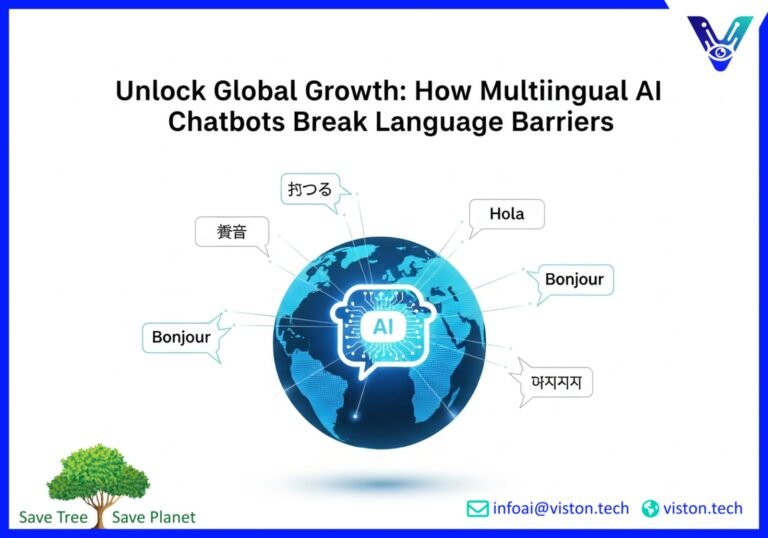
AI Chatbots with Multilingual Support: Going Global Without Language Barriers
In today’s interconnected world, global expansion is no longer a luxury—it’s a necessity. But as businesses reach across borders, they often encounter a significant hurdle: language. The ability to communicate with customers in their native tongue is paramount for building trust, fostering loyalty, and driving growth. Enter the game-changer: Multilingual AI. By 2025, AI-powered chatbots and voice-enabled assistants are not just a futuristic concept; they are an essential tool for any enterprise serious about its global footprint.
Gone are the days of clunky, robotic translations that alienate customers. Modern chatbots offer seamless, real-time multilingual support, effectively erasing language barriers and revolutionizing customer service. This isn’t just about providing 24/7 assistance; it’s about delivering personalized, culturally resonant experiences that make every customer feel understood and valued. For C-suite executives, IT leaders, and product managers, harnessing the power of multilingual AI is the key to unlocking new markets and achieving unparalleled global scale.
The Evolution of Multilingual AI: More Than Just Translation
The journey of multilingual AI has been one of rapid evolution. Early iterations were often limited to basic, literal translations that missed the nuances of human conversation. Today’s sophisticated AI models, however, are a world apart. They are built on advanced neural networks and machine learning algorithms that don’t just translate words but understand context, sentiment, and even cultural subtleties. This leap in technology has made real-time, high-quality multilingual communication a reality for businesses of all sizes.
Modern multilingual AI represents a paradigm shift in how companies interact with their global audience. It’s a move from a one-size-fits-all approach to a deeply personalized and inclusive model of customer engagement. As we delve deeper into 2025, the capabilities of these AI systems continue to expand, offering unprecedented opportunities for businesses to connect with customers on a truly global scale. Explore how advanced AI is reshaping industries on a global scale through resources like Forbes’ AI section.
The Architecture of a Global Conversation: How Multilingual AI Works
At the heart of a powerful multilingual chatbot lies a sophisticated architecture designed for seamless cross-lingual communication. This isn’t about simply plugging in a translation tool. Instead, it involves a multi-layered approach that ensures accuracy, context, and a natural conversational flow.
- Core AI Engine: This is the brain of the operation, powered by advanced Natural Language Processing (NLP) and Natural Language Understanding (NLU) models. These models are trained on vast datasets encompassing multiple languages, enabling them to grasp the intricacies of grammar, syntax, and semantics.
- Language Detection and Identification: The chatbot can instantly identify the language a customer is using, often from the first few words. This allows for a smooth and immediate transition to the appropriate language model without the user having to manually select their language.
- Real-Time Translation Layer: Leveraging cutting-edge neural machine translation (NMT), the AI provides instantaneous and contextually accurate translations. This ensures that the conversation flows naturally, much like speaking with a human agent who is fluent in multiple languages.
- Knowledge Base Integration: The chatbot is connected to a centralized knowledge base, with content that can be automatically translated and localized. This ensures that customers receive consistent and accurate information, regardless of the language they are communicating in.
Breaking Down Barriers: Key Features of Modern Multilingual Chatbots
The latest generation of multilingual AI chatbots comes equipped with a suite of powerful features that enable businesses to offer truly global customer service. These capabilities go far beyond basic translation, addressing the real-world complexities of cross-cultural communication.
Expansive Language Coverage: Speaking the World’s Languages
A key differentiator of leading AI chatbot platforms in 2025 is the sheer breadth of their language support. It’s no longer enough to cover a handful of major languages. Top-tier solutions now offer support for over 100 languages, and in some cases, more than 150. This extensive coverage ensures that businesses can engage with customers in their native tongue, no matter where they are in the world. This includes not just widely spoken languages but also those with a significant regional presence, opening up new and previously untapped markets.
Beyond Words: Understanding Regional Dialects and Nuances
Effective communication is about more than just speaking the same language; it’s about understanding the subtle variations in how it’s spoken. Advanced multilingual AI is now capable of recognizing and adapting to regional dialects. Whether it’s the difference between Castilian Spanish and Latin American Spanish, or the nuances of various Arabic dialects, the AI can tailor its responses to be more natural and culturally appropriate. This level of sophistication demonstrates a deeper understanding of the customer and fosters a stronger connection.
The Reality of Conversation: Seamless Code-Switching Support
In many parts of the world, it’s common for people to mix two or more languages in a single conversation—a phenomenon known as code-switching. For instance, a customer in India might use a mix of Hindi and English (Hinglish), while someone in the United States might blend Spanish and English (Spanglish). Modern AI chatbots are increasingly adept at understanding and responding to this code-mixed speech. This capability is crucial for creating a truly natural and frictionless customer experience, as it mirrors how people actually communicate in their daily lives.
For a deeper dive into the technical advancements in natural language processing, a visit to the ACL Anthology, a comprehensive repository of computational linguistics research, can be insightful.
Everywhere Your Customers Are: Omnichannel Consistency
Today’s customer journey is fragmented across multiple touchpoints. A customer might start a conversation on a company’s website, continue it on a mobile app, and then switch to a messaging platform like WhatsApp. An effective multilingual AI strategy ensures a consistent and seamless experience across all these channels. The chatbot maintains the context of the conversation, regardless of the platform, so customers never have to repeat themselves. This omnichannel approach is fundamental to providing a modern, customer-centric experience.
The Business Impact: Why Multilingual AI is a Strategic Imperative
Adopting multilingual AI chatbots is not just a technological upgrade; it’s a strategic business decision with far-reaching benefits. For enterprises looking to compete on a global stage, the return on investment is clear and compelling.
- Enhanced Customer Experience: By communicating with customers in their preferred language, businesses can significantly improve customer satisfaction and build stronger, more lasting relationships.
- Increased Global Reach: Multilingual support opens the door to new international markets, allowing businesses to expand their customer base and drive revenue growth.
- Reduced Operational Costs: AI chatbots can handle a high volume of customer inquiries simultaneously, reducing the need for a large, multilingual human support team and lowering operational expenses.
- 24/7 Availability: AI-powered assistants provide round-the-clock support, ensuring that customers can get help whenever they need it, regardless of their time zone.
- Valuable Customer Insights: Multilingual chatbots can gather and analyze customer data from around the world, providing valuable insights into global market trends and customer preferences.
The Future is Now: Real-Time Multilingual Translation as the Standard
As we look ahead, real-time multilingual translation is no longer a futuristic vision but the new standard for global customer communication. The ability of AI to instantly and accurately translate conversations is transforming how businesses operate on an international scale. This technology is becoming increasingly integrated into our daily lives, from voice-enabled assistants on our smartphones to sophisticated customer service platforms.
The continuous advancements in AI and machine learning mean that the quality and accuracy of these translations will only continue to improve. For businesses, this means that language will no longer be a barrier to providing exceptional customer experiences and achieving global success.
Your Partner in Global Communication: Viston AI
Navigating the complexities of global expansion requires a partner with the expertise and technology to break down language barriers. At Viston AI, we specialize in developing custom, AI-powered solutions that enable businesses to connect with their customers in any language. Our enterprise-grade chatbots and voice-enabled assistants are designed with a sophisticated multilingual architecture, offering extensive language coverage, regional dialect handling, and seamless code-switching support. We are committed to helping you deliver a superior customer experience across every channel.
Ready to take your business global? Contact Viston AI today to learn how our multilingual AI solutions can help you erase language barriers and unlock your full international potential.
Frequently Asked Questions (FAQs)
1. What is a multilingual AI chatbot?
A multilingual AI chatbot is a conversational AI program designed to understand and respond to users in multiple languages. It uses advanced technologies like Natural Language Processing (NLP) and machine translation to provide seamless and contextually accurate support across different linguistic backgrounds.
2. How many languages can a modern AI chatbot support?
Leading multilingual AI chatbots in 2025 can support over 100 languages, with some platforms offering capabilities for more than 150. This includes not only major global languages but also many regional and local languages.
3. What is code-switching, and why is it important for chatbots to support it?
Code-switching is the practice of alternating between two or more languages in a single conversation. Support for code-switching (e.g., Hinglish, Spanglish) is crucial for a natural user experience, as it reflects how many bilingual and multilingual individuals communicate in their daily lives.
4. Can multilingual chatbots understand different dialects of the same language?
Yes, advanced AI models are trained on diverse datasets that include various regional dialects. This enables them to understand and respond appropriately to the specific dialect a user is speaking, leading to more personalized and effective communication.
5. How does an omnichannel approach benefit multilingual customer service?
An omnichannel approach ensures that a customer receives a consistent and seamless experience whether they are interacting with the chatbot on a website, mobile app, or social media platform. The conversation context is maintained across all channels, providing a unified and user-friendly journey.
6. Is real-time translation by AI accurate enough for complex customer service issues?
Modern neural machine translation has achieved remarkable accuracy. For many customer service inquiries, the real-time translation is highly effective. For highly complex or sensitive issues, the chatbot can be programmed to seamlessly escalate the conversation to a human agent.
7. How can my business implement a multilingual AI chatbot?
Implementing a multilingual chatbot typically involves partnering with an AI solutions provider like Viston AI. The process includes defining your language requirements, integrating the chatbot with your existing systems, and training it on your specific business knowledge base.
8. What is the business advantage of using a multilingual chatbot over hiring human translators?
Multilingual chatbots offer 24/7 availability, can handle a vast number of conversations simultaneously, and are often more cost-effective than hiring a large team of human agents to cover multiple languages and time zones. They also provide consistent service quality.
#MultilingualAI #Chatbots #VoiceAssistants #CustomerService #AIforBusiness #GlobalBusiness #LanguageTechnology #FutureofAI
