
Voice-First AI Agents: The Next Customer Service Revolution
In the rapidly evolving landscape of customer experience, a groundbreaking shift is underway. Voice is no longer just a means of communication; it’s becoming the primary interaction channel between businesses and their customers. Fuelled by a projected 25% growth in Generative AI with voice capabilities, we are entering the era of voice-first AI agents. This isn’t science fiction; it’s the next customer service revolution, and it’s happening now.
Imagine a world where your customers can interact with your brand in their native language, 24/7, with instantaneous and personalized responses. This is the power of voice AI, a technology poised to redefine customer engagement and operational efficiency. For enterprise C-suite, IT leaders, and product managers, understanding and harnessing this technology is no longer optional—it’s essential for staying competitive.
This blog post will explore the transformative potential of voice-first AI agents. We’ll delve into their architecture, uncover compelling industry use cases, and examine their powerful multilingual capabilities and seamless integration patterns. Get ready to discover how your business can leverage this technology to build stronger customer relationships and drive growth.
Understanding Voice Agent Architecture: The Brains Behind the Conversation
At its core, a voice-first AI agent is a sophisticated system designed to understand and respond to human speech in a natural and intelligent way. While the underlying technology is complex, the basic architecture can be broken down into a few key components that work together to create a seamless conversational experience.
- Automatic Speech Recognition (ASR): This is the “ears” of the AI agent. ASR technology converts spoken language into text, allowing the system to process what the user is saying.
- Natural Language Processing (NLP): Once the speech is converted to text, NLP algorithms analyze the grammar, syntax, and context to understand the user’s intent. This is the “brain” that figures out what the customer wants.
- Generative AI and Large Language Models (LLMs): This is where the magic happens. Leveraging the power of GenAI, the agent can generate human-like, relevant, and personalized responses. It’s not just pulling from a script; it’s creating a dynamic conversation.
- Text-to-Speech (TTS): The final step is converting the AI’s text-based response back into natural-sounding speech. Advanced TTS engines can even mimic human intonation and emotion, creating a more engaging experience.
Think of it as a highly efficient and intelligent digital employee who can listen, understand, think, and talk, all in real-time. For more insights into the evolution of conversational AI, check out this informative article from Salesforce.
Revolutionizing Industries: 7 Powerful Use Cases for Voice-First AI Agents
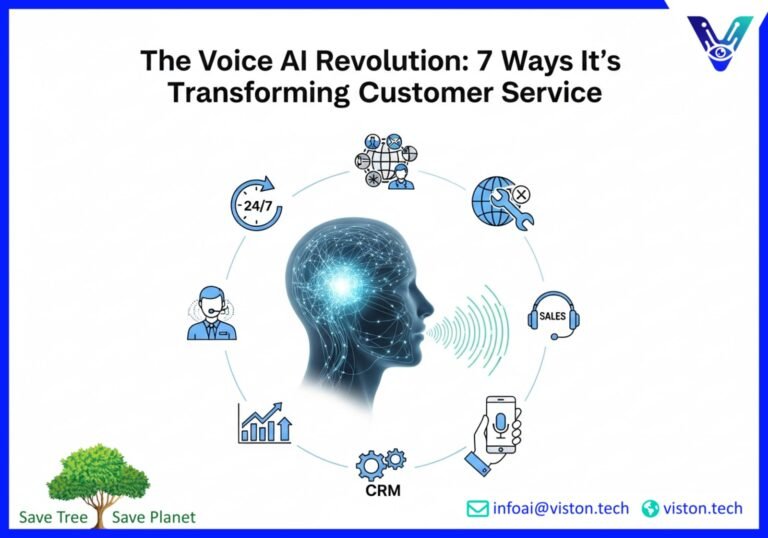
The applications for voice-first AI agents span across numerous industries, driving significant improvements in efficiency, customer satisfaction, and revenue. Here are some of the most impactful use cases we’re seeing in 2025:
Contact Centers: The New Frontline of Customer Experience
- 24/7 Availability and Instant Responses: Voice AI agents never sleep. They can handle customer inquiries around the clock, eliminating wait times and providing immediate support. This is crucial in today’s on-demand world, where 67% of customers hang up if they’re on hold for just one minute.
- Intelligent Call Routing: By understanding a customer’s intent from the moment they start speaking, voice agents can intelligently route complex issues to the most appropriate human agent, providing them with a full transcript and context of the conversation.
- Automated Self-Service: For routine tasks like checking an order status, paying a bill, or resetting a password, voice AI agents can guide customers through the process without needing to speak to a human, freeing up agents to handle more complex issues.
Field Service: Empowering Technicians and Streamlining Operations
- Hands-Free Information Access: Field technicians can use voice commands to access manuals, schematics, and service histories while keeping their hands free to perform repairs. This improves safety and efficiency.
- Real-Time Job Updates and Reporting: Technicians can verbally report job status, order parts, and log completed tasks, which are then automatically updated in the company’s CRM or ERP system. This eliminates manual data entry and reduces errors.
Sales: Supercharging Your Sales Funnel
- Lead Qualification and Nurturing: Voice AI agents can engage with inbound leads in real-time, ask qualifying questions, and schedule appointments with sales representatives, ensuring no lead goes cold.
- Personalized Customer Outreach: Conversational AI can analyze customer data to deliver personalized outbound sales messages, increasing engagement and conversion rates. For a deeper dive into how AI is transforming sales, this Nextiva article offers valuable insights.
Breaking Down Barriers: The Power of Multilingual Voice Agents
One of the most transformative aspects of modern voice-first AI is its ability to communicate in multiple languages. With real-time translation capabilities across more than 120 languages, businesses can now offer truly global customer support from a centralized location.
This isn’t just about basic translation. Advanced multilingual voice agents understand cultural nuances and regional dialects, creating a more personalized and effective customer experience. This capability opens up new markets and allows businesses to connect with a wider audience on a more personal level.
The benefits of multilingual voice agents are clear:
- Enhanced Customer Experience: Speaking to customers in their native language builds trust and rapport.
- Increased Market Reach: Easily expand your business into new international markets without the need for a large, multilingual support team.
- Improved Efficiency: A single AI agent can handle interactions in multiple languages, reducing operational costs.
Seamless Integration: Connecting Voice AI to Your Existing Systems
The true power of voice-first AI agents is unlocked when they are seamlessly integrated with your existing enterprise systems. This creates a unified and intelligent ecosystem where data flows freely, and processes are automated.
Common integration patterns include:
- Customer Relationship Management (CRM): Integrating with your CRM allows voice agents to access customer history, personalize interactions, and automatically log all conversations. This provides a 360-degree view of the customer journey.
- Enterprise Resource Planning (ERP): Connecting to your ERP system enables voice agents to access and update information related to inventory, orders, and logistics in real-time.
- Knowledge Management Systems: By integrating with your internal knowledge base, voice agents can provide customers with accurate and up-to-date information.
The goal is to create a frictionless flow of information that empowers both your AI agents and your human team to deliver exceptional customer service. A detailed guide on integrating voice AI with legacy systems by Gladia provides practical advice for a smooth transition.
The Future is Calling: Embracing the Voice-First Revolution
The rise of voice-first AI agents marks a pivotal moment in the evolution of customer service. As voice becomes the preferred channel of interaction for a growing number of consumers, businesses that embrace this technology will gain a significant competitive advantage.
From providing 24/7 multilingual support to automating complex workflows, the possibilities are vast. The key is to start now, explore the potential use cases for your business, and partner with an expert who can guide you on your journey to a voice-first future.
#VoiceAI #MultilingualVoiceAgents #ConversationalAI #CustomerExperience #GenAI #AIinBusiness #CustomerServiceRevolution #FutureOfCX #VistonAI
Frequently Asked Questions (FAQs)
What is a voice-first AI agent?
A voice-first AI agent is an advanced software program that uses artificial intelligence, including automatic speech recognition and natural language processing, to understand and respond to human speech in a conversational manner. It’s designed to be the primary interface for customer interactions.
How is a voice AI agent different from a traditional chatbot?
While both are forms of conversational AI, voice AI agents are designed for spoken interactions and can understand nuances in tone and intent. Traditional chatbots are primarily text-based and often follow more rigid, scripted conversations.
What are the main benefits of using multilingual voice agents?
The main benefits include the ability to provide 24/7 customer support in over 120 languages, enhanced customer experience through native language communication, increased market reach, and significant operational cost savings.
How does voice AI integrate with existing business systems like CRM?
Voice AI agents can be integrated with CRMs and other enterprise systems through APIs (Application Programming Interfaces). This allows the AI to access and update customer data in real-time, providing a more personalized and efficient service.
Is voice AI technology difficult to implement?
While the underlying technology is complex, modern voice AI platforms are designed for easier implementation. Many providers offer low-code or no-code solutions and work closely with businesses to ensure a smooth integration process.
Can voice AI understand different accents and dialects?
Yes, advanced voice AI models are trained on vast datasets of human speech, enabling them to understand a wide variety of accents and dialects with a high degree of accuracy.
How secure is customer data when using voice AI agents?
Reputable voice AI providers prioritize data security and comply with regulations like GDPR. Conversations are typically encrypted, and sensitive information can be redacted to ensure customer privacy.
What is the expected ROI from implementing voice-first AI agents?
The return on investment can be significant and comes from various areas, including reduced operational costs, increased agent productivity, higher customer satisfaction and retention, and new revenue opportunities through upselling and cross-selling.
Ready to Revolutionize Your Customer Experience?
The voice-first era is here, and the opportunities for businesses to innovate and grow are immense. If you’re ready to explore how AI-powered voice solutions can transform your customer service and drive your business forward, the team at Viston AI is here to help. Contact us today to learn more about our cutting-edge voice AI technology and start your journey towards a more connected and intelligent future.