
“`html
No-Code Agent Builders: How Non-Developers Will Shape the Future of AI in 2026
Enterprise AI reports are all pointing to the same conclusion for 2026: the next wave of business transformation won’t come from teams of PhDs in a lab. It will come from your own experts in marketing, finance, and operations. A major trend is emerging, centered on pre-built AI agents and accessible creation platforms. These tools don’t require specialized AI knowledge. They empower the people who know your business best to build powerful automation solutions. This is the dawn of the no-code AI revolution, and it’s changing everything.
The conversation is shifting from complex algorithms to business outcomes. The focus is now on agility, speed, and democratization of technology. Businesses can no longer wait months for a single AI project to get off the ground. They need solutions now. This is where no-code agent builders come in. They are the catalysts for this new era of widespread, business-led innovation.
What Exactly Are No-Code AI Agent Builders?
Imagine you could build a sophisticated digital assistant without writing a single line of code. That is the core idea behind no-code agent builders. Think of them as construction kits for intelligent automation. They provide a visual environment where anyone can design, build, and deploy AI-powered “agents.”
These are not simple chatbots. An AI agent is an autonomous system designed to perform complex, multi-step tasks. It can interact with different software, analyze data, make decisions, and learn from its interactions. For example, an agent could manage customer inquiries, process invoices, or even orchestrate a marketing campaign. Traditional automation is like a train on a fixed track; it follows a rigid, predefined path. No-code agents are like all-terrain vehicles. They can navigate unexpected situations, adapt to new information, and choose the best path to achieve a goal.
The Key Difference: Agents vs. Traditional Automation
- Traditional Automation: Follows strict “if-this-then-that” rules. It is perfect for repetitive, predictable tasks but fails when faced with variability.
- AI Agents: Use large language models (LLMs) and reasoning capabilities. They understand intent, handle ambiguity, and can make independent decisions to complete a task.
The Rise of the Citizen Developer: A 2026 Game-Changer
For years, software development was the exclusive domain of IT professionals. If you needed a new application or an automated workflow, you had to submit a ticket and wait. The rise of “citizen development” is flipping that model on its head. A citizen developer is a user without a formal background in coding who creates new business applications using IT-sanctioned platforms.
Industry analysts at Forrester predict that a significant portion of new AI-infused automation apps will be delivered by citizen developers. This is a monumental shift. It means the marketing manager who understands the lead qualification process better than anyone can now build an agent to automate it. The HR specialist can design a workflow to streamline employee onboarding. Power is shifting from a centralized IT department to the business units on the front lines.
Why is This Happening Now?
- The Skills Gap: There simply aren’t enough AI specialists and developers to meet demand. No-code platforms bridge this gap by empowering existing talent.
- Need for Speed: Markets are changing faster than ever. Businesses that can adapt and automate quickly gain a significant competitive advantage.
- Domain Expertise: The best person to solve a business problem is often the person who experiences it every day. No-code tools allow this expertise to be translated directly into a solution.
This movement democratizes innovation. It unlocks the problem-solving potential of your entire workforce. To learn more about this transformative trend, explore how platforms like the Microsoft Power Platform are empowering citizen developers across the globe.
Drag, Drop, Automate: A Look Inside Agent Builders
The magic of no-code agent builders lies in their simplicity. They replace complex code with intuitive, visual interfaces. Users can literally see their workflow come to life as they build it.
Drag-and-Drop Orchestration
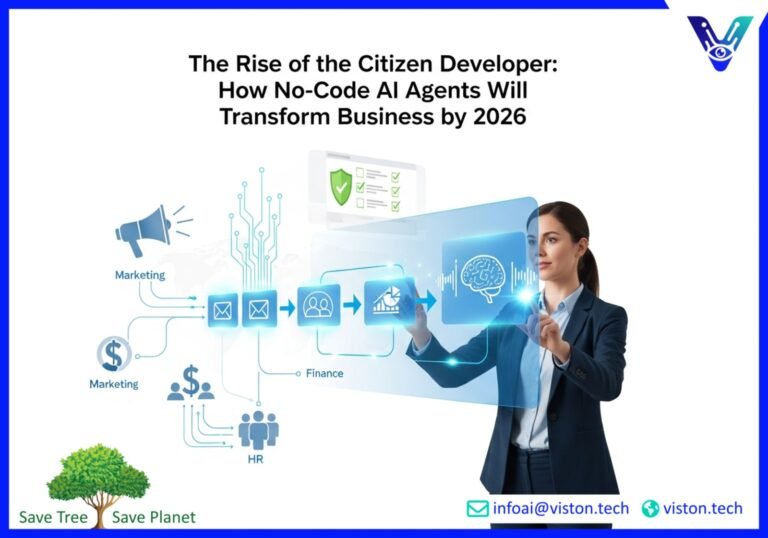
The heart of these platforms is a visual canvas. Building an agentic workflow is as simple as dragging and dropping pre-built blocks onto this canvas. Each block represents a specific action, logic, or integration.
- Triggers: What starts the workflow? (e.g., a new email, a form submission, a specific time of day).
- Actions: What does the agent do? (e.g., send a message, update a CRM, analyze a document).
- Logic: How does the agent make decisions? (e.g., if a customer is “high-value,” then escalate to a human).
- Integrations: How does the agent connect to other tools? (e.g., connecting to Salesforce, Google Sheets, or Slack).
You connect these blocks to create a “flow” that maps out the entire process from start to finish. This visual approach makes it easy to understand, modify, and troubleshoot complex processes without needing to decipher a single line of code.
From Marketing to Manufacturing: Templates for Every Department
Getting started with a blank canvas can be intimidating. That’s why leading agent builders offer a wide range of pre-built templates tailored to specific departmental needs. These templates serve as powerful starting points, providing a functional workflow that can be customized to fit your exact processes.
Examples of Departmental Agents:
- Marketing Teams:
- Lead Qualification Agent: An agent that automatically researches new leads from web forms, enriches their data from sources like LinkedIn, scores them based on predefined criteria, and routes the hot leads directly to the sales team’s calendar.
- Social Media Content Agent: An agent that monitors industry news, identifies trending topics, drafts relevant social media posts in the company’s voice, and schedules them for approval.
- Human Resources:
- Onboarding Assistant: An agent that initiates the onboarding process for new hires. It sends welcome emails, assigns required training modules, provisions access to necessary systems, and schedules introductory meetings.
- Resume Screening Agent: An agent that screens incoming job applications, identifies candidates who match the key criteria for a role, and schedules initial interviews with the top prospects.
- Finance & Operations:
- Invoice Processing Agent: An agent that extracts data from incoming PDF invoices, matches it against purchase orders in the ERP system, and flags any discrepancies for human review before processing payment.
- Supply Chain Monitor: An agent that tracks shipments, monitors for potential delays, and automatically notifies relevant stakeholders if a disruption is detected, suggesting alternative routes or suppliers.
These templates dramatically accelerate time-to-value. Instead of building from scratch, your teams can deploy a working solution in hours, not months, and then iterate and improve over time.
Building with Confidence: The Crucial Role of Governance Guardrails
The idea of non-developers building enterprise applications can be alarming for IT leaders. It raises concerns about security, data privacy, and the rise of “shadow IT”—unmanaged applications that create risk. However, modern no-code agent builders are designed for the enterprise. They come with robust governance features that allow IT to empower citizen developers safely.
Finding the Right Balance
Effective governance isn’t about restricting innovation; it’s about enabling it securely. A good governance framework strikes a balance between agility and control.
- Role-Based Access Control (RBAC): IT can define who has permission to build agents, what data sources they can connect to, and which actions they can perform.
- Data Loss Prevention (DLP) Policies: These policies prevent sensitive information from being accidentally shared outside the organization. For example, a rule could block an agent from sending confidential customer data to a personal email address.
- Centralized Monitoring and Auditing: IT maintains a central dashboard to see every agent built on the platform. They can monitor performance, track usage, and view detailed audit logs to ensure compliance.
- Reusable Components: IT can create a library of pre-approved connectors and components, ensuring that citizen developers are building with secure and vetted building blocks.
With these governance guardrails in place, IT can transition from being a gatekeeper to an enabler. They provide a secure sandbox where business experts can innovate, confident that they are operating within safe and compliant boundaries. For an in-depth look at managing this new ecosystem, publications like CIO.com offer valuable insights into establishing effective citizen developer strategies.
Leading the Change: Managing the Transition to Agentic Workflows
Implementing new technology is only half the battle. The other half is managing the human side of change. Introducing AI agents and empowering citizen developers requires a thoughtful change management strategy to ensure successful adoption. Without it, even the most powerful tools can fail to deliver on their promise.
Organizational change management is the structured approach to ensuring that changes are implemented smoothly and that the lasting benefits are achieved. It’s about guiding your people through the transition, from initial awareness to proficient use of the new tools.
Key Pillars of AI Change Management:
- Clear Vision and Communication: Leadership must clearly articulate why the change is happening. Explain the benefits not just for the company, but for the employees themselves. How will no-code agents make their jobs easier, more strategic, and more impactful?
- Employee Engagement and Training: Involve employees in the process early. Identify enthusiastic individuals to become “champions” who can help train and support their peers. Provide comprehensive, role-based training that moves beyond theory to hands-on practice.
- Address Fears and Concerns Head-On: Automation can create anxiety about job security. Be transparent. Emphasize that the goal is to augment human capabilities, not replace them. Focus on how AI agents will free up employees from repetitive tasks to focus on higher-value strategic work.
- Establish a Center of Excellence (CoE): A CoE is a dedicated team that provides guidance, best practices, and support for citizen developers. It helps ensure that development efforts are aligned with business goals and that everyone is building in a consistent and secure manner.
Successfully managing this change is critical for unlocking the full potential of no-code automation and fostering a culture of continuous innovation.
Conclusion: Your Next Step into the Future of Automation
The rise of no-code agent builders is more than just a technological trend; it’s a fundamental shift in how work gets done. By 2026, the ability to empower your non-technical teams to create their own AI-powered solutions will be a key differentiator for successful enterprises. It is the path to unlocking unprecedented levels of productivity, agility, and innovation.
By embracing citizen development and providing your teams with the right tools and governance, you can harness the collective intelligence of your entire organization. You can solve business problems faster, respond to market changes with greater agility, and create a culture where everyone is empowered to build the future.
The journey starts with understanding the possibilities. It’s time to explore how these powerful, accessible platforms can transform your business from the inside out.
Ready to empower your teams and accelerate your automation journey? The experts at Viston AI can help you design and implement AI-powered solutions that drive real business results. Contact us today to learn how our industry-specific expertise can help you build your future, no code required.
Frequently Asked Questions (FAQs)
1. What is the main difference between a no-code AI agent and a simple chatbot?
A simple chatbot typically follows a predefined script and is designed for basic Q&A interactions. A no-code AI agent is far more advanced. It can perform multi-step tasks, integrate with various business systems (like your CRM or ERP), make decisions based on data, and execute actions autonomously to achieve a specific goal.
2. Do I need any technical skills at all to use a no-code agent builder?
No, you do not need coding or programming skills. These platforms are designed for business users. If you are comfortable with logic-based tools like spreadsheets (using formulas) or creating presentation flows, you will likely find the visual drag-and-drop interface of an agent builder very intuitive.
3. How secure are the applications and workflows built with these platforms?
Enterprise-grade no-code platforms are built with security as a top priority. They include features like role-based access control, data encryption, audit logs, and data loss prevention policies. This allows IT departments to set up a secure environment where citizen developers can build applications without putting sensitive company data at risk.
4. Can no-code agents handle really complex business processes?
Yes. While they are easy to use, they are also very powerful. No-code agents can be orchestrated to handle highly complex workflows that involve multiple systems, conditional logic, and data analysis. The key is to break down the complex process into smaller, logical steps, which is what the visual builder helps you do.
5. Will citizen development lead to chaos and unmanageable “shadow IT”?
This is a valid concern, but it can be effectively managed with a proper governance strategy. Modern no-code platforms provide IT with the tools to oversee and manage all development. By establishing a Center of Excellence and clear governance guardrails, companies can prevent chaos and ensure that all development is secure, compliant, and aligned with business objectives.
6. How do we get started with implementing no-code agent builders in our organization?
A great way to start is with a pilot program. Identify a specific, high-impact business process within one department. Work with a small group of enthusiastic business users (potential citizen developers) and provide them with training and support. Document the successes and lessons learned before scaling the initiative across the organization.
7. Can these agents be used for external, customer-facing processes?
Absolutely. Agents can be deployed to handle a wide range of customer-facing tasks, such as intelligent customer support that goes beyond basic FAQs, personalized marketing automation, or streamlined client onboarding processes. They can provide a more responsive and intelligent experience for your customers.
8. What is the typical ROI for investing in a no-code automation platform?
The Return on Investment (ROI) comes from multiple areas: increased employee productivity by automating repetitive tasks, faster time-to-market for new solutions and processes, reduced reliance on expensive external development resources, and improved operational efficiency, which leads to direct cost savings.
#NoCode #AI #Automation #CitizenDeveloper #AgentBuilders #FutureOfWork #DigitalTransformation #EnterpriseAI #AgenticWorkflows
“`
