
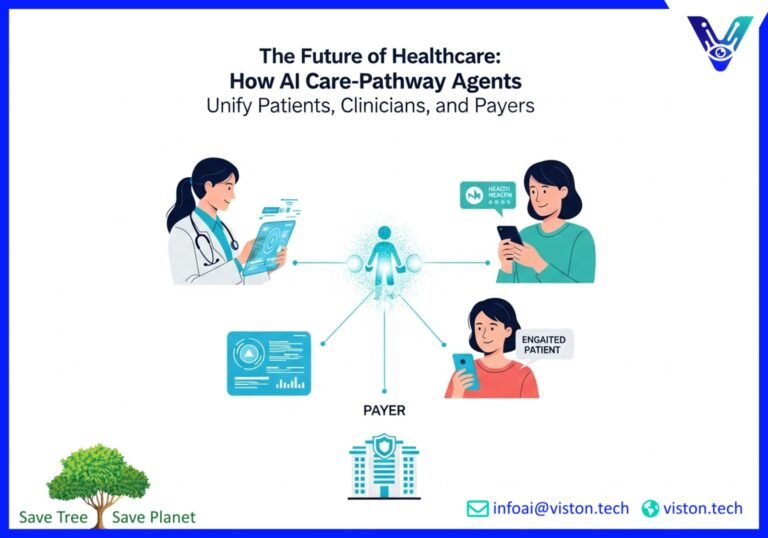
Healthcare Care-Pathway Agents: Coordinating Patients, Clinicians, and Payers
The year is 2026, and the healthcare landscape is undergoing a seismic shift. Faced with mounting pressures from rising costs and widespread clinician burnout, industry leaders are turning to a powerful new ally: Artificial Intelligence. Specifically, AI-powered “care-pathway agents” are emerging as the central nervous system of modern healthcare, orchestrating complex patient journeys and automating administrative tasks that have long plagued the system. These intelligent agents are no longer the stuff of science fiction; they are becoming a practical and indispensable tool for creating a more efficient, personalized, and sustainable healthcare ecosystem.
For enterprise C-suite executives, AI/ML engineers, and healthcare innovators, understanding the potential of these agents is no longer optional—it’s critical for survival and growth. This technology promises not just incremental improvements but a fundamental reimagining of how patients, clinicians, and payers interact and coordinate.
What Are Healthcare Care-Pathway Agents?
Imagine a dedicated, intelligent digital assistant for every patient. This is the essence of a care-pathway agent. These are sophisticated AI software programs designed to manage and coordinate the entire patient journey, from the initial consultation to post-treatment follow-up. They act as a central hub, seamlessly connecting the dots between patients, doctors, hospitals, pharmacies, and insurance providers. Unlike simple automation tools, these agents are dynamic and adaptive. They leverage machine learning and vast datasets to make intelligent decisions, anticipate needs, and personalize the care experience for each individual.
At their core, these agents are built to understand and navigate established “care pathways”—structured, evidence-based plans that outline the ideal steps for treating a specific condition. By automating and personalizing these pathways, AI agents ensure that every patient receives the right care at the right time, every time.
The Burnout and Cost Crisis: Why AI Agents Are the Answer
The healthcare industry is at a breaking point. Clinicians are drowning in administrative work, spending valuable hours on documentation and coordination rather than patient care. This administrative burden is a primary driver of burnout, leading to a depleted and demoralized workforce. Simultaneously, healthcare costs continue to skyrocket, driven by inefficiencies, redundant procedures, and poor care coordination. It’s a vicious cycle that impacts everyone: patients face fragmented care, clinicians face exhaustion, and payers face unsustainable financial demands.
Care-pathway agents tackle these challenges head-on. By automating routine administrative tasks, they liberate clinicians to focus on what they do best: healing patients. The potential for cost savings is immense, with some estimates suggesting AI could save the U.S. healthcare system up to $150 billion annually. As we move further into 2026, the adoption of these AI agents is no longer a question of “if,” but “when and how fast.”
Orchestrating the Patient Journey: Core Functions of Care-Pathway Agents
The true power of care-pathway agents lies in their ability to manage and streamline every facet of the patient experience. Here’s a closer look at their key functions:
Intelligent Scheduling and Appointment Management
Gone are the days of endless phone calls and scheduling mix-ups. AI agents automate the entire appointment process with a level of efficiency humans can’t match.
- Automated Booking: Agents can schedule appointments across multiple specialists and departments, instantly finding the best time slots that work for both the patient and the providers.
- Smart Reminders: Personalized reminders are sent to patients via their preferred communication channel, significantly reducing no-show rates.
- Proactive Rescheduling: The agent can anticipate potential scheduling conflicts or the need for follow-up appointments based on the patient’s care plan and automatically suggest new times.
Enhancing Care Plan Adherence
A treatment plan is only effective if the patient follows it. Non-adherence is a massive problem in healthcare, leading to poor outcomes and increased costs. AI agents act as a personal health coach, empowering patients to stay on track.
- Personalized Reminders: Agents send timely reminders for medications, exercises, and other prescribed treatments.
- Educational Content: They provide patients with easy-to-understand information about their condition and treatment plan, answering common questions and alleviating concerns.
- Symptom Tracking and Monitoring: Patients can easily report their symptoms through a simple interface. The AI agent analyzes this data in real-time, flagging any concerning trends for the clinical team.
Seamless Payer Coordination and Administrative Automation
The administrative side of healthcare is notoriously complex and inefficient. Care-pathway agents are bringing much-needed order to this chaos, particularly in coordinating with payers (insurance companies).
- Automated Prior Authorizations: Agents can automatically gather and submit the necessary documentation for prior authorizations, a process that is a major bottleneck and source of frustration.
- Real-Time Eligibility Checks: The system can instantly verify a patient’s insurance coverage and eligibility for specific procedures and medications.
- Streamlined Billing and Claims: By ensuring accurate coding and documentation from the outset, AI agents drastically reduce claim denials and billing errors, accelerating the revenue cycle for providers.
For a deeper dive into how AI is revolutionizing healthcare operations, explore the insights from Forbes on generative AI in healthcare administration.
Building Trust: The Critical Role of Safety and Regulatory Design
The integration of AI into direct patient care rightfully raises questions about safety, ethics, and accountability. For healthcare leaders and developers, building trust is paramount. This requires a proactive and transparent approach to the design and deployment of care-pathway agents.
Designing for Safety and Reliability
Patient safety is non-negotiable. AI systems in healthcare must be built on a foundation of robust, reliable, and secure technology.
- Data Security and Privacy: Adherence to regulations like HIPAA is just the starting point. These systems must employ state-of-the-art encryption and data protection measures to safeguard sensitive patient information.
- Human-in-the-Loop Oversight: While agents automate many tasks, they are designed to augment, not replace, human clinicians. Critical medical decisions always remain in the hands of healthcare professionals, with the AI providing support and flagging a need for intervention.
- Algorithmic Transparency: It’s crucial to understand how the AI makes its recommendations. “Explainable AI” (XAI) is becoming a standard, ensuring that the logic behind an agent’s actions can be reviewed and understood by clinicians.
Navigating the Regulatory Landscape
The regulatory environment for AI in healthcare is rapidly evolving. Staying ahead of these changes is essential for any organization deploying these technologies.
- FDA and Global Compliance: Many care-pathway agents, especially those involved in clinical decision support, may be classified as medical devices and require clearance from bodies like the U.S. Food and Drug Administration (FDA).
- Proactive Governance: Leading healthcare organizations are establishing internal AI governance boards. These multidisciplinary teams, which include clinical, legal, and ethical experts, oversee the deployment of AI to ensure it aligns with organizational values and patient safety standards.
The U.S. Department of Health and Human Services offers valuable resources on AI and HIPAA compliance.
The Future is Agentic: What’s Next for Care-Pathway Coordination?
The capabilities of healthcare AI agents are expanding at an incredible pace. Looking ahead, we can expect even more sophisticated and integrated solutions. The era of “agentic AI”—where multiple specialized AI agents collaborate to solve complex problems—is dawning in healthcare. Imagine a diagnostic agent, a scheduling agent, and a billing agent all working together seamlessly under the direction of a master care-pathway agent to manage a patient’s journey through cancer treatment.
These advancements will lead to a future of truly personalized medicine, where care plans are continuously adapted based on real-time data from wearables, genomic information, and patient-reported outcomes. This will shift the focus of healthcare from reactive treatment to proactive prevention and wellness.
Read more about the future of AI in healthcare in this comprehensive overview from HealthITAnalytics.
Your Partner in the AI Revolution
The transition to an AI-driven healthcare model is both exciting and challenging. Navigating the complexities of technology, regulation, and implementation requires a partner with deep expertise and a proven track record. The future of healthcare is about intelligent coordination and seamless integration. Care-pathway agents are the key to unlocking this future, creating a system that works better for patients, clinicians, and payers alike.
Ready to explore how AI-powered solutions can transform your organization? Contact Viston AI today to learn how our custom AI agent solutions can help you navigate the future of healthcare.
Frequently Asked Questions (FAQs)
- What is a healthcare care-pathway agent?
A care-pathway agent is an advanced AI software program designed to automate and coordinate the entire journey a patient takes for a specific medical condition. It connects patients, clinicians, and payers to streamline scheduling, improve adherence to care plans, and handle administrative tasks. - How do these AI agents help reduce clinician burnout?
By automating time-consuming administrative tasks like scheduling, documentation, and prior authorizations, these agents free up clinicians’ time. This allows doctors and nurses to focus more on direct patient care and less on paperwork, which is a major contributor to burnout. - Is my health information safe with an AI agent?
Yes. These systems are designed with security as a top priority. They must comply with stringent healthcare regulations like HIPAA and use advanced encryption and data protection methods to ensure that all patient information remains confidential and secure. - Can an AI agent make medical decisions for me?
No. Care-pathway agents are decision-support tools. They provide data and recommendations to assist healthcare professionals, but the final medical decisions are always made by a qualified human clinician. They are designed to augment, not replace, the expertise of your doctor. - How do care-pathway agents help control healthcare costs?
AI agents reduce costs in several ways: by decreasing administrative overhead, reducing hospital readmissions through better care plan adherence, preventing costly errors in billing and coding, and ensuring that resources are used more efficiently throughout the care process. - What is the difference between a simple chatbot and a care-pathway agent?
While a chatbot can answer simple, pre-programmed questions, a care-pathway agent is a far more sophisticated system. It uses AI and machine learning to manage complex, multi-step workflows, integrate with various healthcare systems (like EHRs and billing), and make intelligent, autonomous decisions to guide the entire patient journey. - How will these agents impact the patient’s role in their own healthcare?
These agents empower patients by giving them more control and better access to information. Through personalized reminders, educational content, and easy symptom tracking, patients become more active and engaged participants in managing their own health, leading to better outcomes. - What does the implementation of a care-pathway agent look like for a hospital or clinic?
Implementation typically involves integrating the AI agent with existing systems like the Electronic Health Record (EHR). This requires careful planning and collaboration between the technology provider and the healthcare organization to ensure a seamless transition that supports existing clinical workflows without disruption.
#healthcare #AI #CareCoordination #DigitalHealth #HealthcareInnovation #PatientEngagement #HealthTech #CarePathways #FutureofHealthcare #VistonAI
