
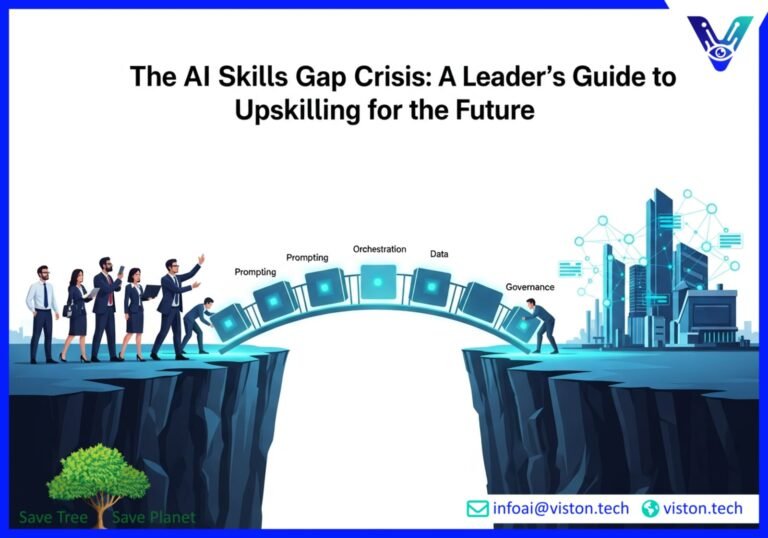
The AI Skills Gap Crisis: Upskilling Your Team for the Agentic AI Era
The artificial intelligence revolution is here, but is your team ready? As AI adoption surges across industries, a critical skills gap has emerged, threatening to leave many businesses behind. While 93% of organizations plan to increase their AI investments, a staggering reality remains: only a fraction of employees have received formal AI training. This disconnect is no longer a minor issue; it’s a strategic barrier to capturing the immense value AI promises.
The demand for “AI fluency” and the skills to guide intelligent AI agents has grown sevenfold in just two years. This isn’t just about coding or data science anymore. It’s about a new kind of literacy that empowers your entire workforce to collaborate with AI, drive innovation, and unlock new levels of productivity. The companies that address this skills gap head-on will be the leaders of tomorrow. Those that don’t risk being outpaced by more agile, AI-empowered competitors.
The Sobering Statistics of the AI Skills Gap
The numbers paint a stark picture of the current landscape. While businesses are eagerly integrating AI to automate tasks and gain a competitive edge, the investment in human capital is lagging dangerously behind. Consider these key statistics:
- Low Training Adoption: Despite the widespread use of AI, a shockingly low percentage of employees—by some estimates, as little as 12%—have undergone any formal AI training.
- Executive vs. Employee Divide: While over three-quarters of leaders and managers report using generative AI multiple times a week, regular use among frontline employees has stalled at around 51%. This highlights a significant gap in adoption and, consequently, in skill development at all levels of an organization.
- Abandoned Projects: A lack of skilled personnel is directly impacting the success of AI initiatives. Reports indicate that as many as 38% of organizations have had to abandon AI projects due to a shortage of the necessary skills.
- Employee Anxiety and Desire for Training: The workforce is acutely aware of this gap. Over 75% of employees express fear of job loss due to AI, and a massive 81% would feel more secure in their roles if their employers provided comprehensive AI training.
These statistics underscore a critical message: the unaddressed skills gap is a direct threat to realizing the full potential of AI investments. It’s not enough to simply acquire the technology; you must empower your people to use it effectively.
Mapping the Essential Skills for the Agentic AI Era
To thrive in this new era, your team needs a diverse and evolving skill set. It’s no longer sufficient to have a few data scientists in a corner. AI literacy must become a core competency across the entire organization. Here’s a map of the crucial skills your team needs to develop:
1. Prompting: The Art and Science of Communicating with AI
At its core, interacting with generative AI is about communication. Effective prompting is the skill of crafting clear, concise, and context-rich instructions to guide AI models to produce the desired output. This is more than just asking a question; it’s about understanding how the AI “thinks” and framing your requests in a way that maximizes its capabilities. For marketing teams, this could mean generating creative ad copy. For developers, it could be producing efficient code snippets. Every department can benefit from mastering the language of AI.
2. Orchestration: Managing the Symphony of AI Systems
As businesses deploy multiple AI models and agents, the ability to manage and coordinate these systems becomes paramount. AI orchestration is the practice of integrating various AI tools, data pipelines, and workflows to create a seamless and efficient operation. This skill is crucial for IT leaders and AI/ML engineers who are responsible for building and maintaining the organization’s AI infrastructure. Effective orchestration ensures that all the moving parts of your AI strategy work in harmony to achieve your business goals.
3. Data: The Lifeblood of Intelligent Systems
The old adage “garbage in, garbage out” has never been more relevant than in the age of AI. A strong foundation in data skills is essential for anyone working with AI. This includes:
- Data Literacy: The ability to read, understand, create, and communicate data as information.
- Data Curation: The process of gathering, cleaning, and organizing data to ensure it is of high quality and relevant for training AI models.
- Data Analysis: The skill of interpreting data to extract meaningful insights and inform business decisions.
Without a workforce that is proficient in handling data, even the most advanced AI models will fail to deliver accurate and reliable results.
4. Governance: Ensuring Responsible and Ethical AI
With the power of AI comes great responsibility. Strong AI governance is the framework of rules, policies, and processes that ensure your organization’s use of AI is ethical, transparent, and compliant with regulations. This includes addressing issues such as data privacy, algorithmic bias, and the overall societal impact of your AI systems. Developing skills in AI governance is crucial for C-suite executives, legal teams, and anyone involved in the deployment of AI to mitigate risks and build trust with customers and stakeholders.
Effective Training Models for AI Upskilling
Closing the AI skills gap requires a strategic and multifaceted approach to training. A one-size-fits-all solution is unlikely to be effective. Instead, organizations should consider a blend of training models to cater to the diverse needs of their workforce:
- Online Learning and Development: Platforms like Coursera and Udemy offer a vast array of AI-related courses, from introductory concepts to advanced technical skills. These can be a cost-effective way to provide foundational knowledge to a large number of employees. Look for programs that offer hands-on projects and certifications to validate learning.
- Hands-on Workshops and Bootcamps: For more practical and role-specific training, immersive workshops and bootcamps can be highly effective. These formats allow employees to work on real-world projects and receive personalized feedback from expert instructors. This is particularly beneficial for technical teams that need to learn new tools and frameworks.
- Peer-to-Peer Learning and Mentorship: Fostering a culture of knowledge sharing is a powerful way to accelerate skill development. Encourage employees with existing AI expertise to mentor their colleagues. Establishing internal communities of practice can also provide a platform for employees to learn from each other’s experiences and collaborate on challenges. For a deeper dive into fostering this kind of learning environment, this article from McKinsey offers valuable insights.
The Power of Internal AI Academies
For organizations committed to building a future-proof workforce, establishing an internal AI academy can be a game-changer. An internal academy is a dedicated learning and development initiative focused on building AI capabilities from within. This approach offers several distinct advantages:
- Tailored Curriculum: An internal academy allows you to design a curriculum that is specifically aligned with your company’s strategic goals, industry, and the unique challenges your teams face.
- Cultivating a Learning Culture: By making a significant investment in employee development, you send a clear message that learning and innovation are valued. This can boost employee morale and retention.
- Building a Talent Pipeline: An academy can serve as a powerful engine for identifying and nurturing high-potential employees, creating a sustainable pipeline of AI talent within your organization.
- Driving Innovation: As employees develop new skills, they will be better equipped to identify opportunities for AI-driven innovation in their day-to-day work, leading to a virtuous cycle of improvement and growth. For more on how to structure such initiatives, Harvard Business Review provides a comprehensive guide.
Measuring the Impact of Your AI Training Initiatives
To ensure your upskilling efforts are delivering a positive return on investment, it’s crucial to measure their impact. While traditional metrics like course completion rates are a starting point, a more sophisticated approach is needed to capture the true value of AI training. Key metrics to track include:
- Productivity Gains: Measure how much faster tasks are completed after AI training. Monitor the time and manual hours saved as AI automates repetitive processes.
- Project Impact and Innovation: Evaluate how AI-trained employees are applying their new skills to real-world projects. Track the number of new automation tools launched or process improvements identified by these teams.
- Employee Performance: Assess changes in key performance indicators (KPIs) for individuals and teams that have undergone AI training. This could include improvements in sales figures, customer satisfaction scores, or a reduction in error rates.
- Talent Retention: Monitor employee turnover rates among trained staff. Upskilling can significantly boost job satisfaction and loyalty, leading to higher retention of valuable talent.
By tracking these metrics, you can demonstrate the tangible business value of your AI training programs and make data-driven decisions to optimize your upskilling strategy over time.
Take the Next Step into the Agentic AI Era
The AI skills gap is a formidable challenge, but it also presents a tremendous opportunity. By proactively upskilling your team, you can unlock the full potential of your AI investments, foster a culture of innovation, and secure a significant competitive advantage. The future of work is a partnership between humans and intelligent machines. Now is the time to equip your workforce with the skills they need to thrive in this new reality.
Ready to bridge the AI skills gap in your organization? The journey to AI fluency starts with a single step. For expert guidance and tailored AI-powered solutions to accelerate your team’s transformation, contact Viston AI today.
FAQs
What is the AI skills gap?
The AI skills gap refers to the significant disparity between the growing demand for workers with artificial intelligence expertise and the limited supply of qualified professionals. This gap encompasses a wide range of skills, from technical abilities like machine learning and data science to softer skills like AI ethics and governance.
Why is upskilling and reskilling important in the age of AI?
Upskilling and reskilling are crucial because AI is rapidly transforming job roles and the nature of work itself. As AI automates routine tasks, employees need to develop new skills to work alongside and manage these intelligent systems. Proactive training ensures that the workforce remains relevant and can contribute to higher-value, more strategic initiatives.
What are the most in-demand AI skills for 2025?
In 2025, the most in-demand AI skills include prompt engineering, AI orchestration, data literacy, and AI governance. Additionally, soft skills such as critical thinking, creativity, and emotional intelligence are becoming increasingly important as AI handles more of the technical, data-driven tasks.
How can a company start building an AI training program?
A company can start by conducting a skills gap analysis to identify the specific AI competencies needed to achieve its business goals. From there, it can develop a multi-faceted training program that includes a mix of online courses, hands-on workshops, and mentorship opportunities. Starting with a pilot program for a specific department can be an effective way to test and refine the training strategy before a full-scale rollout.
What is agentic AI, and why is it important to prepare for it?
Agentic AI refers to AI systems that can operate autonomously to make decisions and take actions to achieve specific goals with minimal human intervention. It’s important to prepare for this next wave of AI because it will further shift the focus of human work from execution to strategy, oversight, and collaboration with these intelligent agents. Teams will need the skills to design, manage, and ethically guide these autonomous systems.
How can we measure the ROI of AI training?
The ROI of AI training can be measured through a combination of quantitative and qualitative metrics. Quantitative measures include productivity improvements, cost savings from automation, and revenue growth from AI-driven initiatives. Qualitative measures can include improvements in employee engagement, innovation rates, and talent retention.
What is the role of leadership in driving AI upskilling?
Leadership plays a critical role in championing the importance of AI upskilling. Executives need to articulate a clear vision for how AI will transform the organization and secure the necessary resources for training initiatives. By modeling a commitment to learning and embracing AI, leaders can foster a culture that encourages employees to develop new skills and adapt to the changing technological landscape.
Should we hire new talent or upskill our existing workforce for AI?
While hiring for specific, highly technical AI roles may be necessary, a primary focus on upskilling the existing workforce is often more practical and beneficial. Upskilling is more cost-effective than constantly competing for scarce external talent, and it boosts the morale and loyalty of current employees by providing them with opportunities for growth and development.
#AISkillsGap #Upskilling #Reskilling #AITraining #AgenticAI #FutureOfWork #AIStrategy #DigitalTransformation #VistonAI #LeadGeneration
