
Enterprise AI Agents: Real-World Examples Driving ROI in 2025
The conversation around artificial intelligence in the enterprise has fundamentally shifted. No longer a futuristic concept, enterprise AI agents are now a core driver of business value. Forward-thinking companies are moving beyond experimental pilots and are deploying sophisticated AI agents that automate complex workflows, delivering measurable returns. These intelligent agents are not just enhancing efficiency; they are fundamentally reshaping operations, improving customer experiences, and creating new revenue streams.
This article explores the tangible impact of enterprise AI agents in 2025. We will showcase fresh, real-world examples of how businesses are achieving significant gains in cycle time, error reduction, and revenue enablement. You will also find a practical framework for measuring automation ROI, a comprehensive governance checklist, and an actionable playbook for successful adoption. Whether you are a C-suite executive, an IT leader, or an AI engineer, this guide will provide you with the insights needed to harness the power of AI agents in your organization.
Cross-Industry Mini Case Studies: AI Agents in Action
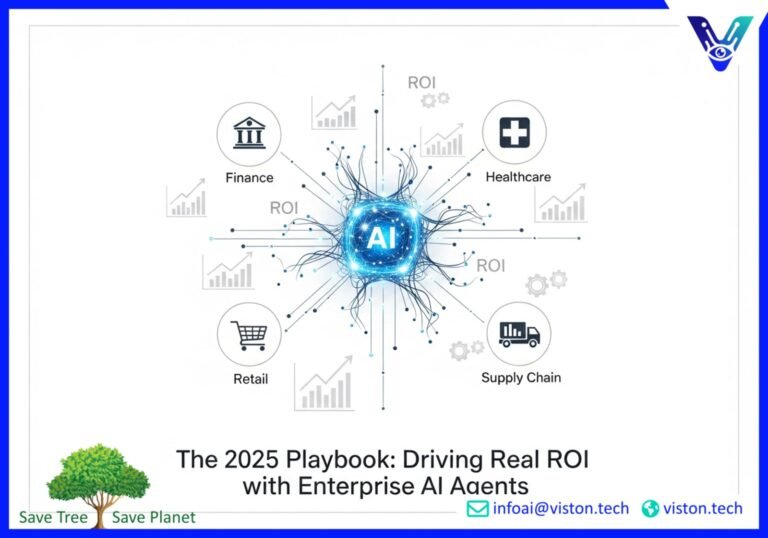
The true value of enterprise AI agents is best understood through their real-world applications. Across various sectors, these intelligent systems are tackling complex challenges and delivering impressive results. Here are some compelling mini AI case studies that highlight the transformative power of AI agents in 2025.
Finance: Revolutionizing Customer Service and Fraud Detection
The financial services industry is a fertile ground for AI innovation. Banks and fintech companies are leveraging AI agents to enhance customer interactions and fortify security measures. For instance, a leading global bank deployed an AI-powered virtual assistant to handle a wide range of customer inquiries. The result was a 30% reduction in operational costs for their customer service department. This AI agent was not just a simple chatbot; it could process complex requests, from transaction disputes to loan applications, with remarkable accuracy. Bank of America’s virtual assistant, Erica, has handled over 2 billion interactions, resolving 98% of customer queries in under a minute, showcasing the immense potential for efficiency gains.
In the realm of security, AI agents are proving to be invaluable in the fight against fraud. By analyzing transaction patterns in real-time, these systems can identify and flag suspicious activities with a high degree of accuracy. This has led to a significant decrease in financial losses due to fraud and has helped financial institutions stay ahead of evolving threats.
Healthcare: Enhancing Diagnostics and Administrative Efficiency
In healthcare, AI agents are making a profound impact on both clinical and administrative fronts. AI-powered diagnostic tools are assisting radiologists by analyzing medical images with up to 98% accuracy, leading to earlier and more precise diagnoses. This not only improves patient outcomes but also frees up valuable time for medical professionals to focus on more complex cases. For example, some AI systems can identify signs of rare diseases from genetic data, a task that would be incredibly time-consuming for human doctors.
On the administrative side, AI agents are streamlining workflows and reducing the burden of paperwork. Hospitals are using AI to automate tasks like patient scheduling, insurance verification, and medical billing. One hospital reported saving 66 minutes per provider each day by using AI to reduce documentation time. This automation allows healthcare providers to dedicate more time to patient care, improving the overall quality of service.
Retail: Personalizing Customer Experiences and Boosting Sales
The retail sector is leveraging enterprise AI agents to create highly personalized shopping experiences and drive revenue growth. AI-powered recommendation engines analyze customer data to suggest products that are most likely to appeal to individual shoppers. This level of personalization has been shown to increase conversion rates and customer loyalty. A major e-commerce platform saw a 15% increase in sales after implementing an AI-driven product recommendation system.
AI agents are also optimizing inventory management and supply chain operations. By forecasting demand with greater accuracy, retailers can ensure that they have the right products in stock at the right time, reducing instances of stockouts and overstocking. This leads to improved customer satisfaction and a more efficient use of resources. For more on this, you can explore how AI is transforming supply chains.
Supply Chain and Logistics: Optimizing Routes and Predicting Disruptions
The supply chain and logistics industry is reaping significant benefits from the adoption of AI agents. Companies are using AI to optimize delivery routes, reducing fuel consumption and delivery times. Some AI-driven route optimization tools have been shown to cut total driving distance by up to 20%. This not only lowers operational costs but also contributes to a greener, more sustainable supply chain.
Furthermore, AI agents are being used to predict and mitigate supply chain disruptions. By analyzing a wide range of data, from weather patterns to geopolitical events, these systems can identify potential risks and recommend proactive measures. This enables companies to build more resilient supply chains that can withstand unforeseen challenges. Global shipping giant Maersk, for example, uses an AI-driven system to manage its containers, which has led to a 60% reduction in cargo spoilage and a 12% decrease in fuel consumption.
A Metrics Framework for Measuring Automation ROI
To truly understand the value of enterprise AI agents, it is crucial to have a robust framework for measuring their return on investment. While direct cost savings are an important metric, a comprehensive ROI analysis should also consider less tangible benefits like productivity gains and improved customer satisfaction. Here is a framework to help you measure the automation ROI of your AI initiatives.
Direct Cost Savings
- Labor Cost Reduction: Calculate the hours of manual work saved by AI automation and multiply that by the average hourly cost of an employee.
- Error Reduction: Quantify the financial impact of errors, such as a reduction in rework or customer refunds, and attribute the improvement to your AI agent.
- Infrastructure Savings: Account for any cost reductions in software licenses or hardware that are no longer needed due to AI automation.
Productivity and Efficiency Gains
- Cycle Time Reduction: Measure the decrease in the time it takes to complete a process from start to finish.
- Increased Throughput: Track the increase in the number of tasks or transactions that can be processed in a given period.
- Improved Employee Focus: While harder to quantify, survey employees on how AI has allowed them to focus on more strategic, high-value work.
Revenue Enablement and Growth
- Increased Sales: Correlate the implementation of AI agents, such as in personalized marketing or lead scoring, with an uplift in sales revenue.
- Improved Customer Retention: Track customer churn rates before and after the deployment of AI-powered customer service agents.
- New Revenue Streams: Identify any new products or services that were made possible by the capabilities of your AI agents.
Risk Mitigation and Compliance
- Reduced Compliance Costs: Measure the decrease in costs associated with regulatory compliance, such as fines or legal fees.
- Enhanced Security: Quantify the financial impact of improved security, such as a reduction in losses from fraud.
By taking a holistic approach to measuring ROI, you can build a more compelling business case for your AI investments. For a deeper dive into this topic, consider this comprehensive guide on measuring the ROI of AI.
Your Governance Checklist for Enterprise AI Agents
As you deploy enterprise AI agents, it is essential to have a strong governance framework in place to ensure they are used responsibly and ethically. A well-defined governance structure will help you mitigate risks, maintain compliance, and build trust with your stakeholders. Here is a checklist to guide your AI governance efforts.
- Establish Clear Accountability: Assign ownership for AI initiatives to specific individuals or teams. Define who is responsible for the development, deployment, and ongoing monitoring of AI agents.
- Conduct a Risk Assessment: Identify and evaluate the potential risks associated with your AI use cases. This should include an assessment of potential biases, privacy concerns, and security vulnerabilities.
- Ensure Data Privacy and Security: Implement robust data protection measures to safeguard the data used by your AI agents. Ensure compliance with all relevant data privacy regulations.
- Promote Transparency and Explainability: Strive to make your AI systems as transparent as possible. Users should understand how AI agents make decisions, especially in high-stakes situations.
- Implement Human-in-the-Loop Oversight: For critical processes, ensure that there is a human in the loop who can review and override the decisions of an AI agent if necessary.
- Monitor and Audit Performance: Continuously monitor the performance of your AI agents to ensure they are functioning as intended. Conduct regular audits to check for biases and other issues.
- Provide Training and Education: Train your employees on the responsible use of AI. Make sure they understand the capabilities and limitations of your AI agents.
- Stay Informed on Regulations: Keep abreast of the evolving regulatory landscape for AI. Ensure that your governance framework is aligned with the latest legal and ethical standards.
An Adoption Playbook for Enterprise AI Agents
Successfully adopting enterprise AI agents requires a strategic and methodical approach. This playbook provides a step-by-step guide to help you navigate the journey from initial concept to full-scale deployment.
Step 1: Identify High-Impact Use Cases
Start by identifying business processes that are ripe for automation. Look for tasks that are repetitive, rule-based, and have a high potential for human error. Prioritize use cases that align with your strategic business objectives and have the potential to deliver a significant return on investment.
Step 2: Start with a Pilot Project
Instead of attempting a large-scale deployment from the outset, begin with a small pilot project. This will allow you to test the technology in a controlled environment and gather valuable feedback. A successful pilot will also help you build momentum and secure buy-in from key stakeholders.
Step 3: Choose the Right Technology and Partners
Select an AI platform and a technology partner that have a proven track record of success. Look for a solution that is scalable, secure, and easy to integrate with your existing systems. A good partner will not only provide you with the right technology but will also offer expert guidance and support throughout the implementation process.
Step 4: Prepare Your Data
The performance of your AI agents is highly dependent on the quality of your data. Ensure that your data is clean, accurate, and relevant to your chosen use case. You may need to invest in data preparation and cleansing tools to get your data ready for AI.
Step 5: Develop and Train Your AI Agents
Work with your technology partner to develop and train your AI agents. This will involve feeding them with relevant data and refining their algorithms to ensure they can perform their designated tasks accurately and efficiently.
Step 6: Integrate and Deploy
Once your AI agents have been trained, integrate them into your existing workflows. This should be done in a phased manner to minimize disruption. Provide your employees with the necessary training to ensure they can work effectively with their new AI-powered colleagues.
Step 7: Measure, Monitor, and Iterate
After deployment, continuously measure the performance of your AI agents against your predefined metrics. Monitor their performance and gather feedback from users. Use this information to iterate and improve your AI agents over time.
Conclusion: The Future is Autonomous
The era of enterprise AI agents is here, and the organizations that embrace this technology will be the leaders of tomorrow. The real-world examples and frameworks presented in this article demonstrate that the ROI of AI is no longer a matter of speculation but a tangible reality. By taking a strategic and well-governed approach to adoption, you can unlock the full potential of AI agents and drive transformative growth for your business.
Are you ready to harness the power of enterprise AI agents? Contact Viston AI today to learn how our AI-powered solutions can help you achieve your business goals and drive measurable ROI.
Frequently Asked Questions (FAQs)
What are enterprise AI agents?
Enterprise AI agents are sophisticated software programs that use artificial intelligence to perform complex tasks and automate workflows within a business. Unlike simple automation tools, AI agents can learn, reason, and make decisions with a high degree of autonomy. They are designed to handle multi-step processes and can be integrated into a wide range of business functions, from customer service to supply chain management.
How do enterprise AI agents drive ROI?
Enterprise AI agents drive ROI in several ways. They can reduce operational costs by automating manual tasks and reducing the need for human intervention. They can also improve productivity and efficiency by accelerating workflows and reducing errors. Furthermore, AI agents can drive revenue growth by enhancing the customer experience, personalizing marketing efforts, and identifying new business opportunities.
What are some real-world examples of enterprise AI agents?
Real-world examples of enterprise AI agents include AI-powered virtual assistants in customer service that can handle complex inquiries, AI diagnostic tools in healthcare that can analyze medical images with high accuracy, and AI-driven recommendation engines in retail that can personalize the shopping experience. In finance, AI agents are used for real-time fraud detection, and in logistics, they are used to optimize delivery routes.
What is a metrics framework for automation ROI?
A metrics framework for automation ROI is a structured approach to measuring the return on investment of AI automation initiatives. It goes beyond simple cost savings to include a wide range of metrics, such as productivity gains, revenue enablement, and risk mitigation. A comprehensive framework will help you understand the full business impact of your AI investments.
Why is a governance checklist important for enterprise AI?
A governance checklist is important for enterprise AI because it provides a structured framework for ensuring that AI is used responsibly and ethically. It helps organizations mitigate risks, maintain compliance with regulations, and build trust with stakeholders. A good governance checklist will cover areas such as accountability, data privacy, transparency, and human oversight.
What are the key steps in an AI adoption playbook?
The key steps in an AI adoption playbook typically include identifying high-impact use cases, starting with a pilot project, choosing the right technology and partners, preparing your data, developing and training your AI agents, integrating and deploying them into your workflows, and continuously measuring and iterating on their performance.
How can I get started with enterprise AI agents in my organization?
To get started with enterprise AI agents, begin by educating yourself and your team on the potential benefits and use cases of the technology. Identify a few high-impact areas in your business where AI could make a significant difference. Then, consider partnering with an experienced AI solutions provider, like Viston AI, who can help you develop a strategy and a roadmap for your AI journey.
What is the future of enterprise AI agents?
The future of enterprise AI agents is one of increasing autonomy and sophistication. We can expect to see AI agents that are capable of handling even more complex and strategic tasks. They will become more integrated into the core fabric of business operations, acting as intelligent partners to human employees and driving a new wave of innovation and growth.