
#
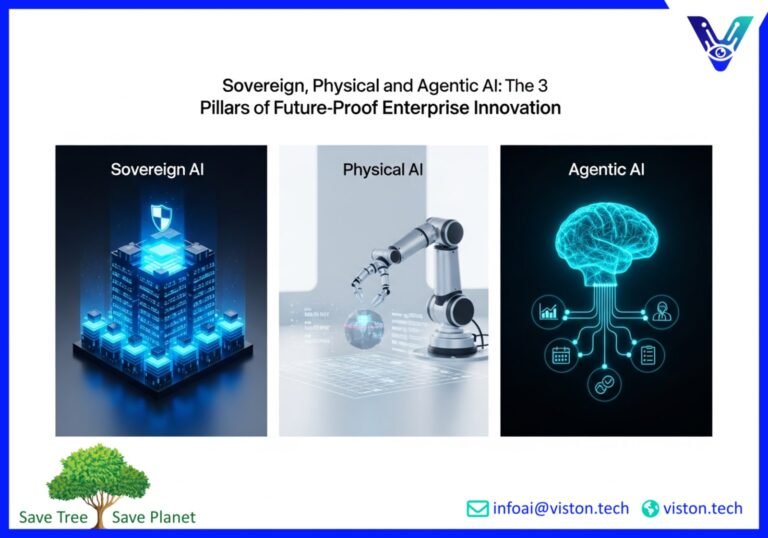
Sovereign, Physical, and Agentic AI: Three Systems Reshaping Enterprise Innovation
The world of artificial intelligence is moving at lightning speed. As we look toward 2030, the World Economic Forum has highlighted three distinct yet interconnected AI systems poised to revolutionize how businesses operate: Sovereign AI, Physical AI, and Agentic AI. These are not just buzzwords; they represent fundamental shifts in how enterprises will innovate, compete, and create value. For leaders aiming to stay ahead, understanding these systems is no longer optional—it’s essential.
This guide will break down each AI type in simple terms. We’ll explore real-world enterprise examples, discuss when to use each system, and examine how they can be integrated. We will also look at the critical risks and policy considerations to keep in mind. Let’s dive into the future of enterprise innovation.
Decoding the Three AI Systems
To harness the power of these transformative technologies, we must first understand what they are. Each system offers unique capabilities that, when applied correctly, can unlock unprecedented efficiency and growth.
1. Sovereign AI: The Fortress of Data and Control
Sovereign AI refers to the capability of an organization or a nation to develop, deploy, and govern AI systems using its own infrastructure, data, and models. It’s about maintaining full control and ensuring compliance within specific legal and strategic boundaries. In a world of tightening data privacy regulations and geopolitical uncertainties, sovereign AI is becoming a critical strategic asset.
The core idea is simple: your data and your AI are yours alone. This approach prevents reliance on third-party providers in other jurisdictions, safeguarding sensitive information and intellectual property. By building a “sovereign cloud,” enterprises can ensure their AI operations are resilient, secure, and aligned with local regulations like GDPR.
Key characteristics of Sovereign AI include:
- Data Residency and Control: All data is stored and processed within a defined jurisdiction, ensuring compliance with local laws.
- Infrastructure Independence: AI systems run on private, on-premises, or sovereign cloud infrastructure, reducing dependence on foreign technology providers.
- Custom Governance: Organizations can implement their own security protocols, ethical guidelines, and operational policies.
- Enhanced Security: Isolating AI systems from shared infrastructure minimizes the risk of data leakage and cyber threats.
2. Physical AI: Where AI Meets the Real World
Physical AI brings artificial intelligence out of the digital realm and into the physical world. It is the integration of AI with robotics and other mechanical systems, enabling machines to perceive, interact with, and learn from their surroundings. Think of autonomous robots in a warehouse, smart drones inspecting infrastructure, or surgical bots assisting in operating rooms.
These systems go beyond simple automation. They use sensors, computer vision, and advanced machine learning models to perform complex tasks in dynamic environments. Physical AI is the engine behind the next wave of automation, transforming industries like manufacturing, logistics, healthcare, and agriculture.
Key characteristics of Physical AI include:
- Real-World Interaction: It can see, hear, and touch, allowing it to perform tasks that require physical manipulation and navigation.
- Autonomous Operation: These systems can make decisions and adapt their actions in real-time without constant human supervision.
- Advanced Sensing Capabilities: Utilizes cameras, LiDAR, and other sensors to build a comprehensive understanding of its environment.
- Continuous Learning: Physical AI systems can improve their performance over time by learning from their experiences.
3. Agentic AI: The Rise of Autonomous Digital Workers
Agentic AI represents a significant leap from traditional AI, which typically requires human prompting to perform tasks. AI agents are autonomous systems that can understand goals, create plans, and execute multi-step actions to achieve them with minimal human intervention. They act like highly capable digital employees, able to reason, adapt, and collaborate with both humans and other systems.
Imagine an AI agent tasked with planning a marketing campaign. It could analyze market data, identify the target audience, draft ad copy, allocate a budget, and launch the campaign across multiple channels—all on its own. This level of autonomy is what makes agentic AI so powerful. It has the potential to automate complex workflows and free up human talent for more strategic initiatives.
Key characteristics of Agentic AI include:
- Goal-Oriented Autonomy: It can pursue complex, long-term objectives independently.
- Reasoning and Planning: Agentic AI can break down a goal into smaller, actionable steps and devise a strategy to complete them.
- Dynamic Adaptation: It can adjust its plan in response to new information or unexpected obstacles.
- System Integration: AI agents can interact with various software applications, databases, and APIs to execute tasks.
Enterprise Examples in Action
Theory is great, but how are these AI systems being used in the real world? Let’s look at some practical examples across different industries.
Sovereign AI in Finance and Healthcare
In highly regulated sectors, data security and compliance are paramount.
- Financial Services: A European bank uses a sovereign AI platform for fraud detection. By keeping all customer transaction data within EU borders, the bank complies with GDPR while leveraging powerful machine learning models to identify and flag suspicious activities in real-time.
- Healthcare: A national health service deploys a sovereign AI system to analyze patient data for medical research. This ensures that sensitive health information remains protected under national privacy laws, while still allowing researchers to uncover valuable insights for disease prevention and treatment.
Physical AI Transforming Manufacturing and Logistics
Industries that rely on physical operations are seeing massive gains from this technology.
- Manufacturing: An automotive manufacturer uses physical AI-powered robots on its assembly line. These robots can handle complex tasks like welding and painting with incredible precision. They can also identify and correct errors on the fly, improving quality and reducing waste.
- Logistics: A large e-commerce company has automated its warehouses with a fleet of autonomous mobile robots. These robots navigate the warehouse floor, pick up items, and transport them to packing stations, dramatically speeding up order fulfillment times.
Agentic AI Revolutionizing Customer Service and HR
Agentic AI is streamlining complex business processes and enhancing efficiency.
- Customer Service: A telecom company uses an AI agent to manage customer support. The agent can understand customer queries, access their account information, troubleshoot technical issues, and even process billing adjustments, all without human intervention.
- Human Resources: A global corporation has deployed an agentic AI system to streamline its hiring process. The AI can screen resumes, schedule interviews with candidates and hiring managers, and even conduct initial interviews, freeing up HR staff to focus on more strategic talent acquisition activities.
When to Use Which AI System: A Strategic Guide
Choosing the right AI system depends on your specific business needs and objectives. Here’s a simple framework to guide your decision-making:
- Choose Sovereign AI when:
- You handle sensitive data like financial records, health information, or proprietary intellectual property.
- You operate in a region with strict data residency and privacy laws (e.g., the EU’s GDPR).
- You need to ensure business continuity without being dependent on foreign technology providers.
- Your AI applications are critical to national or economic security.
- Choose Physical AI when:
- Your business involves manual, repetitive, or dangerous physical tasks.
- You need to improve efficiency and precision in manufacturing, logistics, or other physical operations.
- You want to automate inspection and maintenance in hard-to-reach or hazardous environments.
- You aim to enhance human capabilities with robotic assistance, such as in surgery or rehabilitation.
- Choose Agentic AI when:
- You need to automate complex, multi-step business processes and workflows.
- You want to free up employees from time-consuming administrative and operational tasks.
- You require a system that can make decisions and take action autonomously to achieve a specific goal.
- You aim to create a more responsive and personalized customer experience through intelligent automation.
Integration Patterns: Making the Three Systems Work Together
The true power of these AI systems is unleashed when they are integrated into a cohesive enterprise architecture. Integrating AI is not just a technological upgrade; it’s a strategic transformation that can redefine how your organization operates.
A common pattern involves using a Sovereign AI platform as the secure foundation for all AI activities. This ensures that all data is managed in a compliant and secure manner. On top of this foundation, Agentic AI can be deployed to orchestrate and automate business processes. For example, an AI agent could analyze sales data stored in the sovereign cloud to identify a re-stocking need. It could then dispatch a command to the Physical AI robots in the warehouse to pick and pack the required items for shipment.
This layered approach allows businesses to leverage the unique strengths of each AI system while maintaining a secure and governed environment. For more insights on this topic, you can explore resources like this World Economic Forum article on AI innovation.
Navigating the Risks and Policy Landscape
As with any powerful technology, the adoption of these advanced AI systems comes with risks and responsibilities. A proactive approach to governance is crucial for mitigating potential negative outcomes.
Key Risks to Consider:
- Data Privacy and Security: With Sovereign AI, the onus is on the organization to implement robust security measures to protect data from breaches.
- Safety and Reliability: Physical AI systems operating in the real world must be designed to be safe and reliable to prevent accidents and injuries.
- Accountability and Transparency: For Agentic AI, it’s critical to have clear lines of accountability. When an AI agent makes a mistake, who is responsible? The decision-making process of these agents should also be transparent and explainable.
- Job Displacement: The automation capabilities of Physical and Agentic AI may lead to job displacement. Organizations have a responsibility to manage this transition by investing in reskilling and upskilling programs for their workforce.
- Bias and Fairness: All AI systems can perpetuate and even amplify existing biases present in the data they are trained on. It is essential to implement measures to ensure fairness and equity in AI-driven decisions.
Developing a Robust AI Policy:
To navigate these risks, enterprises need to develop a comprehensive AI governance framework. This should include:
- Clear Ethical Guidelines: Establish a set of principles that guide the development and deployment of AI in your organization.
- Human-in-the-Loop Oversight: For critical decisions, ensure that there is meaningful human oversight of AI systems.
- Regular Audits and Testing: Continuously monitor AI systems for performance, bias, and security vulnerabilities.
- Compliance with Regulations: Stay up-to-date with evolving AI regulations in the jurisdictions where you operate. For a deeper dive into AI ethics and governance, publications from institutions like IBM’s Trust in Tech provide valuable frameworks.
The Future is Here: Are You Ready?
Sovereign, Physical, and Agentic AI are not science fiction. They are here today, and they are already reshaping the landscape of enterprise innovation. By understanding these three powerful systems, businesses can begin to chart a course for a future where intelligent automation drives growth, efficiency, and competitive advantage. The journey starts with a clear strategy, a commitment to responsible implementation, and a vision for how these technologies can unlock new possibilities for your organization.
Ready to explore how these advanced AI-powered solutions can transform your business? The team at Viston AI is here to help. Contact us today to learn more about our cutting-edge AI platforms and how we can partner with you to build the future of your enterprise.
Frequently Asked Questions (FAQs)
1. What is the main difference between Agentic AI and traditional AI?
The key difference is autonomy. Traditional AI systems typically require specific commands or prompts from a human to perform a task. Agentic AI, on the other hand, can be given a high-level goal and will then autonomously create and execute a plan to achieve it with minimal human intervention.
2. Is Sovereign AI only for governments and large corporations?
While governments and large enterprises are early adopters due to their scale and regulatory requirements, the principles of sovereign AI are relevant for any organization that handles sensitive data. As sovereign cloud solutions become more accessible, we can expect to see wider adoption across businesses of all sizes.
3. How does Physical AI differ from standard industrial automation?
Standard industrial automation typically involves robots programmed to perform a fixed set of repetitive tasks. Physical AI is far more advanced. It equips robots with the ability to perceive, understand, and adapt to dynamic and unstructured environments, allowing them to perform a much wider and more complex range of tasks.
4. Can the three types of AI systems be used in isolation?
Yes, each AI system can be implemented independently to address specific business needs. For example, a company might start by deploying physical AI in its manufacturing operations. However, the greatest value is often unlocked through the strategic integration of these systems, creating a synergistic effect that enhances overall business performance.
5. What are the first steps my company should take to explore these AI systems?
Start with a clear identification of your business challenges and opportunities. Assess which AI system—sovereign, physical, or agentic—is best suited to address them. It’s also crucial to evaluate your data readiness and to begin developing a robust governance framework to guide your AI journey responsibly.
6. How can we ensure the ethical use of Agentic AI?
Ensuring the ethical use of Agentic AI requires a multi-faceted approach. This includes building transparency and explainability into the AI’s decision-making processes, establishing clear lines of accountability, implementing strong data privacy and security measures, and actively working to mitigate bias in the AI models.
7. What is the potential impact of Physical AI on the job market?
Physical AI will undoubtedly automate many manual and repetitive tasks, which could lead to shifts in the job market. However, it will also create new roles that require skills in robotics, AI supervision, and system maintenance. Proactive investment in employee reskilling and upskilling programs will be crucial for managing this transition.
8. Does implementing Sovereign AI mean we can’t use public cloud services?
Not necessarily. Some public cloud providers are beginning to offer “sovereign cloud” solutions that are designed to meet specific data residency and regulatory requirements. The key is to ensure that you have the necessary level of control and security over your data, regardless of the underlying infrastructure.
