
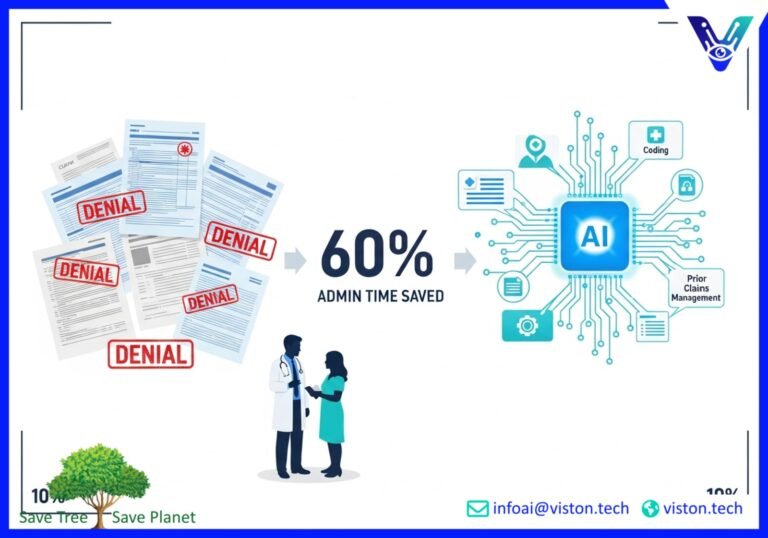
Healthcare RCM Automation: AI Agents Cutting Admin Time by 60%
The healthcare industry is facing a critical challenge. Administrative tasks are consuming valuable time, leading to physician burnout and impacting patient care. The relentless pace of clinical documentation, prior authorizations, and claims management is creating a significant burden. But what if there was a way to reclaim that time? What if intelligent technology could handle the administrative heavy lifting, freeing up clinicians to do what they do best—care for patients?
This is where Healthcare AI and Revenue Cycle Management (RCM) automation come into play. AI-powered agents are not a futuristic concept; they are here today, revolutionizing the healthcare landscape. For enterprise C-suite executives, AI/ML engineers, and IT leaders, understanding the potential of this technology is crucial for driving efficiency, improving financial outcomes, and supporting your most valuable asset: your people.
The Crippling Effect of Administrative Burden in Healthcare
The administrative side of healthcare is complex and often inefficient. Manual processes, disparate systems, and ever-changing regulations create a perfect storm of challenges that directly impact your bottom line and the well-being of your staff. Let’s break down some of the most significant RCM pain points:
- Clinical Documentation Overload: Physicians are spending a staggering amount of their time on clinical documentation. This “pajama time,” spent catching up on notes after hours, is a leading cause of burnout and takes away from patient interaction.
- Prior Authorization Hurdles: The prior authorization process is a notorious bottleneck. It’s a manual, time-consuming task that often leads to delays in patient care and can be a significant source of frustration for both providers and patients.
- Medical Coding Complexities: Accurate medical coding is essential for proper reimbursement. However, the complexity of coding guidelines and the sheer volume of codes make it a highly error-prone process when done manually.
- Claims Management and Denials: A significant percentage of claims are denied on the first submission, often due to simple administrative errors. The process of reworking and resubmitting these claims is a major drain on resources and a direct hit to your revenue cycle.
The consequences of these pain points are far-reaching. They contribute to revenue leakage, increase operational costs, and, most importantly, lead to clinician burnout. In fact, a recent survey revealed that 37% of healthcare leaders cite automation as a key strategy for burnout relief.
For a deeper dive into how administrative tasks impact healthcare, read this insightful article from Health Affairs.
AI Agent Workflows: The Engine of RCM Automation
So, how exactly are AI agents transforming the revenue cycle? These intelligent assistants are designed to handle specific, repetitive tasks with speed and accuracy far beyond human capabilities. Here’s a look at how AI agent workflows are streamlining key RCM processes:
Eligibility and Benefits Verification
Before a patient even steps into the clinic, an AI agent can automatically verify their insurance eligibility and benefits. This process, which used to take several minutes of manual work per patient, can now be done in seconds. This ensures that you have accurate information from the start, reducing the likelihood of claim denials down the line.
Prior Authorization Automation
AI agents can navigate the complexities of prior authorizations with ease. They can automatically gather the necessary clinical documentation, submit the request to the payer, and track its status in real-time. This not only speeds up the process but also reduces the administrative burden on your staff.
Intelligent Medical Coding
Leveraging Natural Language Processing (NLP), AI agents can analyze clinical documentation and suggest the most accurate medical codes. This reduces the risk of human error, ensures compliance with coding guidelines, and maximizes reimbursement. Some advanced AI solutions can even identify and flag potential documentation gaps that could lead to a denial.
Automated Claims Management and Denial Prediction
AI agents can scrub claims for errors before they are submitted, significantly increasing the first-pass acceptance rate. Furthermore, by analyzing historical data, these agents can predict the likelihood of a denial and flag high-risk claims for review. This proactive approach to denial management is a game-changer for the financial health of any healthcare organization.
Ensuring HIPAA Compliance in the Age of AI
The integration of AI into healthcare workflows raises important questions about data security and patient privacy. Adherence to the Health Insurance Portability and Accountability Act (HIPAA) is non-negotiable. Modern Healthcare AI solutions are designed with robust security measures to ensure compliance. This includes:
- Data Encryption: All patient data is encrypted both at rest and in transit, making it unreadable to unauthorized users.
- Access Controls: Strict access controls ensure that only authorized personnel can view or interact with patient information.
- Audit Trails: Every action taken within the system is logged, creating a detailed audit trail for accountability and transparency.
By partnering with a reputable AI vendor that prioritizes security, you can leverage the power of automation while maintaining the highest standards of patient data protection. For more information on navigating HIPAA compliance with new technologies, the U.S. Department of Health & Human Services provides comprehensive resources.
Quantified Outcomes: The Tangible Impact of RCM Automation
The benefits of Healthcare RCM automation are not just theoretical. Healthcare organizations that have embraced this technology are seeing significant, measurable results. Here are some of the key outcomes you can expect:
- Up to a 60% Reduction in Clinical Documentation Time: AI-powered ambient clinical intelligence tools can listen to patient-physician conversations and automatically generate clinical notes. This frees up physicians to focus on their patients, leading to improved patient satisfaction and a dramatic reduction in administrative workload.
- Near-Term Return on Investment (ROI): The efficiency gains from RCM automation translate directly into a stronger bottom line. By reducing claim denials, accelerating the billing cycle, and lowering administrative costs, healthcare organizations can see a positive ROI in a remarkably short period.
- Significant Reduction in Claim Denial Rates: AI’s ability to ensure claim accuracy before submission can lead to a substantial decrease in denial rates. Some providers have seen denial rates drop by as much as 40% after implementing AI-powered RCM solutions.
- Improved Staff Satisfaction and Reduced Burnout: By automating tedious and repetitive tasks, you empower your staff to focus on more strategic and fulfilling work. This leads to higher job satisfaction, lower turnover rates, and a more engaged workforce.
The evidence is clear: Healthcare AI is not just a cost-saving measure; it’s an investment in a more efficient, financially stable, and human-centric healthcare system.
Explore the latest research on AI’s impact on healthcare at NEJM AI for further reading.
The Future is Now: Embrace the Power of AI with Viston AI
The challenges facing the healthcare industry are significant, but so are the opportunities. Healthcare RCM automation, powered by intelligent AI agents, offers a clear path toward a more sustainable and efficient future. By embracing this technology, you can empower your clinicians, optimize your revenue cycle, and ultimately, deliver better care to your patients.
At Viston AI, we are committed to developing cutting-edge Healthcare AI solutions that address the real-world challenges of the healthcare industry. Our team of experts understands the complexities of the revenue cycle and the importance of a human-centered approach to technology.
Are you ready to cut your administrative time, reduce clinician burnout, and unlock the full potential of your revenue cycle? Contact Viston AI today to learn more about our AI-powered solutions and how we can help you achieve your organizational goals.
Frequently Asked Questions (FAQs)
1. What is Healthcare RCM Automation?
Healthcare Revenue Cycle Management (RCM) Automation uses technology, particularly Artificial Intelligence (AI) and machine learning, to streamline and automate the administrative and financial processes involved in a patient’s care journey. This includes tasks like eligibility verification, prior authorization, medical coding, claims submission, and denial management.
2. How do AI agents work in the revenue cycle?
AI agents are software programs designed to perform specific tasks autonomously. In the revenue cycle, they can be programmed to interact with payer portals, extract information from clinical documents, and process claims. They use technologies like Natural Language Processing (NLP) to understand and interpret human language, and machine learning to learn from data and improve their performance over time.
3. Is AI in healthcare RCM secure and HIPAA compliant?
Reputable AI vendors in the healthcare space prioritize data security and HIPAA compliance. They employ robust security measures such as data encryption, strict access controls, and comprehensive audit trails to protect patient information. When choosing an AI solution, it is crucial to partner with a vendor that can demonstrate a strong commitment to security and compliance.
4. What kind of ROI can be expected from RCM automation?
The return on investment (ROI) from RCM automation can be significant and is typically seen in a relatively short timeframe. The ROI is driven by several factors, including reduced labor costs, a decrease in claim denials, faster payment cycles, and improved overall operational efficiency. Many healthcare organizations report a positive ROI within the first year of implementation.
5. How does RCM automation help with clinician burnout?
A major contributor to clinician burnout is the overwhelming administrative burden, particularly clinical documentation. AI-powered tools like ambient clinical intelligence can automate the creation of clinical notes, drastically reducing the time physicians spend on this task. By freeing clinicians from these administrative burdens, RCM automation allows them to focus more on patient care, leading to increased job satisfaction and reduced burnout.
6. What is the first step to implementing RCM automation?
The first step is to identify the most significant pain points in your current revenue cycle. Conduct a thorough analysis of your workflows to determine where the biggest bottlenecks and inefficiencies lie. Then, research and partner with an experienced AI vendor that offers solutions tailored to your specific needs. A phased approach, starting with a pilot project in a specific area, can be an effective way to begin your RCM automation journey.
7. How does AI-powered coding improve accuracy?
AI-powered coding tools use Natural Language Processing (NLP) to analyze unstructured clinical text from physician notes and other documents. The AI can identify key clinical concepts and map them to the appropriate medical codes. This automated process reduces the potential for human error, ensures greater consistency, and helps healthcare organizations stay compliant with complex coding regulations, leading to more accurate billing and fewer denials.
8. Can AI automation help with patient collections?
Yes, AI can significantly improve the patient collections process. AI-powered tools can analyze patient data to predict their likelihood to pay and segment them for targeted outreach. Automation can also be used to send personalized payment reminders via text or email and offer convenient self-service payment options. This more proactive and patient-friendly approach can lead to a significant increase in patient collections.
