
Viston delivers enterprise-grade Quality Control Automation solutions that combine computer vision, machine learning, and edge AI to revolutionize manufacturing inspection processes. With 15+ years of expertise serving 2,860+ clients across the USA, UK, Germany, France, Nordics, and Australia, we help manufacturers achieve zero-defect production at scale. Our visual inspection systems detect anomalies in milliseconds, reduce manual inspection costs by up to 85%, and ensure compliance with industry standards. From automotive assembly lines to pharmaceutical packaging, Viston’s Quality Control Automation platform integrates seamlessly with existing production environments to deliver real-time defect detection, predictive maintenance insights, and comprehensive traceability.
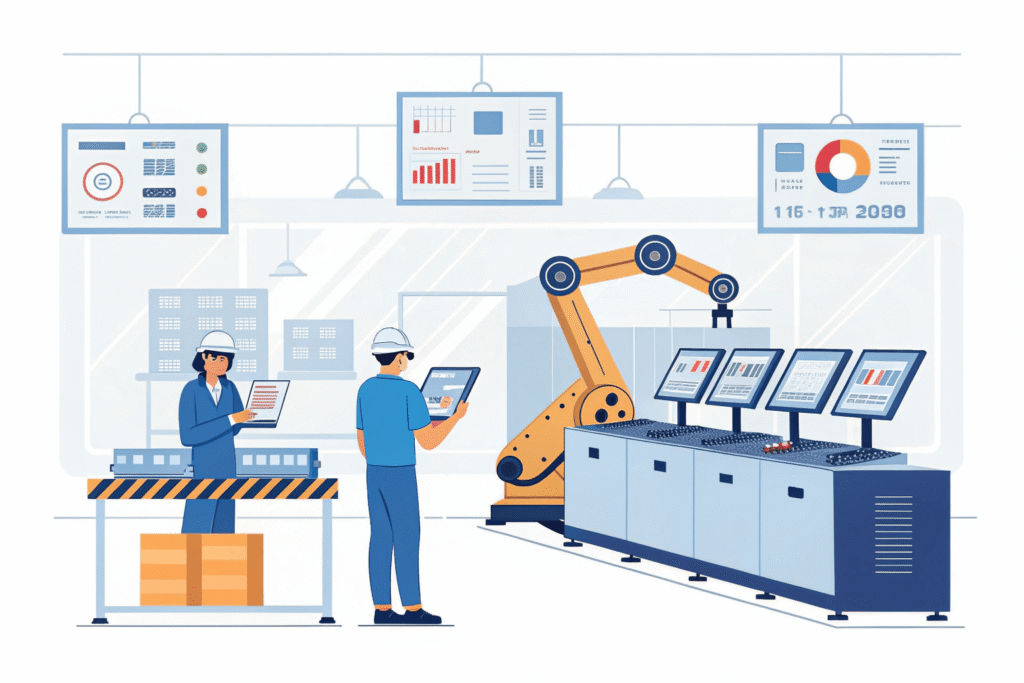









































































































































































Quality Control Automation represents the cornerstone of competitive manufacturing in 2025. Manual visual inspection creates bottlenecks, introduces human error, and fails to scale with production demands. Manufacturers across USA, Europe, and Australia face mounting pressure to deliver perfect products while reducing costs and accelerating time-to-market. Traditional quality control methods can’t keep pace with high-speed production lines, complex product variations, or stringent regulatory requirements. Viston’s AI-powered visual inspection systems transform quality assurance from a cost center into a strategic advantage, enabling manufacturers to detect microscopic defects, prevent recalls, optimize production parameters, and build customer trust through consistent product excellence.
Computer vision algorithms inspect 100% of products at production speed, identifying surface defects, dimensional variations, assembly errors, and contamination with 99.7% accuracy across automotive, electronics, food & beverage, and pharmaceutical manufacturing environments throughout USA, UK, Germany, and beyond
Machine learning models analyze inspection data patterns to forecast equipment degradation, predict failure points before breakdowns occur, reduce unplanned downtime by 68%, and optimize maintenance schedules based on actual production conditions rather than fixed intervals, protecting your operational continuity
Seamlessly connects with MES, ERP, SCADA, and PLM systems through standardized APIs, enabling bidirectional data flow, automated production adjustments, comprehensive traceability from raw materials to finished goods, and unified quality dashboards that consolidate insights across multiple facilities in USA, Europe, and Australia
Automatically generates audit trails, defect reports, statistical process control charts, and regulatory documentation that meet ISO 9001, FDA 21 CFR Part 11, automotive IATF 16949, and industry-specific standards, reducing compliance preparation time by 82% while ensuring inspection data integrity and traceability
Viston’s Quality Control Automation solution provides end-to-end defect detection, classification, and production optimization capabilities designed specifically for enterprise manufacturing environments requiring high-speed, high-precision inspection at scale.

Deploy RGB, infrared, X-ray, and 3D laser scanning technologies in unified inspection workflows. Our platform automatically selects optimal imaging modalities based on product characteristics, defect types, and production speed requirements to maximize detection accuracy across diverse materials and manufacturing processes.

Execute computer vision inference directly on production floor hardware, achieving sub-50ms inspection latency without cloud dependency. Edge deployment ensures data sovereignty, reduces network bandwidth requirements by 94%, and maintains inspection continuity during connectivity disruptions critical for USA and European manufacturers.

Quality Control Automation systems continuously improve through production feedback loops. Machine learning models automatically retrain on newly detected defect patterns, adapt to product variations, and refine classification thresholds based on quality engineer validation, ensuring inspection accuracy improves over your product lifecycle.

Aggregate quality metrics across manufacturing facilities in USA, UK, Germany, France, and Australia through centralized analytics dashboards. Identify systemic quality issues, benchmark facility performance, share defect detection models between sites, and implement corrective actions globally while maintaining local production autonomy.
Inspect vehicle body paint for orange peel, runs, dirt nibs, and color variations at 60 vehicles per hour using multi-angle illumination and high-resolution imaging that detects defects invisible to human inspectors before final assembly.
Verify blister pack integrity, label accuracy, expiration date printing, and seal quality at 800 units per minute with 99.9% accuracy, ensuring FDA and EMA compliance while preventing costly pharmaceutical product recalls across European markets.
Automate component placement verification, solder joint quality assessment, and polarity checking for printed circuit boards at 15,000 inspections per hour, reducing field failures by 89% for technology manufacturers in USA and Australia.
Identify foreign materials, packaging defects, fill level variations, and label misalignment in food production lines at 400 items per minute using hyperspectral imaging and AI classification that exceeds HACCP requirements across UK and Nordic markets.
Detect weaving defects, color inconsistencies, pattern misalignments, and fabric damage across full-width inspection at 100 meters per minute, reducing material waste by 34% for textile manufacturers in Germany, France, and Italy.
Inspect surgical instruments, implantable devices, and diagnostic equipment for dimensional accuracy, surface finish, and assembly completeness with full traceability documentation meeting ISO 13485 requirements for healthcare manufacturers throughout USA and Europe.
Identify scratches, dents, corrosion, and weld defects on metal components using 3D laser profiling and surface texture analysis at production speed, preventing rework and ensuring structural integrity for aerospace and industrial applications.
Detect flash, short shots, sink marks, and color variations in injection-molded parts at cycle times under 10 seconds, providing real-time process parameter feedback to optimize mold conditions and reduce scrap rates by 56%.
Verify bottle and jar manufacturing for cracks, inclusions, dimensional variations, and finish defects at 600 containers per minute using transmitted light and sidewall scanning techniques that ensure product integrity for beverage and packaging industries across Australia.
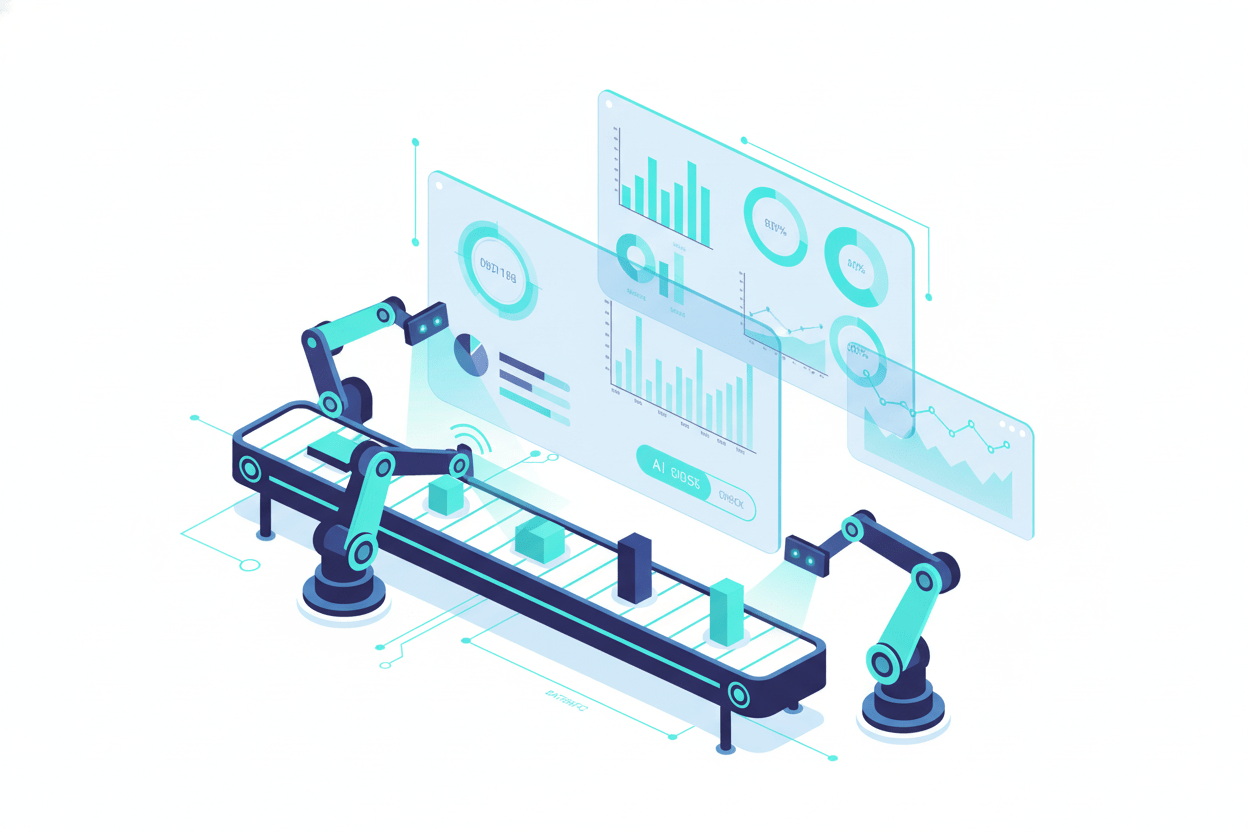
Quality Control Automation leverages deep learning neural networks specifically trained on manufacturing defect datasets to achieve superhuman inspection accuracy. Unlike traditional machine vision systems that rely on rigid rule-based algorithms, Viston’s platform uses convolutional neural networks that understand defect context, differentiate between cosmetic and functional issues, and adapt to product variations without reprogramming. Our computer vision models process multi-resolution imagery, 3D point clouds, and thermal signatures to detect surface defects, dimensional deviations, assembly errors, and contamination across materials ranging from metals and plastics to fabrics and pharmaceuticals. Manufacturers in USA, Germany, UK, and Australia deploy our Quality Control Automation solutions to inspect everything from automotive body panels and semiconductor wafers to food packaging and medical devices, achieving consistent quality standards that were previously impossible with manual inspection teams.
Global manufacturers require Quality Control Automation solutions that scale across hundreds of production lines while maintaining consistent inspection standards. Viston’s platform architecture supports centralized model management, enabling quality teams to train computer vision models at corporate headquarters and deploy them simultaneously to facilities in USA, UK, Germany, France, Nordics, and Australia. Our multi-tenant infrastructure provides facility-level autonomy for production parameters while aggregating quality metrics into unified dashboards that reveal systemic issues, benchmark facility performance, and track improvement initiatives across the enterprise. Quality engineers leverage our collaborative tools to share defect classification expertise, validate model predictions, and continuously refine inspection criteria based on customer feedback and field failure data, creating a virtuous cycle of quality improvement.
Background: A leading automotive components manufacturer operating 12 facilities across USA struggled with inconsistent paint quality inspection, resulting in 8% rework rates and customer complaints from major OEM clients. Manual inspection teams couldn’t maintain consistent defect classification standards across shifts and facilities, creating quality variations that damaged customer relationships.
Challenge: The manufacturer needed to inspect 240,000 components daily across facilities in Michigan, Ohio, and Tennessee with uniform quality standards, detect microscopic paint defects at production speed, and reduce false rejection rates that were causing 15% good-product scrap. Existing machine vision systems couldn’t handle product variations or adapt to new paint finishes without extensive reprogramming.
Solution: Viston deployed Quality Control Automation systems across all 12 facilities, using multi-angle illumination and deep learning computer vision trained on 2 million defect images. The platform integrated with existing production lines, automatically adjusted inspection parameters for different component types, and provided real-time feedback to paint application systems. Centralized model management ensured consistent defect classification across all USA facilities.
Results: Rework rates decreased from 8% to 0.7% within six months, saving $4.8M annually in labor and materials. Inspection throughput increased 340%, eliminating production bottlenecks. Customer quality complaints dropped 94%, resulting in preferred supplier status with three major OEM clients. The manufacturer recouped full Quality Control Automation investment in 14 months through scrap reduction and productivity gains.
Testimonial: “Viston’s Quality Control Automation transformed our paint inspection from subjective judgment calls to objective, data-driven decisions. We finally have consistent quality standards across our entire USA manufacturing network, and our OEM customers have noticed the difference in product consistency.”
Background: A pharmaceutical manufacturer with facilities in Germany, France, and UK faced mounting regulatory pressure to verify 100% of packaging while maintaining production speeds of 600 blister packs per minute. Manual sampling inspection was insufficient for FDA and EMA requirements, and traditional vision systems generated too many false positives, causing production disruptions.
Challenge: The company needed Quality Control Automation capable of verifying label accuracy, expiration date printing, blister seal integrity, and product count across six production lines while meeting 21 CFR Part 11 electronic records requirements. The solution required multilingual label verification for products distributed across 28 European countries and complete audit trail documentation.
Solution: Viston implemented Quality Control Automation systems with optical character recognition, seal integrity verification, and product counting algorithms achieving 99.97% accuracy. The platform automatically validated inspection data against production orders, flagged discrepancies for quality review, and generated electronic batch records with digital signatures. Edge processing ensured sub-40ms inspection latency compatible with high-speed packaging equipment.
Results: The manufacturer achieved 100% inspection coverage while maintaining production throughput, preventing an estimated 180,000 potentially mislabeled packages from reaching distribution. Regulatory audit preparation time decreased 79%, and the company passed FDA and EMA inspections with zero quality system findings. Annual savings from prevented recalls and reduced manual inspection labor exceeded $2.9M across European facilities.
Testimonial: “Viston’s Quality Control Automation gave us complete confidence in our packaging quality while satisfying the most rigorous regulatory requirements. The system’s audit trail capabilities transformed our compliance documentation from a burden into a competitive advantage.”
Background: An electronics manufacturer in Australia experienced escalating field failure rates traced to PCB assembly defects that slipped through manual inspection. With 40,000 boards produced monthly across two facilities in Sydney and Melbourne, the company couldn’t inspect every solder joint, component placement, and polarity without creating production bottlenecks.
Challenge: The manufacturer needed automated inspection capable of verifying 2,500+ components per board, detecting solder defects as small as 0.1mm, and identifying component polarity errors before boards entered functional testing. The solution required integration with existing SMT equipment and real-time feedback to placement machines to prevent recurring defects.
Solution: Viston deployed Quality Control Automation with high-resolution X-ray inspection, automated optical inspection, and 3D solder paste measurement. Computer vision algorithms trained on 500,000+ defect images identified solder bridging, insufficient solder, component tombstoning, and placement errors with 99.8% accuracy. The platform provided immediate feedback to SMT equipment, automatically adjusting placement parameters when defect trends emerged.
Results: Field failure rates decreased from 2.3% to 0.2%, dramatically improving product reliability and customer satisfaction across Australia. First-pass yield increased from 87% to 98.4%, reducing rework labor by 68%. The manufacturer avoided an estimated $1.4M in warranty costs and reputation damage. Inspection throughput doubled, eliminating PCB inspection as a production bottleneck.
Testimonial: “Viston’s Quality Control Automation caught defects we didn’t even know existed. The X-ray inspection combined with AI classification transformed our PCB quality from industry-average to best-in-class, and our customers have noticed.”
Background: A food processing company operating facilities in Denmark, Sweden, and Norway needed to enhance contamination detection capabilities to meet increasingly stringent food safety regulations. Manual inspection and random sampling were insufficient for detecting foreign materials, and consumer complaints about packaging defects were damaging brand reputation.
Challenge: The company required inspection systems capable of detecting metal fragments, plastic pieces, glass shards, and organic contaminants in products moving at 400 units per minute while simultaneously verifying package integrity, label accuracy, and fill levels. The solution needed to operate in harsh food processing environments with temperature variations, moisture, and washdown requirements across Nordic facilities.
Solution: Viston implemented Quality Control Automation combining X-ray imaging for foreign material detection, hyperspectral cameras for organic contamination identification, and standard vision for package verification. The platform’s IP69K-rated hardware withstood food processing environments, while edge AI processing delivered real-time contamination alerts. Centralized quality dashboards aggregated safety metrics across Denmark, Sweden, and Norway facilities.
Results: Foreign material detection rates increased from 78% to 99.6%, preventing six potential product recalls. Package defect identification improved 94%, reducing customer complaints by 87%. The company achieved SQF Level 3 certification at all Nordic facilities, becoming a preferred supplier for major retail chains. Annual savings from prevented recalls and reduced product waste exceeded $3.2M.
Testimonial: “Viston’s Quality Control Automation elevated our food safety standards beyond regulatory requirements. We now have complete confidence in our product quality, and our retail partners recognize us as the most reliable supplier in Nordic markets.”
Background: A textile manufacturer in Germany faced substantial material waste from undetected fabric defects that became visible only after cutting and sewing operations. Manual fabric inspection at 20 meters per minute created production bottlenecks, and inspectors missed subtle defects that caused finished garment rejections by fashion brand customers.
Challenge: The company needed Quality Control Automation capable of detecting weaving defects, color variations, pattern misalignments, and contamination across full-width fabric inspection at 100 meters per minute. The solution required differentiation between cosmetic defects acceptable for lower-grade products and critical defects requiring fabric rejection while maintaining throughput for multiple fabric types and patterns.
Solution: Viston deployed Quality Control Automation with full-width line-scan cameras, multi-spectral illumination, and deep learning models trained on textile-specific defect patterns. The platform automatically classified defects by severity, marked defect locations for subsequent cutting operations, and generated fabric quality reports for customer documentation. Adaptive learning continuously improved defect detection as new fabric designs entered production.
Results: Material waste decreased from 12.4% to 7.1%, generating annual savings of $1.9M through improved fabric utilization. Inspection throughput increased 400%, eliminating fabric inspection bottlenecks. Customer rejections of finished garments dropped 76%, strengthening relationships with premium fashion brands across Germany and Europe. The manufacturer expanded into higher-value textile markets based on demonstrated quality capabilities.
Testimonial: “Viston’s Quality Control Automation transformed fabric inspection from a production constraint into a competitive advantage. We now detect defects our competitors miss, allowing us to command premium pricing for verified quality.”
Background: A UK medical device manufacturer developing surgical instruments needed to implement rigorous quality inspection processes to achieve ISO 13485 certification required for European market access. Manual dimensional inspection and surface finish verification were too slow and subjective for regulatory requirements, delaying certification and market entry.
Challenge: The company required Quality Control Automation capable of verifying dimensional tolerances within 0.01mm, detecting surface defects including scratches and corrosion, and maintaining complete inspection traceability linking every component to specific production batches and sterilization cycles. The solution needed to generate documentation acceptable to notified bodies reviewing ISO 13485 certification applications.
Solution: Viston implemented Quality Control Automation combining 3D laser scanning for dimensional verification, high-resolution surface imaging for defect detection, and automated documentation generation. The platform created inspection records with digital signatures, linked measurements to calibrated equipment certificates, and generated statistical process control charts demonstrating measurement system capability. Integration with manufacturing execution systems provided end-to-end traceability.
Results: The company achieved ISO 13485 certification in 11 months versus an anticipated 18-month timeline, accelerating market entry. Inspection consistency improved 97%, eliminating subjective quality decisions that previously created traceability gaps. First-pass yield increased from 81% to 96%, reducing rework costs by $420K annually. The manufacturer secured contracts with three major UK hospital networks based on demonstrated quality systems.
Testimonial: “Viston’s Quality Control Automation provided the objective inspection data and documentation our notified body required for ISO 13485 certification. The system transformed quality assurance from a compliance burden into a business enabler.”
Background: An aerospace components supplier in France manufactured critical structural parts requiring 100% inspection for surface defects, dimensional accuracy, and material integrity. Manual inspection consumed 18% of production time, created delivery delays, and couldn’t reliably detect microscopic cracks that could cause catastrophic in-service failures.
Challenge: The supplier needed Quality Control Automation meeting aerospace industry standards including AS9100, capable of detecting surface defects under 0.5mm, verifying complex 3D geometries within 0.02mm tolerances, and maintaining inspection records for components with 30-year service lives. The solution required non-destructive testing methods compatible with titanium, aluminum, and composite materials.
Solution: Viston deployed Quality Control Automation combining eddy current testing for subsurface defects, 3D optical scanning for dimensional verification, and ultrasonic testing for internal flaw detection. Deep learning algorithms correlated inspection data across testing modalities, identifying defect patterns human inspectors might miss. The platform generated comprehensive inspection reports with lifetime traceability required by aerospace quality standards.
Results: Defect detection accuracy increased from 94% to 99.9%, preventing potential in-service failures. Inspection throughput improved 280%, reducing production cycle times from 14 to 9 days. The supplier achieved preferred status with Airbus and Boeing, securing $18M in new contracts based on demonstrated quality capabilities. Annual inspection labor costs decreased $680K while improving inspection reliability across French aerospace manufacturing operations.
Testimonial: “Viston’s Quality Control Automation gave us inspection capabilities that exceed aerospace industry requirements. We now detect defects invisible to traditional methods, ensuring our components meet the highest safety standards while accelerating delivery to aircraft manufacturers.”
Background: A consumer packaged goods company operating 45 facilities across USA, UK, Germany, Australia, and other global markets struggled with inconsistent quality inspection standards. Each facility used different inspection methods, creating quality variations that damaged brand reputation and complicated regulatory compliance across jurisdictions.
Challenge: The company needed Quality Control Automation that could standardize inspection across diverse product lines including beverages, personal care items, and household cleaners while accommodating facility-specific production equipment and regulatory requirements. The solution required centralized quality management with local production autonomy and support for 12 languages used by quality teams globally.
Solution: Viston implemented Quality Control Automation across all 45 facilities with centralized computer vision model management and localized production integration. The platform provided unified defect classification standards while accommodating product variations, automatically generated region-specific compliance documentation, and consolidated quality metrics into executive dashboards showing global performance trends. Multilingual interfaces supported diverse quality teams.
Results: Quality variation across facilities decreased 83%, strengthening brand consistency. Consumer complaints dropped 71% globally, improving Net Promoter Scores by 18 points. The company avoided an estimated $7.4M in potential recall costs through earlier defect detection. Regulatory compliance preparation time decreased 69% through automated documentation. The enterprise Quality Control Automation deployment delivered $12.8M annual value through scrap reduction, productivity gains, and brand protection.
Testimonial: “Viston’s Quality Control Automation unified our global quality standards while respecting local production needs. We finally have consistent brand quality whether products are manufactured in USA, Europe, or Australia, and our customers have responded positively to the improved product consistency.”
Transform your manufacturing quality assurance with AI-powered visual inspection that delivers 99.7% defect detection accuracy at production speed. Viston brings 15+ years of proven expertise serving 2,860+ enterprise clients across USA, UK, Germany, France, Nordics, and Australia. Our Quality Control Automation platform integrates seamlessly with your existing production systems, providing immediate ROI through reduced scrap, eliminated recalls, and accelerated throughput. Join leading manufacturers who trust Viston to protect their brand reputation, satisfy regulatory requirements, and achieve competitive manufacturing excellence.
Deploy Quality Control Automation across single production lines or entire global manufacturing networks without performance degradation. Viston’s architecture scales from pilot implementations inspecting 50 units per hour to enterprise deployments processing 10M+ inspections daily across USA, UK, Germany, France, and Australia facilities, maintaining consistent sub-50ms latency through edge AI optimization and distributed computing.
Satisfy regulatory requirements including ISO 9001, IATF 16949, FDA 21 CFR Part 11, ISO 13485, and AS9100 through automated audit trails, electronic signatures, and documentation generation. Quality Control Automation systems maintain inspection traceability linking every product to specific production batches, equipment calibrations, AI model versions, and operator approvals required for pharmaceutical, medical device, aerospace, and automotive compliance across global markets.
Connect Quality Control Automation seamlessly with MES, ERP, SCADA, PLM, and robotic systems through standardized OPC UA, MQTT, REST APIs, and industrial protocols. Bidirectional data flow enables automated reject handling, real-time process parameter adjustments, predictive maintenance alerts, and comprehensive traceability from raw materials through finished goods distribution, creating closed-loop quality management that continuously optimizes manufacturing operations.
Transform inspection data into actionable insights through machine learning analytics that identify quality trends, predict equipment degradation, optimize process parameters, and prevent defects before they occur. Quality Control Automation platforms aggregate data across production runs, facilities, and product lines to reveal systemic issues, benchmark performance, and guide continuous improvement initiatives that reduce total cost of quality by an average of 47%.
Deploy RGB imaging, infrared thermography, X-ray inspection, 3D laser profiling, hyperspectral analysis, and ultrasonic testing within unified Quality Control Automation workflows. Viston’s platform automatically selects optimal inspection modalities based on product characteristics, defect types, and production requirements, achieving detection accuracy impossible with single-sensor approaches across diverse materials including metals, plastics, composites, textiles, pharmaceuticals, and food products.
Quality Control Automation continuously improves through production feedback, automatically retraining computer vision models on newly detected defect patterns, validated quality decisions, and customer feedback. Adaptive learning eliminates the rigid rule-based limitations of traditional machine vision, enabling systems to handle product variations, new defect types, and changing quality standards without expensive reprogramming that disrupts production schedules.
Connect inspection results directly to production equipment, automatically adjusting process parameters when quality trends emerge. Quality Control Automation systems provide millisecond feedback to robotic systems, coating applicators, assembly machines, and packaging equipment, creating self-correcting production lines that maintain quality standards without human intervention, reducing defect rates by an average of 68% while increasing throughput.
Reduce quality assurance costs through inspection automation that eliminates 60-85% of manual inspection labor while improving accuracy. Quality Control Automation prevents expensive recalls, reduces scrap and rework, minimizes warranty claims, and accelerates time-to-market through faster inspection throughput. Manufacturers across USA, Europe, and Australia typically achieve full ROI within 12-18 months through combined labor savings, yield improvement, and defect prevention.
Invest in Quality Control Automation infrastructure that evolves with manufacturing requirements through continuous software updates, model improvements, and capability enhancements. Viston’s cloud-connected edge architecture enables remote model deployment, performance monitoring, and feature additions without production disruptions, protecting your quality inspection investment as product portfolios, regulatory requirements, and production technologies advance over multi-year equipment lifecycles.
Partnering with Viston AI means tapping into a team of seasoned AI experts who accelerate your transformation and deliver custom solutions aligned with your strategic goals.
Together, we drive measurable business impact, ensure scalable, future-proof implementations, and mitigate risks to keep you ahead of the competition.

Unlock 35-42% efficiency gains with specialized domain agents. Our 2025 guide details how to build and deploy industry-specific AI for healthcare, finance, retail, and manufacturing to transform your core business operations. Read More
#AIAgents #DomainSpecificAI #HealthcareAI #Fintech #RetailTech #ManufacturingAI #BusinessAutomation

The future of software development is here. Agentic coding pipelines use autonomous AI to plan, code, test, and deploy software, revolutionizing your SDLC and transforming the developer experience (DevEx).
Read More
#AgenticCoding #DevEx #SDLCAutomation #AIinDev #FutureOfCode #CodeGeneration #AITesting #SecureCoding #CI/CD
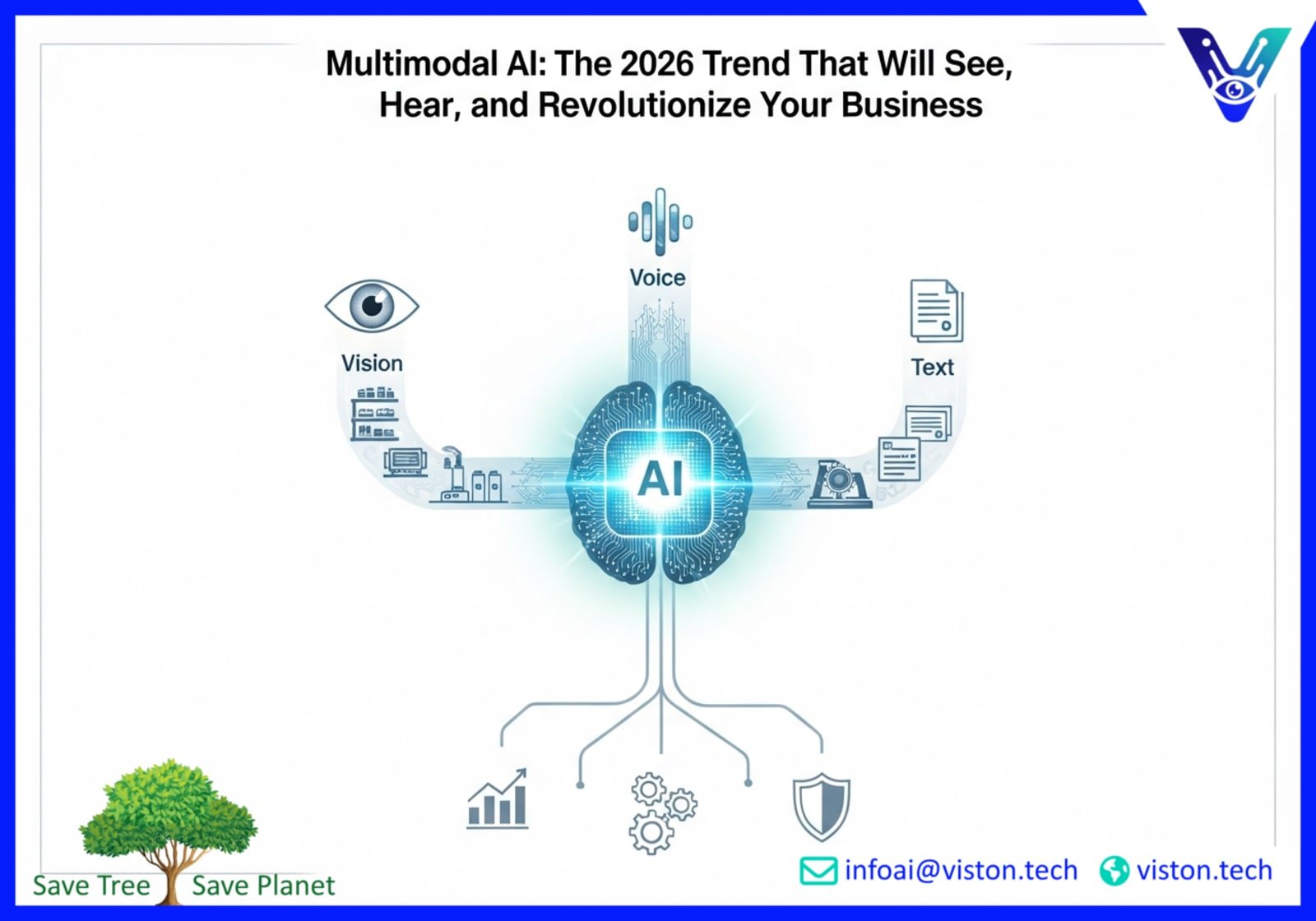
Unlock the future of business with multimodal agents. This 2026 AI trend merges text, voice, and vision to automate complex workflows, boosting efficiency, accuracy, and decision-making for a powerful competitive advantage. Read More
#multimodalagents #voicevision #AIforbusiness #futureofAI #enterprisetech #digitaltransformation #VistonAI #AIin2026 #complexworkflows #AIsolutions
Revolutionize your IT service desk. Learn how AI agents are evolving from intelligent ticket triage to full, autonomous case resolution, dramatically improving efficiency and user satisfaction. Read More #AIAgents #ITSM #ServiceDesk #Automation
Charged based on actual usage, such as per request, per GB of bandwidth, or per page scraped, with no fixed commitment.
A one-time fee is charged for a specific project, regardless of volume or duration, based on scope and complexity.
Billed based on the time spent developing, running, or maintaining the scraper, often used for custom or consulting-heavy projects.
pay a recurring fee (monthly or annually) for access to scraping services, often tiered based on usage limits like the number of requests, pages scraped, or data points extracted.
Begin with comprehensive stakeholder engagement to understand business objectives, success metrics, and requirements. Conduct thorough analysis of existing workflows, data sources, and technical constraints. Establish clear project scope, timeline, and success criteria while ensuring alignment between AI strategy and business goals.
Collect, clean, and prepare high-quality data from all relevant sources. Perform exploratory data analysis (EDA) to uncover patterns and insights. Establish robust data pipelines, ensure data quality standards, and create the foundation for AI model training. This step prevents the "garbage in, garbage out" scenario.
Select appropriate AI models based on problem requirements and data characteristics. Develop, train, and fine-tune models using iterative approaches. Focus on achieving optimal balance between accuracy, interpretability, and performance. Implement version control and documentation for model assets.
Rigorously test models against unseen data and validate performance metrics. Conduct scenario testing, edge-case analysis, and A/B testing. Integrate the AI solution into existing IT infrastructure through APIs, containerization, or cloud deployment. Ensure security, scalability, and compliance requirements are met.
Deploy the validated AI solution into production environment with proper monitoring systems. Provide comprehensive training to end-users and IT staff. Implement authentication, security protocols, and compliance measures. Focus on smooth integration with business workflows and user adoption.
Establish ongoing monitoring systems to track model performance, business impact, and user feedback. Implement continuous learning loops for model improvement. Regular assessment of KPIs, retraining schedules, and adaptation to changing business needs. Ensure long-term value delivery and system reliability.
Quality Control Automation leverages deep learning computer vision that understands defect context and adapts to product variations, unlike traditional systems using rigid rule-based algorithms requiring extensive reprogramming for each product change. Modern Quality Control Automation learns from production feedback, continuously improving detection accuracy, while handling complex inspection scenarios impossible with conventional threshold-based vision systems. The platform processes multi-modal sensor data including RGB, infrared, X-ray, and 3D imaging through unified AI models that correlate findings across inspection modalities, achieving 99.7% accuracy compared to 85-92% typical of traditional systems across manufacturing applications in USA, Europe, and Australia.
Viston’s Quality Control Automation processes 2.4M+ visual inspections daily with sub-50ms latency through edge AI architecture that executes computer vision inference directly on production floor hardware. The platform inspects products at full production speed ranging from 50 units per hour for complex aerospace components to 800 units per minute for pharmaceutical packaging, eliminating inspection bottlenecks while maintaining 99.7% detection accuracy. Edge processing ensures throughput consistency regardless of network conditions, critical for manufacturers in Germany, UK, and USA operating continuous production requiring 24/7 inspection reliability without cloud dependency latency.
Quality Control Automation deployment begins with Viston’s pre-trained models covering common manufacturing defects across automotive, electronics, pharmaceutical, food, and industrial applications, dramatically reducing training data requirements. Manufacturers typically provide 500-2,000 product images representing normal variation and 200-500 examples of defect types for model customization. The platform uses transfer learning to adapt pre-trained models to specific products within 2-3 weeks, then continuously improves through production feedback. Viston’s data scientists support model development, defect classification definition, and validation testing, ensuring 99%+ accuracy before production deployment across USA, European, and Australian manufacturing facilities.
The platform automatically generates audit trails, statistical process control documentation, and regulatory reports meeting ISO 9001, IATF 16949, FDA 21 CFR Part 11, ISO 13485, AS9100, and industry-specific standards. Every inspection decision traces to specific AI model versions, training datasets, calibration records, and operator approvals, ensuring manufacturers demonstrate inspection validity during regulatory audits. Quality Control Automation supports configurable approval workflows, electronic signatures, change management protocols, and data integrity controls required for validated systems in pharmaceutical and medical device manufacturing across USA, UK, Germany, and other regulated markets, reducing compliance preparation time by 82%.
Quality Control Automation achieves 99.7% average defect detection accuracy across manufacturing sectors, significantly exceeding 85-92% typical of manual inspection and conventional machine vision. Automotive paint inspection detects defects under 0.2mm, pharmaceutical packaging verification achieves 99.9% accuracy at 800 units per minute, electronics PCB inspection identifies solder defects to 0.1mm, and food safety systems detect foreign materials with 99.6% accuracy. Accuracy varies by defect type, product complexity, and image quality, but consistently exceeds manual inspection while processing 100% of production versus sampling-based approaches used by manufacturers in USA, Europe, and Australia.
Viston implements defense-in-depth cybersecurity including encrypted data transmission, role-based access controls, network segmentation, intrusion detection, and compliance with IEC 62443 industrial cybersecurity standards. Edge AI architecture minimizes attack surface by processing inspection data locally, reducing cloud connectivity requirements. The platform supports air-gapped deployments for classified manufacturing in aerospace and defense sectors, while maintaining remote monitoring capabilities through secure VPN tunnels. Regular security audits, penetration testing, and vulnerability assessments ensure protection against evolving threats for manufacturers in USA, Europe, and Australia operating in regulated industries requiring data sovereignty and production system integrity.
The platform provides centralized model management enabling quality teams to train computer vision models once and deploy simultaneously to facilities across USA, UK, Germany, France, Nordics, and Australia. Multi-tenant architecture delivers facility-level autonomy for production parameters while aggregating quality metrics into unified dashboards revealing systemic issues and benchmarking performance. Quality engineers share defect classification expertise, validate predictions, and refine criteria based on customer feedback through collaborative tools, creating consistent inspection standards globally. Remote monitoring capabilities enable corporate quality teams to support local facilities, troubleshoot inspection issues, and deploy model updates without on-site visits, reducing total cost of ownership for enterprise manufacturers.
Manufacturers typically achieve 12-18 month ROI through combined inspection labor reduction (60-85%), scrap and rework savings (35-70%), prevented recalls, reduced warranty claims, and productivity gains from faster throughput. A typical deployment saving $2.4M annually includes $1.1M labor cost reduction, $800K scrap prevention, $400K productivity improvement, and $100K recall avoidance. Quality Control Automation investment ranges from $150K for single production line implementations to $5M+ for enterprise deployments across 40+ facilities in USA, Europe, and Australia. Ongoing subscription costs cover software updates, model improvements, technical support, and cloud services, ensuring continuous value delivery throughout 7-10 year equipment lifecycles.
Organizations maintain human oversight through content strategists defining AI generation parameters, subject matter experts reviewing technical accuracy, brand managers validating voice consistency, compliance officers verifying regulatory adherence, and content editors refining strategic messaging. Review workflows vary by content type with routine communications requiring minimal oversight while strategic thought leadership, regulatory filings, and customer-facing materials receive comprehensive review. Most enterprises implement tiered review processes where AI confidence scores and content sensitivity determine required approval levels balancing quality assurance with production efficiency.
Enterprise platforms implement data security controls including encryption in transit and at rest, role-based access controls, data residency compliance for European GDPR requirements, audit logging, and confidentiality classification systems. Sensitive content generation occurs in isolated environments preventing training data contamination or inadvertent disclosure. Healthcare implementations maintain HIPAA-compliant protected health information handling. Financial services platforms ensure material non-public information security. Organizations can deploy on-premises or private cloud instances for maximum data control over AI content generation infrastructure and training data.
