
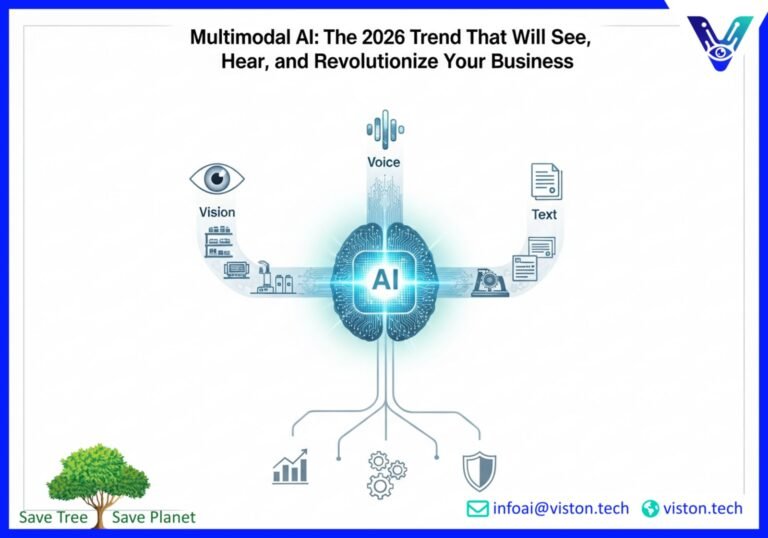
Multimodal Agents: The 2026 AI Trend Combining Text, Voice, and Vision in a Single Workflow
Imagine an AI that doesn’t just understand text but also sees what you see and hears what you say. This isn’t science fiction anymore. Welcome to the era of multimodal agents, the next frontier in artificial intelligence. By 2026, these sophisticated AI systems are set to revolutionize how businesses operate by seamlessly blending text, voice, and vision into a single, powerful workflow. This technology is moving beyond simple chatbots and voice assistants to tackle complex, real-world tasks that require a much deeper understanding of our environment.
For too long, our interactions with AI have been fragmented. We type commands to a chatbot, speak to a voice assistant, and use separate software for image analysis. Multimodal agents break down these silos. They can read a document, listen to your verbal instructions about it, and analyze a related image all at once. This capability unlocks unprecedented efficiency and enables automation of tasks that were previously too complex for AI. For businesses, this means smarter operations, faster decision-making, and a significant competitive edge.
What are Multimodal Agents?
At its core, a multimodal agent is an AI system that can process and understand information from multiple sources, or “modalities.” These modalities include:
- Text: This is the traditional way we interact with computers. It includes everything from emails and reports to instant messages and knowledge base articles. Multimodal agents can read, interpret, and generate text with a high degree of accuracy.
- Voice: With the rise of voice assistants, interacting with technology through speech has become commonplace. Multimodal agents can understand spoken language, identify who is speaking, and even interpret the emotional tone of a voice.
- Vision: This is where things get really interesting. Computer vision allows AI to “see” and interpret the world through images and videos. This could be anything from a photo of a store shelf to a live video feed from a drone.
The true power of multimodal agents lies in their ability to fuse these different inputs together to gain a comprehensive understanding of a situation. Think of it like a human. We naturally combine what we see, hear, and read to make sense of the world. Multimodal AI aims to replicate this ability on a massive scale, leading to more intuitive and powerful applications.
The Rise of Voice+Vision in Complex Workflows
The combination of voice and vision (voice+vision) is a particularly potent one for enterprise applications. It allows for hands-free operation and real-time data capture in dynamic environments. Imagine a field technician who can narrate their observations while a drone-mounted camera provides a visual feed. The multimodal agent can then process both the audio and video to create a detailed inspection report automatically. This synergy between seeing and hearing is what makes these agents so transformative for complex workflows.
Real-World Applications: Demo Flows in Action
The theoretical benefits of multimodal agents are impressive, but their real-world applications are what truly highlight their potential. Let’s explore a few demo flows across different industries:
Retail Store Audits
Traditional retail audits are time-consuming and prone to human error. A store manager typically walks the aisles with a clipboard, manually checking inventory levels, promotional displays, and shelf layouts. A multimodal agent can streamline this entire process.
- The Workflow: An employee uses a smartphone or tablet to walk through the store. They use their voice to initiate the audit and provide context. “Start audit for the cereal aisle,” they might say. As they pan the camera across the shelves, the AI’s computer vision analyzes the images in real-time.
- What the AI Does: The agent identifies each product on the shelf, counts the number of items, and checks for out-of-stock products. It can also verify that promotional displays are set up correctly and that pricing is accurate. If the employee sees an issue, they can simply say, “There’s a damaged box on the top shelf,” and the agent will log the issue, attaching a photo for reference.
- The Outcome: The audit is completed in a fraction of the time. The data collected is more accurate and is instantly available in a centralized dashboard. This allows for faster restocking and ensures a better customer experience.
Field Service and Inspections
For industries like manufacturing, energy, and construction, field inspections are critical for safety and maintenance. These inspections often take place in hazardous environments and require detailed documentation.
- The Workflow: A field technician wearing a smart helmet equipped with a camera and microphone inspects a piece of heavy machinery. They can use voice commands to pull up technical manuals or schematics, which are then displayed on a small screen in their field of view.
- What the AI Does: The multimodal agent can visually identify components of the machinery and overlay relevant information. If the technician spots a potential issue, they can describe it verbally while the AI captures high-resolution images. The agent can even compare the current state of the equipment to historical data to detect anomalies that a human might miss. Learn more about how AI is transforming inspections in this insightful article from Forbes.
- The Outcome: Inspections are more thorough and consistent. The hands-free nature of the interaction improves safety for the technician. Detailed reports are generated automatically, saving significant administrative time.
Telehealth and Remote Patient Monitoring
The healthcare industry is also poised to benefit greatly from multimodal AI. Telehealth has become increasingly popular, but doctors often lack the comprehensive information they would get from an in-person visit.
- The Workflow: A patient at home uses their smartphone for a virtual consultation. The doctor asks them to describe their symptoms. The patient can also use their phone’s camera to show the doctor a physical issue, such as a skin rash.
- What the AI Does: The multimodal agent transcribes the conversation between the doctor and patient in real-time. Its computer vision can analyze the images of the rash, providing the doctor with potential diagnoses based on a vast database of medical images. The agent can also monitor the patient’s speech patterns for signs of distress or other health indicators.
- The Outcome: The doctor can make a more accurate diagnosis with the help of the AI’s analysis. The automated transcription saves the doctor from having to take copious notes, allowing them to focus more on the patient. This technology can make healthcare more accessible and efficient. For a deeper dive into AI’s role in healthcare, check out this article from the U.S. Department of Health and Human Services.
The Technology Stack Behind Multimodal Agents
Creating a multimodal agent requires a sophisticated technology stack. While the specific components can vary, a typical stack includes:
- Data Ingestion: This layer is responsible for capturing the raw data from various sources, such as microphones, cameras, and document scanners.
- Speech-to-Text (STT): These engines convert spoken language into written text. Accuracy and the ability to handle different accents and background noise are crucial.
- Natural Language Processing (NLP): This is the brain of the operation. NLP models are used to understand the meaning and intent behind the text and voice inputs.
- Computer Vision (CV): CV models are trained to recognize and classify objects, people, and text within images and videos.
- Core AI and Machine Learning Models: These are the large language models (LLMs) and other machine learning algorithms that process the combined inputs and generate insights and actions.
- Integration and Workflow Automation: This layer connects the AI to other business systems, such as CRMs, ERPs, and inventory management software. This allows the agent to not just understand but also act on the information it gathers.
Why Multimodal Agents are the Future of Business
The trend for 2026 and beyond is clear: AI will become more aware of the world around it. Multimodal agents are at the forefront of this shift. They offer a more natural and intuitive way for humans to interact with technology. Instead of being confined to a keyboard, we can communicate with AI in the same way we communicate with each other – through a combination of words, sounds, and sights.
For businesses, this means:
- Enhanced Efficiency: Automating complex workflows reduces manual effort and frees up employees to focus on more strategic tasks.
- Improved Accuracy: AI can process vast amounts of data without getting tired or making careless mistakes, leading to more reliable outcomes.
- Better Decision-Making: By providing a more complete picture of a situation, multimodal agents empower leaders to make more informed decisions.
- Increased Safety: In industries like manufacturing and construction, hands-free AI can help to create a safer working environment.
Getting Started with Multimodal AI
The journey into multimodal AI might seem daunting, but it’s more accessible than ever. The key is to start with a clear business problem that you want to solve. Identify a workflow that is currently manual, time-consuming, and involves multiple data types. From there, you can begin to explore how a multimodal agent could streamline that process.
It’s also important to partner with experts in the field. Companies like Viston AI specialize in developing custom AI-powered solutions that are tailored to the unique needs of your business. With the right partner, you can navigate the complexities of this technology and unlock its full potential.
Conclusion
Multimodal agents represent a significant leap forward in artificial intelligence. By combining text, voice, and vision, these powerful systems are poised to transform industries and redefine how we work. The 2026 trend is all about AI that can read, listen, and act in the real world, enabling richer and more complex workflows than ever before. For businesses looking to stay ahead of the curve, now is the time to explore the incredible possibilities of multimodal AI.
Ready to revolutionize your workflows with the power of multimodal AI? Contact Viston AI today to learn how our custom AI-powered solutions can help your business thrive in the age of intelligent automation.
Frequently Asked Questions (FAQs)
What is the main advantage of a multimodal agent over a traditional AI?
The main advantage is its ability to understand the world in a more holistic way. By processing text, voice, and vision simultaneously, it can tackle more complex tasks and provide more accurate insights than an AI that is limited to a single input type.
Are multimodal agents difficult to implement?
While the underlying technology is complex, the implementation can be straightforward with the right partner. The key is to start with a well-defined use case and build from there. Many companies offer platforms and services that make it easier to develop and deploy multimodal solutions.
What industries can benefit most from multimodal agents?
Virtually any industry that relies on complex, real-world workflows can benefit. This includes retail, manufacturing, healthcare, logistics, and customer service. Any business that wants to improve efficiency, accuracy, and safety should consider this technology.
Is my data secure when using a multimodal agent?
Data security is a top priority for reputable AI providers. Ensure that any solution you consider has robust security measures in place, including data encryption, access controls, and compliance with industry regulations.
How do multimodal agents handle different languages and accents?
Advanced multimodal agents are trained on vast datasets that include a wide range of languages, dialects, and accents. This allows them to understand and respond to users from diverse backgrounds with a high degree of accuracy.
Can a multimodal agent work with our existing software systems?
Yes, a key feature of a well-designed multimodal agent is its ability to integrate with other business systems. This is typically done through APIs (Application Programming Interfaces), which allow different software applications to communicate with each other.
What is the return on investment (ROI) for implementing multimodal AI?
The ROI can be significant and comes from various sources, including increased productivity, reduced operational costs, improved quality control, and enhanced customer satisfaction. The specific ROI will depend on the use case and the scale of the implementation.
How can I learn more about the technical aspects of multimodal AI?
For those interested in a deeper technical understanding, exploring resources from academic institutions and leading AI research labs can be beneficial. A great starting point is the Multimodal Communication and Machine Learning program at Carnegie Mellon University, a leader in this field.
#multimodalagents #voicevision #AIforbusiness #futureofAI #enterprisetech #digitaltransformation #VistonAI #AIin2026 #complexworkflows #AIsolutions
