
In today’s competitive industrial landscape, manufacturers require advanced analytics capabilities that go beyond traditional monitoring. Viston delivers enterprise-grade Manufacturing Analytics solutions that combine predictive maintenance, quality control automation, and real-time operational intelligence. With 15+ years of expertise serving 2,860+ clients across USA, UK, Germany, France, and Australia, we empower manufacturing organizations to reduce downtime, optimize production efficiency, and accelerate digital transformation. Our LLMOps-driven platform integrates seamlessly with existing industrial systems, delivering actionable insights that drive measurable ROI and competitive advantage.
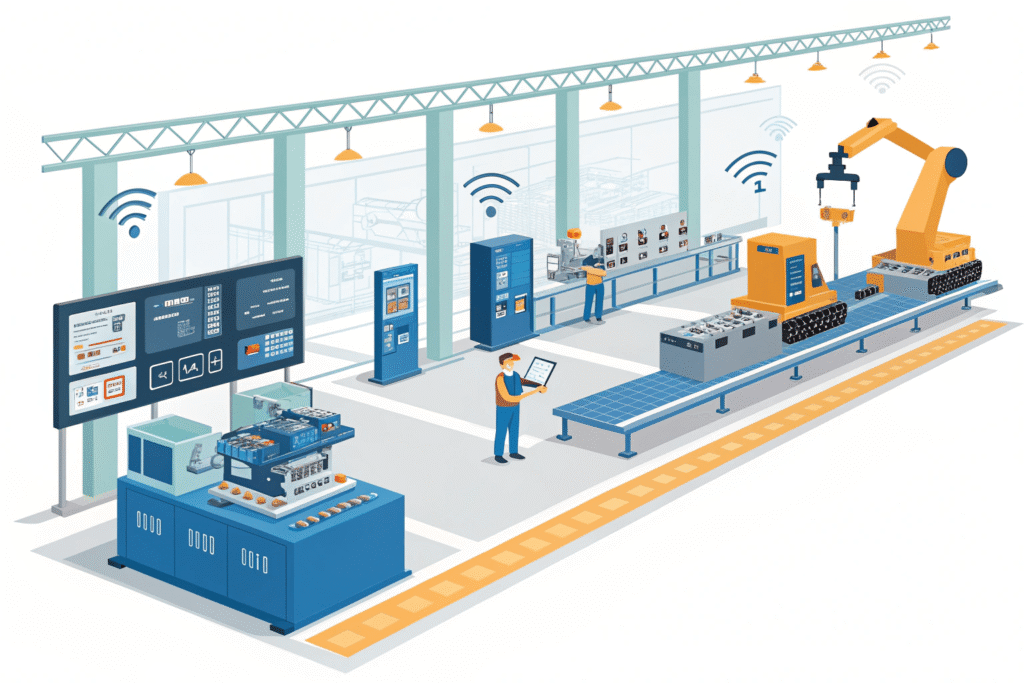






























































































































































Manufacturing organizations face unprecedented pressure to optimize operations, reduce costs, and maintain quality standards while navigating supply chain disruptions and workforce challenges. Manufacturing Analytics transforms raw operational data into strategic intelligence, enabling data-driven decisions that improve efficiency, prevent costly downtime, and ensure product quality consistency.
Viston’s AI-powered manufacturing analytics platform delivers comprehensive visibility across production lines, quality control processes, and equipment performance. Our solutions integrate with industrial IoT sensors, SCADA systems, MES platforms, and ERP databases to provide unified intelligence that drives operational excellence.
Machine learning algorithms analyze equipment sensor data, vibration patterns, and historical maintenance records to predict failures 3-6 weeks in advance, enabling proactive interventions that eliminate unplanned downtime and extend asset lifecycles
Computer vision and AI-powered inspection systems detect defects, dimensional variations, and quality deviations in real-time with 99.2% accuracy, reducing scrap rates and ensuring consistent product quality across production runs
Predictive analytics monitor supplier performance, raw material quality, and inventory levels to anticipate disruptions, optimize procurement, and ensure continuous production flow across USA, Europe, and Australia operations
Comprehensive oversight frameworks with audit trails, approval workflows, compliance guardrails, ethical AI boundaries, and human-in-the-loop intervention points, ensuring autonomous agents operate within your organization's risk tolerance and regulatory requirements
Viston delivers comprehensive manufacturing analytics infrastructure combining edge AI deployment, cloud-scale data processing, and enterprise-grade governance. Our platform supports global manufacturing operations with regional compliance.

Advanced sensor integration and streaming analytics provide millisecond-latency insights into equipment health, production metrics, and quality parameters. AI models continuously learn from operational patterns to improve prediction accuracy.

Machine learning pipelines analyze vibration, temperature, acoustic, and performance data to identify failure signatures. Automated alerting systems notify maintenance teams with prioritized recommendations and optimal intervention timing.

Computer vision systems inspect products at production speed, identifying defects invisible to human inspection. AI-powered root cause analysis links quality issues to specific process parameters for rapid correction.

Multi-dimensional analysis of production data identifies optimization opportunities across scheduling, resource allocation, and process parameters. Prescriptive recommendations drive continuous improvement and OEE maximization.
AI-powered vibration analysis and thermal monitoring predict bearing failures, motor degradation, and hydraulic system issues in automotive manufacturing plants, enabling scheduled maintenance that eliminates production interruptions.
Computer vision systems inspect precision-engineered components at 400 units per minute, detecting micro-defects and dimensional variations that ensure German automotive quality standards while reducing inspection costs by 67%.
Real-time analytics monitor 847 production parameters across food processing facilities, identifying bottlenecks and recommending scheduling adjustments that increase throughput by 23% without additional capital investment.
AI algorithms analyze electricity usage patterns across pharmaceutical manufacturing facilities, identifying inefficiencies and optimizing HVAC, compressed air, and process heating systems to reduce energy costs by €2.1M annually.
Predictive models monitor 340+ supplier metrics, raw material quality trends, and logistics data to forecast supply chain disruptions 4-8 weeks in advance, enabling proactive sourcing and inventory adjustments.
Advanced analytics identify process parameter correlations affecting wafer yields in chip fabrication, enabling precision adjustments that increase yields from 87% to 94% and reduce scrap costs significantly.
Machine learning algorithms optimize maintenance schedules across mining equipment fleets, balancing preventive maintenance costs against failure risks to reduce total maintenance expenditure by 34% while improving equipment availability.
AI-powered analytics correlate quality deviations with process variables across batch production, identifying root causes within minutes versus days of manual investigation and preventing recurring quality issues.
Unified analytics platform compares production efficiency, quality metrics, and cost structures across 23 European manufacturing facilities, identifying best practices and standardizing processes that improve overall performance by 19%.
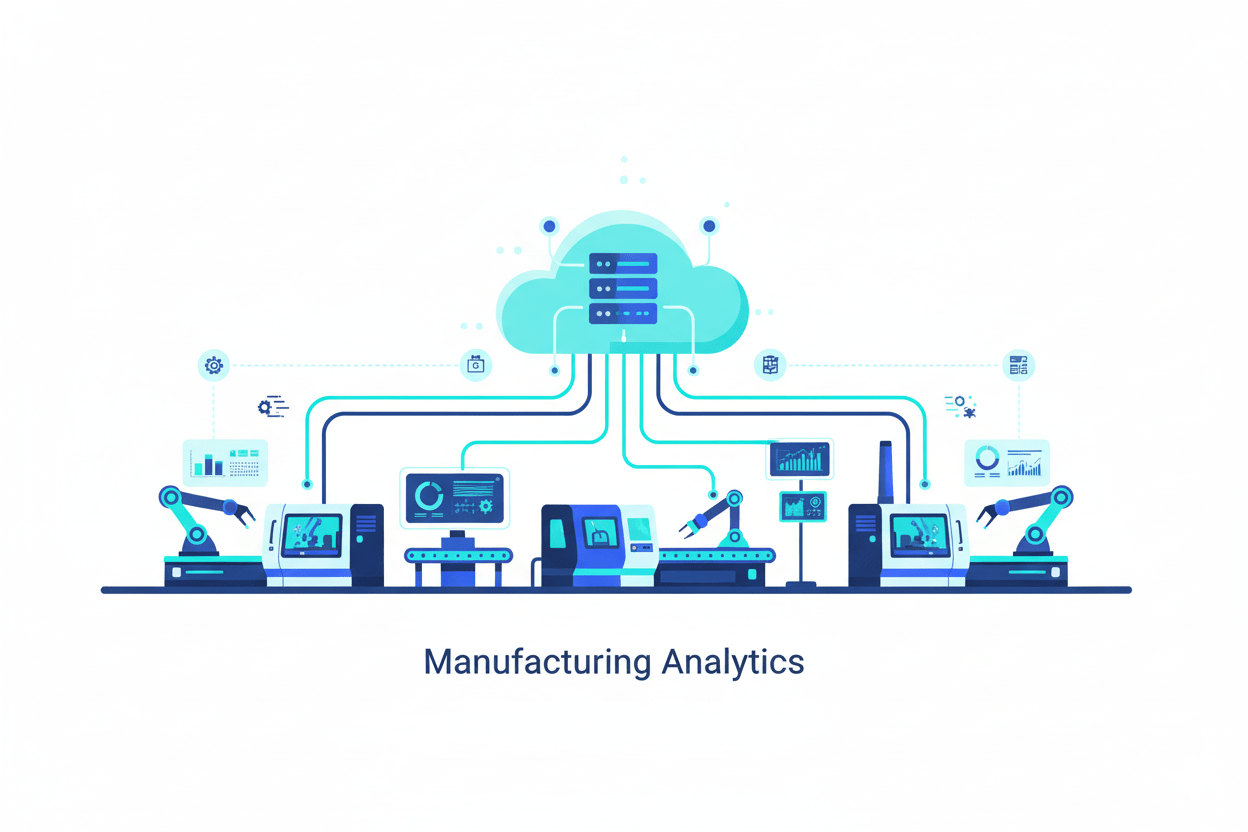
Modern manufacturing generates massive volumes of data from sensors, machines, quality systems, and enterprise applications. However, most organizations struggle to extract actionable insights from this data flood. Traditional business intelligence tools lack the sophistication to handle time-series sensor data, identify complex failure patterns, or predict quality issues before they occur.
Viston’s manufacturing analytics platform leverages advanced machine learning, edge AI processing, and cloud-scale infrastructure to transform raw industrial data into predictive intelligence. Our solutions integrate seamlessly with existing industrial systems—from legacy SCADA platforms to modern IoT sensor networks—providing unified visibility across production operations, maintenance activities, and quality control processes.
The platform supports global manufacturing operations across USA, Canada, UK, Germany, France, and Australia with regional data residency, localized compliance frameworks, and multi-language support. Our edge AI architecture enables real-time analytics at the production floor level while maintaining centralized visibility and governance for enterprise decision-makers.
Equipment failures represent the costliest disruption in manufacturing operations, causing unplanned downtime, missed production targets, and expensive emergency repairs. Traditional preventive maintenance schedules based on calendar intervals result in unnecessary servicing while still missing critical failures that occur between scheduled maintenance windows.
Viston’s predictive maintenance analytics apply machine learning algorithms to continuous sensor streams—vibration patterns, thermal signatures, acoustic emissions, electrical current, and performance metrics—to identify degradation signatures that precede equipment failures. Our models learn normal operational patterns for each asset and detect subtle anomalies that indicate developing problems.
The platform predicts specific failure modes 3-6 weeks in advance with 94.7% accuracy, providing maintenance teams with prioritized work orders, recommended interventions, and optimal timing that balances failure risk against maintenance costs. Manufacturing clients across automotive, pharmaceutical, food processing, and discrete manufacturing industries report 63% average reductions in unplanned downtime and 41% decreases in maintenance costs after implementing Viston’s predictive maintenance analytics.
Background: A leading automotive components manufacturer operating 8 production facilities across USA and Mexico experienced frequent unplanned equipment failures causing an average of 127 hours of production downtime monthly. Traditional preventive maintenance schedules missed critical failures while performing unnecessary servicing on healthy equipment.
Challenge: The organization needed predictive maintenance capabilities that could analyze data from 840+ critical assets across stamping presses, welding robots, CNC machines, and assembly line automation. Existing condition monitoring systems generated alerts but lacked predictive capabilities to forecast failures weeks in advance.
Solution: Viston implemented a comprehensive predictive maintenance analytics platform integrating vibration sensors, thermal cameras, and electrical monitoring across all critical assets. Machine learning models were trained on 18 months of historical failure data combined with continuous sensor streams to identify failure signatures specific to each asset type.
Results: Within 6 months, unplanned downtime decreased by 71%, from 127 hours to 37 hours monthly. The platform predicted 94% of equipment failures 4-6 weeks in advance, enabling scheduled maintenance during planned production windows. Annual maintenance costs decreased by $3.8M while equipment availability increased to 97.2%. The organization expanded implementation to all 8 facilities after initial success.
Testimonial: “Viston’s predictive maintenance analytics transformed our maintenance approach from reactive firefighting to proactive prevention. We now schedule maintenance when it’s needed, not when the calendar says so. The ROI exceeded expectations within the first year.” – VP of Manufacturing Operations
Background: A major European food processing company producing packaged goods for retail distribution faced recurring quality issues including underfilled packages, contamination risks, and labeling errors that resulted in 3 product recalls within 18 months, damaging brand reputation and resulting in €4.2M in recall costs.
Challenge: Manual quality inspection processes inspected only 2% of production output, missing defects that reached consumers. The organization needed automated quality control systems capable of inspecting 100% of products at production speeds while detecting subtle quality variations.
Solution: Viston deployed computer vision-based quality inspection systems across 12 production lines, using high-resolution cameras and AI-powered image analysis to inspect fill levels, seal integrity, label accuracy, and contamination indicators. Real-time analytics correlated quality deviations with specific production parameters to enable immediate corrective action.
Results: The system inspects 100% of production output at speeds exceeding 400 units per minute with 99.4% defect detection accuracy. Quality-related production waste decreased by 58%, saving €1.9M annually. The company has operated 24 months without quality recalls since implementation. Root cause analysis capabilities reduced average quality issue resolution time from 6 days to 4 hours.
Testimonial: “Achieving zero recalls for two years represents a fundamental transformation in our quality assurance capabilities. Viston’s AI-powered inspection systems provide confidence that every product meets our quality standards before reaching customers.” – Director of Quality Assurance
Background: A pharmaceutical manufacturer operating FDA-regulated facilities in USA and Germany struggled with production inefficiencies across complex batch manufacturing processes. Overall equipment effectiveness (OEE) averaged 67%, significantly below industry benchmarks, due to unidentified bottlenecks and suboptimal scheduling.
Challenge: Production processes involved 200+ controlled parameters across mixing, granulation, tablet compression, coating, and packaging stages. Manual analysis couldn’t identify subtle parameter correlations affecting throughput and yield. The organization needed advanced analytics that respected FDA validation requirements and data integrity regulations.
Results: Viston implemented production analytics across 6 manufacturing lines, analyzing real-time data from process control systems, equipment sensors, and quality management systems. Machine learning algorithms identified 47 previously unknown bottlenecks and parameter correlations affecting production efficiency.
Solution: OEE increased from 67% to 84% within 8 months through data-driven process optimization. Annual production capacity increased by 23% without capital investment in new equipment. The platform maintains complete audit trails and validation documentation meeting FDA 21 CFR Part 11 requirements. Batch cycle times decreased by 19% while maintaining pharmaceutical quality standards.
Testimonial: “Viston’s manufacturing analytics revealed optimization opportunities we didn’t know existed. The platform’s validation-ready architecture ensured FDA compliance while delivering breakthrough efficiency improvements. We’ve extended implementation to all global facilities.” – VP of Manufacturing Excellence
Background: A consumer electronics manufacturer producing smartphones and tablets in Asia Pacific facilities experienced 3.2% defect rates in final assembly, resulting in significant rework costs, warranty claims, and customer dissatisfaction. Manual inspection processes couldn’t identify microscopic defects or assembly errors.
Challenge: High-speed assembly lines produced 1,200 units per hour across 840+ assembly steps. Quality issues often originated from specific suppliers or process parameters but root cause identification took weeks of manual investigation. The organization needed real-time quality analytics with automated root cause analysis.
Solution: Viston deployed an integrated quality analytics platform combining computer vision inspection at critical assembly stages with real-time correlation analysis linking defects to specific suppliers, components, process parameters, and operators. AI models learned defect patterns and identified causal relationships across complex supply chains.
Results: Overall defect rates decreased from 3.2% to 0.76% within 5 months. Automated root cause analysis reduced issue investigation time from 12 days to 3 hours on average. Rework and warranty costs decreased by $7.4M annually. Supplier quality scorecards enabled proactive supplier management that improved incoming component quality by 68%.
Testimonial: “The combination of automated inspection and intelligent root cause analysis fundamentally changed our quality management approach. We now prevent quality issues rather than detecting them after the fact.” – Global Quality Director
Background: A specialty chemicals manufacturer operating high-hazard production processes across Europe and USA needed enhanced process safety monitoring to prevent incidents while maintaining production efficiency. Manual monitoring couldn’t detect subtle process deviations that preceded safety incidents.
Challenge: Chemical processes involved precise temperature, pressure, and reaction rate control across 340+ monitored parameters. Small deviations could cascade into dangerous conditions within minutes. The organization needed real-time anomaly detection with predictive alerting that reduced false positives while ensuring true safety risks triggered immediate response.
Solution: Viston implemented AI-powered process safety analytics that continuously monitored all critical parameters, learned normal operating envelopes for each process unit, and detected anomalous patterns indicating developing safety risks. Multi-variate analysis identified subtle parameter correlations that single-variable alarms missed.
Results: The platform reduced process safety incidents by 87% over 18 months while decreasing false alarms by 72%, enabling operators to focus on genuine risks. Predictive alerting provided 8-15 minute advance warning before parameters reached critical thresholds, enabling proactive interventions. The organization received recognition from regulatory authorities for process safety excellence.
Testimonial: “Viston’s safety analytics platform represents the most significant advancement in our process safety capabilities in 20 years. The system’s intelligence distinguishes genuine risks from routine process variations, providing confidence that we’ll prevent incidents before they occur.” – VP of Environmental Health & Safety
Background: A heavy industrial equipment manufacturer operating energy-intensive production facilities across Germany, UK, and France faced rising energy costs representing 18% of production expenses. Manual energy management couldn’t identify optimization opportunities across complex production processes.
Challenge: Energy consumption varied based on production mix, equipment utilization, time-of-day electricity rates, and weather-dependent HVAC loads. The organization needed predictive energy analytics that could optimize consumption patterns while maintaining production schedules and environmental conditions.
Solution: Viston deployed energy analytics integrating data from smart meters, building management systems, and production scheduling platforms. Machine learning algorithms identified energy waste patterns, optimized HVAC operations, scheduled energy-intensive processes during low-cost periods, and recommended equipment efficiency improvements.
Results: Annual energy costs decreased by €3.7M (21% reduction) across all facilities within 12 months. Peak demand charges decreased by 34% through intelligent load shifting. The platform identified €890K in equipment efficiency improvements with 11-month payback periods. Carbon emissions decreased by 17%, supporting sustainability commitments.
Testimonial: “Energy optimization seemed like a mature domain until Viston’s AI analytics revealed dozens of opportunities we’d missed. The platform pays for itself multiple times over through sustained energy savings.” – Director of Facilities & Operations
Background: An aerospace components manufacturer producing precision-machined parts for commercial aircraft faced 82% first-pass yield rates, meaning 18% of parts required rework or scrapping. Each scrapped part represented significant material and machining costs due to expensive aerospace-grade alloys and complex CNC programming.
Challenge: Machining processes involved 5-axis CNC operations with tolerances measured in microns. Yield losses resulted from subtle variations in raw material properties, tool wear patterns, thermal expansion, and programming parameters. Manual analysis couldn’t identify the complex multi-variate relationships affecting part quality.
Solution: Viston implemented advanced manufacturing analytics correlating machining parameters, tool condition monitoring, raw material properties, and quality measurement data across 67 CNC machines. Machine learning models identified optimal parameter combinations for different material batches and predicted when tool changes would prevent quality issues.
Results: First-pass yield improved from 82% to 96.3% over 9 months, reducing scrap costs by $4.2M annually. Predictive tool management extended tool life by 31% while improving surface finish quality. The platform’s recommendations enabled programming adjustments that reduced cycle times by 14% without compromising quality.
Testimonial: “Achieving 96% first-pass yield in aerospace precision machining represents world-class performance. Viston’s analytics platform gave us insights into our processes that 30 years of engineering experience hadn’t revealed.” – Director of Manufacturing Engineering
Background: A steel manufacturing company operating integrated mills in USA and Canada struggled with production scheduling complexity across blast furnaces, steel making, continuous casting, and rolling operations. Suboptimal scheduling resulted in equipment underutilization, excessive work-in-progress inventory, and missed delivery commitments.
Challenge: Production scheduling required optimizing across 200+ equipment dependencies, energy consumption patterns, order due dates, quality specifications, and maintenance windows. Manual scheduling took 6-8 hours daily and couldn’t find optimal solutions across competing constraints.
Solution: Viston deployed AI-powered production scheduling analytics that optimized schedules in real-time considering all constraints and business objectives. The platform integrated with ERP, MES, and maintenance systems to maintain schedule feasibility while maximizing throughput and minimizing costs.
Results: Equipment utilization increased from 73% to 89% within 4 months. Work-in-progress inventory decreased by 42%, freeing $23M in working capital. On-time delivery performance improved from 81% to 97%. Energy costs per ton decreased by 11% through optimized furnace scheduling. Daily scheduling time reduced from 7 hours to 45 minutes.
Testimonial: “The scheduling optimization platform transformed our operations from reactive firefighting to proactive planning. We’re producing more steel with the same assets while improving delivery performance and reducing costs.” – VP of Operations
Transform your enterprise with intelligent AI solutions that deliver measurable results. Viston’s AI & ML Strategic Consulting combines 15+ years of proven expertise with cutting-edge technology to accelerate your digital transformation across the USA, Europe, and Australia.
Transform manufacturing operations with AI-powered analytics that provide real-time visibility, predictive insights, and automated decision support. Reduce costs, improve quality, and accelerate digital transformation across global manufacturing facilities while maintaining governance and compliance.
Eliminate unplanned downtime and reduce maintenance costs by 30-45% through AI-powered failure prediction. Machine learning algorithms analyze equipment sensor data to predict failures 3-6 weeks in advance, enabling scheduled maintenance that maximizes asset uptime and extends equipment lifecycles.
Achieve 99%+ inspection accuracy with computer vision systems that inspect 100% of production output at manufacturing speeds. AI-powered root cause analysis identifies quality issue sources within hours, enabling rapid corrective action that prevents recurring defects and reduces scrap rates.
Increase overall equipment effectiveness (OEE) by 15-28% through data-driven identification of bottlenecks, optimal scheduling, and process parameter optimization. Advanced analytics reveal improvement opportunities invisible to manual analysis, driving continuous operational improvement.
Reduce energy consumption and costs by 18-25% through intelligent monitoring, demand optimization, and predictive scheduling of energy-intensive operations. Analytics platforms identify waste patterns and recommend efficiency improvements with measurable ROI and sustainability impact.
Predict supply chain disruptions 4-8 weeks in advance by monitoring supplier performance, quality trends, and external risk factors. Proactive visibility enables alternative sourcing and inventory adjustments that ensure continuous production flow despite supply chain volatility.
Maintain complete data governance, audit trails, and regulatory compliance across all analytics operations. Platform architecture supports FDA, ISO, GDPR, and industry-specific regulations with validated workflows, role-based access control, and comprehensive security measures.
Achieve measurable ROI within 3-6 months through pre-built analytics templates, industry-specific models, and accelerated deployment frameworks. Platform integrates with existing industrial systems—SCADA, MES, ERP, CMMS—minimizing implementation complexity and change management requirements.
Partnering with Viston AI means tapping into a team of seasoned AI experts who accelerate your transformation and deliver custom solutions aligned with your strategic goals.
Together, we drive measurable business impact, ensure scalable, future-proof implementations, and mitigate risks to keep you ahead of the competition.

Unlock 35-42% efficiency gains with specialized domain agents. Our 2025 guide details how to build and deploy industry-specific AI for healthcare, finance, retail, and manufacturing to transform your core business operations. Read More
#AIAgents #DomainSpecificAI #HealthcareAI #Fintech #RetailTech #ManufacturingAI #BusinessAutomation

The future of software development is here. Agentic coding pipelines use autonomous AI to plan, code, test, and deploy software, revolutionizing your SDLC and transforming the developer experience (DevEx).
Read More
#AgenticCoding #DevEx #SDLCAutomation #AIinDev #FutureOfCode #CodeGeneration #AITesting #SecureCoding #CI/CD
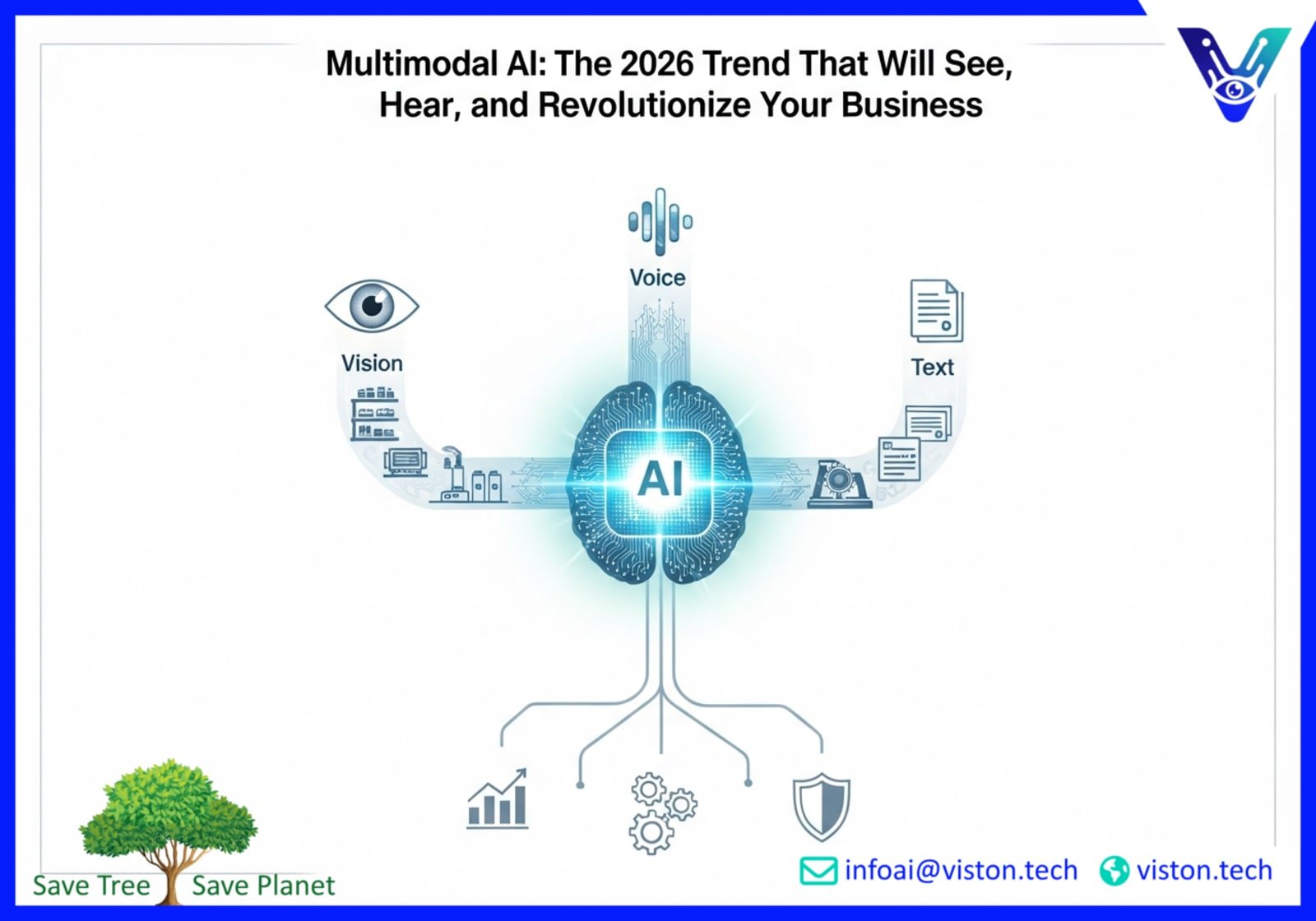
Unlock the future of business with multimodal agents. This 2026 AI trend merges text, voice, and vision to automate complex workflows, boosting efficiency, accuracy, and decision-making for a powerful competitive advantage. Read More
#multimodalagents #voicevision #AIforbusiness #futureofAI #enterprisetech #digitaltransformation #VistonAI #AIin2026 #complexworkflows #AIsolutions
Revolutionize your IT service desk. Learn how AI agents are evolving from intelligent ticket triage to full, autonomous case resolution, dramatically improving efficiency and user satisfaction. Read More #AIAgents #ITSM #ServiceDesk #Automation
Charged based on actual usage, such as per request, per GB of bandwidth, or per page scraped, with no fixed commitment.
A one-time fee is charged for a specific project, regardless of volume or duration, based on scope and complexity.
Billed based on the time spent developing, running, or maintaining the scraper, often used for custom or consulting-heavy projects.
pay a recurring fee (monthly or annually) for access to scraping services, often tiered based on usage limits like the number of requests, pages scraped, or data points extracted.
Begin with comprehensive stakeholder engagement to understand business objectives, success metrics, and requirements. Conduct thorough analysis of existing workflows, data sources, and technical constraints. Establish clear project scope, timeline, and success criteria while ensuring alignment between AI strategy and business goals.
Collect, clean, and prepare high-quality data from all relevant sources. Perform exploratory data analysis (EDA) to uncover patterns and insights. Establish robust data pipelines, ensure data quality standards, and create the foundation for AI model training. This step prevents the "garbage in, garbage out" scenario.
Select appropriate AI models based on problem requirements and data characteristics. Develop, train, and fine-tune models using iterative approaches. Focus on achieving optimal balance between accuracy, interpretability, and performance. Implement version control and documentation for model assets.
Rigorously test models against unseen data and validate performance metrics. Conduct scenario testing, edge-case analysis, and A/B testing. Integrate the AI solution into existing IT infrastructure through APIs, containerization, or cloud deployment. Ensure security, scalability, and compliance requirements are met.
Deploy the validated AI solution into production environment with proper monitoring systems. Provide comprehensive training to end-users and IT staff. Implement authentication, security protocols, and compliance measures. Focus on smooth integration with business workflows and user adoption.
Establish ongoing monitoring systems to track model performance, business impact, and user feedback. Implement continuous learning loops for model improvement. Regular assessment of KPIs, retraining schedules, and adaptation to changing business needs. Ensure long-term value delivery and system reliability.
Manufacturing Analytics applies advanced data science, machine learning, and AI to operational data from production equipment, quality systems, and enterprise applications. It transforms raw sensor data and process metrics into actionable insights that predict equipment failures, optimize production efficiency, automate quality control, and reduce operational costs. Benefits include 30-45% maintenance cost reductions, 15-28% OEE improvements, 50-70% fewer unplanned downtime incidents, and 18-25% energy cost savings through data-driven decision-making.
Viston’s platform integrates seamlessly with industrial control systems (SCADA, DCS, PLCs), manufacturing execution systems (MES), enterprise resource planning (ERP), computerized maintenance management systems (CMMS), and quality management systems through standard protocols including OPC-UA, MQTT, REST APIs, and database connectors. Pre-built integrations support major vendors including Siemens, Rockwell, SAP, Oracle, and Wonderware. Integration typically requires 2-4 weeks depending on system complexity.
Automotive, aerospace, pharmaceutical, food & beverage, chemical processing, electronics, medical devices, consumer goods, industrial equipment, and steel manufacturing industries achieve significant benefits. Any capital-intensive manufacturing operation with complex production processes, quality requirements, and equipment reliability challenges benefits from predictive maintenance, quality automation, and production optimization analytics. Viston serves clients across USA, Canada, UK, Germany, France, Nordics, and Australia in these sectors.
Viston’s predictive maintenance models achieve 94.7% average accuracy in forecasting equipment failures 3-6 weeks in advance. Accuracy varies by asset type, sensor coverage, and historical data availability. Models continuously improve through ongoing learning from operational data. The platform identifies specific failure modes—bearing degradation, motor winding issues, hydraulic leaks, valve failures—with equipment-specific precision that enables targeted maintenance interventions.
The platform implements enterprise-grade security including end-to-end encryption, role-based access control, network segmentation, and SOC 2 Type II certification. Regional data residency options ensure compliance with GDPR, CCPA, and data sovereignty requirements. Industry-specific compliance frameworks support FDA 21 CFR Part 11, ISO 13485, GxP, and other regulatory standards with validated workflows, audit trails, and complete data lineage documentation.
Initial implementation typically requires 6-12 weeks including system integration, model training, and user onboarding. Measurable ROI often appears within 3-6 months as predictive maintenance prevents failures, quality automation reduces defects, and production optimization improves throughput. Full enterprise deployment across multiple facilities typically completes within 6-12 months. Viston provides implementation frameworks, pre-built models, and expert support that accelerate time-to-value.
Yes. The platform’s cloud-native architecture scales from single production lines to global manufacturing networks encompassing hundreds of facilities. Deployment begins with high-value pilot applications—typically predictive maintenance on critical assets or quality automation on high-volume production lines—then expands based on demonstrated ROI. Unified governance ensures consistent analytics capabilities across facilities while supporting regional compliance and localization requirements.
Viston’s platform features intuitive dashboards, automated alerting, and workflow integration that enables manufacturing personnel to leverage analytics insights without data science expertise. Initial deployment requires collaboration between IT, engineering, and operations teams. Ongoing operation integrates with existing maintenance, quality, and production management workflows. Viston provides training, documentation, and expert support ensuring successful adoption across technical and operational stakeholders.
The platform provides data-driven visibility into improvement opportunities across maintenance efficiency, production throughput, quality performance, and cost optimization. Analytics identify root causes, quantify improvement impact, and track KPI trends that demonstrate continuous improvement progress. Integration with Lean, Six Sigma, and TPM methodologies enables analytics-driven DMAIC projects with measurable results. Benchmarking capabilities compare performance across facilities to identify and replicate best practices.
Viston combines 15+ years of manufacturing domain expertise with advanced AI/ML capabilities and enterprise-grade platform architecture. Key differentiators include 94.7% predictive maintenance accuracy, pre-built industry-specific models, edge AI capabilities for real-time insights, comprehensive regulatory compliance frameworks, and proven success across 2,860+ enterprise clients. The platform balances sophisticated analytics capabilities with operational simplicity, enabling manufacturing organizations to achieve breakthrough results without building internal data science teams.
