
Viston delivers enterprise-grade Image Recognition & Classification solutions that transform visual data into actionable intelligence. With 15+ years of AI expertise and 2,860+ clients across the USA, UK, Germany, France, Scandinavia, and Australia, we architect computer vision systems that analyze, categorize, and extract insights from millions of images in real time. Our end-to-end LLMOps platform powers intelligent automation for financial services, healthcare, retail, manufacturing, and technology sectors—delivering measurable ROI through scalable, compliant, and production-ready vision AI.






































































































































































































Modern enterprises generate terabytes of visual data daily—from product images and medical scans to surveillance feeds and manufacturing quality checks. Image Recognition & Classification systems powered by deep learning enable organizations to automate visual inspection, accelerate decision-making, and unlock insights hidden in unstructured image data. Viston’s computer vision platform combines convolutional neural networks, transfer learning, and explainable AI to deliver accuracy rates exceeding 97% while maintaining compliance with GDPR, HIPAA, and industry-specific regulations across the USA, Europe, and Australia.
Integrate object detection, facial recognition, OCR, scene understanding, and image segmentation into unified workflows that process diverse visual formats at enterprise scale with real-time inference speed
Build industry-specific category hierarchies with thousands of labels, supporting fine-grained distinctions for retail SKUs, medical pathology, manufacturing defects, or document types with continuous learning capabilities
Deploy lightweight vision models on IoT devices, edge servers, or cloud infrastructure with seamless synchronization, enabling real-time processing in manufacturing plants, hospitals, retail stores, and remote locations
Maintain complete audit trails with model versioning, bias detection, confidence scoring, and visual explanations that satisfy regulatory requirements for healthcare, financial services, and high-stakes decision environments
Viston’s Image Recognition & Classification platform delivers production-ready computer vision with enterprise-grade reliability, compliance, and performance optimization for mission-critical applications.

Leverage pre-trained foundation models and transfer learning workflows to build custom classifiers with minimal labeled data, reducing time-to-production from months to weeks while maintaining 95%+ accuracy benchmarks

Process image streams at millisecond latency using GPU acceleration, model quantization, and intelligent batching that scales from thousands to millions of images daily without infrastructure bottlenecks

Deploy across AWS, Azure, GCP, or on-premise infrastructure with containerized models, Kubernetes orchestration, and unified management dashboards that support disaster recovery and geographic redundancy

Implement automated testing suites with confusion matrices, precision-recall curves, and edge case detection that identify model drift, data quality issues, and performance degradation before impacting production systems
Retailers in the USA and Europe deploy image classifiers to automatically tag millions of product images, enabling accurate search, personalized recommendations, and inventory management across multi-channel marketplaces with 98% categorization accuracy.
Healthcare providers across Germany, UK, and Australia implement AI-powered radiology assistants that detect anomalies in X-rays, MRIs, and CT scans, reducing diagnostic time by 60% while maintaining HIPAA compliance and explainable predictions.
Automotive and electronics manufacturers in France, USA, and Japan integrate vision systems that identify surface defects, component misalignments, and assembly errors in real time, achieving 99.7% defect detection with minimal false positives.
Banks and insurance companies across Switzerland, UK, and Canada automate check processing, ID verification, and claims validation using OCR combined with image classification, reducing manual review time by 75% while flagging suspicious documents.
CPG brands deploy edge-based vision systems in stores across the USA, Australia, and Netherlands to monitor stock levels, verify product placement, and analyze shopper behavior, providing real-time insights that increase on-shelf availability by 40%.
Utility companies and transportation agencies in Scandinavia, UK, and Australia use drone-mounted cameras with image classifiers to detect infrastructure damage, vegetation encroachment, and safety hazards across power grids, railways, and highways.
Social media platforms and marketplaces across Europe and North America implement multi-class image moderation systems that flag inappropriate content, trademark violations, and policy breaches with 96% accuracy while respecting GDPR privacy requirements.
Farming operations in Australia, USA, and France leverage satellite and drone imagery with classification models to identify crop diseases, irrigation issues, and yield predictions, enabling precision agriculture that reduces input costs by 30%.
Metropolitan areas across Germany, UK, and Canada deploy computer vision for automated license plate recognition, parking occupancy detection, and traffic flow analysis, optimizing urban mobility with real-time data integration into city management platforms.

Enterprise-grade image recognition requires more than accurate models—it demands robust infrastructure that handles millions of images daily while maintaining sub-second latency, 99.9% uptime, and seamless integration with existing data ecosystems. Viston’s LLMOps platform provides end-to-end orchestration from data ingestion and model training to deployment and monitoring. Our automated pipelines support continuous integration and delivery of vision models, enabling data science teams to iterate rapidly without operational bottlenecks. For financial services clients in London and New York, we’ve deployed fraud detection systems processing 2 million check images daily with 97% accuracy. Healthcare networks in Germany and Australia rely on our HIPAA-compliant infrastructure for radiology workflows that prioritize critical cases while maintaining complete audit trails for regulatory compliance.
Organizations that effectively harness image data gain significant competitive advantages in operational efficiency, customer experience, and predictive insights. Retail chains across Europe and North America using our automated product tagging systems reduce merchandising costs by 65% while improving search relevance that drives 35% higher conversion rates. Manufacturing facilities in France and USA achieve 40% faster quality inspection cycles with vision systems that detect defects invisible to human inspectors, preventing costly recalls and warranty claims. The key to ROI lies in choosing computer vision platforms designed for enterprise scale—supporting thousands of image classes, handling diverse formats from medical DICOM to high-resolution product photography, and providing explainable predictions that build trust with stakeholders and regulators across jurisdictions.
Background: A Fortune 500 retailer operating 3,400 stores across the USA, UK, and Germany struggled with manual product image tagging for their e-commerce platform, processing 450,000 new product images annually with inconsistent categorization quality.
Challenge: The existing manual workflow required 12 full-time staff, took 6 weeks per image batch, and generated 18% tagging errors that degraded search accuracy and customer satisfaction. They needed an automated solution that maintained brand taxonomy precision while handling seasonal surges and multi-language requirements.
Solution: Viston deployed a custom image classification system with 2,840 product categories, integrating transfer learning from retail-specific foundation models. The platform processes images through automated quality checks, multi-label classification, and human-in-the-loop validation for edge cases, with deployment across AWS and on-premise infrastructure.
Results: The client achieved 98.3% tagging accuracy, reduced processing time from 6 weeks to 48 hours, and reallocated merchandising staff to strategic initiatives. E-commerce search relevance improved by 42%, contributing to a 23% increase in conversion rates. The system now processes 1.2 million images annually with 95% automation.
Testimonial: “Viston’s vision AI transformed our merchandising operations. The combination of accuracy, speed, and seamless integration with our existing PIM system delivered ROI within 5 months—far exceeding our expectations for an enterprise AI deployment.”
Background: A multi-hospital healthcare system serving 2.3 million patients across Australia needed to address radiologist burnout and diagnostic backlogs, with average report turnaround times reaching 72 hours and critical findings occasionally delayed.
Challenge: The network processed 340,000 imaging studies annually with only 14 radiologists. They required an AI assistant that could prioritize urgent cases, flag potential abnormalities, and maintain HIPAA compliance while integrating with existing PACS infrastructure and clinical workflows without disrupting established practices.
Solution: Viston implemented a HIPAA-compliant image classification platform for chest X-rays and CT scans, featuring explainable AI with attention maps, confidence scoring, and automated worklist prioritization. The system underwent clinical validation with 95,000 historical cases and integrates via HL7/FHIR standards.
Results: Critical findings now receive automatic prioritization, reducing time-to-diagnosis for urgent cases by 67%. Radiologist productivity increased 35% through intelligent pre-screening, and diagnostic accuracy improved by 8% through AI-assisted second reads. The system processes 1,100 studies daily with 97.2% accuracy and complete audit trails.
Testimonial: “The explainable AI features were crucial for clinical acceptance. Our radiologists trust the system because they can see exactly why the AI flagged specific findings. This isn’t just automation—it’s genuine clinical decision support that improves patient outcomes.”
Background: A Tier 1 automotive supplier in Germany manufacturing 850,000 precision components monthly faced quality control challenges, with manual visual inspection missing microscopic defects that led to costly recalls and strained OEM relationships.
Challenge: Human inspectors examining components at 45-second intervals couldn’t detect hairline cracks, surface contamination, or dimensional variations under 0.1mm. The company needed 99.95% defect detection with zero false negatives while maintaining production throughput and generating ISO-compliant documentation.
Solution: Viston deployed edge-based vision systems with high-resolution cameras and real-time classification models at 6 production lines, achieving millisecond inference with GPU acceleration. The platform integrates with MES systems, automatically quarantines defective parts, and generates detailed inspection reports with visual evidence.
Results: Defect detection rates reached 99.7% with 0.02% false positives, eliminating customer complaints related to visual defects. The client reduced quality control labor costs by 58% while increasing inspection throughput by 340%. Automated documentation cut audit preparation time by 80%, and the system paid for itself within 11 months.
Testimonial: “Viston’s computer vision system gave us quality assurance capabilities impossible with human inspection. The edge deployment was critical—we get real-time decisions without network latency, and the system scales as we expand production capacity.”
Background: A regional bank processing 4.2 million checks annually across Canada and USA struggled with manual fraud detection that missed sophisticated forgeries while creating bottlenecks in check clearing that frustrated commercial customers.
Challenge: Fraud analysts could manually review only 3% of checks, with sophisticated forgeries bypassing rule-based systems. The bank needed automated detection covering signature verification, payee alteration, and amount tampering while maintaining regulatory compliance and minimizing false positives that blocked legitimate transactions.
Solution: Viston implemented a multi-model classification system combining OCR, signature matching, and anomaly detection with explainable confidence scores. The platform processes checks in real-time during clearing, automatically flags suspicious items for analyst review, and maintains complete audit trails for regulatory examination.
Results: The bank detected 94% of fraudulent checks compared to 38% previously, preventing $3.7 million in losses annually. Processing speed increased 280%, reducing commercial check clearing from 48 hours to 6 hours. False positive rates dropped to 0.8%, and the system handles seasonal volume spikes without additional staffing.
Testimonial: “The ROI was immediate—fraud losses dropped dramatically while customer satisfaction improved through faster clearing. Viston’s platform gave us enterprise-grade fraud detection without the complexity and cost of building in-house capabilities.”
Background: A metropolitan area in the Netherlands serving 890,000 residents needed to optimize traffic flow, reduce congestion, and monitor infrastructure condition across 1,240 km of roadways with limited municipal budgets.
Challenge: Manual traffic monitoring provided only periodic snapshots, while infrastructure inspections required expensive field crews that could assess only 15% of assets annually. The city needed real-time traffic analytics, automated incident detection, and predictive infrastructure maintenance within GDPR compliance frameworks.
Solution: Viston deployed edge-based vision systems at 340 traffic cameras and integrated drone-based infrastructure inspection with automated classification of road damage, signage condition, and vegetation encroachment. The platform provides real-time dashboards and predictive maintenance alerts with privacy-preserving image processing.
Results: Traffic incident detection improved by 85%, enabling 12-minute faster emergency response. Infrastructure inspection coverage reached 92% annually at 60% lower cost. Traffic optimization algorithms reduced congestion by 28% during peak hours. The privacy-compliant system processes 6.8 million vehicle observations daily without storing personally identifiable information.
Testimonial: “Viston understood the unique challenges of public sector AI deployment—GDPR compliance, budget constraints, and system reliability. Their computer vision platform delivered smart city capabilities that seemed out of reach for a mid-sized municipality.”
Background: A large-scale farming operation managing 45,000 hectares across Australia needed to improve crop health monitoring, optimize input application, and predict yields more accurately in the face of increasingly variable weather patterns.
Challenge: Manual field scouting covered less than 5% of acreage, missing early disease indicators and irrigation issues that reduced yields by 12-18%. The operation needed scalable aerial monitoring with automated classification of crop health, pest damage, and growth stages that integrated with precision agriculture equipment.
Solution: Viston implemented a drone-based imaging system with multi-spectral cameras and classification models trained on agricultural datasets. The platform processes weekly aerial surveys, generates field-level health maps, and provides automated alerts for irrigation issues, disease outbreaks, and nutrient deficiencies with GPS-tagged recommendations.
Results: Early disease detection improved by 76%, enabling targeted intervention that reduced crop losses by 34%. Variable rate application of inputs based on visual classification data cut fertilizer costs by 28% while increasing yields 16%. The system monitors the entire operation weekly compared to 5% coverage previously, with insights available 48 hours after each survey.
Testimonial: “The precision we’ve gained through Viston’s vision AI fundamentally changed our farming operation. We make data-driven decisions across every hectare, optimizing inputs and maximizing yields in ways impossible with traditional methods.”
Background: A European social media platform with 14 million monthly active users across France, Germany, and UK struggled to moderate user-generated images, with manual review processes unable to keep pace with 850,000 daily image uploads.
Challenge: The platform needed to detect inappropriate content, trademark violations, and policy breaches within minutes of upload while respecting GDPR requirements for data handling and avoiding over-moderation that frustrated users. Manual review teams could address only 8% of flagged content within SLA targets.
Results: Automated moderation now processes 97% of uploaded images within 90 seconds, with 96.4% accuracy in policy violation detection. False positive rates dropped from 22% to 3.1%, improving user experience. The platform reduced moderation costs by 68% while improving response times from 6 hours to 90 seconds. GDPR-compliant processing ensures image analysis without unauthorized personal data collection.
Testimonial: “Viston’s content moderation AI gave us the scale and accuracy we desperately needed. The explainable predictions help our human moderators understand edge cases, and the GDPR compliance framework was essential for our European operations.”
Transform visual data into competitive intelligence with Viston’s enterprise-grade computer vision platform. Our AI specialists architect scalable image classification systems that deliver measurable ROI through automation, accuracy, and innovation. With 15+ years of expertise, 2,860+ global clients, and proven deployments across the USA, UK, Germany, France, Scandinavia, and Australia, we deliver production-ready vision AI that exceeds enterprise requirements.
Eliminate manual image analysis bottlenecks by processing thousands to millions of images daily with consistent accuracy, freeing knowledge workers for strategic initiatives while reducing labor costs by 60-75% and accelerating decision cycles from days to minutes across retail, manufacturing, and financial services operations.
Achieve 95-99% classification precision that surpasses human performance for repetitive visual tasks, detecting microscopic defects, subtle anomalies, and pattern variations that escape manual inspection while maintaining consistent quality standards across shifts, locations, and volume fluctuations in production and quality assurance workflows.
Handle exponential image volume growth without proportional cost increases through cloud-native architectures that auto-scale during peak demand, supporting business expansion from thousands to millions of daily images while maintaining sub-second latency and enabling new data-driven products and services that weren’t economically viable with manual processing.
Maintain complete documentation of classification decisions with timestamped predictions, confidence scores, model versions, and visual explanations that satisfy GDPR, HIPAA, FDA, and industry-specific regulations across healthcare, financial services, and regulated industries with automated compliance reporting that reduces audit preparation time by 70-80%.
Enable immediate action on visual data through millisecond inference pipelines that power critical applications like manufacturing quality control, security monitoring, and medical diagnostics where delayed decisions create safety risks, revenue loss, or customer dissatisfaction, with edge deployment supporting real-time processing even without network connectivity.
Achieve 6-18 month ROI through reduced labor costs, improved quality that prevents recalls and warranty claims, optimized resource allocation based on visual insights, and new revenue opportunities from data-driven services, with typical clients realizing 3-5x return within 24 months while improving operational KPIs across multiple business functions.
Build proprietary classification taxonomies with thousands of domain-specific categories that encode competitive intelligence and operational expertise, creating defensible advantages in product search, quality standards, or customer experience that generic vision APIs cannot replicate while supporting continuous refinement as business requirements evolve.
Seamlessly connect with existing enterprise systems including ERP, MES, PACS, CRM, and data warehouses through REST APIs, message queues, and standard protocols that preserve IT investments while adding AI capabilities, with support for hybrid cloud, multi-cloud, and on-premise deployments that accommodate security policies and data sovereignty requirements.
Generate visual explanations showing which image regions influenced classification decisions, enabling stakeholders to understand and validate AI predictions rather than treating the system as a black box, with confidence scores and uncertainty quantification that identify edge cases requiring human review and support clinical, regulatory, or legal scrutiny of automated decisions.
Partnering with Viston AI means tapping into a team of seasoned AI experts who accelerate your transformation and deliver custom solutions aligned with your strategic goals.
Together, we drive measurable business impact, ensure scalable, future-proof implementations, and mitigate risks to keep you ahead of the competition.

Unlock 35-42% efficiency gains with specialized domain agents. Our 2025 guide details how to build and deploy industry-specific AI for healthcare, finance, retail, and manufacturing to transform your core business operations. Read More
#AIAgents #DomainSpecificAI #HealthcareAI #Fintech #RetailTech #ManufacturingAI #BusinessAutomation

The future of software development is here. Agentic coding pipelines use autonomous AI to plan, code, test, and deploy software, revolutionizing your SDLC and transforming the developer experience (DevEx).
Read More
#AgenticCoding #DevEx #SDLCAutomation #AIinDev #FutureOfCode #CodeGeneration #AITesting #SecureCoding #CI/CD
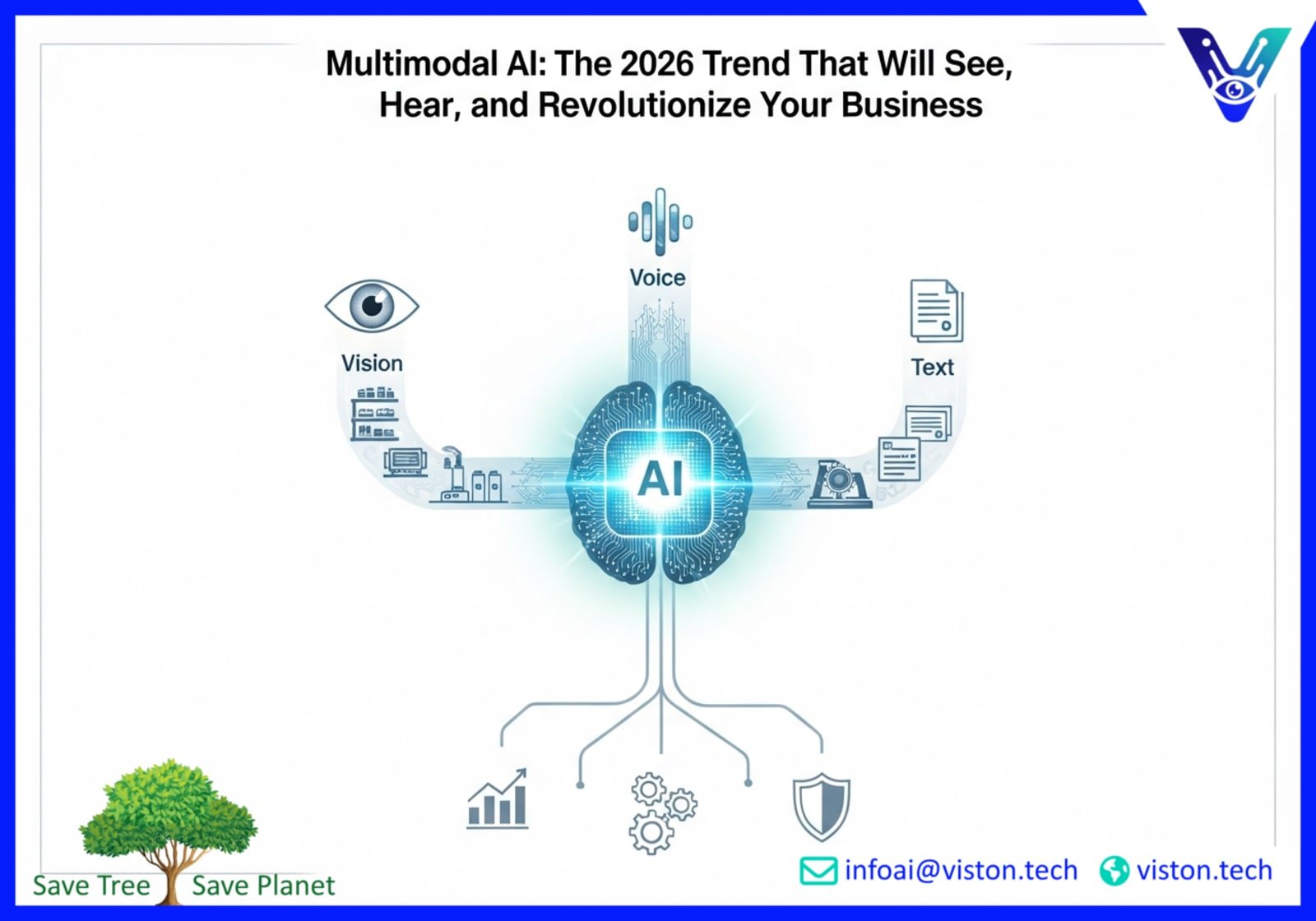
Unlock the future of business with multimodal agents. This 2026 AI trend merges text, voice, and vision to automate complex workflows, boosting efficiency, accuracy, and decision-making for a powerful competitive advantage. Read More
#multimodalagents #voicevision #AIforbusiness #futureofAI #enterprisetech #digitaltransformation #VistonAI #AIin2026 #complexworkflows #AIsolutions
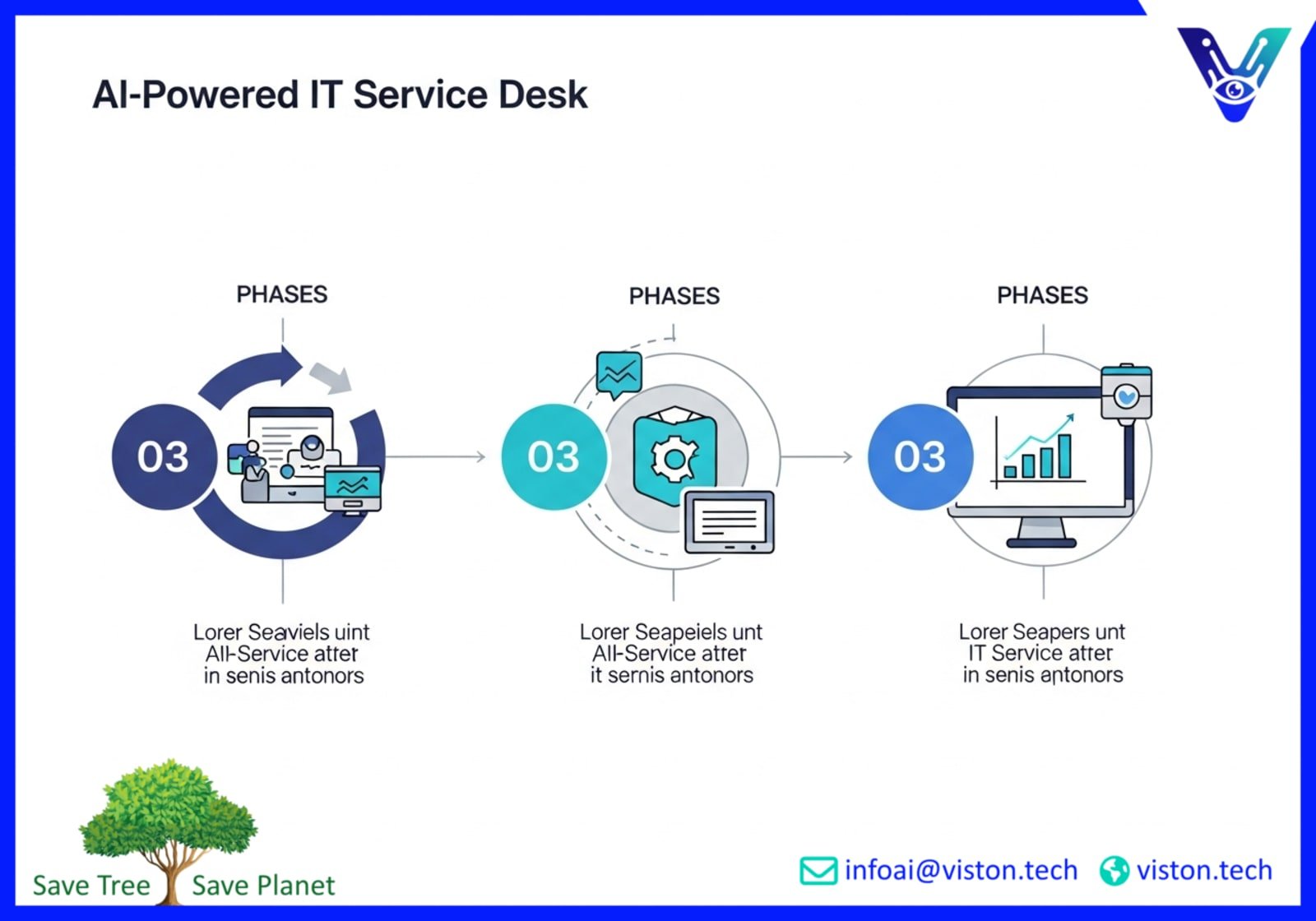
Revolutionize your IT service desk. Learn how AI agents are evolving from intelligent ticket triage to full, autonomous case resolution, dramatically improving efficiency and user satisfaction. Read More #AIAgents #ITSM #ServiceDesk #Automation
Charged based on actual usage, such as per request, per GB of bandwidth, or per page scraped, with no fixed commitment.
A one-time fee is charged for a specific project, regardless of volume or duration, based on scope and complexity.
Billed based on the time spent developing, running, or maintaining the scraper, often used for custom or consulting-heavy projects.
pay a recurring fee (monthly or annually) for access to scraping services, often tiered based on usage limits like the number of requests, pages scraped, or data points extracted.
Begin with comprehensive stakeholder engagement to understand business objectives, success metrics, and requirements. Conduct thorough analysis of existing workflows, data sources, and technical constraints. Establish clear project scope, timeline, and success criteria while ensuring alignment between AI strategy and business goals.
Collect, clean, and prepare high-quality data from all relevant sources. Perform exploratory data analysis (EDA) to uncover patterns and insights. Establish robust data pipelines, ensure data quality standards, and create the foundation for AI model training. This step prevents the "garbage in, garbage out" scenario.
Select appropriate AI models based on problem requirements and data characteristics. Develop, train, and fine-tune models using iterative approaches. Focus on achieving optimal balance between accuracy, interpretability, and performance. Implement version control and documentation for model assets.
Rigorously test models against unseen data and validate performance metrics. Conduct scenario testing, edge-case analysis, and A/B testing. Integrate the AI solution into existing IT infrastructure through APIs, containerization, or cloud deployment. Ensure security, scalability, and compliance requirements are met.
Deploy the validated AI solution into production environment with proper monitoring systems. Provide comprehensive training to end-users and IT staff. Implement authentication, security protocols, and compliance measures. Focus on smooth integration with business workflows and user adoption.
Establish ongoing monitoring systems to track model performance, business impact, and user feedback. Implement continuous learning loops for model improvement. Regular assessment of KPIs, retraining schedules, and adaptation to changing business needs. Ensure long-term value delivery and system reliability.
Image Recognition & Classification uses deep learning models, particularly convolutional neural networks, to analyze visual content and assign predefined labels or categories. The system processes images through multiple layers that detect features ranging from basic edges and textures to complex objects and scenes, ultimately predicting which categories best describe the image content with associated confidence scores. Enterprise implementations typically combine transfer learning from pre-trained models with custom training on domain-specific datasets to achieve 95-99% accuracy for business applications.
Production-grade image classification systems achieve 95-99% accuracy depending on use case complexity, data quality, and problem definition. Simple binary classifications may exceed 99% accuracy, while fine-grained distinctions among thousands of similar categories typically range from 95-97%. Viston’s platform includes comprehensive testing frameworks with confusion matrices, precision-recall analysis, and edge case detection that validate performance before deployment. Critical applications often implement confidence thresholds with human-in-the-loop validation for predictions below 90% certainty, balancing automation with quality assurance.
Retail and e-commerce leverage automated product categorization and visual search; healthcare uses diagnostic imaging support for radiology and pathology; manufacturing implements automated quality inspection and defect detection; financial services deploy document processing and fraud detection; agriculture benefits from crop health monitoring; smart cities optimize traffic management; and content platforms require moderation at scale. Any industry generating significant visual data or requiring consistent visual analysis gains efficiency, accuracy, and competitive advantages through computer vision automation.
Viston’s platform provides REST APIs, SDKs, and pre-built connectors for common enterprise systems including SAP, Oracle, Salesforce, and industry-specific platforms like PACS for healthcare or MES for manufacturing. Integration patterns support both batch processing of archived images and real-time streaming of new visual content, with deployment options including cloud-hosted APIs, on-premise containers, or edge devices. Data flows bidirectionally—vision systems receive images from operational systems and return classification results, confidence scores, and metadata that trigger downstream workflows or populate databases and dashboards.
Custom classification models typically require 100-1,000 labeled examples per category depending on use case complexity, visual similarity between categories, and whether transfer learning from pre-trained models is applicable. Viston’s platform reduces data requirements through active learning that prioritizes labeling of informative examples, semi-supervised techniques that leverage unlabeled data, and domain adaptation from related datasets. For most enterprise applications, 50,000-500,000 total labeled images enable production-ready models, with continuous learning processes that improve accuracy as operational data accumulates post-deployment.
Viston implements privacy-by-design architectures with data minimization, purpose limitation, and automated retention policies that delete or anonymize images after classification. GDPR compliance includes data processing agreements, right-to-erasure capabilities, and documentation of legal bases for processing. HIPAA deployments feature encrypted data transmission and storage, access controls, audit logging, and business associate agreements. Industry-specific requirements like FDA validation for medical devices or financial services regulations receive dedicated compliance frameworks with testing protocols, documentation, and ongoing monitoring that satisfies regulatory scrutiny.
Most organizations achieve positive ROI within 6-18 months depending on use case, implementation scope, and baseline costs. Quick wins like automated document classification or simple quality inspection may pay for themselves within 3-6 months through direct labor savings. Complex applications requiring extensive custom training and integration typically reach ROI in 12-18 months as accuracy improves and adoption expands across business units. Long-term value compounds through continuous improvement, new use case expansion, and competitive advantages that traditional ROI calculations underestimate. Viston provides ROI modeling during evaluation to set realistic expectations aligned with business cases.
Yes, modern vision platforms process video by analyzing individual frames or sequences at 15-30 frames per second depending on model complexity and hardware acceleration. Real-time applications like manufacturing inspection, traffic monitoring, or security surveillance deploy edge devices with GPU or specialized AI chips that enable millisecond inference latency. Viston’s architecture supports both frame-by-frame classification and temporal analysis that considers motion patterns across frames, with intelligent sampling that processes every Nth frame for efficiency while maintaining detection accuracy for critical events or anomalies in continuous video streams.
Comprehensive error handling includes confidence thresholds that route uncertain predictions to human review, active learning that identifies problematic examples for additional training, and ensemble methods that combine multiple models for robust predictions. Viston’s platform provides detailed error analysis including confusion matrices showing which categories are frequently confused, attention visualizations highlighting problematic image regions, and anomaly detection for inputs significantly different from training data. Post-deployment monitoring tracks performance metrics, identifies systematic errors from concept drift or new data patterns, and triggers model retraining workflows to maintain accuracy as conditions evolve.
Enterprise platforms provide production-grade reliability with 99.9%+ uptime guarantees, customization supporting proprietary taxonomies with thousands of categories, on-premise and hybrid deployment options for data sovereignty, compliance frameworks for regulated industries, explainability features for high-stakes decisions, scalability handling millions of daily images, integration capabilities with enterprise systems, dedicated support and SLA commitments, model monitoring and lifecycle management, and long-term partnership rather than pay-per-call commodity services. Viston’s LLMOps approach treats vision AI as strategic infrastructure requiring governance, performance optimization, and continuous improvement aligned with business objectives.
