
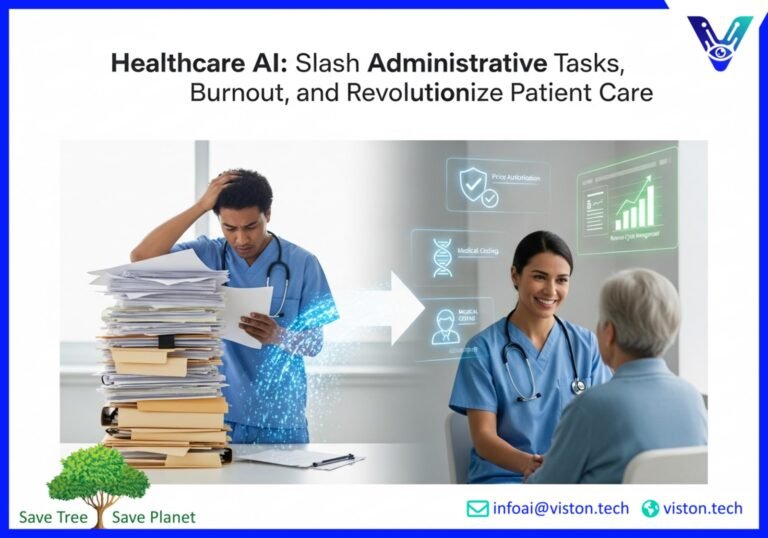
Healthcare AI Agents: Automating Administrative Tasks and Improving Patient Care
The healthcare industry is grappling with a silent crisis: administrative burden. Physicians and their staff are spending an enormous amount of time on paperwork, leading to burnout and taking valuable time away from patient care. In fact, studies show that administrative tasks can consume up to 40% of a hospital’s total expenses. This isn’t just an operational issue; it’s a critical barrier to efficient and effective healthcare delivery. But what if there was a way to reclaim that lost time, streamline operations, and ultimately, enhance patient outcomes? The answer lies in the transformative power of Healthcare AI Agents.
The market for AI in healthcare is booming, projected to grow from over $39 billion in 2025 to more than $500 billion by 2032. This incredible growth is fueled by the increasing demand for efficiency and better patient outcomes. At the forefront of this revolution are healthcare AI agents, sophisticated systems designed to automate and optimize the administrative and clinical workflows that are currently bogging down the industry. These AI agents are not just a futuristic concept; they are practical solutions being deployed today to tackle real-world challenges.
From cutting down documentation time by an estimated 60% to accelerating diagnostics and automating complex revenue cycle management (RCM) workflows, AI agents are proving to be indispensable. Key trends like agentic RCM and self-pay orchestration are emerging, showcasing the immense potential of AI to create a more streamlined, cost-effective, and patient-centric healthcare ecosystem. This blog post will explore the significant impact of healthcare AI agents, their diverse use cases, the crucial aspects of risk and compliance, and the tangible steps for successful deployment.
The Crushing Weight of Administrative Burden in Healthcare
Physician burnout is a pervasive issue, with a significant number of doctors reporting symptoms. A primary driver of this is the overwhelming administrative workload. Physicians can spend a staggering amount of their time on non-clinical tasks, including documentation, billing, and dealing with insurance-related paperwork. This administrative overload not only contributes to professional dissatisfaction but also has a direct, negative impact on patient care by reducing the time clinicians can spend with their patients.
The financial implications are equally concerning. Administrative costs represent a substantial portion of total healthcare spending in the United States. These costs are driven by the complexities of the multi-payer system, extensive regulation, and inefficient, often manual, processes. Tasks that should be straightforward, like verifying insurance benefits or obtaining prior authorization, become time-consuming hurdles that delay care and inflate costs.
Enter Healthcare AI Agents: A New Era of Efficiency
Healthcare AI agents are intelligent software systems designed to perform administrative and clinical tasks with minimal human intervention. By leveraging technologies like machine learning and natural language processing, these agents can understand, learn, and execute complex workflows. Think of them as a highly efficient digital workforce, capable of handling the repetitive, rule-based tasks that currently consume so much of healthcare professionals’ time.
The benefits of integrating AI agents into healthcare workflows are manifold:
- Reduced Administrative Overhead: By automating tasks, AI agents free up staff to focus on more complex, patient-facing responsibilities.
- Increased Accuracy: AI can perform tasks with a high degree of precision, reducing the human errors that often lead to claim denials and billing issues.
- Faster Turnaround Times: Automation accelerates processes like prior authorization and claims submission, leading to quicker reimbursements and improved cash flow.
- Enhanced Patient Experience: With administrative processes running smoothly in the background, patients experience shorter wait times and a more streamlined care journey.
Transforming Healthcare Workflows: Key Use Cases for AI Agents
The applications for healthcare AI agents span the entire patient journey, from initial scheduling to final payment. Here are some of the most impactful use cases that are reshaping the industry:
Benefits and Eligibility Verification
Verifying a patient’s insurance coverage and eligibility is a critical first step in the revenue cycle. Manually performing this check for every patient is a time-consuming process prone to errors. AI agents can automate this entire workflow:
- Real-time Verification: AI can instantly connect with payer portals to verify a patient’s coverage details, including deductibles, copayments, and out-of-pocket maximums.
- Reduced Denials: By ensuring that services are covered before they are rendered, AI helps to significantly reduce the number of denied claims due to eligibility issues.
- Improved Patient Satisfaction: Patients are better informed about their financial responsibilities upfront, leading to greater transparency and a better overall experience.
Prior Authorization Automation
Prior authorization is notoriously one of the most burdensome administrative tasks in healthcare, often causing significant delays in patient care. AI-powered automation is a game-changer in this area:
- Automated Submission: AI agents can automatically gather the necessary clinical documentation from the Electronic Health Record (EHR) and submit prior authorization requests to payers electronically.
- Real-time Status Tracking: The system can track the status of each request, providing updates and flagging any that require further action.
- Reduced Delays in Care: By speeding up the approval process, AI ensures that patients receive the treatments they need in a timely manner. The American Medical Association has found that a vast majority of physicians report care delays due to prior authorization.
Medical Coding and Billing
Accurate medical coding is essential for proper reimbursement, but it is also a complex and error-prone process. The standard ICD-10 coding system contains about 70,000 codes. AI is revolutionizing this critical RCM function:
- Automated Code Assignment: Using natural language processing, AI can analyze clinical documentation and suggest the most appropriate medical codes, improving accuracy and consistency.
- Claim Scrubbing: AI agents can “scrub” claims before submission, checking for errors, inconsistencies, and missing information that could lead to denial.
- Optimized Revenue Cycle: By reducing coding errors and claim denials, AI helps healthcare organizations to optimize their revenue cycle and improve their financial health.
Claims Management and Statusing
Managing the lifecycle of a claim, from submission to payment, involves a significant amount of follow-up and administrative effort. AI agents can automate much of this process:
- Automated Follow-up: AI can automatically check the status of submitted claims with payers, identifying any that are delayed or have been denied.
- Denial Management: For denied claims, AI can help to identify the reason for the denial and even initiate the appeals process by gathering the required documentation.
- Improved Cash Flow: By accelerating the claims process and reducing the number of outstanding accounts receivable, AI improves the financial stability of healthcare providers.
Navigating Risk and Ensuring Compliance: HIPAA and AI
The integration of AI into healthcare workflows raises important questions about data privacy and security. The Health Insurance Portability and Accountability Act (HIPAA) sets the standard for protecting sensitive patient health information (PHI). Any AI solution used in healthcare must be fully HIPAA compliant.
Ensuring compliance involves several key considerations:
- Data Encryption: All PHI handled by AI systems must be encrypted, both at rest and in transit, to prevent unauthorized access.
- Access Controls: Strict access controls must be in place to ensure that only authorized individuals can view or interact with patient data.
- Audit Trails: AI systems should maintain detailed logs of all data access and system activity, creating a transparent audit trail.
- Business Associate Agreements (BAAs): Healthcare organizations must have a signed BAA with any third-party AI vendor that handles PHI, ensuring that the vendor adheres to all HIPAA regulations.
By prioritizing security and compliance from the outset, healthcare organizations can leverage the power of AI while safeguarding patient privacy. For more detailed information on this topic, a valuable resource is the U.S. Department of Health & Human Services’ HIPAA page.
Real-World Success: Case Studies in AI Implementation
The theoretical benefits of healthcare AI are compelling, but the real proof is in the results. Several healthcare systems have already successfully implemented AI agents and are reaping the rewards:
- A large hospital network utilized AI-powered predictive analytics to reduce patient readmissions. By analyzing historical patient data, they were able to identify high-risk patients and intervene proactively, resulting in a 20% reduction in 30-day readmission rates and millions of dollars in annual savings.
- Valley Medical Center implemented an AI solution to streamline its utilization management processes. This led to a 67% improvement in the volume of case reviews their team could handle, allowing them to complete 100% of reviews and focus on the clinical merits of each case.
- Johns Hopkins Hospital has adopted AI-powered predictive analytics to anticipate patient deterioration and readmission risks, enabling faster clinical decisions and better care coordination.
A Practical Guide to Deploying Healthcare AI Agents
Implementing AI into your healthcare organization may seem like a daunting task, but with a structured approach, it can be a smooth and successful transition. Here are the key steps to consider:
- Identify Key Pain Points: Start by identifying the administrative or clinical workflows that are causing the most significant bottlenecks and inefficiencies in your organization. This could be prior authorization, claims management, or patient scheduling.
- Define Clear Objectives: Once you’ve identified the problem areas, define clear and measurable objectives for your AI implementation. For example, your goal might be to reduce claim denial rates by a certain percentage or decrease the time spent on prior authorizations.
- Select the Right AI Partner: Choosing the right technology partner is crucial. Look for a vendor with a proven track record in healthcare AI, a deep understanding of HIPAA compliance, and a solution that can integrate seamlessly with your existing EHR and other systems. Explore reputable sources like the KLAS Research website for vendor performance data.
- Start with a Pilot Program: Before a full-scale rollout, implement a pilot program in a specific department or for a particular workflow. This allows you to test the technology, gather feedback from staff, and make any necessary adjustments.
- Provide Comprehensive Training: Ensure that your staff is thoroughly trained on how to use the new AI system. This will help to drive user adoption and maximize the benefits of the technology.
- Monitor and Optimize: After implementation, continuously monitor the performance of the AI agent and gather data on its impact. Use these insights to further optimize workflows and identify new opportunities for automation.
The Future is Agentic: What’s Next for Healthcare AI?
The evolution of healthcare AI is far from over. The next wave of innovation will see the rise of more sophisticated “agentic AI” systems. These agents will not only automate tasks but also make intelligent decisions and recommendations, acting as true partners to healthcare professionals. Imagine a future where an AI agent can proactively identify gaps in care, suggest personalized treatment plans, and seamlessly coordinate a patient’s entire care journey.
The continued growth of the digital health market, which is estimated to be worth over $300 billion in 2026, will further accelerate the adoption of these advanced AI solutions. As we move forward, the focus will be on creating a more connected and interoperable healthcare ecosystem where AI-driven insights are seamlessly integrated into daily workflows, empowering clinicians and improving patient outcomes.
The journey towards an AI-powered healthcare future is an exciting one. By embracing these transformative technologies, we can alleviate the administrative burdens that plague the industry, empower our healthcare professionals to work at the top of their license, and ultimately, deliver a higher quality of care to every patient.
Ready to unlock the power of AI for your healthcare organization? Contact Viston AI today to learn how our intelligent automation solutions can help you streamline administrative tasks, reduce costs, and improve patient care.
Frequently Asked Questions (FAQs)
What are healthcare AI agents?
Healthcare AI agents are advanced software programs designed to automate and streamline administrative and clinical tasks within the healthcare industry. They use artificial intelligence technologies like machine learning and natural language processing to handle workflows such as prior authorization, medical coding, claims processing, and patient scheduling with minimal human intervention.
How do AI agents reduce administrative burden?
AI agents significantly reduce administrative burden by automating repetitive, time-consuming tasks. This frees up healthcare staff from manual paperwork, data entry, and follow-up calls, allowing them to focus on more complex, patient-facing activities. This can lead to increased efficiency, reduced operational costs, and lower rates of staff burnout.
Is it safe to use AI with patient data?
Yes, when implemented correctly, it is safe to use AI with patient data. Reputable healthcare AI solutions are designed to be fully compliant with the Health Insurance Portability and Accountability Act (HIPAA). This includes using robust data encryption, strict access controls, and detailed audit trails to ensure the privacy and security of protected health information (PHI).
What is the difference between AI and automation in healthcare?
While related, AI and automation are not the same. Automation in healthcare typically refers to using software to perform simple, rule-based tasks (Robotic Process Automation or RPA). AI, on the other hand, involves more advanced technology that can learn, reason, and make decisions. Healthcare AI agents can handle more complex, variable workflows than simple automation tools.
How will AI impact the jobs of healthcare administrative staff?
AI is not intended to replace healthcare administrative staff but rather to augment their capabilities. By handling the mundane and repetitive aspects of their jobs, AI allows staff to focus on higher-value tasks that require human empathy, critical thinking, and complex problem-solving skills, such as patient communication and resolving complex billing issues.
What is Revenue Cycle Management (RCM) and how does AI help?
Revenue Cycle Management (RCM) is the financial process that healthcare facilities use to manage the administrative and clinical functions associated with claims processing, payment, and revenue generation. AI helps RCM by automating key components like benefits verification, prior authorization, medical coding, and claims management, which leads to fewer errors, faster payments, and improved financial performance.
Can small practices benefit from healthcare AI agents?
Absolutely. While large hospital systems are early adopters, AI solutions are becoming increasingly accessible to smaller practices as well. Cloud-based AI platforms offer scalable and cost-effective options for smaller organizations to automate their administrative workflows and reap the benefits of increased efficiency and improved revenue cycle management without a large upfront investment.
How do I get started with implementing AI in my healthcare organization?
A good starting point is to identify the most significant administrative bottlenecks in your current workflows. Then, research reputable AI vendors who specialize in healthcare and offer solutions that integrate with your existing systems. Starting with a pilot program for a specific task, like prior authorization automation, can be an effective way to introduce AI and demonstrate its value before a broader rollout.
#HealthcareAI #AIinHealthcare #DigitalHealth #RevenueCycleManagement #RCM #PriorAuthorization #PatientCare #HealthcareTechnology #AdministrativeAutomation #VistonAI
