
Financial services organizations face unprecedented challenges in fraud detection, risk assessment, and regulatory compliance. Viston delivers end-to-end AI solutions purpose-built for banks, insurance providers, investment firms, and fintech innovators across the USA, UK, Germany, France, and Australia. With 15+ years of expertise serving 2860+ global clients, we transform complex financial data into actionable intelligence through scalable LLMOps infrastructure, real-time anomaly detection, and responsible AI governance frameworks that protect your institution while accelerating digital transformation.
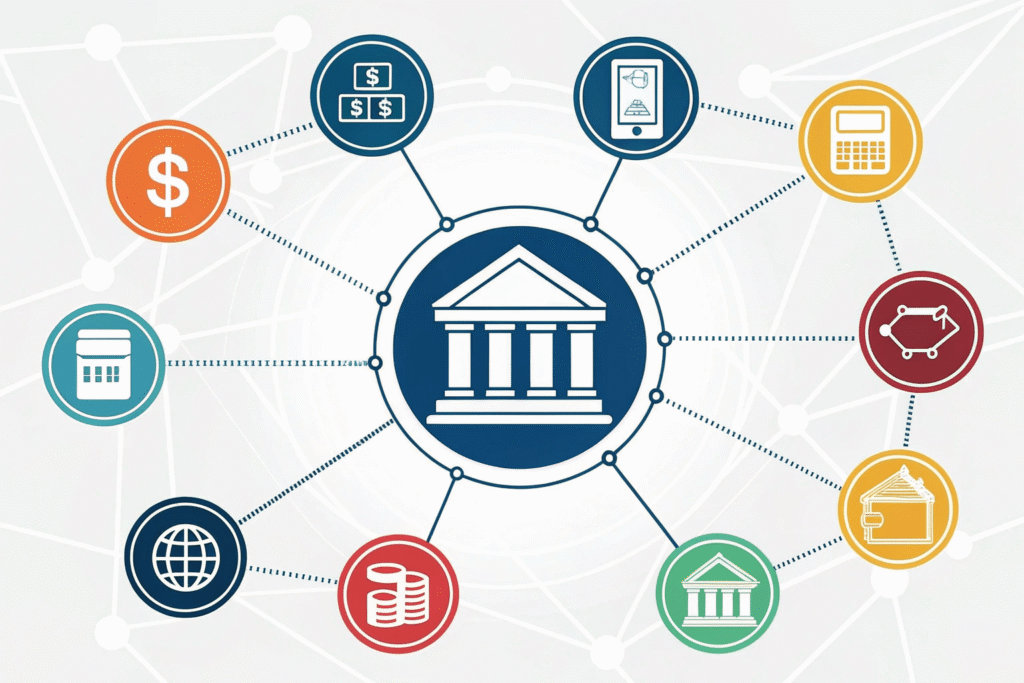

























































































































































































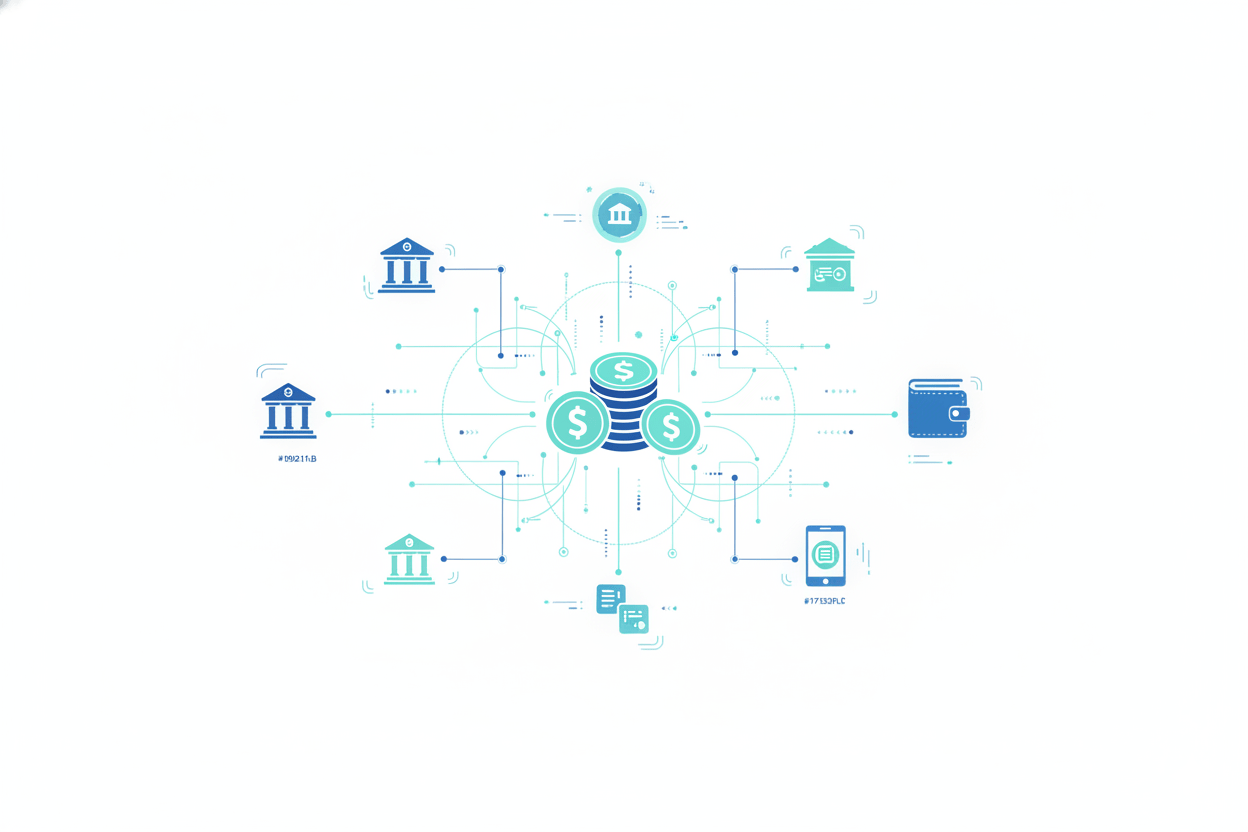
Financial institutions operating in competitive markets across North America, Europe, and Australia require intelligent systems that detect sophisticated fraud patterns, assess credit risk with precision, and maintain regulatory compliance across multiple jurisdictions. Traditional rule-based systems cannot keep pace with evolving cyber threats, money laundering schemes, and insider trading patterns. Viston’s LLMOps platform integrates seamlessly with core banking systems, payment gateways, and trading platforms to provide real-time risk intelligence that protects assets while enabling confident business decisions. Our AI solutions process structured and unstructured data from transactions, customer interactions, market feeds, and external threat databases to identify anomalies invisible to conventional monitoring tools.
Machine learning models continuously evolve by analyzing transaction patterns, device fingerprints, behavioral biometrics, and network relationships to identify fraudulent activity with precision while minimizing false positives that frustrate legitimate customers
Combine credit scoring, market risk analytics, operational risk monitoring, and counterparty evaluation through unified AI models that provide comprehensive risk profiles for lending decisions, investment strategies, and portfolio management
Generative AI systems automatically interpret regulatory updates across USA, UK, German BaFin, French AMF, and Australian APRA requirements, translating complex mandates into actionable compliance workflows that reduce manual review time by 68%
Advanced natural language processing analyzes customer documentation, transaction narratives, and sanctions lists across 140+ countries to detect money laundering, terrorist financing, and sanctions violations with multilingual support
Deploy production-ready fraud detection, risk assessment, and compliance automation through unified LLMOps infrastructure designed for financial services scale and security requirements.

Real-time analysis of payment flows, wire transfers, card transactions, and cryptocurrency movements using ensemble machine learning models that detect fraud patterns across channels while maintaining sub-100ms latency for seamless customer experiences.

Combine traditional credit bureau data with alternative data sources including social signals, payment behavior, and business performance metrics through gradient boosting algorithms that improve lending accuracy while expanding financial inclusion across underserved segments.

Generative AI systems extract relevant data from core systems, apply jurisdiction-specific formatting rules, and generate regulatory submissions for SEC, FCA, EBA, and ASIC requirements while maintaining complete audit trails for examiner review.

Advanced pattern recognition analyzes trading activity, order flow, and communication channels to detect insider trading, market manipulation, and spoofing across equities, fixed income, commodities, and cryptocurrency markets with explainable AI outputs for compliance teams.
Deploy behavioral biometrics and device intelligence across card-not-present transactions to reduce false declines by 45% while catching sophisticated account takeover attempts targeting high-value customers in competitive US banking markets.
Analyze SEPA, SWIFT, and instant payment transactions across 27 EU member states using multilingual natural language processing that detects structuring, trade-based money laundering, and sanctions evasion while maintaining GDPR compliance.
Track blockchain activity, wallet relationships, and exchange flows to identify high-risk crypto assets entering traditional banking systems, meeting FCA expectations for digital asset compliance and financial crime prevention.
Apply computer vision and natural language understanding to claims documentation, telematics data, and social media activity to detect staged accidents, inflated damages, and organized fraud rings targeting German insurance markets.
Combine property valuation data, employment verification, spending patterns, and macroeconomic indicators through ensemble models that improve lending decisions for Australian residential and commercial real estate financing.
Analyze letters of credit, bills of lading, and commercial invoices using document intelligence that detects double financing, cargo fraud, and shell company schemes affecting Nordic export-import businesses.
Monitor client communications, portfolio recommendations, and suitability assessments using generative AI that ensures MiFID II compliance while identifying potential conflicts of interest in French wealth management operations.
Integrate internal system logs, threat feeds, and dark web monitoring to predict and prevent cyber attacks targeting Canadian financial institutions through proactive security orchestration and automated incident response.
Analyze portfolio positions, counterparty exposure, and macroeconomic scenarios using advanced quantitative models that optimize risk-return profiles for Dutch pension administrators managing retirement security for millions.
Financial crime evolves continuously as sophisticated actors develop new attack vectors targeting payment systems, lending platforms, and trading infrastructure. Viston’s adaptive fraud detection framework combines supervised learning from historical fraud cases with unsupervised anomaly detection that identifies previously unknown attack patterns. Our system analyzes over 300 data points per transaction including device fingerprinting, IP geolocation, transaction velocity, merchant category analysis, and behavioral consistency scoring. Machine learning models trained on billions of global transactions detect subtle indicators of synthetic identity fraud, friendly fraud, refund abuse, and account takeover attempts that bypass traditional rule-based systems.
Traditional credit scoring models rely heavily on bureau data that may not capture complete financial behavior, particularly for thin-file consumers, small businesses, and emerging market segments. Viston’s predictive credit risk platform expands assessment capabilities by incorporating alternative data including bank account transaction patterns, utility payment history, rent payments, educational background, employment stability, and digital footprint analysis. Advanced feature engineering extracts meaningful risk signals while privacy-preserving techniques ensure FCRA, GDPR, and local data protection compliance across all operating jurisdictions.
Lending institutions in competitive markets deploy our risk assessment platform to improve approval rates, reduce default losses, and expand responsible lending to underserved populations. Gradient boosting algorithms analyze complex interactions between traditional and alternative data sources to generate more accurate risk predictions than conventional FICO-based approaches. The platform supports consumer lending, small business loans, commercial real estate financing, and trade finance applications across USA, European, and Australian markets. Explainable AI features provide clear documentation of decision factors for regulatory compliance, fair lending requirements, and adverse action notices. Continuous model monitoring detects performance degradation and population drift while automated retraining maintains predictive accuracy as economic conditions evolve.
Background: A Fortune 500 financial institution operating across North America, Europe, and Asia struggled with inconsistent marketing messaging, slow content approval cycles, and rising creative agency costs. Their marketing team managed 40+ product lines across 23 countries, requiring thousands of content pieces monthly while maintaining strict regulatory compliance.
Challenge: Manual content creation processes resulted in 6-8 week lead times from briefing to publication. Regional marketing teams often resorted to creating unapproved content locally, creating compliance risks. Annual creative agency spending exceeded $12M while campaign velocity continued declining. The organization needed to scale content production 5x while reducing costs and improving governance.
Solution: Viston deployed a custom content automation platform with brand-trained GPT models, multilingual capabilities, and built-in compliance screening. The system automated blog post creation, social media content, email campaigns, and product descriptions across all markets. Human reviewers focused only on strategic approvals while AI handled production and localization.
Results: Content production velocity increased 470% with average creation time dropping from 6 weeks to 4 days. Marketing content costs decreased by $8.2M annually. Compliance violations fell to zero through automated regulatory screening. Regional marketing satisfaction scores improved 83% due to faster content delivery and local customization capabilities.
Testimonial: “Viston’s content automation transformed our marketing operations. We now publish more content, faster, with better brand consistency and zero compliance issues. The ROI exceeded our most optimistic projections within the first quarter.” — Chief Marketing Officer
Background: A multinational healthcare organization serving patients across Germany, France, and the Netherlands needed to produce educational content covering 200+ medical conditions and treatments in multiple languages while maintaining GDPR compliance and medical accuracy.
Challenge: Medical writers created content manually, limiting output to 15-20 articles monthly. Growing patient populations and regulatory requirements demanded 10x more educational materials. Translation costs alone exceeded €400K annually. The organization required scalable content production without compromising medical accuracy or patient safety.
Solution: Viston implemented a specialized content automation system combining medical-trained AI models with physician review workflows. The platform generated patient education articles, treatment guides, and FAQ content in German, French, and Dutch with automated medical fact-checking against approved clinical databases. Subject matter experts reviewed AI drafts rather than writing from scratch.
Results: Monthly content output increased from 18 to 247 articles across three languages. Physician review time decreased 76% as they edited AI drafts rather than creating initial content. Translation costs fell €310K annually through AI-native multilingual generation. Patient engagement with educational content improved 62% due to increased content availability and localization quality.
Testimonial: “The medical accuracy and compliance safeguards built into Viston’s platform gave us confidence to scale content production dramatically. Our physicians now spend time enhancing content rather than writing first drafts, resulting in better patient education at lower cost.” — Head of Patient Experience
Background: A B2B SaaS company based in San Francisco competed in a crowded market where thought leadership and educational content determined buyer consideration. Their small content team struggled to maintain publishing velocity against competitors with larger creative budgets.
Challenge: The three-person content team could publish only 8 blog posts and 2 white papers monthly. Sales teams demanded 5x more content to support demand generation and deal cycles. Budget constraints prevented hiring additional writers. Competitors published daily while this organization posted weekly, creating disadvantage in organic search rankings and industry visibility.
Solution: Viston deployed a content automation platform specializing in technical B2B content creation. AI models trained on the company’s existing high-performing content, industry research, and technical documentation generated blog drafts, social posts, and email newsletters. Content strategists edited and enhanced AI outputs while focusing on strategic content planning.
Results: Publishing velocity increased to 47 blog posts and 9 white papers monthly with the same team size. Organic search traffic grew 340% within six months. Sales-qualified leads from content increased 128%. Content production costs decreased 54% while output increased 475%, delivering exceptional ROI.
Testimonial: “Viston enabled our small team to compete with enterprise content operations. The AI handles the heavy lifting while we add strategic value and subject matter expertise. We’ve become thought leaders in our space because we can finally publish at scale.” — Director of Content Marketing
Background: A consumer packaged goods company in Melbourne launched 40-60 new products annually across grocery, pharmacy, and online channels. Each launch required product descriptions, marketing copy, social media content, and retailer-specific materials creating bottlenecks in go-to-market timing.
Challenge: Content creation represented the longest phase in product launch cycles, taking 8-12 weeks per product. External copywriters cost $45K per launch with inconsistent quality and slow revisions. Delayed launches due to content production resulted in lost revenue and missed seasonal windows.
Solution: Viston implemented an automated product launch content system that generated all marketing materials from product specifications and brand guidelines. The platform produced e-commerce descriptions, social content calendars, email campaigns, and retailer materials in days rather than months. Brand managers reviewed and approved rather than briefing external agencies.
Results: Product launch timelines decreased from 12 weeks to 5 weeks, enabling faster market entry. Content costs per launch fell from $45K to $7K, saving $1.9M annually. Launch content quality consistency improved through brand-trained models. The company now launches products during optimal seasonal windows rather than missing market timing.
Testimonial: “Content was our launch bottleneck until Viston automated our production workflows. We now get to market 60% faster while maintaining brand excellence. That speed advantage translates directly to revenue and competitive positioning.” — VP of Marketing
Background: A wealth management firm operating across Sweden, Denmark, and Norway provided investment advisory services to high-net-worth clients. Regulatory requirements demanded extensive disclosure documentation, client communications, and marketing compliance across three jurisdictions with different financial regulations.
Challenge: Manual creation of compliant marketing materials took 6-8 weeks with 30% requiring revisions after legal review. Inconsistent compliance messaging across markets created regulatory risk. The legal team reviewed 100% of content, creating bottlenecks. Competitors using automation tools launched campaigns faster.
Solution: Viston deployed a compliance-first content automation platform with jurisdiction-specific regulatory rules encoded into AI models. The system generated investment commentary, client newsletters, and marketing materials with automated compliance checking against Swedish, Danish, and Norwegian financial regulations. Legal reviews focused on strategic approvals rather than basic compliance screening.
Results: Content creation time decreased from 7 weeks to 9 days. Legal review cycles reduced 68% as AI pre-screened for compliance issues. Regulatory violations dropped to zero across all markets. Marketing campaign velocity increased 280%, improving client engagement and asset gathering capabilities.
Testimonial: “Viston’s understanding of Nordic financial regulations was exceptional. Their platform doesn’t just automate content—it embeds compliance expertise into every workflow, giving us confidence to scale while managing risk.” — Chief Compliance Officer
Background: A German industrial equipment manufacturer serving automotive and aerospace sectors produced complex technical documentation for 3,000+ products. Technical writers struggled to maintain current documentation while supporting new product launches and regulatory updates.
Challenge: Documentation creation averaged 40 hours per product manual. The eight-person technical writing team maintained existing documentation but couldn’t support new product velocity. Outdated documentation created customer service issues and compliance risks. Translation into 12 languages added months to international launches.
Solution: Viston implemented an AI-powered technical content automation system that generated equipment manuals, specification sheets, and maintenance guides from engineering data and CAD files. The platform automated multilingual translation with technical terminology consistency. Technical writers reviewed and enhanced AI outputs rather than writing from scratch.
Results: Documentation production time decreased from 40 hours to 6 hours per product. New product documentation now completes in days rather than months. Translation costs fell €280K annually through automated localization. Customer support tickets related to documentation quality decreased 47% due to improved clarity and comprehensiveness.
Testimonial: “Viston’s technical content automation handles the complexity of our products while maintaining the precision our industry demands. We’ve transformed documentation from a bottleneck into a competitive advantage.” — Head of Technical Publications
Transform fraud prevention, risk assessment, and compliance operations with enterprise-grade LLMOps trusted by leading financial institutions across USA, UK, Germany, France, and Australia. Viston’s 15+ years of expertise serving 2860+ global clients delivers measurable results: 67% fraud loss reduction, 68% faster compliance reporting, and 99.7% detection accuracy. Our team understands the unique challenges facing banks, insurance providers, and investment firms operating in competitive regulated markets.
Deploy fraud detection, risk assessment, and compliance automation across millions of daily transactions using distributed computing infrastructure that maintains sub-100ms latency regardless of processing volume, ensuring seamless customer experiences during peak demand periods while protecting institution security.
Meet GDPR, PSD2, Basel III, Dodd-Frank, MiFID II, and APRA requirements through built-in compliance frameworks that automatically adapt to regulatory updates across USA, UK, German, French, and Australian jurisdictions while maintaining complete audit trails for examiner review and supervisory inquiries.
Reduce manual fraud review time by 68% through intelligent case management workflows that route high-risk transactions for human investigation while auto-approving legitimate activity, freeing experienced analysts to focus on sophisticated threat investigation rather than routine alert processing.
Achieve 99.7% fraud detection accuracy through ensemble machine learning models that combine supervised learning from historical cases with unsupervised anomaly detection identifying emerging attack patterns, continuously improving through automated retraining as threat landscape evolves.
Realize 300%+ return on investment through reduced fraud losses, decreased false positives, lower compliance staffing requirements, and faster lending decisions that accelerate revenue while maintaining prudent risk management across retail, commercial, and investment banking operations.
Tailor fraud detection rules, risk scoring models, and compliance workflows to institution-specific requirements, customer segments, and regional market conditions through configurable platform architecture that supports rapid experimentation and continuous improvement without vendor dependencies.
Process transaction data, market feeds, and external threat intelligence in real-time using stream processing architecture that delivers risk scores, fraud alerts, and compliance notifications within milliseconds, enabling immediate intervention before financial impact occurs.
Connect seamlessly with core banking systems, payment gateways, trading platforms, customer relationship management tools, and external data sources through pre-built connectors and APIs that accelerate deployment while maintaining data security and privacy requirements.
Partnering with Viston AI means tapping into a team of seasoned AI experts who accelerate your transformation and deliver custom solutions aligned with your strategic goals.
Together, we drive measurable business impact, ensure scalable, future-proof implementations, and mitigate risks to keep you ahead of the competition.

Unlock 35-42% efficiency gains with specialized domain agents. Our 2025 guide details how to build and deploy industry-specific AI for healthcare, finance, retail, and manufacturing to transform your core business operations. Read More
#AIAgents #DomainSpecificAI #HealthcareAI #Fintech #RetailTech #ManufacturingAI #BusinessAutomation

The future of software development is here. Agentic coding pipelines use autonomous AI to plan, code, test, and deploy software, revolutionizing your SDLC and transforming the developer experience (DevEx).
Read More
#AgenticCoding #DevEx #SDLCAutomation #AIinDev #FutureOfCode #CodeGeneration #AITesting #SecureCoding #CI/CD
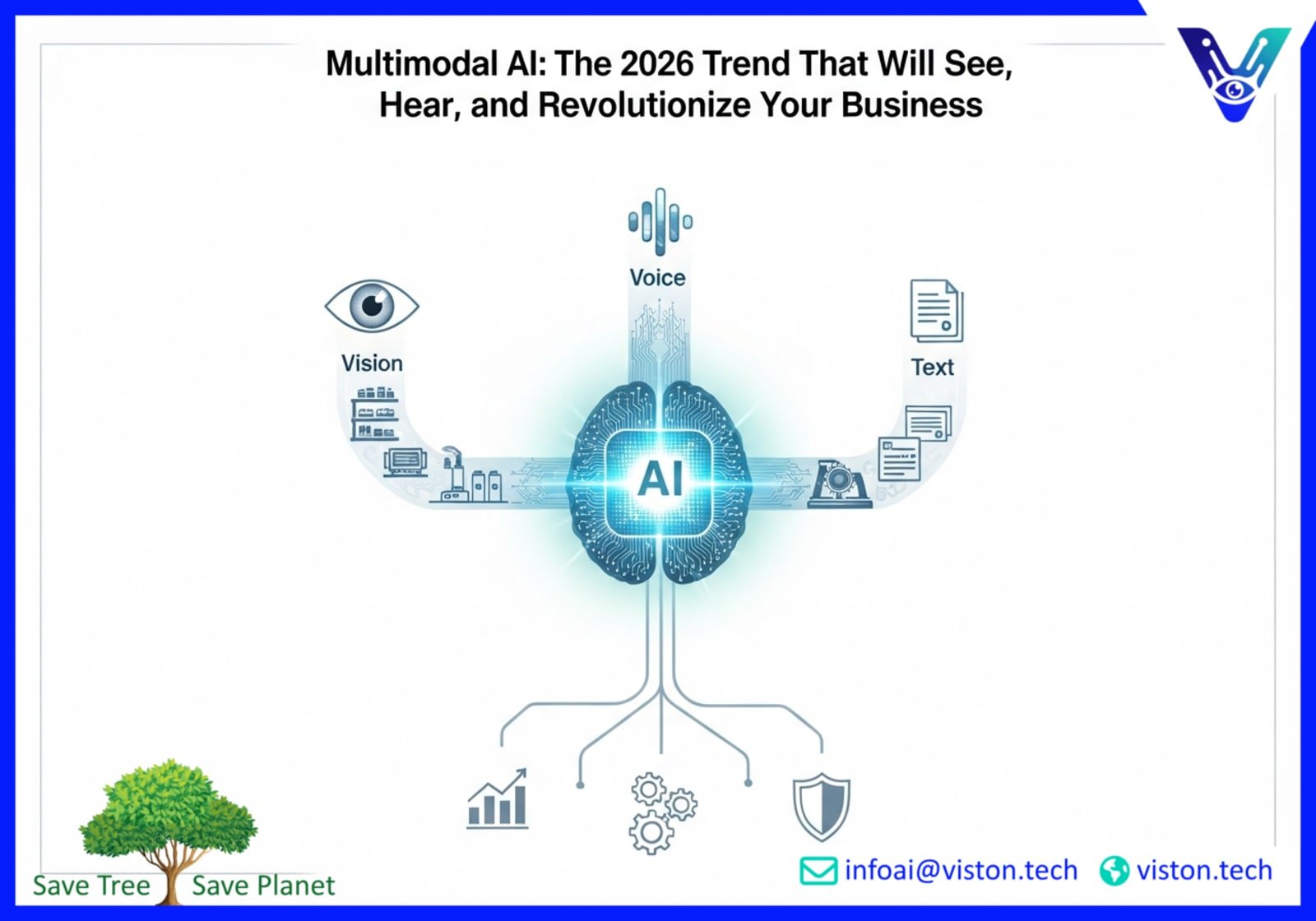
Unlock the future of business with multimodal agents. This 2026 AI trend merges text, voice, and vision to automate complex workflows, boosting efficiency, accuracy, and decision-making for a powerful competitive advantage. Read More
#multimodalagents #voicevision #AIforbusiness #futureofAI #enterprisetech #digitaltransformation #VistonAI #AIin2026 #complexworkflows #AIsolutions
Revolutionize your IT service desk. Learn how AI agents are evolving from intelligent ticket triage to full, autonomous case resolution, dramatically improving efficiency and user satisfaction. Read More #AIAgents #ITSM #ServiceDesk #Automation
Charged based on actual usage, such as per request, per GB of bandwidth, or per page scraped, with no fixed commitment.
A one-time fee is charged for a specific project, regardless of volume or duration, based on scope and complexity.
Billed based on the time spent developing, running, or maintaining the scraper, often used for custom or consulting-heavy projects.
pay a recurring fee (monthly or annually) for access to scraping services, often tiered based on usage limits like the number of requests, pages scraped, or data points extracted.
Begin with comprehensive stakeholder engagement to understand business objectives, success metrics, and requirements. Conduct thorough analysis of existing workflows, data sources, and technical constraints. Establish clear project scope, timeline, and success criteria while ensuring alignment between AI strategy and business goals.
Collect, clean, and prepare high-quality data from all relevant sources. Perform exploratory data analysis (EDA) to uncover patterns and insights. Establish robust data pipelines, ensure data quality standards, and create the foundation for AI model training. This step prevents the "garbage in, garbage out" scenario.
Select appropriate AI models based on problem requirements and data characteristics. Develop, train, and fine-tune models using iterative approaches. Focus on achieving optimal balance between accuracy, interpretability, and performance. Implement version control and documentation for model assets.
Rigorously test models against unseen data and validate performance metrics. Conduct scenario testing, edge-case analysis, and A/B testing. Integrate the AI solution into existing IT infrastructure through APIs, containerization, or cloud deployment. Ensure security, scalability, and compliance requirements are met.
Deploy the validated AI solution into production environment with proper monitoring systems. Provide comprehensive training to end-users and IT staff. Implement authentication, security protocols, and compliance measures. Focus on smooth integration with business workflows and user adoption.
Establish ongoing monitoring systems to track model performance, business impact, and user feedback. Implement continuous learning loops for model improvement. Regular assessment of KPIs, retraining schedules, and adaptation to changing business needs. Ensure long-term value delivery and system reliability.
Viston delivers comprehensive fraud prevention across card payments, digital banking, wire transfers, loan applications, and account opening through adaptive machine learning that analyzes over 350 transaction and behavioral attributes in real-time. Our platform combines device intelligence, behavioral biometrics, transaction velocity analysis, merchant risk scoring, and network relationship mapping to detect account takeover, synthetic identity fraud, application fraud, and payment fraud with 99.7% accuracy while maintaining false positive rates below 3%. The system integrates with existing authorization infrastructure, payment gateways, and fraud tools to provide seamless deployment across USA, European, and Australian financial institutions serving retail, commercial, and investment banking customers.
Viston’s predictive credit risk platform expands assessment capabilities beyond traditional bureau data by incorporating alternative data sources including bank transaction patterns, utility payments, employment stability, digital footprint analysis, and behavioral indicators through advanced feature engineering and gradient boosting algorithms. This comprehensive approach improves approval rates for thin-file consumers by 34% while maintaining stable default performance through more accurate risk prediction. The platform satisfies FCRA, GDPR, and fair lending requirements through explainable AI that documents decision factors for regulatory compliance, adverse action notices, and audit review. Financial institutions deploy our risk assessment framework for consumer lending, small business loans, commercial real estate, and trade finance across competitive North American, European, and Australian markets.
Viston’s financial services platform includes built-in compliance frameworks for GDPR data protection, PSD2 strong customer authentication, Basel III capital requirements, Dodd-Frank stress testing, MiFID II investment advice, APRA prudential standards, and local regulations across USA, UK, Germany, France, and Australia. Generative AI capabilities automatically interpret regulatory updates and translate complex mandates into actionable compliance workflows, reducing manual review time by 68%. The system maintains complete audit trails for all model decisions, risk assessments, and compliance actions with automated documentation generation for regulatory reporting, examiner inquiries, and internal governance. Regular updates ensure continued alignment with evolving regulatory expectations across all operating jurisdictions.
Deployment timelines typically range from 4-12 weeks depending on integration complexity, data availability, and institution-specific requirements. Viston provides pre-built connectors for major core banking systems, payment gateways, trading platforms, and data warehouses that accelerate implementation while maintaining security standards. Our technical teams work alongside institution staff to map data sources, configure risk models, establish compliance workflows, and train users through structured implementation methodology. Initial deployment often focuses on specific use cases like credit card fraud or loan risk assessment before expanding to additional products and channels. Cloud-native architecture enables rapid scaling as usage grows without infrastructure constraints.
The platform integrates with core banking systems, payment processors, credit bureaus, fraud data networks, threat intelligence feeds, customer relationship management tools, document management systems, and external alternative data providers through REST APIs, batch file transfer, and streaming data connections. Viston supports structured transaction data, unstructured text documents, images, voice recordings, and video content through multi-modal AI processing capabilities. Privacy-preserving techniques ensure GDPR, CCPA, and local data protection compliance while maximizing analytical value. The system operates on premises, in private cloud, or hybrid environments based on institution preferences and regulatory requirements across USA, European, and Australian markets.
Viston’s adaptive machine learning approach continuously optimizes the balance between fraud detection and customer experience through reinforcement learning that incorporates analyst feedback on alert dispositions. Ensemble models combine multiple detection techniques including supervised classification, unsupervised anomaly detection, and rule-based logic to achieve 99.7% fraud detection accuracy while maintaining false positive rates below 3%. Explainable AI provides clear rationales for risk scores, helping fraud analysts quickly assess legitimacy and close false positives efficiently. Automated case management routes low-risk alerts for auto-approval while focusing human investigation on genuine threats. Financial institutions typically see 52-67% reduction in false positives within six months of deployment through continuous model optimization.
Viston serves retail banks, commercial banks, credit unions, investment firms, insurance companies, payment processors, fintech lenders, wealth managers, and specialized finance companies across USA, Canada, UK, Germany, France, Nordic countries, wider Europe, and Australia. Our client base includes institutions ranging from $500M to $10B+ in annual revenue serving consumer, small business, middle market, and enterprise customers. Use cases span credit card fraud prevention, loan risk assessment, AML transaction monitoring, market abuse surveillance, insurance fraud detection, regulatory reporting automation, and cybersecurity threat intelligence. The platform’s configurable architecture supports diverse business models, regulatory environments, and customer segments across global financial services markets.
Continuous model monitoring tracks prediction accuracy, population drift, feature importance changes, and performance degradation across all deployed AI models using statistical process control and automated alerting. Automated retraining incorporates new fraud patterns, emerging risk indicators, and changing customer behavior to maintain predictive accuracy as market conditions evolve. Champion-challenger testing validates new model versions against production performance before deployment, ensuring improvements don’t compromise existing capabilities. A/B testing on live transactions measures business impact before full rollout. Model governance frameworks document all training data, algorithm changes, performance metrics, and approval workflows for regulatory model risk management requirements. Quarterly business reviews with client risk teams assess performance trends and improvement opportunities.
Viston implements bank-grade security including end-to-end encryption, role-based access controls, multi-factor authentication, network segmentation, intrusion detection, security information and event management, and regular penetration testing. The platform satisfies SOC 2 Type II, ISO 27001, and PCI DSS requirements through comprehensive security controls and annual audits. Privacy-preserving techniques including differential privacy, federated learning, and synthetic data generation enable powerful analytics while protecting customer information. Data residency options support GDPR, CCPA, and local data sovereignty requirements across USA, European, and Australian markets. All personnel undergo background checks and security awareness training while client data access follows least-privilege principles and comprehensive audit logging.
Viston delivers comprehensive onboarding including technical implementation support, user training for fraud analysts and risk managers, administrator certification for IT teams, and executive briefings on platform capabilities and business value. Ongoing support includes 24/7 technical assistance, dedicated customer success management, quarterly business reviews, regular product training on new features, and access to best practice documentation. Professional services teams provide advanced analytics consulting, custom model development, integration support, and optimization recommendations based on performance data. An online knowledge base, user community forums, and regular webinars ensure clients maximize platform value. All support includes service level agreements appropriate for mission-critical financial services operations across global markets.
