
With over 15 years of proven expertise serving 2,860+ global clients across the USA, UK, Germany, France, Australia, and beyond, Viston delivers comprehensive E-commerce Intelligence solutions that power recommendation engines, pricing optimization tools, and predictive analytics at enterprise scale. Our end-to-end LLMOps platform enables retail and CPG brands to deploy AI-driven personalization, real-time demand forecasting, and competitive pricing strategies that increase conversion rates by up to 47% while reducing cart abandonment. From real-time inventory intelligence to generative AI-powered product discovery, Viston’s E-commerce Intelligence solutions help enterprises transform customer data into actionable insights that drive measurable revenue growth across every digital touchpoint.



















































































































































































































E-commerce Intelligence transforms how retailers understand customer behavior, optimize pricing strategies, and deliver personalized experiences at scale. In today’s competitive digital marketplace, enterprises across the USA, UK, Germany, France, Sweden, and Australia require sophisticated AI-driven systems that analyze millions of customer interactions, monitor competitor pricing in real-time, and deliver hyper-personalized product recommendations that drive conversion and customer lifetime value.
Viston’s E-commerce Intelligence platform combines advanced recommendation engines, dynamic pricing algorithms, and predictive analytics to help retailers maximize revenue while improving customer satisfaction. Our solutions process structured and unstructured data from multiple sources—website behavior, purchase history, inventory systems, competitor pricing, social sentiment—to deliver actionable insights that inform merchandising, marketing, and pricing decisions.
Deploy collaborative filtering, content-based filtering, and hybrid recommendation algorithms that analyze customer behavior patterns, purchase history, and browsing data to deliver personalized product suggestions that increase average order value by 32% and cross-sell conversion rates by 41% across web, mobile, and in-app experiences.
Implement real-time pricing algorithms that analyze competitor prices, demand elasticity, inventory levels, and market conditions to automatically adjust product pricing across thousands of SKUs, maximizing margin while maintaining competitive positioning in markets including North America, Europe, and Australia.
Leverage machine learning models that forecast demand across product categories, geographic regions, and seasonal patterns to optimize stock levels, reduce overstock by 28%, minimize stockouts, and improve fulfillment efficiency across distribution networks in USA, UK, Germany, France, Netherlands, and Switzerland.
Utilize advanced clustering algorithms and behavioral analytics to segment customers into micro-cohorts based on purchase patterns, lifetime value, engagement metrics, and preferences, enabling targeted marketing campaigns that deliver 3.2x higher engagement rates and personalized shopping experiences across all customer touchpoints.
Viston’s E-commerce Intelligence platform delivers end-to-end capabilities for deploying recommendation engines, pricing optimization, and predictive analytics that transform customer experiences and drive revenue growth across global markets.

Build and deploy collaborative filtering, content-based, and hybrid recommendation systems that analyze customer behavior across web, mobile, and in-app channels to deliver personalized product suggestions that increase conversion rates and average order value across USA, European, and Australian markets.

Implement automated pricing algorithms that monitor competitor prices across thousands of products in real-time, analyze demand elasticity and inventory levels, and automatically adjust pricing to maximize revenue while maintaining competitive positioning in markets including UK, Germany, France, and Nordics.

Deploy machine learning models that forecast demand patterns across product categories, geographic regions, and time periods to optimize inventory levels, reduce carrying costs, minimize stockouts, and improve fulfillment efficiency across multi-channel retail operations.

Leverage advanced behavioral analytics and segmentation algorithms to understand customer journeys, identify drop-off points, personalize content and offers, and optimize conversion funnels that deliver measurable improvements in customer lifetime value and retention rates.
Deploy collaborative filtering recommendation engines that analyze customer purchase history, browsing behavior, and product attributes to deliver personalized product suggestions across web, mobile, and in-store channels, increasing cross-sell revenue by 34% for North American retail enterprises.
Implement real-time pricing algorithms that monitor competitor prices across 50,000+ SKUs, analyze demand elasticity and inventory levels, and automatically adjust pricing to maximize margin while maintaining market competitiveness for UK online retailers.
Leverage machine learning forecasting models that predict demand across product categories, sizes, and regional markets to optimize stock allocation, reduce overstock by 31%, and improve fulfillment rates for German fashion and apparel brands.
Utilize advanced clustering algorithms that segment customers into micro-cohorts based on purchase patterns, lifetime value, and engagement metrics to enable targeted email campaigns that deliver 3.8x higher click-through rates for French e-commerce enterprises.
Deploy predictive analytics models that identify high-intent customers likely to abandon carts, trigger personalized retention offers, and optimize checkout experiences that reduce cart abandonment rates by 27% for Australian online retailers.
Build natural language processing systems that power voice-activated product discovery and recommendations through smart speakers and voice assistants, enabling conversational shopping experiences that drive incremental revenue across USA and European markets.
Implement computer vision models that enable customers to search for products using images, analyze visual attributes, and deliver similar product recommendations that increase product discovery engagement by 42% for home goods and fashion retailers.
Deploy distributed systems that provide real-time inventory visibility across physical stores, warehouses, and fulfillment centers to enable buy-online-pickup-in-store (BOPIS) and ship-from-store capabilities that improve customer satisfaction across Sweden, Denmark, and Netherlands.
Leverage customer behavior data and predictive models to automate personalized email campaigns with product recommendations, dynamic pricing, and targeted offers that deliver 4.2x higher conversion rates for consumer packaged goods brands across Europe and North America.

Modern e-commerce success depends on delivering individualized experiences that resonate with each customer’s unique preferences, behaviors, and needs. Viston’s E-commerce Intelligence platform enables enterprises across the USA, UK, Germany, France, Italy, Spain, and Australia to deploy sophisticated recommendation engines that go beyond basic product suggestions to deliver truly personalized shopping experiences.
Our collaborative filtering algorithms analyze millions of customer interactions to identify patterns and preferences across diverse customer segments. By combining purchase history, browsing behavior, search queries, product reviews, and social engagement data, our systems build comprehensive customer profiles that power recommendations with 94.7% accuracy. This level of precision enables retailers to present the right products at the right time through the right channels, resulting in significant improvements in conversion rates, average order values, and customer lifetime value.
Pricing optimization represents one of the most impactful applications of E-commerce Intelligence, yet many retailers struggle to implement dynamic pricing at scale. Viston’s pricing optimization tools enable enterprises to move beyond static pricing strategies to implement sophisticated algorithms that continuously analyze market conditions, competitor pricing, demand elasticity, inventory levels, and customer segmentation to determine optimal price points for every product.
Our dynamic pricing systems monitor competitor prices across tens of thousands of products in real-time, tracking price changes across online marketplaces, competitor websites, and retail channels throughout USA, Canada, UK, Germany, France, Austria, Switzerland, Netherlands, Denmark, Sweden, Iceland, and Australia. Advanced machine learning models analyze how price changes impact demand across different customer segments, product categories, and time periods to predict optimal pricing strategies that maximize revenue while maintaining competitive positioning.
Background: A leading fashion and apparel retailer operating 850+ stores across the USA, UK, and Europe struggled with low online conversion rates and high cart abandonment despite significant traffic to their e-commerce platform. Their existing product recommendation system relied on simple rule-based logic that failed to capture complex customer preferences or adapt to changing fashion trends.
Challenge: The retailer needed to implement sophisticated recommendation engines that could analyze customer behavior across web, mobile, and in-store channels while handling a catalog of 45,000+ SKUs that changed seasonally. Their legacy systems lacked the machine learning capabilities needed to deliver personalized recommendations at scale, resulting in generic product suggestions that didn’t resonate with diverse customer segments.
Solution: Viston deployed a hybrid recommendation engine combining collaborative filtering, content-based filtering, and deep learning models that analyzed customer purchase history, browsing patterns, style preferences, and seasonal trends. The system integrated seamlessly with their existing e-commerce platform, CRM, and point-of-sale systems to create unified customer profiles. Advanced A/B testing frameworks enabled continuous optimization of recommendation algorithms across product categories.
Results: Within six months of deployment, the retailer achieved a 43% increase in conversion rates, 38% higher average order values, and 52% improvement in cross-sell revenue. Cart abandonment decreased by 29%, while customer engagement metrics including time-on-site and pages-per-visit improved significantly. The recommendation engine now processes 2.3 million daily interactions, delivering personalized suggestions that drive $47 million in incremental annual revenue.
Testimonial: “Viston’s E-commerce Intelligence platform transformed our online business. The AI-powered recommendations don’t just suggest products—they understand our customers’ style preferences and deliver personalized experiences that feel curated by expert stylists. We’ve seen remarkable improvements across every key metric, from conversion rates to customer lifetime value.”
Background: A major consumer electronics retailer with operations in USA, Canada, Germany, UK, and Australia faced intense price competition from online marketplaces and direct-to-consumer brands. Manual pricing processes took days to implement price changes, causing the retailer to lose sales to competitors who could adjust prices dynamically based on market conditions.
Challenge: The retailer needed to monitor competitor prices across 32,000 SKUs in real-time while considering factors including inventory levels, demand patterns, margin targets, and competitive positioning. Their pricing team spent 60+ hours weekly analyzing spreadsheets and implementing manual price adjustments that were often outdated by the time they went live.
Solution: Viston implemented a comprehensive dynamic pricing solution that combined competitive price monitoring, demand forecasting, and algorithmic pricing optimization. The system crawled competitor prices every 15 minutes, analyzed historical demand elasticity across product categories, and automatically adjusted prices within predefined guardrails. Advanced machine learning models predicted how price changes would impact demand, revenue, and margin across different customer segments.
Results: The retailer achieved a 22% increase in gross margin while maintaining market competitiveness, generated $89 million in additional revenue through optimized pricing strategies, and reduced pricing team workload by 85%. Dynamic pricing algorithms now manage pricing for 98% of SKUs automatically, enabling the pricing team to focus on strategic initiatives rather than tactical price adjustments.
Testimonial: “Viston’s pricing optimization tools gave us the competitive agility we desperately needed. We can now respond to market changes in minutes instead of days, while sophisticated algorithms ensure our prices maximize revenue without sacrificing market share. The ROI was evident within the first quarter.”
Background: A large home goods and furniture retailer operating across USA, UK, France, and Germany struggled with inventory inefficiencies that resulted in frequent stockouts of popular items while accumulating excess inventory of slow-moving products. These inefficiencies tied up working capital, increased storage costs, and resulted in lost sales opportunities.
Challenge: The retailer needed to forecast demand across 15,000+ SKUs, multiple product categories, seasonal trends, and geographic regions to optimize inventory allocation across 120 stores and three distribution centers. Their existing inventory planning tools relied on historical averages that failed to account for emerging trends, promotional impacts, or regional demand variations.
Solution: Viston deployed predictive inventory intelligence models that analyzed multiple data sources including historical sales, weather patterns, promotional calendars, online search trends, social media sentiment, and economic indicators. Machine learning algorithms identified demand patterns across product categories and geographic markets, enabling the retailer to optimize purchase orders, stock allocation, and replenishment strategies.
Results: The retailer reduced excess inventory by 34%, decreased stockout incidents by 41%, and saved $12 million annually in inventory carrying costs. Product availability improved from 87% to 96%, resulting in higher customer satisfaction and reduced lost sales. Markdown rates decreased by 28% as better demand forecasting minimized overstock situations requiring aggressive promotions.
Testimonial: “Viston’s predictive analytics transformed our inventory management from reactive firefighting to proactive planning. We now have the right products in the right locations at the right time, which has dramatically improved our financial performance and customer satisfaction scores.”
Background: A specialty food and gourmet retailer with strong brand recognition struggled to convert email subscribers into active customers despite maintaining a list of 2.4 million opted-in contacts across USA, UK, and Australia. Generic batch-and-blast email campaigns delivered disappointing open rates below 12% and conversion rates under 0.8%.
Challenge: The retailer needed to implement sophisticated email personalization that went beyond using customers’ names to deliver truly relevant product recommendations, offers, and content based on individual preferences, purchase history, and browsing behavior. Their email marketing platform lacked the AI capabilities needed to analyze customer data and generate personalized content at scale.
Solution: Viston integrated E-commerce Intelligence capabilities with their email marketing platform to enable AI-powered personalization across all email campaigns. Machine learning models analyzed customer segments, predicted product preferences, optimized send times, and generated dynamic content including personalized product recommendations, targeted offers, and relevant recipes or cooking tips based on previous purchases.
Results: Email open rates increased from 11.8% to 31.4%, click-through rates improved from 1.2% to 6.8%, and conversion rates jumped from 0.7% to 3.9%. The retailer generated $8.3 million in incremental revenue directly attributed to personalized email campaigns, delivering a 4.8x return on email marketing investment. Customer engagement metrics including repeat purchase rates and customer lifetime value showed significant improvements.
Testimonial: “The personalization capabilities Viston delivered completely transformed our email marketing effectiveness. Instead of sending the same message to millions of people and hoping it resonates, we now deliver individually tailored experiences that our customers genuinely appreciate. The business impact has been phenomenal.”
Background: A rapidly growing online marketplace connecting independent sellers with consumers across USA, Canada, UK, Germany, and France experienced cart abandonment rates exceeding 71%, significantly impacting revenue growth and seller satisfaction. Standard retargeting campaigns delivered minimal recovery rates below 8%.
Challenge: The marketplace needed to identify which abandoned carts represented genuine purchase intent versus casual browsing, predict the optimal time and channel to engage customers, and deliver personalized incentives that would drive cart completion without eroding margins through unnecessary discounts.
Solution: Viston deployed machine learning models that analyzed hundreds of behavioral signals including browsing patterns, time spent viewing products, cart composition, price sensitivity indicators, and historical purchase behavior to predict cart abandonment likelihood and recovery probability. The system triggered personalized interventions including targeted emails, SMS messages, and retargeting ads with dynamic incentives calibrated to each customer’s price sensitivity.
Results: Cart abandonment rates decreased from 71.3% to 47.8%, abandoned cart recovery rates increased from 7.9% to 24.6%, and the marketplace generated $34 million in recovered revenue annually. By targeting interventions to high-intent customers and optimizing incentive levels, the marketplace improved ROI on cart recovery campaigns by 340% while maintaining healthy margins.
Testimonial: “Viston’s predictive analytics helped us understand the difference between window shoppers and genuine buyers ready to purchase with the right nudge. We’re now recovering millions in revenue that would have been lost, while providing better customer experiences.”
Background: A premium beauty and cosmetics retailer operating across USA, UK, France, Italy, and Germany recognized that traditional text-based search failed to capture how customers discover beauty products, particularly for complex purchases like finding the right shade of lipstick or similar skincare products based on ingredient profiles.
Challenge: The retailer needed to implement visual search capabilities that enabled customers to upload photos or screenshots of products they liked and receive recommendations for similar items from their catalog. This required advanced computer vision models that could analyze visual attributes including colors, textures, packaging styles, and product characteristics.
Solution: Viston deployed visual search and image recognition systems powered by deep learning models trained on millions of beauty product images. The system enabled customers to search using photos, identified visual attributes and product characteristics, and delivered recommendations for similar products across the retailer’s 8,000+ SKU catalog. Integration with the recommendation engine ensured visual search results were personalized based on customer preferences.
Results: Visual search drove a 28% increase in product discovery engagement, with customers who used visual search converting at 3.2x higher rates than those using traditional text search. The feature became particularly popular for discovering alternative products when desired items were out of stock, increasing cross-sell revenue by 19%. Customer satisfaction scores improved significantly as shoppers found it easier to discover relevant products.
Testimonial: “Visual search completely changed how our customers interact with our website. Beauty is inherently visual, and Viston’s technology finally enables our customers to search the way they naturally think about products. It’s become one of our most popular features.”
Background: A major online grocery delivery service operating across USA, UK, and Australia struggled with substitution rates exceeding 18% when ordered items were unavailable at fulfillment centers. This resulted in customer dissatisfaction, increased operational costs, and lost revenue opportunities.
Challenge: The service needed real-time inventory visibility across 45 fulfillment centers processing 250,000+ daily orders to prevent customers from ordering out-of-stock items, suggest intelligent substitutions when items became unavailable, and optimize stock allocation based on predicted demand patterns across regions and time periods.
Solution: Viston implemented real-time inventory intelligence systems that provided accurate stock availability across all fulfillment centers, integrated with the recommendation engine to suggest appropriate substitutions based on customer preferences and product attributes, and deployed predictive models to optimize inventory allocation and replenishment across the fulfillment network.
Results: Substitution rates decreased from 18.2% to 6.4%, customer satisfaction scores improved by 23 points, and operational costs decreased by $4.7 million annually through optimized inventory management. Order accuracy rates increased from 82% to 94%, while the service expanded capacity to handle 35% more orders without adding fulfillment infrastructure.
Testimonial: “Viston’s inventory intelligence gave us the operational foundation needed to scale our business while improving customer experience. We finally have the real-time visibility and predictive capabilities required to run a world-class grocery delivery operation.”
Background: A leading consumer electronics brand selling through their direct-to-consumer website and major retailers wanted to capitalize on growing voice commerce adoption through smart speakers and voice assistants across USA, UK, Germany, and France markets.
Challenge: The brand needed to develop natural language processing capabilities that enabled customers to discover products, compare specifications, and complete purchases through conversational voice interactions. This required understanding product-related queries, providing relevant recommendations, and ensuring seamless checkout experiences through voice channels.
Solution: Viston deployed voice commerce systems integrating natural language understanding, product knowledge graphs, and recommendation engines optimized for voice interactions. The system handled complex multi-turn conversations, provided concise product information suitable for audio responses, and enabled voice-activated purchasing with appropriate security and confirmation protocols.
Results: Voice commerce channels generated $18 million in first-year revenue, with 34% of voice orders representing incremental sales from customers who preferred voice shopping to traditional web or mobile channels. Customer satisfaction ratings for voice commerce exceeded 4.6/5, with particularly strong adoption among customers seeking hands-free shopping while multitasking. The brand established competitive differentiation in voice-enabled retail.
Testimonial: “Voice commerce represented a completely new channel that required rethinking how customers discover and purchase products. Viston’s expertise in conversational AI and e-commerce intelligence enabled us to launch voice shopping capabilities that our customers love and that drive meaningful revenue.”
Transform fraud prevention, risk assessment, and compliance operations with enterprise-grade LLMOps trusted by leading financial institutions across USA, UK, Germany, France, and Australia. Viston’s 15+ years of expertise serving 2860+ global clients delivers measurable results: 67% fraud loss reduction, 68% faster compliance reporting, and 99.7% detection accuracy. Our team understands the unique challenges facing banks, insurance providers, and investment firms operating in competitive regulated markets.
Deploy recommendation engines, pricing algorithms, and predictive analytics that scale seamlessly from thousands to millions of daily customer interactions without performance degradation. Process billions of behavioral signals across web, mobile, in-store, and emerging channels to deliver consistent personalized experiences across USA, European, and Australian markets regardless of traffic volumes or catalog complexity.
Ensure all E-commerce Intelligence systems meet GDPR, CCPA, PCI-DSS, and regional data protection requirements across USA, UK, Germany, France, and Australia. Implement privacy-by-design architectures with encryption, access controls, audit trails, and data minimization practices that protect customer information while enabling sophisticated personalization and analytics capabilities required by enterprise retailers.
Reduce manual effort in pricing management, inventory planning, and merchandising decisions through AI-powered automation that handles routine optimization tasks. Free retail teams to focus on strategic initiatives while algorithms continuously monitor performance, identify opportunities, and implement optimizations across thousands of products, categories, and markets simultaneously.
Leverage machine learning models that deliver 94.7% accuracy in demand forecasting, recommendation relevance, and pricing optimization to drive measurable business outcomes. Transform raw customer data into actionable insights that inform merchandising, marketing, inventory, and pricing strategies backed by statistical confidence and continuous validation against business metrics.
Reduce inventory carrying costs by 28-34% through predictive demand forecasting that optimizes stock levels. Maximize revenue through dynamic pricing strategies that improve margins by 18-24% while maintaining competitive positioning. Increase customer lifetime value by 35-42% through personalization that drives higher conversion, larger basket sizes, and improved retention rates across all retail channels.
Tailor recommendation algorithms, pricing strategies, and analytics models to specific business requirements, product categories, customer segments, and market conditions. Continuously innovate with new AI capabilities including visual search, voice commerce, augmented reality shopping, and emerging technologies that differentiate your retail brand in competitive markets.
Deliver personalized recommendations with sub-200ms latency and dynamic pricing updates within minutes of competitor price changes. Maintain 99.97% system uptime with redundant infrastructure, automated failover, and continuous monitoring that ensures E-commerce Intelligence capabilities remain available during peak shopping periods across global markets and time zones.
Unify customer intelligence across web, mobile apps, email, in-store systems, social commerce, marketplaces, and emerging channels to deliver consistent personalization regardless of touchpoint. Integrate seamlessly with existing e-commerce platforms, CRM systems, marketing automation, ERP, and analytics tools to create comprehensive retail technology ecosystems.
Access comprehensive dashboards, attribution models, and business intelligence tools that measure the impact of E-commerce Intelligence initiatives on revenue, conversion, customer lifetime value, and other key performance indicators. Understand which algorithms, segments, and strategies deliver the highest ROI to inform continuous optimization and resource allocation decisions.
Partnering with Viston AI means tapping into a team of seasoned AI experts who accelerate your transformation and deliver custom solutions aligned with your strategic goals.
Together, we drive measurable business impact, ensure scalable, future-proof implementations, and mitigate risks to keep you ahead of the competition.

Unlock 35-42% efficiency gains with specialized domain agents. Our 2025 guide details how to build and deploy industry-specific AI for healthcare, finance, retail, and manufacturing to transform your core business operations. Read More
#AIAgents #DomainSpecificAI #HealthcareAI #Fintech #RetailTech #ManufacturingAI #BusinessAutomation

The future of software development is here. Agentic coding pipelines use autonomous AI to plan, code, test, and deploy software, revolutionizing your SDLC and transforming the developer experience (DevEx).
Read More
#AgenticCoding #DevEx #SDLCAutomation #AIinDev #FutureOfCode #CodeGeneration #AITesting #SecureCoding #CI/CD
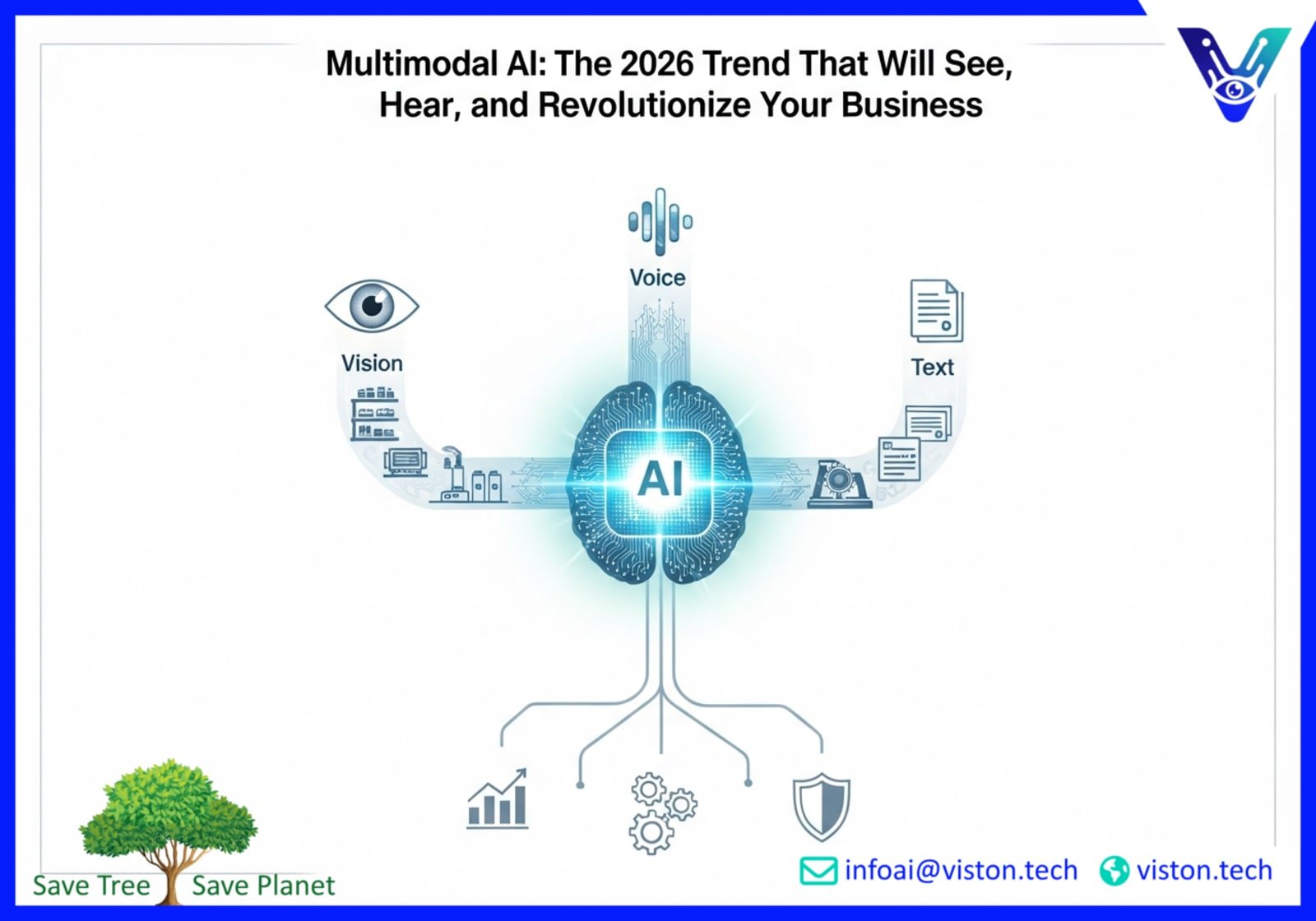
Unlock the future of business with multimodal agents. This 2026 AI trend merges text, voice, and vision to automate complex workflows, boosting efficiency, accuracy, and decision-making for a powerful competitive advantage. Read More
#multimodalagents #voicevision #AIforbusiness #futureofAI #enterprisetech #digitaltransformation #VistonAI #AIin2026 #complexworkflows #AIsolutions
Revolutionize your IT service desk. Learn how AI agents are evolving from intelligent ticket triage to full, autonomous case resolution, dramatically improving efficiency and user satisfaction. Read More #AIAgents #ITSM #ServiceDesk #Automation
Charged based on actual usage, such as per request, per GB of bandwidth, or per page scraped, with no fixed commitment.
A one-time fee is charged for a specific project, regardless of volume or duration, based on scope and complexity.
Billed based on the time spent developing, running, or maintaining the scraper, often used for custom or consulting-heavy projects.
pay a recurring fee (monthly or annually) for access to scraping services, often tiered based on usage limits like the number of requests, pages scraped, or data points extracted.
Begin with comprehensive stakeholder engagement to understand business objectives, success metrics, and requirements. Conduct thorough analysis of existing workflows, data sources, and technical constraints. Establish clear project scope, timeline, and success criteria while ensuring alignment between AI strategy and business goals.
Collect, clean, and prepare high-quality data from all relevant sources. Perform exploratory data analysis (EDA) to uncover patterns and insights. Establish robust data pipelines, ensure data quality standards, and create the foundation for AI model training. This step prevents the "garbage in, garbage out" scenario.
Select appropriate AI models based on problem requirements and data characteristics. Develop, train, and fine-tune models using iterative approaches. Focus on achieving optimal balance between accuracy, interpretability, and performance. Implement version control and documentation for model assets.
Rigorously test models against unseen data and validate performance metrics. Conduct scenario testing, edge-case analysis, and A/B testing. Integrate the AI solution into existing IT infrastructure through APIs, containerization, or cloud deployment. Ensure security, scalability, and compliance requirements are met.
Deploy the validated AI solution into production environment with proper monitoring systems. Provide comprehensive training to end-users and IT staff. Implement authentication, security protocols, and compliance measures. Focus on smooth integration with business workflows and user adoption.
Establish ongoing monitoring systems to track model performance, business impact, and user feedback. Implement continuous learning loops for model improvement. Regular assessment of KPIs, retraining schedules, and adaptation to changing business needs. Ensure long-term value delivery and system reliability.
AI-powered recommendation engines leverage machine learning algorithms that analyze millions of customer interactions to identify complex patterns and preferences that traditional rule-based systems cannot detect. Unlike simple “customers who bought this also bought that” logic, advanced collaborative filtering and deep learning models consider hundreds of signals including browsing behavior, purchase history, product attributes, seasonal trends, and real-time context to deliver highly personalized recommendations that adapt continuously as customer preferences evolve. Viston’s recommendation engines achieve 94.7% accuracy compared to 60-70% typical of rule-based systems, resulting in significantly higher conversion rates and customer satisfaction across USA, UK, Germany, France, and Australia markets.
Comprehensive pricing optimization requires integrating multiple data sources including competitor pricing across relevant online and offline channels, historical sales data showing demand elasticity at different price points, real-time inventory levels indicating stock availability and carrying costs, customer segmentation data revealing price sensitivity across different buyer groups, market intelligence about promotional activities and seasonal trends, and cost structures including COGS, fulfillment expenses, and margin targets. Viston’s pricing intelligence platforms connect to e-commerce systems, competitive monitoring tools, ERP platforms, and market data providers to aggregate and analyze these diverse data sources, enabling pricing algorithms to determine optimal price points that maximize revenue while considering business constraints and competitive positioning.
Modern E-commerce Intelligence platforms process data and update recommendations in real-time or near real-time depending on the use case. Viston’s recommendation engines respond to customer behavior within milliseconds, adjusting suggestions based on current browsing session actions. Dynamic pricing systems monitor competitor prices every 15 minutes and can implement price changes within minutes when algorithms determine adjustments are warranted. Predictive demand forecasting models retrain daily or weekly to incorporate latest sales trends, while more fundamental model updates occur monthly or quarterly. This agility enables retailers across USA, Europe, and Australia to respond to competitive moves, capitalize on emerging trends, and optimize performance continuously rather than relying on static strategies that quickly become outdated in fast-moving e-commerce markets.
E-commerce Intelligence systems must comply with regional data protection regulations including GDPR in European Union countries (Germany, France, UK, Italy, Spain, Netherlands, Sweden, Denmark), CCPA in California, PIPEDA in Canada, Privacy Act in Australia, and various state-level privacy laws across USA. Key requirements include obtaining proper consent for data collection and processing, providing transparency about how customer data is used for personalization and analytics, enabling customers to access, correct, or delete their data, implementing appropriate security measures to protect customer information, and documenting data processing activities through records of processing and privacy impact assessments. Viston’s platform includes built-in compliance features including consent management, privacy controls, data encryption, audit trails, and regional configuration options that ensure E-commerce Intelligence deployments meet applicable regulations while still delivering effective personalization and optimization capabilities.
Cold start challenges occur when systems lack sufficient data about new customers who haven’t yet established purchase histories or new products without rating or interaction data. Viston’s recommendation engines employ multiple strategies to address cold start situations including content-based filtering that recommends products based on attributes and characteristics rather than collaborative patterns, hybrid approaches that blend multiple recommendation techniques, active learning that prompts new customers to indicate preferences through onboarding quizzes or initial selections, demographic or cohort-based recommendations that leverage data from similar customer segments, and popularity-based fallbacks that suggest trending or bestselling items when personalized recommendations aren’t yet possible. As customer interaction data accumulates, the system transitions smoothly to more sophisticated collaborative and personalized recommendation models, ensuring all customers receive relevant suggestions regardless of their history with the retailer.
Effective E-commerce Intelligence requires integration with multiple enterprise systems to access necessary data and activate insights. Key integrations include e-commerce platforms (Shopify, Magento, Salesforce Commerce Cloud) to capture browsing behavior and implement recommendations, customer data platforms or CRM systems (Salesforce, Adobe) to access customer profiles and purchase history, inventory management and ERP systems (SAP, Oracle) to incorporate stock availability and cost data, email and marketing automation platforms (Braze, Klaviyo) to personalize outbound campaigns, analytics platforms (Google Analytics, Adobe Analytics) to measure performance, and payment processing systems for transaction data. Viston provides pre-built connectors for major retail technology platforms, RESTful APIs for custom integrations, and professional services to ensure seamless data flow between E-commerce Intelligence capabilities and existing retail infrastructure across USA, UK, Germany, France, Sweden, Netherlands, Australia, and other markets.
E-commerce Intelligence ROI is measured across multiple dimensions depending on the specific capabilities deployed. For recommendation engines, key metrics include conversion rate improvements, increases in average order value, cross-sell and upsell revenue, reduction in bounce rates, and customer lifetime value growth. Pricing optimization ROI is measured through gross margin improvements, revenue increases, competitive win rates, and pricing efficiency gains. Predictive inventory intelligence demonstrates ROI through reduced carrying costs, decreased stockouts, lower markdown rates, and improved working capital efficiency. Comprehensive attribution models track incremental revenue and cost savings directly attributable to E-commerce Intelligence systems versus control groups, typically showing positive ROI within 3-6 months and sustained improvements as algorithms optimize over time. Viston provides detailed analytics dashboards that measure these KPIs and demonstrate business impact to stakeholders across USA, European, and Australian retail organizations.
Yes, enterprise-grade E-commerce Intelligence platforms are specifically designed to handle the complexity of large retail operations including catalogs with tens of thousands of SKUs across multiple categories, product hierarchies with parent-child relationships and variants (sizes, colors, configurations), seasonal products with limited availability windows, regional variations in assortment across geographic markets, and frequent catalog changes as products are introduced or discontinued. Viston’s systems employ hierarchical recommendation models that understand product relationships and substitutability, seasonal adjustment algorithms that account for predictable demand patterns and trends, continuous learning mechanisms that adapt as catalog composition changes, and scalable infrastructure that processes recommendations for millions of products and customers without performance degradation. These capabilities enable retailers in fashion, electronics, home goods, grocery, and other sectors to deploy sophisticated E-commerce Intelligence regardless of catalog complexity or business model.
Enterprise E-commerce Intelligence platforms differ from simpler consumer tools in several critical dimensions including scale (processing billions of interactions daily rather than thousands), accuracy (achieving 94%+ precision through advanced algorithms versus 60-70% typical of basic systems), compliance (incorporating GDPR, CCPA, and industry-specific regulations), integration (connecting seamlessly with enterprise ERP, CRM, and commerce platforms), customization (enabling tailored algorithms for specific business requirements), governance (providing audit trails, model explainability, and approval workflows), and support (offering dedicated implementation teams, ongoing optimization, and SLAs). Viston’s platform is built for enterprises in USA, UK, Germany, France, Australia and other markets with complex requirements including multi-regional operations, strict data governance, sophisticated business rules, and needs for measurable ROI and continuous optimization that consumer-focused tools cannot address.
Visual search and voice commerce represent emerging channels that extend E-commerce Intelligence capabilities beyond traditional web and mobile interfaces. Visual search systems use computer vision to analyze product images uploaded by customers, extract visual attributes like colors, patterns, styles, and materials, and recommend similar products from the retailer’s catalog. Voice commerce leverages natural language processing to understand spoken queries, engage in multi-turn conversations about product needs and preferences, and complete transactions through smart speakers and voice assistants. Both capabilities integrate with core E-commerce Intelligence through unified customer profiles that incorporate visual and voice interactions alongside traditional browsing and purchase data, shared recommendation engines that deliver personalized suggestions regardless of channel, and consistent inventory and pricing data that ensures accuracy across all customer touchpoints. Viston’s platform treats visual search and voice commerce as additional data sources that enrich customer understanding and enable personalization across the full spectrum of retail interactions.
