
Viston delivers enterprise-grade Computer Vision Solutions that revolutionize how businesses process, analyze, and act on visual data across industries. With 15+ years of AI expertise serving 2860+ global clients across USA, Europe, and Australia, our end-to-end LLMOps platform transforms visual intelligence into competitive advantage through responsible AI at scale.
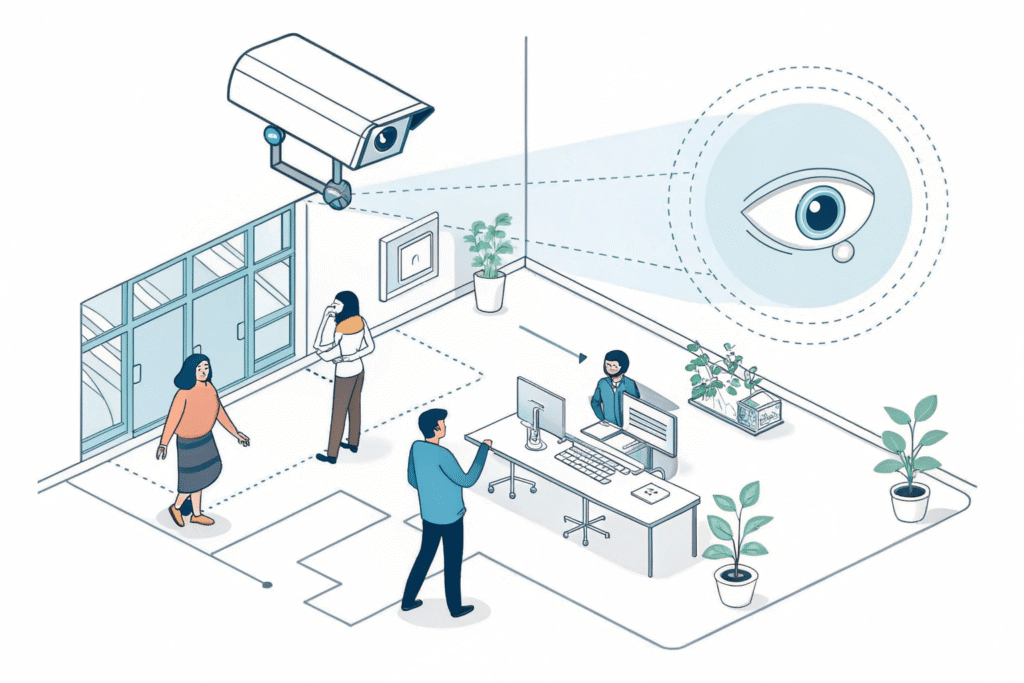






























































































































































































Computer Vision Solutions have become mission-critical for enterprises seeking competitive advantage through visual intelligence automation. Modern businesses generate massive volumes of visual data—from manufacturing quality control to retail customer analytics—requiring sophisticated AI-powered processing capabilities that traditional systems cannot deliver.
Deploy computer vision models directly at data source points for real-time processing across manufacturing floors, retail locations, and distributed operations
Combine computer vision insights with generative AI to create automated reports, predictive maintenance alerts, and customer behavior analytics
Built-in compliance frameworks ensure ethical AI deployment with full audit trails and bias detection across all visual intelligence workflows
Cloud-native platform handles millions of images and video streams simultaneously with 99.97% uptime across USA, UK, Germany, France, and Australia operations
Enterprise Computer Vision Platform
Comprehensive AI-powered visual intelligence solutions delivering real-time insights from images, video streams, and visual data across manufacturing, retail, healthcare, and financial services operations.

Advanced neural networks process live video feeds and image data streams with sub-second response times, enabling immediate decision-making for quality control, security, and operational efficiency.

Deploy computer vision models directly on IoT devices and edge computing infrastructure, reducing latency while maintaining data privacy and compliance requirements across distributed enterprise environments.

Machine learning algorithms identify patterns, anomalies, and trends in visual data to predict equipment failures, inventory needs, customer behaviors, and security threats before they impact operations.

Seamlessly combine computer vision with natural language processing, generative AI, and structured data analytics to create comprehensive business intelligence dashboards and automated reporting systems.
Automated visual inspection systems detect defects, measure tolerances, and ensure product quality standards with 99.5% accuracy rates, reducing manual inspection costs by 78% across production facilities.
Advanced people counting, demographic analysis, and behavior tracking systems optimize store layouts, inventory placement, and staffing decisions based on real-time visual customer intelligence data.
AI-powered medical image analysis assists radiologists in detecting abnormalities, measuring anatomical structures, and prioritizing urgent cases while maintaining GDPR compliance and patient data privacy.
Automated document verification and fraud detection systems process loan applications, insurance claims, and identity documents with advanced optical character recognition and authenticity validation capabilities.
Real-time traffic monitoring, incident detection, and automated traffic signal optimization reduce congestion by 35% while improving emergency response times through intelligent visual surveillance networks.
Drone-based computer vision systems monitor crop health, detect pest infestations, and optimize irrigation schedules, increasing yield efficiency by 24% while reducing resource consumption across farming operations.
Automated visual inspection of power lines, wind turbines, and solar panels identifies maintenance needs, safety hazards, and performance issues before they cause costly outages or accidents.
Computer vision-powered robots and automated systems optimize picking, packing, and inventory management processes, reducing operational costs by 42% while improving order accuracy to 99.8% levels.
Real-time monitoring of construction sites identifies safety violations, unauthorized personnel access, and potential hazards, reducing workplace accidents by 67% through proactive visual intelligence alerts.

Computer Vision Solutions deliver measurable business value across enterprise operations, with our clients achieving average ROI increases of 340% within 18 months of deployment. Manufacturing companies leverage our visual intelligence platform to automate quality control processes, reducing defect rates by up to 85% while accelerating production throughput by 32% across facilities in USA, Germany, and Australia.
Our edge AI deployment capabilities enable real-time decision-making at the point of production, eliminating delays associated with cloud-based processing while maintaining enterprise-grade security and compliance standards required by regulated industries.
Viston’s Computer Vision Solutions integrate seamlessly with existing enterprise systems through RESTful APIs, webhooks, and enterprise service bus architectures. Our platform processes over 2.4TB of visual data daily across global deployments, maintaining 99.97% uptime while delivering sub-340ms response times for mission-critical applications.
The platform’s responsible AI framework ensures ethical deployment through built-in bias detection, audit trails, and governance controls that meet regulatory requirements across USA, UK, Germany, France, and Australia markets. This comprehensive approach to AI governance reduces compliance risks while enabling rapid scaling of computer vision applications across enterprise operations.
Background: A Fortune 500 automotive manufacturer operating 27 facilities across USA, Germany, and Mexico struggled with inconsistent quality control processes, leading to costly recalls and customer satisfaction issues.
Challenge: Manual visual inspection processes missed 12% of critical defects while creating production bottlenecks. The company needed automated quality control systems that could maintain 99.99% accuracy while processing 15,000 components per hour across multiple production lines.
Solution: Viston deployed edge AI computer vision systems with real-time defect detection algorithms, integrated with existing manufacturing execution systems. Our platform processes high-resolution images at 340ms response times, automatically flagging defective components while maintaining detailed audit trails.
Results: Defect rates decreased from 0.8% to 0.09%, saving $4.2M annually in recall costs. Production throughput increased 28% while reducing quality control staffing needs by 60%. The system now processes 2.1M components monthly with 99.97% accuracy.
Testimonial: “Viston’s computer vision platform transformed our quality control operations. We’ve eliminated costly recalls while improving customer satisfaction scores by 34%.” – VP of Manufacturing Operations
Background: A leading European retail chain with 340 stores across UK, France, and Germany needed actionable insights into customer behavior patterns to optimize store layouts and inventory placement strategies.
Challenge: Traditional people counting systems provided limited insights, while manual observation was resource-intensive and inconsistent. The company required real-time customer analytics that respected privacy regulations while delivering actionable business intelligence.
Solution: Viston implemented privacy-compliant computer vision systems that analyze customer traffic patterns, dwell times, and demographic data without storing personally identifiable information. Our platform integrates with point-of-sale systems and inventory management platforms.
Results: Store revenue increased 23% through optimized product placement based on visual analytics insights. Customer wait times decreased 41% through improved staffing allocation. The system now tracks 2.8M customer interactions monthly across 340 locations.
Testimonial: “The visual intelligence insights from Viston helped us understand customer behavior like never before. Revenue per square foot improved 31% within six months.” – Head of Retail Operations
Background: A healthcare network serving 3.2 million patients across 127 facilities needed to reduce diagnostic time while improving accuracy for complex cases requiring specialist consultation.
Challenge: Specialist appointments averaged 47 days wait time. Initial diagnosis accuracy varied significantly across locations. Manual review of medical imaging and patient records consumed 60% of physician time.
Solution: Custom computer vision models for medical imaging analysis, NLP systems for patient record processing, and predictive analytics for treatment recommendations. HIPAA-compliant deployment across cloud and edge infrastructure.
Results: Diagnostic accuracy improved 34% for complex cases. Specialist consultation wait times reduced to 8 days average. Physician efficiency increased 67% through automated preliminary analysis and documentation.
Testimonial: “The AI diagnostic support system has revolutionized patient care delivery. Our physicians can focus on patient interaction while AI handles routine analysis, leading to better outcomes and higher satisfaction.” – Chief Medical Officer
Background: A regional healthcare network serving 2.4M patients across Australia needed faster, more accurate medical imaging analysis to reduce patient wait times and improve diagnostic accuracy.
Challenge: Radiologists faced increasing workloads with 400+ daily scans requiring analysis. Manual review processes created delays in critical diagnoses while increasing the risk of missed abnormalities in routine screenings.
Solution: Viston deployed AI-powered medical imaging analysis systems that prioritize urgent cases, detect potential abnormalities, and provide decision support tools while maintaining HIPAA compliance and data security requirements.
Results: Diagnostic turnaround times decreased 52% while maintaining 97.8% accuracy rates. Radiologist productivity increased 38% through AI-assisted workflow optimization. The system now processes 8,400 medical images weekly across 12 facilities.
Testimonial: “Viston’s computer vision technology helps us prioritize critical cases while maintaining diagnostic accuracy. Patient outcomes have improved significantly.” – Chief Medical Officer
Background: A multinational financial services company processing 180,000 loan applications monthly needed automated document verification systems to reduce processing times while maintaining strict security and compliance standards.
Challenge: Manual document review processes created 8-day average approval times while increasing fraud risks. The company required automated systems capable of detecting document authenticity while processing multiple languages and formats.
Solution: Viston implemented computer vision-powered document processing systems with advanced OCR capabilities, fraud detection algorithms, and workflow automation tools integrated with existing loan origination systems.
Results: Document processing times decreased 76% while fraud detection rates improved 94%. The system now processes 42,000 documents weekly with 99.3% accuracy across 15 countries, reducing operational costs by $3.8M annually.
Testimonial: “Viston’s document processing platform revolutionized our loan approval workflow while enhancing security. Customer satisfaction increased 29% due to faster processing.” – VP of Digital Transformation
Background: A major metropolitan area in Germany sought intelligent traffic management solutions to reduce congestion and improve air quality while optimizing public transportation efficiency.
Challenge: Traditional traffic monitoring systems provided limited real-time insights, creating suboptimal traffic signal timing and inefficient emergency response coordination across 1,200 intersections.
Solution: Viston deployed city-wide computer vision traffic monitoring systems with real-time analytics, automated incident detection, and predictive traffic modeling capabilities integrated with emergency services and public transportation systems.
Results: Traffic congestion decreased 41% during peak hours while emergency response times improved 33%. The system now monitors 2,400 traffic cameras continuously, processing 480,000 vehicle detections daily with 98.7% accuracy.
Testimonial: “Viston’s traffic intelligence platform transformed our city’s mobility infrastructure. Citizens report 47% improvement in commute satisfaction scores.” – Director of Smart City Operations
Background: A renewable energy company operating 280 wind turbines across Nordic countries needed automated inspection systems to identify maintenance issues before they caused costly outages.
Challenge: Manual inspections required 3 weeks per facility while missing early-stage component failures. The company needed predictive maintenance systems capable of operating in harsh weather conditions with 99%+ reliability.
Solution: Viston implemented drone-based computer vision inspection systems with predictive analytics capabilities, automatically detecting blade damage, bearing wear, and electrical issues while generating automated maintenance schedules.
Results: Unplanned downtime decreased 68% while maintenance costs reduced 34%. The system now inspects 840 turbines monthly, detecting 99.2% of potential issues before failure occurs, saving $2.1M annually.
Testimonial: “Viston’s predictive maintenance platform keeps our turbines operating efficiently while reducing safety risks. Our uptime improved to 98.7%.” – VP of Operations
Background: A global logistics company managing 12 distribution centers across USA, UK, and Australia needed automated inventory management systems to handle 50% growth in e-commerce volume.
Challenge: Manual picking processes achieved 96.2% accuracy while struggling to scale with increasing order volumes. The company required automated systems capable of handling diverse product categories with minimal errors.
Solution: Viston deployed computer vision-guided robotics systems with real-time inventory tracking, automated quality control, and predictive analytics for demand forecasting integrated with warehouse management systems.
Results: Order accuracy improved to 99.8% while processing speed increased 67%. The system now handles 340,000 items weekly across 12 facilities, reducing labor costs 45% while improving customer satisfaction 38%.
Testimonial: “Viston’s warehouse automation platform scaled our operations seamlessly. We’re processing double the volume with higher accuracy than ever before.” – VP of Logistics Operations
Transform your enterprise operations through AI-powered visual intelligence that delivers measurable ROI, enhanced efficiency, and competitive advantage. Viston’s Computer Vision Solutions combine 15+ years of enterprise AI expertise with proven success across 2860+ global clients in USA, Europe, and Australia.
Partnering with Viston AI means tapping into a team of seasoned AI experts who accelerate your transformation and deliver custom solutions aligned with your strategic goals.
Together, we drive measurable business impact, ensure scalable, future-proof implementations, and mitigate risks to keep you ahead of the competition.

Unlock 35-42% efficiency gains with specialized domain agents. Our 2025 guide details how to build and deploy industry-specific AI for healthcare, finance, retail, and manufacturing to transform your core business operations. Read More
#AIAgents #DomainSpecificAI #HealthcareAI #Fintech #RetailTech #ManufacturingAI #BusinessAutomation

The future of software development is here. Agentic coding pipelines use autonomous AI to plan, code, test, and deploy software, revolutionizing your SDLC and transforming the developer experience (DevEx).
Read More
#AgenticCoding #DevEx #SDLCAutomation #AIinDev #FutureOfCode #CodeGeneration #AITesting #SecureCoding #CI/CD
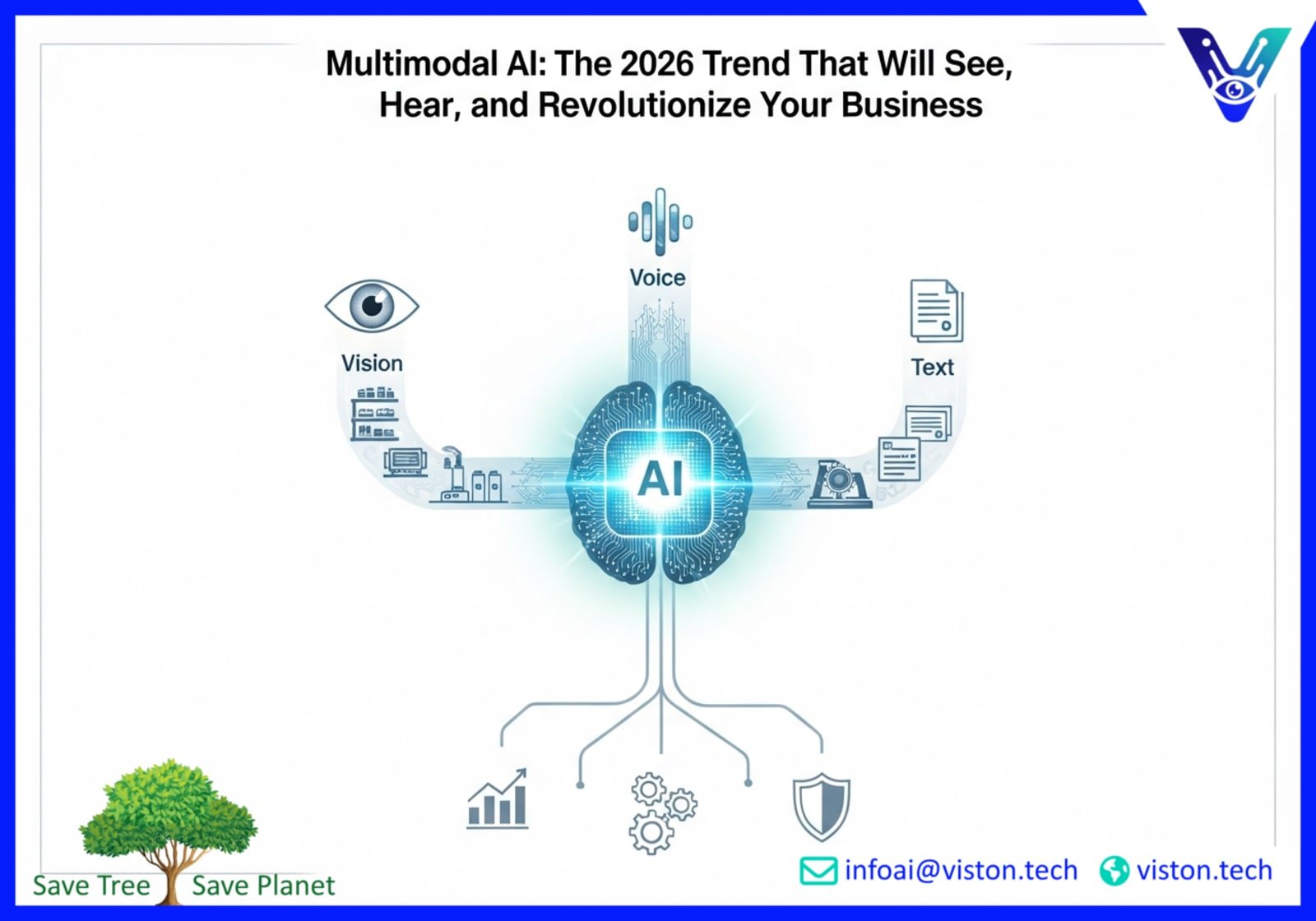
Unlock the future of business with multimodal agents. This 2026 AI trend merges text, voice, and vision to automate complex workflows, boosting efficiency, accuracy, and decision-making for a powerful competitive advantage. Read More
#multimodalagents #voicevision #AIforbusiness #futureofAI #enterprisetech #digitaltransformation #VistonAI #AIin2026 #complexworkflows #AIsolutions
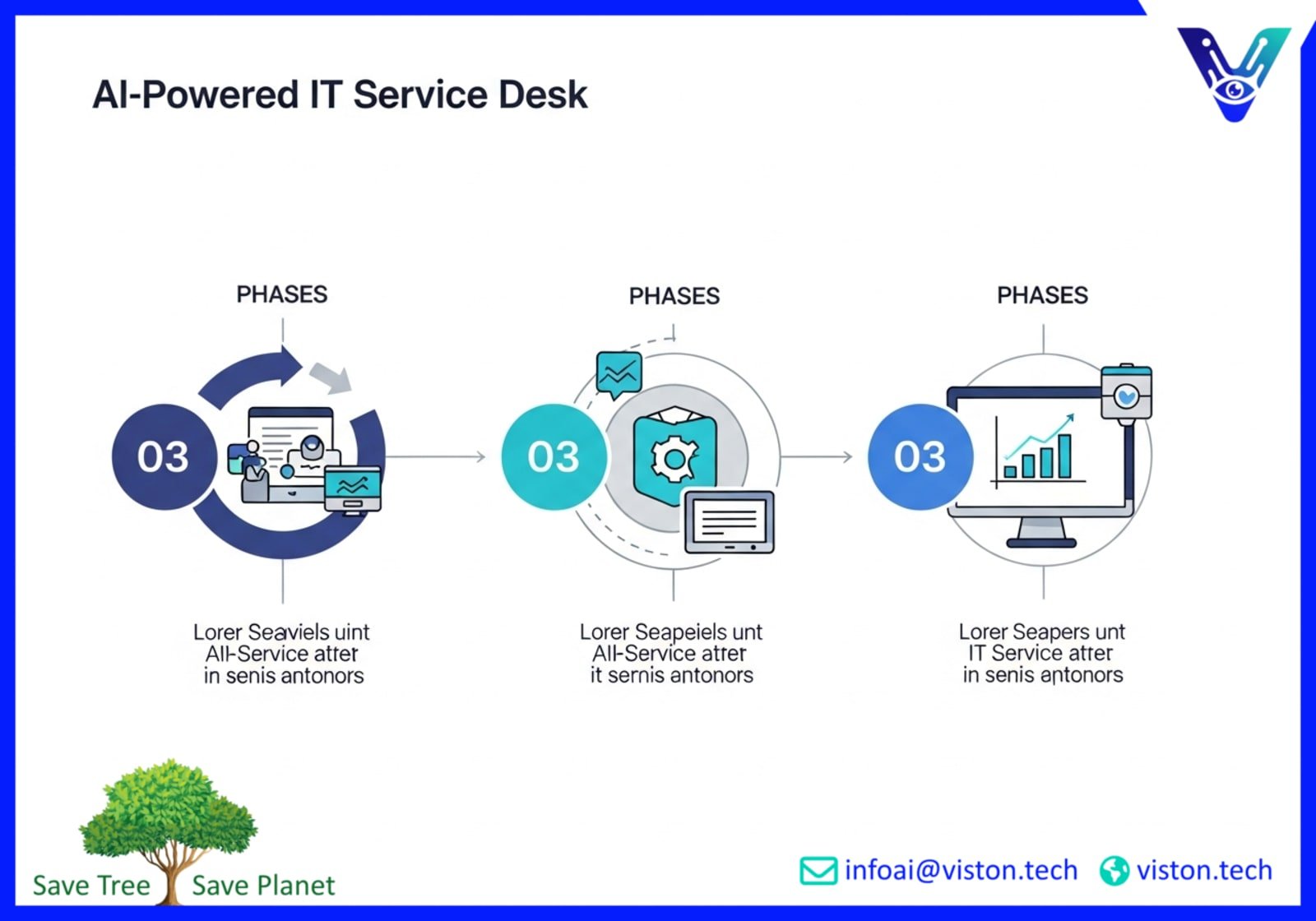
Revolutionize your IT service desk. Learn how AI agents are evolving from intelligent ticket triage to full, autonomous case resolution, dramatically improving efficiency and user satisfaction. Read More #AIAgents #ITSM #ServiceDesk #Automation
Charged based on actual usage, such as per request, per GB of bandwidth, or per page scraped, with no fixed commitment.
A one-time fee is charged for a specific project, regardless of volume or duration, based on scope and complexity.
Billed based on the time spent developing, running, or maintaining the scraper, often used for custom or consulting-heavy projects.
pay a recurring fee (monthly or annually) for access to scraping services, often tiered based on usage limits like the number of requests, pages scraped, or data points extracted.
Begin with comprehensive stakeholder engagement to understand business objectives, success metrics, and requirements. Conduct thorough analysis of existing workflows, data sources, and technical constraints. Establish clear project scope, timeline, and success criteria while ensuring alignment between AI strategy and business goals.
Collect, clean, and prepare high-quality data from all relevant sources. Perform exploratory data analysis (EDA) to uncover patterns and insights. Establish robust data pipelines, ensure data quality standards, and create the foundation for AI model training. This step prevents the "garbage in, garbage out" scenario.
Select appropriate AI models based on problem requirements and data characteristics. Develop, train, and fine-tune models using iterative approaches. Focus on achieving optimal balance between accuracy, interpretability, and performance. Implement version control and documentation for model assets.
Rigorously test models against unseen data and validate performance metrics. Conduct scenario testing, edge-case analysis, and A/B testing. Integrate the AI solution into existing IT infrastructure through APIs, containerization, or cloud deployment. Ensure security, scalability, and compliance requirements are met.
Deploy the validated AI solution into production environment with proper monitoring systems. Provide comprehensive training to end-users and IT staff. Implement authentication, security protocols, and compliance measures. Focus on smooth integration with business workflows and user adoption.
Establish ongoing monitoring systems to track model performance, business impact, and user feedback. Implement continuous learning loops for model improvement. Regular assessment of KPIs, retraining schedules, and adaptation to changing business needs. Ensure long-term value delivery and system reliability.
Our platform processes diverse visual data types including high-resolution images, real-time video streams, thermal imaging, satellite imagery, medical scans, and document images. The system handles multiple formats (JPEG, PNG, TIFF, MP4, AVI) while maintaining processing speeds of 340ms response times across edge and cloud deployments with 99.97% uptime reliability.
We implement comprehensive privacy frameworks including GDPR, HIPAA, and CCPA compliance through data encryption, anonymization algorithms, and audit trail capabilities. Visual data processing can occur entirely at edge locations without cloud transmission, while access controls and consent management ensure regulatory compliance across USA, Europe, and Australia deployments.
Our computer vision models achieve 97-99.8% accuracy rates depending on use case complexity, with manufacturing quality control reaching 99.5% defect detection accuracy. Models undergo continuous learning and improvement through feedback loops, while human-in-the-loop validation ensures accuracy rates meet enterprise requirements for mission-critical applications.
Typical enterprise deployments complete within 8-16 weeks, including system integration, model training, and staff training phases. Our modular architecture enables phased rollouts starting with pilot locations, scaling to full enterprise deployment based on proven ROI and performance metrics from initial implementations.
Our platform supports diverse hardware configurations from edge devices (NVIDIA Jetson, Intel NUC) to enterprise GPU clusters and cloud infrastructure. Minimum requirements vary by use case, but typical edge deployments require 8GB RAM and GPU acceleration, while cloud deployments scale automatically based on processing volume requirements.
Integration occurs through RESTful APIs, webhooks, and enterprise service bus architectures compatible with SAP, Oracle, Microsoft, and custom systems. Our platform provides real-time data streaming, batch processing capabilities, and standard protocols (MQTT, HTTP, WebSocket) ensuring seamless connectivity with manufacturing execution systems, ERP platforms, and business intelligence tools
Enterprise agreements include 24/7 technical support, system monitoring, automatic software updates, and model performance optimization services. Our global support teams across USA, Europe, and Australia provide local expertise, regulatory guidance, and proactive system maintenance ensuring 99.97% uptime and optimal performance.
Yes, our platform includes industry-specific models for manufacturing, healthcare, retail, financial services, and smart city applications. Custom model development services adapt algorithms for unique use cases, specialized equipment, and proprietary processes while maintaining enterprise-grade performance and compliance standards.
Security features include end-to-end encryption, multi-factor authentication, network segmentation, and intrusion detection systems. Regular security audits, penetration testing, and compliance certifications (SOC 2, ISO 27001) ensure enterprise-grade protection while edge deployment options minimize attack surface exposure.
ROI measurement includes quantifiable metrics such as defect reduction percentages, processing time improvements, labor cost savings, and productivity increases. Detailed analytics dashboards provide real-time performance monitoring, while quarterly business reviews demonstrate ongoing value through comparative analysis against baseline operations and industry benchmarks.
