
Viston delivers enterprise-grade Change Management solutions that transform AI initiatives from concept to competitive advantage. With 15+ years of experience serving 2,860+ clients across USA, Canada, UK, Germany, France, Nordics, and Australia, we create adoption roadmaps aligned with business goals, workforce readiness, and sustainable transformation. Our Change Management framework integrates LLMOps infrastructure, generative AI workflows, and responsible AI governance to ensure seamless transitions that minimize disruption while maximizing business value.








































































































































Change Management for AI transformation addresses the human, process, and cultural dimensions that determine whether your AI investments deliver value or stall in pilot purgatory. Organizations across USA, UK, Germany, and Australia face resistance, skill gaps, and misaligned expectations that derail even the most sophisticated LLMOps implementations. Viston’s Change Management practice combines strategic planning, stakeholder engagement, training architecture, and continuous reinforcement to ensure AI adoption becomes embedded in daily operations rather than remaining isolated in data science teams.
Comprehensive evaluation of organizational maturity, technical infrastructure, workforce capabilities, and cultural readiness across all departments, identifying specific barriers to AI adoption and creating prioritized remediation roadmaps that address leadership alignment, data governance, skills development, and process redesign requirements.
Multi-tiered communication frameworks that identify champions, influencers, resistors, and neutral parties across C-suite, middle management, frontline employees, and external partners, designing targeted messaging, training, and involvement strategies that build coalition support and address concerns before they become obstacles to implementation.
Role-specific AI literacy curricula spanning executive awareness, technical deep-dives, ethical AI usage, prompt engineering, model monitoring, and citizen data scientist development, delivered through blended learning approaches including workshops, e-learning modules, hands-on labs, and continuous coaching that ensures sustained competency across all skill levels.
Implementation of AI adoption metrics, feedback loops, performance dashboards, and iterative improvement mechanisms that track behavior change, identify emerging resistance patterns, celebrate early wins, and provide ongoing support structures ensuring AI transformation becomes permanent rather than temporary organizational capability across USA, Europe, and Australia operations.
Viston’s Change Management platform integrates assessment tools, stakeholder collaboration environments, training delivery systems, and adoption analytics to orchestrate enterprise-wide AI transformation programs with measurable outcomes and sustained behavioral change.

Diagnostic frameworks evaluating organizational culture, leadership commitment, technical infrastructure, data maturity, workforce capabilities, process adaptability, and ethical governance readiness, generating detailed gap analyses with prioritized recommendations for addressing barriers to successful AI adoption across all business units and geographic locations.

Interactive platforms facilitating communication planning, resistance management, champion network development, and feedback collection across diverse employee populations, enabling change leaders to monitor sentiment, address concerns proactively, and maintain momentum throughout transformation journeys spanning multiple quarters or years.

Customized training environments delivering role-specific AI education through microlearning modules, immersive simulations, hands-on labs, certification programs, and just-in-time support resources, tracking individual progress and organizational competency development to ensure workforce readiness aligns with deployment timelines across global operations.

Real-time monitoring of AI usage patterns, skill application rates, process adherence, productivity impacts, and employee sentiment metrics, providing change leaders with actionable insights for reinforcing positive behaviors, addressing emerging resistance, and demonstrating measurable business value to sustain executive sponsorship and funding.
AI agents handle multi-channel customer inquiries, route complex cases to specialists, update inventory systems, process returns, and personalize recommendations while maintaining conversation context across touchpoints.
Autonomous agents extract data from loan applications, verify information across multiple databases, flag compliance risks, generate summary reports, and route approvals through workflow management systems.
Agents monitor IoT sensor data, predict equipment failures, automatically schedule maintenance, order replacement parts, update production schedules, and notify stakeholders across supply chain systems.
Medical coding agents process patient records, verify insurance eligibility, submit claims, track reimbursements, flag documentation gaps, and integrate with EHR systems while maintaining HIPAA compliance.
Multi-agent systems monitor shipment status, predict delays, optimize routing, coordinate warehouse operations, manage vendor communications, and update ERP systems with real-time supply chain visibility.
Financial agents analyze transaction patterns, identify anomalies, verify customer identities, block suspicious activities, generate investigation reports, and coordinate with compliance teams across global operations.
Creative agents produce personalized email campaigns, social media posts, product descriptions, and visual assets based on brand guidelines with automated testing and performance optimization.
Recruitment agents screen resumes, schedule interviews, conduct initial assessments, manage onboarding workflows, process benefits enrollment, and maintain employee records across regional HR systems.
IoT-connected agents monitor consumption patterns, adjust HVAC systems, predict maintenance needs, optimize utility costs, and integrate with building management platforms across commercial real estate portfolios.
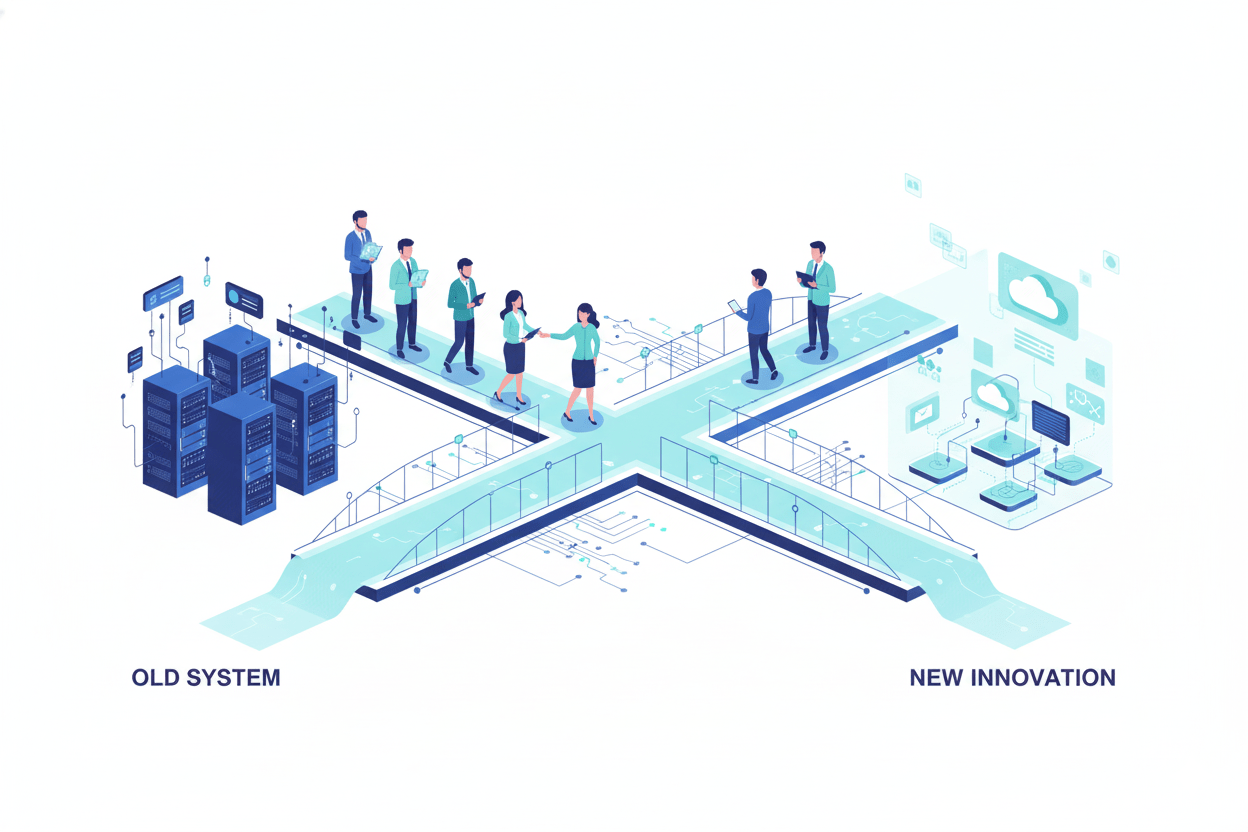
Enterprise Agent Integration Services from Viston address the fundamental challenge of connecting autonomous AI systems to heterogeneous technology environments without disrupting existing operations. Organizations typically maintain dozens of enterprise applications including Salesforce, SAP, Oracle, Microsoft Dynamics, Workday, ServiceNow, and industry-specific platforms that operate in silos. Our integration framework enables AI agents to authenticate, query, update, and orchestrate actions across these systems using standardized protocols and custom connectors. We handle complex data transformation requirements, manage API rate limits, implement retry logic for transient failures, and maintain state consistency across distributed transactions. For multinational enterprises operating in USA, UK, Germany, France, and Australia, we configure agents to respect regional data residency requirements, comply with local privacy regulations, and accommodate language-specific processing needs. The result is unified agent intelligence that leverages data and capabilities from across the enterprise technology stack.
Modern Agent Integration Services extend beyond simple task automation to enable sophisticated workflows that combine autonomous agent capabilities with human expertise and judgment. Viston’s platform supports hybrid automation patterns where agents handle high-volume, repetitive tasks while routing edge cases, exceptions, and strategic decisions to appropriate human stakeholders. We implement intelligent escalation logic based on confidence scores, regulatory requirements, financial thresholds, and business rules that ensure agents operate within defined guardrails. Our integration architecture includes real-time collaboration interfaces where humans can review agent recommendations, provide feedback, approve transactions, and guide learning processes without interrupting workflow execution. For industries like financial services, healthcare, and manufacturing where regulatory compliance and quality assurance are paramount, this human-agent collaboration model delivers automation efficiency while maintaining oversight and accountability. Agents continuously learn from human corrections, improving accuracy and reducing escalation rates over time. This approach enables enterprises across Europe and North America to achieve 60-80% workflow automation while preserving control over critical business outcomes.
Background: A multinational bank with operations across USA, UK, and Germany processed over 500,000 monthly compliance reviews manually, creating bottlenecks and increasing regulatory risk exposure.
Challenge: The institution needed to automate Know Your Customer verification, transaction monitoring, suspicious activity reporting, and regulatory filing while maintaining audit trails and human oversight for high-risk scenarios. Legacy systems across regions operated independently with inconsistent data formats.
Solution: Viston deployed a multi-agent system integrated with core banking platforms, regulatory databases, and document management systems. Specialized agents handled identity verification, transaction pattern analysis, risk scoring, report generation, and cross-border compliance coordination. The integration framework connected to 17 enterprise systems with real-time data synchronization.
Results: The bank achieved 78% reduction in manual compliance processing time, improved suspicious activity detection accuracy by 43%, reduced false positives by 61%, and maintained 100% regulatory audit compliance across jurisdictions. Agent processing capacity scaled to handle 2.1M monthly transactions with consistent sub-minute response times.
Testimonial: “Viston’s agent integration transformed our compliance operations from a cost center into a strategic advantage. The autonomous coordination across our global systems delivered results we couldn’t achieve with traditional automation.”
Background: A healthcare system spanning USA East Coast operated 45 hospitals and 200+ clinics with fragmented electronic health record systems causing documentation delays and billing inefficiencies.
Challenge: Clinical staff spent 35% of time on administrative documentation, reducing patient interaction quality. The organization needed HIPAA-compliant automation that could extract information from physician notes, populate medical codes, verify insurance eligibility, and submit claims while integrating with multiple EHR platforms.
Solution: Viston implemented specialized healthcare agents integrated with Epic, Cerner, and Allscripts systems. Natural language processing agents converted clinical notes to structured data, medical coding agents assigned ICD-10 and CPT codes, eligibility agents verified coverage, and billing agents submitted claims with automated follow-up for denials.
Results: Clinical documentation time decreased 52%, coding accuracy improved to 96.8%, claim denial rates dropped 39%, revenue cycle time reduced from 47 to 23 days, and physicians reported 28% more time for patient care. The system processed 1.8M patient encounters annually with consistent quality.
Testimonial: “The agent integration delivered more than efficiency gains—it improved care quality by giving our providers time back with patients while ensuring documentation accuracy and compliance.”
Background: A European automotive manufacturer with facilities across Germany, France, and Spain managed complex supply chains involving 800+ suppliers and just-in-time production requirements.
Challenge: Supply chain disruptions caused production delays costing €2.3M monthly. The company needed real-time visibility, predictive analytics, and automated coordination across procurement, logistics, production planning, and inventory management systems.
Solution: Viston deployed IoT-connected agents integrated with SAP, supplier portals, logistics platforms, and production control systems. Monitoring agents tracked shipment status, predictive agents forecasted delays, optimization agents adjusted schedules, procurement agents initiated alternative sourcing, and coordination agents synchronized updates across systems.
Results: Supply chain visibility improved from 48 hours to real-time, production disruptions decreased 67%, inventory carrying costs reduced 23%, supplier communication efficiency increased 81%, and on-time delivery performance reached 97.4%. Agent systems managed 15,000+ daily supply chain events autonomously.
Testimonial: “Viston’s agent integration created a self-optimizing supply chain that anticipates problems and resolves them before impacting production. The ROI exceeded projections within eight months.”
Background: A UK-based retail organization with 320 stores and growing e-commerce presence struggled to deliver consistent customer service across phone, chat, email, and in-store channels.
Challenge: Customer inquiries required 18-minute average resolution time with 40% escalation rate due to system fragmentation. The retailer needed unified customer intelligence accessible to agents across all channels with automated handling of routine requests.
Solution: Viston integrated AI agents with Salesforce Service Cloud, e-commerce platforms, inventory management, loyalty programs, and communication channels. Customer service agents handled inquiries, recommendation agents personalized suggestions, inventory agents provided real-time availability, order agents processed transactions, and resolution agents coordinated returns and refunds.
Results: Customer resolution time decreased to 4.2 minutes, escalation rate dropped to 8%, customer satisfaction scores improved 34 points, agent productivity increased 76%, and automated resolution handled 68% of inquiries without human intervention. System supported 425,000 monthly interactions with consistent quality.
Testimonial: “The agent integration unified our customer experience across channels while dramatically improving efficiency. Customers receive faster, more accurate service regardless of how they contact us.”
Background: A Canadian mortgage lender processed 12,000 monthly applications using manual document review, creating 14-day processing cycles and high operational costs.
Challenge: Underwriters spent 70% of time on document verification, data extraction, and compliance checks across income statements, credit reports, property appraisals, and identity documents. The firm needed automation that maintained lending standards and regulatory compliance.
Solution: Viston deployed document processing agents integrated with loan origination systems, credit bureaus, property databases, and compliance platforms. Extraction agents captured data from unstructured documents, verification agents validated information accuracy, compliance agents checked regulatory requirements, and decisioning agents recommended loan approvals with confidence scores.
Results: Document processing time reduced from 4.2 days to 8 hours, manual data entry eliminated for 94% of applications, compliance review automated for standard scenarios, loan officer productivity increased 3.2x, and processing capacity scaled to 28,000 monthly applications without additional staff. Error rates decreased 87%.
Testimonial: “Viston’s agent integration transformed our loan operations from a manual bottleneck into a competitive advantage. We close loans faster while maintaining rigorous standards.”
Background: A software company operating cloud infrastructure across AWS, Azure, and Google Cloud struggled with manual DevOps processes creating deployment delays and configuration drift.
Challenge: Engineering teams spent 30% of time on infrastructure management, deployment coordination, monitoring, and incident response. The organization needed automated orchestration across multi-cloud environments with intelligent problem resolution.
Solution: Viston implemented DevOps agents integrated with Kubernetes, Terraform, monitoring platforms, CI/CD pipelines, and incident management systems. Deployment agents automated releases, monitoring agents detected anomalies, healing agents resolved common issues, scaling agents optimized resources, and coordination agents synchronized updates across environments.
Results: Deployment frequency increased 5.8x, infrastructure incidents decreased 74%, mean time to resolution reduced from 47 minutes to 6 minutes, cloud costs optimized by 31%, and engineering productivity improved allowing focus on feature development. Agent systems managed 2,400+ daily infrastructure operations.
Testimonial: “The agent integration created self-healing infrastructure that operates reliably across our multi-cloud environment while freeing our engineers to focus on innovation rather than maintenance.”
Ready to accelerate AI adoption and unlock measurable business value? Viston’s Change Management experts create customized transformation roadmaps addressing your unique culture, workforce, and strategic objectives. With 15+ years serving 2,860+ clients across USA, UK, Germany, France, Nordics, and Australia, we deliver proven frameworks ensuring AI investments generate sustainable competitive advantages.
Structured change management reduces AI implementation timelines 40-60% by preventing common adoption obstacles including stakeholder resistance, inadequate training, process integration failures, and governance ambiguity. Early engagement of affected teams, transparent communication about capabilities and limitations, and role-specific value articulation create momentum accelerating deployment while ensuring business value realization begins immediately rather than languishing in extended pilot phases characteristic of unmanaged initiatives.
Comprehensive change programs embed responsible AI governance, ethical frameworks, regulatory compliance protocols, and bias monitoring into organizational culture and operational workflows rather than treating them as technical afterthoughts. This proactive approach prevents costly regulatory violations, reputational damage, and operational failures while building stakeholder confidence enabling AI expansion into sensitive applications requiring trust, explainability, and accountability across USA, UK, EU, and Australia regulatory environments.
Investing in change management including robust training, career development pathways, and skill-based compensation demonstrates organizational commitment to workforce enhancement rather than replacement. This approach builds employee advocacy for AI transformation, reduces attrition of institutional knowledge, attracts talent seeking growth opportunities, and creates internal capabilities reducing dependency on external consultants while establishing sustainable competitive advantages through unique human-AI collaboration capabilities.
Organizations with formal change management achieve 80-95% AI adoption rates compared to 30-50% for unmanaged rollouts, directly impacting business value realization. Higher utilization rates create network effects where successful users influence peers, feedback loops improve AI systems, and organizational learning accelerates, creating virtuous cycles transforming AI from isolated tools to embedded capabilities delivering compounding returns.
Change management for initial AI implementations builds foundational capabilities including stakeholder engagement frameworks, governance structures, training infrastructure, and feedback mechanisms that accelerate subsequent technology adoptions. Organizations developing change competencies reduce future transformation timelines 50-70% while fostering innovation cultures where employees proactively identify AI opportunities, experiment with new capabilities, and drive continuous improvement rather than resisting change.
Transparent change programs with clear governance, measurable outcomes, and continuous communication build C-suite confidence enabling sustained investment in AI initiatives through inevitable challenges and setbacks. Executive understanding of transformation complexity, realistic expectation setting, and visible progress against adoption metrics maintain sponsorship critical for securing resources, navigating obstacles, and expanding successful pilots into enterprise-wide capabilities.
Well-managed AI transformation ensures customer-facing applications launch with staff confidence, consistent execution, and ability to articulate value propositions effectively. Employee capability to leverage AI tools for superior customer service, personalized experiences, and rapid problem resolution creates differentiation in competitive markets while preventing negative experiences that could damage brand reputation and customer loyalty during technology transitions.
Change management frameworks designed for initial implementations scale efficiently across business units, geographic regions, and organizational levels, enabling consistent AI capability rollout while accommodating local variations in culture, regulation, and operational requirements. This scalability accelerates global AI transformation timelines, ensures governance consistency, and leverages investment in training and communication infrastructure across USA, Europe, Australia, and emerging markets.
Preventing failed implementations, reducing resistance-driven delays, minimizing redundant training efforts, and avoiding governance gaps that create compliance issues generates 3-5x ROI on change management investment. Organizations with structured change approaches document 40-65% lower total cost of AI ownership through faster adoption, reduced support requirements, lower attrition-related knowledge loss, and decreased risk of costly failures requiring remediation.
Partnering with Viston AI means tapping into a team of seasoned AI experts who accelerate your transformation and deliver custom solutions aligned with your strategic goals.
Together, we drive measurable business impact, ensure scalable, future-proof implementations, and mitigate risks to keep you ahead of the competition.

Unlock 35-42% efficiency gains with specialized domain agents. Our 2025 guide details how to build and deploy industry-specific AI for healthcare, finance, retail, and manufacturing to transform your core business operations. Read More
#AIAgents #DomainSpecificAI #HealthcareAI #Fintech #RetailTech #ManufacturingAI #BusinessAutomation

The future of software development is here. Agentic coding pipelines use autonomous AI to plan, code, test, and deploy software, revolutionizing your SDLC and transforming the developer experience (DevEx).
Read More
#AgenticCoding #DevEx #SDLCAutomation #AIinDev #FutureOfCode #CodeGeneration #AITesting #SecureCoding #CI/CD
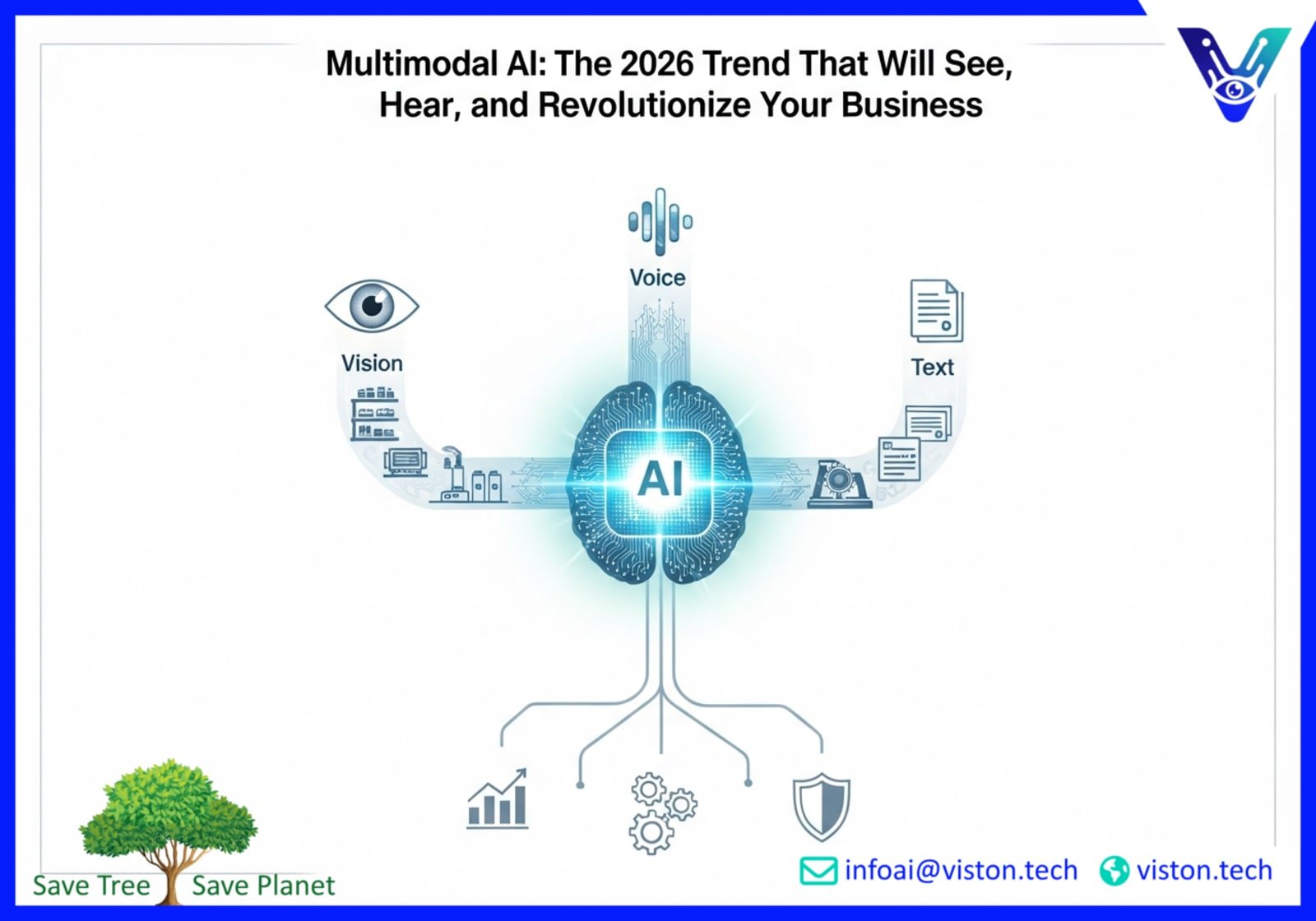
Unlock the future of business with multimodal agents. This 2026 AI trend merges text, voice, and vision to automate complex workflows, boosting efficiency, accuracy, and decision-making for a powerful competitive advantage. Read More
#multimodalagents #voicevision #AIforbusiness #futureofAI #enterprisetech #digitaltransformation #VistonAI #AIin2026 #complexworkflows #AIsolutions
Revolutionize your IT service desk. Learn how AI agents are evolving from intelligent ticket triage to full, autonomous case resolution, dramatically improving efficiency and user satisfaction. Read More #AIAgents #ITSM #ServiceDesk #Automation
Charged based on actual usage, such as per request, per GB of bandwidth, or per page scraped, with no fixed commitment.
A one-time fee is charged for a specific project, regardless of volume or duration, based on scope and complexity.
Billed based on the time spent developing, running, or maintaining the scraper, often used for custom or consulting-heavy projects.
pay a recurring fee (monthly or annually) for access to scraping services, often tiered based on usage limits like the number of requests, pages scraped, or data points extracted.
Begin with comprehensive stakeholder engagement to understand business objectives, success metrics, and requirements. Conduct thorough analysis of existing workflows, data sources, and technical constraints. Establish clear project scope, timeline, and success criteria while ensuring alignment between AI strategy and business goals.
Collect, clean, and prepare high-quality data from all relevant sources. Perform exploratory data analysis (EDA) to uncover patterns and insights. Establish robust data pipelines, ensure data quality standards, and create the foundation for AI model training. This step prevents the "garbage in, garbage out" scenario.
Select appropriate AI models based on problem requirements and data characteristics. Develop, train, and fine-tune models using iterative approaches. Focus on achieving optimal balance between accuracy, interpretability, and performance. Implement version control and documentation for model assets.
Rigorously test models against unseen data and validate performance metrics. Conduct scenario testing, edge-case analysis, and A/B testing. Integrate the AI solution into existing IT infrastructure through APIs, containerization, or cloud deployment. Ensure security, scalability, and compliance requirements are met.
Deploy the validated AI solution into production environment with proper monitoring systems. Provide comprehensive training to end-users and IT staff. Implement authentication, security protocols, and compliance measures. Focus on smooth integration with business workflows and user adoption.
Establish ongoing monitoring systems to track model performance, business impact, and user feedback. Implement continuous learning loops for model improvement. Regular assessment of KPIs, retraining schedules, and adaptation to changing business needs. Ensure long-term value delivery and system reliability.
Well-structured AI change programs typically demonstrate measurable adoption improvements within 3-6 months through early wins, champion engagement, and pilot successes, with full organizational adoption requiring 12-24 months depending on scope, complexity, and change readiness. Timeline acceleration depends on executive sponsorship strength, organizational change maturity, workforce technical literacy, and initiative alignment with strategic priorities. Viston’s approach emphasizes quick wins generating momentum while building foundations for sustained transformation.
AI transformation requires addressing unique challenges including explainability and trust concerns, ethical and bias considerations, role ambiguity between human and AI decision-making, workforce fears about replacement versus augmentation, and rapid technology evolution requiring continuous learning. Successful programs integrate behavioral science, transparent governance, hands-on experimentation opportunities, and clear articulation of AI limitations alongside capabilities, moving beyond generic change management frameworks to address AI-specific psychological, ethical, and operational dimensions.
Comprehensive measurement frameworks track multiple dimensions including proficiency assessments validating skill development, sentiment analysis monitoring employee confidence and enthusiasm, process compliance rates ensuring governance adherence, business outcome metrics linking adoption to performance improvements, and sustainability indicators measuring whether behaviors persist after formal support concludes. Viston implements multi-dimensional dashboards correlating change metrics with business value, enabling iterative program refinement and executive reporting demonstrating ROI.
Transparent communication about transformation goals emphasizing augmentation over replacement, concrete workforce development investments in AI-adjacent skills commanding premium compensation, early engagement enabling employee input into workflow design, showcasing elevated roles combining domain expertise with AI capabilities, and commitment to internal mobility supporting transitions to new opportunities build trust more effectively than generic reassurances. Viston partners with organizations to develop credible workforce strategies backed by investment, governance, and leadership behaviors demonstrating authentic commitment.
Executive resistance often stems from legitimate concerns about ROI uncertainty, implementation complexity, risk management, or strategic misalignment rather than technology aversion. Addressing resistance requires understanding underlying concerns through confidential engagement, providing evidence-based case studies from comparable organizations, creating executive education programs building AI literacy, establishing governance frameworks addressing risk concerns, and developing peer influence through board-level conversations and industry network engagement demonstrating competitive necessity and practical approaches.
Training represents foundational but insufficient element of change management, requiring integration with governance, communication, incentives, and continuous support to drive adoption. Effective training spans executive awareness building strategic understanding, manager programs emphasizing coaching and change leadership, technical training developing hands-on AI literacy, ethical AI education addressing responsible usage, and role-specific enablement connecting capabilities to daily workflows. Blended approaches combining workshops, e-learning, hands-on labs, and performance support resources accommodate diverse learning preferences and schedules.
Balanced governance distinguishes between appropriate controls for high-risk applications requiring explainability, compliance, and human oversight versus lightweight governance for low-risk experimentation encouraging innovation. Effective frameworks establish clear decision pathways, risk-based approval processes, automated compliance checking reducing manual burden, transparent exception protocols, and continuous governance refinement based on implementation learning. Viston co-develops governance with technical teams ensuring practical feasibility and user acceptance rather than imposing theoretical frameworks disconnected from operational realities.
Global AI transformation requires balancing standardized governance, training frameworks, and technology platforms with regional adaptation addressing cultural norms, regulatory requirements, language preferences, and local market dynamics. Successful approaches establish core principles and capabilities while empowering regional change leaders to customize communication, training delivery, stakeholder engagement, and success metrics within global guardrails. Viston leverages local market expertise across USA, UK, Germany, France, Nordics, and Australia ensuring culturally appropriate change strategies while maintaining consistency enabling knowledge sharing and governance uniformity.
Sustaining momentum requires celebrating early wins building confidence, maintaining transparent communication about challenges and mitigation strategies, establishing feedback mechanisms enabling course correction, ensuring visible executive sponsorship particularly during difficulties, refreshing messaging to prevent fatigue, continuously demonstrating business value through adoption milestones, and providing adequate support resources preventing frustration-driven disengagement. Viston implements multi-year transformation roadmaps with phased milestones, iterative improvements, and governance mechanisms preventing momentum loss characteristic of initiatives lacking sustained attention and investment.
Organizations benefit from external change management when facing limited internal change capability, previous transformation failures indicating underlying obstacles, significant stakeholder resistance requiring independent facilitation, regulatory or ethical complexity demanding specialized governance expertise, workforce diversity requiring sophisticated communication and training approaches, executive alignment challenges benefiting from neutral perspective, or transformation scope exceeding internal capacity. Viston assessment frameworks identify change readiness gaps, organizational antibodies likely to impede adoption, and specific intervention points where external expertise accelerates outcomes and reduces risk.
