
Agentic AI in Manufacturing: From Production Scheduling to Lights-Out Factories
The manufacturing sector is on the cusp of a revolution, driven by the rise of agentic AI. This is not just another buzzword; it’s a fundamental shift in how factories operate. By 2026, we expect to see widespread adoption of AI agents automating everything from intricate production schedules to entire “lights-out” factories. This move from predictive insights to autonomous action is what sets agentic AI apart. It’s about creating intelligent, goal-oriented systems that can perceive their environment, make decisions, and act without constant human oversight. For leaders in the manufacturing space, understanding and harnessing this technology is no longer optional—it’s essential for survival and growth.
In this comprehensive guide, we’ll explore the transformative power of agentic AI in manufacturing. We will break down four critical use cases, demystify the underlying architecture, and provide a clear roadmap for implementation. Whether you’re a C-suite executive, an AI engineer, or an IT leader, this post will provide actionable insights to navigate the new era of smart factories.
The Dawn of the Autonomous Factory: What is Agentic AI?
Think of traditional AI as a skilled analyst, excellent at processing data and offering insights. Agentic AI, on the other hand, is the proactive manager that not only analyzes the data but also takes decisive action. In a manufacturing context, this means AI systems that can independently manage and optimize complex processes. These are not just pre-programmed robots performing repetitive tasks. They are dynamic systems that learn from real-time data to improve their performance and adapt to changing conditions on the factory floor.
This evolution is powered by advancements in machine learning, IoT sensors, and cloud computing. The integration of these technologies allows agentic AI to create a seamless, self-optimizing workflow from the supply chain to the production line. The goal is to create a manufacturing ecosystem that is more efficient, resilient, and intelligent.
4 Transformative Use Cases for Agentic AI in Manufacturing
The potential applications of agentic AI in manufacturing are vast. However, four key areas are poised for the most significant disruption in the near future. These are the domains where intelligent automation can deliver immediate and substantial value.
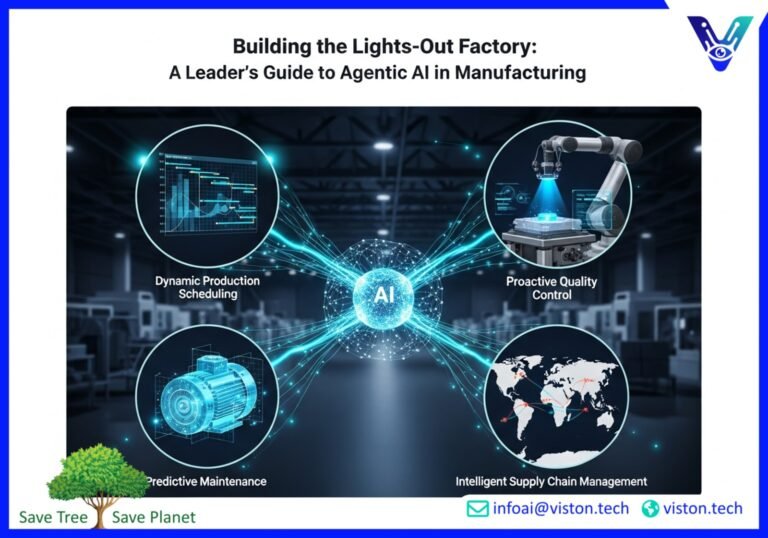
1. Dynamic Production Scheduling
Traditional production scheduling is often a rigid, manual process that struggles to keep up with the dynamic nature of a modern factory. Unforeseen events like machine breakdowns, supply chain disruptions, or sudden changes in customer demand can throw the entire schedule into disarray. This is where production agents, powered by AI, are a game-changer.
An AI-driven scheduling system can process vast amounts of data in real-time, considering variables like machine availability, labor capacity, and material supply. This allows it to create optimal and highly feasible production plans. When a disruption occurs, the AI agent can instantly reconfigure the schedule to mitigate the impact, ensuring on-time delivery and maximizing throughput.
- Real-time adjustments: AI agents continuously monitor the production floor and can dynamically adjust schedules in response to real-time events.
- Optimized resource allocation: These systems ensure that manpower, materials, and machinery are utilized to their fullest potential.
- Enhanced decision-making: By providing managers with actionable insights and optimized plans, AI-based scheduling improves overall operational strategy.
2. Proactive Quality Control
Maintaining product quality is paramount in manufacturing. Traditional quality control often relies on manual inspections, which can be slow and prone to human error. Agentic AI introduces a new paradigm of proactive and predictive quality assurance.
By leveraging machine vision and other sensor data, AI agents can inspect products with a level of speed and precision that is impossible for humans to match. They can identify subtle defects and patterns that might otherwise go unnoticed. Furthermore, AI can predict potential quality issues before they occur by analyzing data from various stages of the production process. This allows for preemptive adjustments to be made, reducing waste and ensuring consistently high-quality output.
- Automated inspection: AI-powered vision systems can inspect every component on a high-speed production line.
- Predictive analytics: AI algorithms can forecast where and when defects are likely to occur, enabling preventative action.
- Continuous improvement: The data generated by AI quality control systems provides valuable insights for ongoing process optimization.
3. Predictive and Prescriptive Maintenance
Unplanned downtime due to equipment failure is a massive drain on resources for manufacturers. Predictive maintenance, powered by agentic AI, is the solution. Instead of reacting to breakdowns, this approach anticipates them. AI agents continuously monitor the health of machinery by analyzing data from sensors that track metrics like temperature, vibration, and energy consumption. When anomalies are detected that indicate a potential failure, the system alerts the maintenance team and can even schedule repairs during planned downtime. This proactive approach significantly reduces unexpected interruptions and extends the life of valuable equipment.
Prescriptive maintenance takes this a step further. Not only does it predict a failure, but it also recommends the best course of action to resolve the issue. This could include specifying the necessary parts, providing step-by-step repair instructions, or even autonomously ordering the required components.
- Reduced downtime: Studies have shown that AI-powered predictive maintenance can reduce machine downtime by up to 50%.
- Lower maintenance costs: By targeting maintenance interventions precisely when they are needed, companies can avoid unnecessary scheduled maintenance and reduce repair costs by up to 30%.
- Improved safety: By preventing catastrophic equipment failures, predictive maintenance contributes to a safer working environment.
4. Intelligent Supply Chain Management
A manufacturer’s efficiency is heavily dependent on the performance of its supply chain. Agentic AI is transforming supply chain management by introducing a new level of intelligence and automation. AI agents can monitor the entire supply chain in real-time, providing insights into potential disruptions and opportunities for optimization.
These intelligent systems can autonomously manage inventory levels, track shipments, and even assess supplier performance. In the event of a disruption, such as a supplier delay or a natural disaster, an AI agent can automatically reroute shipments and adjust production schedules to minimize the impact. This creates a more resilient and agile supply chain that can adapt to the unpredictable nature of the global market.
- Real-time visibility: AI provides a comprehensive view of the entire supply chain, enabling swift responses to disruptions.
- Autonomous optimization: AI agents can make independent decisions to optimize logistics and inventory management.
- Enhanced supplier collaboration: By monitoring supplier performance, AI can help to foster stronger and more reliable partnerships.
The Architecture of Agentic AI in Manufacturing
Implementing agentic AI is not just about plugging in a new piece of software. It requires a well-designed architecture that can support the complex interplay of data, algorithms, and physical machinery. At its core, an agentic AI architecture is a system where autonomous agents can pursue goals by planning actions, utilizing tools, and learning from outcomes.
This architecture is typically composed of several key layers:
- Data Ingestion and Processing: This layer collects data from a wide range of sources, including IoT sensors on machinery, enterprise resource planning (ERP) systems, and manufacturing execution systems (MES). This data is then cleaned, processed, and stored in a way that makes it accessible for analysis.
- AI and Machine Learning Models: This is the “brain” of the system, where algorithms for scheduling, quality control, predictive maintenance, and supply chain management reside. These models are continuously trained on new data to improve their accuracy and performance.
- Orchestration and Execution: This layer is responsible for translating the decisions made by the AI models into actions on the factory floor. It coordinates the activities of various machines and systems to execute the optimized plans.
- User Interface and Visualization: This provides a way for human operators to monitor the performance of the AI system, review its decisions, and intervene when necessary. Clear and intuitive dashboards are essential for building trust and facilitating collaboration between humans and AI.
For a deeper dive into how to build a robust AI infrastructure, you can explore resources like this guide to production-ready AI application architecture.
Measuring the ROI of Agentic AI
The business case for investing in agentic AI is compelling. The return on investment (ROI) can be measured across several key performance indicators (KPIs) that directly impact the bottom line.
- Increased Productivity: By optimizing production schedules and reducing downtime, agentic AI can lead to a significant increase in overall equipment effectiveness (OEE). Many manufacturers report productivity improvements of 20% or more.
- Reduced Operational Costs: AI-driven efficiencies in areas like energy consumption, material usage, and maintenance can lead to substantial cost savings.
- Improved Product Quality: Proactive quality control reduces the number of defects, leading to less waste, fewer customer returns, and enhanced brand reputation.
- Enhanced Agility and Resilience: The ability to quickly adapt to market changes and supply chain disruptions provides a significant competitive advantage in today’s volatile economic climate.
While the initial investment in AI technology can be significant, the long-term benefits in terms of increased efficiency, reduced costs, and improved competitiveness make it a worthwhile endeavor. Companies that have embraced AI in their manufacturing operations report an ROI of 200-400% on their investments.
A Roadmap to the Future: Implementing Agentic AI
The journey to a fully autonomous, lights-out factory is a marathon, not a sprint. A phased approach is crucial for a successful implementation. Here is a practical roadmap for manufacturers looking to integrate agentic AI into their operations:
- Assess Readiness and Build a Strategy: Before embarking on an AI implementation, it’s essential to understand your current capabilities. This includes evaluating your data infrastructure, the skillsets of your team, and your overall AI maturity. A clear strategy with well-defined goals and KPIs is the foundation for success.
- Launch Pilot Projects: Start with a small-scale pilot project in a high-impact area like predictive maintenance or production scheduling. This allows you to test the technology, demonstrate its value, and learn valuable lessons before a full-scale rollout.
- Scale and Integrate: Once the pilot project has proven successful, the next step is to scale the solution across other production lines and departments. This involves integrating the AI system with your existing ERP and MES systems to create a unified, intelligent manufacturing ecosystem.
- Optimize and Evolve: The implementation of AI is not a one-time project. It’s an ongoing process of monitoring, optimizing, and evolving. Continuously gather data, refine your AI models, and explore new use cases to maximize the value of your investment.
For more detailed guidance on creating your AI implementation plan, consider frameworks like the one offered in this AI roadmap from Boston Consulting Group.
The Future is Now: Embracing Agentic AI in Your Smart Factory
The manufacturing landscape is undergoing a profound transformation. Agentic AI is no longer a futuristic concept; it’s a present-day reality that is already delivering significant value to early adopters. From optimizing production schedules to enabling fully autonomous lights-out factories, the potential of this technology is immense.
The path to the smart factory of the future is clear. By embracing agentic AI, manufacturers can unlock new levels of efficiency, resilience, and competitiveness. The time to act is now. Those who hesitate risk being left behind in the next industrial revolution.
Ready to take the next step in your AI journey?
Contact Viston AI today to learn how our AI-powered solutions can transform your manufacturing operations. Our team of experts will work with you to develop a tailored strategy that delivers real results.
Frequently Asked Questions (FAQs)
What is agentic AI in the context of manufacturing?
Agentic AI in manufacturing refers to intelligent systems that can perceive their environment, make autonomous decisions, and take actions to achieve specific goals without direct human intervention. This goes beyond traditional automation by enabling proactive and adaptive control over manufacturing processes.
How does agentic AI differ from traditional manufacturing automation?
Traditional automation typically involves pre-programmed robots performing repetitive, rule-based tasks. Agentic AI, on the other hand, is dynamic and learns from data. It can handle complex, multi-step processes, adapt to changing conditions, and make optimized decisions in real-time.
What are the first steps to implementing agentic AI in a factory?
The first step is to assess your organization’s AI readiness, including your data infrastructure and team skillsets. Then, identify a high-impact use case for a pilot project, such as predictive maintenance. Starting small allows you to demonstrate ROI and build momentum for a broader implementation.
What is a “lights-out” factory, and how does agentic AI enable it?
A “lights-out” or “dark” factory is a manufacturing facility that can operate with little to no human presence on-site. Agentic AI is the core technology that enables this level of automation by autonomously managing all aspects of the production process, from scheduling and quality control to maintenance and logistics.
What kind of data is needed for agentic AI in manufacturing?
Agentic AI systems rely on a wide range of data, including real-time sensor data from machinery (e.g., temperature, vibration), production data from MES and ERP systems, quality control data (e.g., images, measurements), and supply chain data (e.g., inventory levels, shipping times).
What are the biggest challenges to implementing agentic AI?
The biggest challenges often include the initial investment cost, the need for a robust data infrastructure, and the cultural shift required to embrace a more automated and data-driven approach to manufacturing. Overcoming these challenges requires strong leadership, a clear strategy, and a commitment to upskilling the workforce.
#manufacturingAI #smartfactories #productionagents #scheduling #agenticAI #industry40 #AIinmanufacturing #lightsoutfactories
