
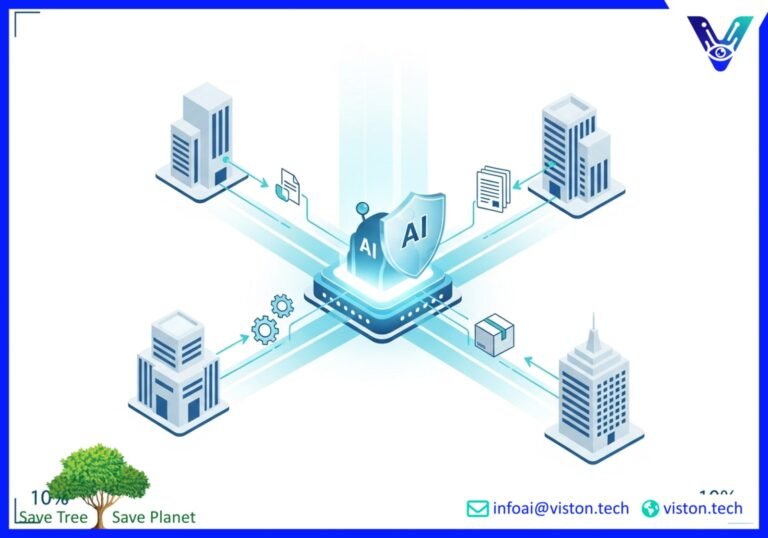
Cross-Company Agents: The Future of Secure B2B Collaboration
Imagine a world where your business processes seamlessly connect with your suppliers, partners, and customers. A world where shared workflows are not just a goal, but an automated, intelligent reality. This isn’t science fiction. This is the power of cross-company agents, the next frontier in agentic AI. As we forge ahead into 2025, businesses are on the cusp of a significant transformation, moving from internal process automation to interconnected, interorganizational ecosystems. MIT research suggests that the next logical step for agentic AI is to pilot these solutions with cooperative suppliers and customers, heralding a new era of secure, efficient, and collaborative B2B interactions.
For C-suite executives, AI engineers, and IT leaders, understanding and harnessing the potential of interorganizational agents is no longer optional—it’s a competitive imperative. This blog post will delve into the world of cross-company agents, exploring their transformative power, real-world applications, and the crucial security and technological considerations for successful implementation. We will provide a clear roadmap for businesses looking to pioneer these shared processes and gain a significant edge in their respective industries.
What Are Interorganizational Agents?
At its core, an interorganizational agent is a sophisticated AI-powered software entity designed to operate securely across company boundaries. Think of it as a digital employee that can collaborate not only with your internal teams but also with the systems and personnel of your trusted partners. These agents are programmed to execute tasks, share information, and manage workflows in a controlled and secure manner, all without direct human intervention for every step. This facilitates a level of integration and automation in B2B workflows that was previously unimaginable.
The basic idea is to create a shared, intelligent layer that connects disparate business ecosystems. This enables real-time data exchange, synchronized processes, and joint decision-making, leading to unprecedented efficiency and agility. Unlike traditional B2B integrations, which are often rigid and costly to maintain, interorganizational agents are flexible, adaptable, and capable of learning and improving over time. They represent a paradigm shift from simple data exchange to truly collaborative, intelligent, and automated shared processes.
Key Characteristics of Interorganizational Agents:
- Autonomy: They can perform complex tasks and make decisions within a predefined set of rules and permissions.
- Interoperability: They are designed to communicate and interact with a wide range of systems and platforms across different organizations.
- Security: Robust security protocols are embedded to ensure data privacy and integrity during cross-company interactions.
- Intelligence: Leveraging machine learning and other AI technologies, they can learn from interactions and optimize workflows for better outcomes.
Unlocking New Possibilities: Scenarios for Cross-Company Collaboration
The applications for interorganizational agents span a multitude of industries and business functions. By enabling secure and intelligent collaboration, these AI-powered entities can resolve long-standing inefficiencies and create new value chains. Let’s explore some of the most compelling scenarios where cross-company agents are set to make a significant impact.
Revolutionizing the Supply Chain
The supply chain is a prime example of a complex, multi-stakeholder environment that stands to benefit immensely from interorganizational agents. These agents can create a truly connected and responsive supply chain by:
- Real-time Inventory Management: An agent can monitor a retailer’s inventory levels and automatically trigger a restocking order with a supplier when stock falls below a certain threshold. This same agent can then track the shipment and update both the retailer’s and the supplier’s systems in real-time.
- Automated Procurement: Agents can be tasked with sourcing materials, negotiating with suppliers based on pre-set parameters, and even executing purchase orders. This streamlines the procurement process, reduces manual effort, and ensures compliance with company policies.
- Enhanced Logistics and Delivery: By connecting the systems of manufacturers, logistics providers, and end-customers, agents can provide real-time updates on delivery status, proactively manage exceptions, and optimize delivery routes for efficiency.
Powering Joint Ventures and Strategic Alliances
For companies engaged in joint ventures or strategic partnerships, interorganizational agents can serve as the digital backbone for collaboration. They can facilitate:
- Shared Project Management: Agents can manage shared project plans, assign tasks to individuals in different organizations, and track progress against common goals. This ensures that all parties are aligned and have a single source of truth for the project’s status.
- Joint Research and Development: In R&D collaborations, agents can securely share research data, manage intellectual property agreements, and automate the process of regulatory submissions, accelerating the pace of innovation.
- Integrated Financial Reporting: Agents can consolidate financial data from multiple partners to provide a unified view of the joint venture’s performance, simplifying financial reporting and ensuring transparency.
Streamlining Vendor and Customer Management
The relationship between a company and its vendors and customers can be significantly enhanced through the use of interorganizational agents. These agents can automate and personalize interactions, leading to stronger partnerships and increased loyalty.
- Automated Onboarding: New vendors or enterprise customers can be onboarded through an automated workflow managed by an agent. The agent can collect necessary documentation, set up system access, and provide initial training materials, reducing the time and effort required for onboarding.
- Proactive Customer Support: An agent can monitor a customer’s usage of a product or service and proactively offer support or upsell opportunities. For instance, if a customer is nearing their data limit on a software subscription, an agent can automatically notify them and suggest an upgrade.
- Seamless Invoicing and Payments: Agents can automate the entire invoicing and payment process between a company and its vendors. This includes generating and sending invoices, tracking payment status, and even resolving minor discrepancies, ensuring timely payments and improving cash flow.
Navigating the Landscape: Security and Legal Considerations
As with any technology that involves sharing data across organizational boundaries, security and legal compliance are paramount. The implementation of interorganizational agents requires a robust framework that addresses these concerns head-on. A proactive approach to security and legal considerations is not just about mitigating risk; it’s about building the trust necessary for successful cross-company collaboration.
Building a Fortress: Security Best Practices
Security must be a foundational element of any interorganizational agent strategy. The potential for data breaches and unauthorized access necessitates a multi-layered security approach. Key security measures include:
- Zero-Trust Architecture: Adopting a “never trust, always verify” model is crucial. Every request for data access, regardless of its origin, must be authenticated and authorized. This minimizes the risk of unauthorized access even if one part of the network is compromised. For more information on building secure systems, you can explore resources on Zero Trust Architecture from the National Institute of Standards and Technology (NIST).
- End-to-End Encryption: All data shared between organizations must be encrypted both in transit and at rest. This ensures that even if data is intercepted, it remains unreadable to unauthorized parties.
- Granular Access Controls: Implementing role-based access control (RBAC) ensures that agents and individuals only have access to the specific data and functionalities they need to perform their tasks. This principle of least privilege is a cornerstone of effective data security.
- Continuous Monitoring and Auditing: Real-time monitoring of agent activities and regular security audits are essential for detecting and responding to potential threats. Detailed logs of all transactions provide a clear audit trail for accountability and forensic analysis.
Staying Compliant: The Legal Framework
The legal landscape for AI and data sharing is continuously evolving. Companies implementing interorganizational agents must navigate a complex web of regulations to ensure compliance and avoid hefty penalties. Key legal considerations include:
- Data Privacy Regulations: Compliance with regulations such as the General Data Protection Regulation (GDPR) in Europe and the California Consumer Privacy Act (CCPA) is non-negotiable. These regulations govern how personal data is collected, processed, and shared.
- Contractual Agreements: Clear and comprehensive legal agreements must be established between collaborating organizations. These agreements should define the scope of the collaboration, data ownership, liability, and dispute resolution mechanisms.
- Intellectual Property (IP) Rights: When agents are involved in joint innovation or content creation, the ownership of the resulting intellectual property must be clearly defined in the contractual agreements to prevent future disputes.
- The EU AI Act: As the European Union’s AI Act comes into force, it will establish a risk-based framework for AI systems. Understanding how interorganizational agents are classified under this act will be crucial for companies operating in or with the EU.
The Engine Room: The Technology Stack for Interorganizational Agents
Developing and deploying interorganizational agents requires a sophisticated and well-integrated technology stack. This stack provides the necessary infrastructure for building, managing, and securing these powerful AI entities. While the specific components may vary depending on the use case, a typical tech stack includes several key layers.
Core Components of the Tech Stack:
- AI and Machine Learning Frameworks: These are the brains of the operation. Frameworks like TensorFlow and PyTorch are used to build the machine learning models that give agents their intelligence and decision-making capabilities.
- Orchestration and Automation Platforms: Tools like Kubernetes and workflow automation platforms are used to manage the lifecycle of the agents, ensuring they run smoothly and efficiently. These platforms handle tasks such as deployment, scaling, and monitoring.
- Secure Data Exchange Protocols: Secure APIs and messaging queues are essential for facilitating communication and data sharing between different organizations’ systems. These protocols must ensure data integrity and confidentiality.
- Identity and Access Management (IAM) Solutions: Robust IAM solutions are needed to manage the identities of agents and enforce access control policies. This ensures that only authorized agents can access specific data and functionalities.
- Blockchain and Distributed Ledger Technology (DLT): For use cases requiring an immutable and transparent record of transactions, blockchain and DLT can provide a secure and decentralized ledger. This is particularly valuable in supply chain and financial applications. A great resource to understand the business implications of blockchain is the Harvard Business Review’s exploration of the topic.
The MIT Perspective: Piloting the Future of Collaboration
The path to widespread adoption of interorganizational agents is not a sprint, but a marathon. As suggested by recent MIT research, the most prudent and effective approach is to start with pilot programs involving trusted and cooperative suppliers and customers. This allows businesses to test the technology in a controlled environment, refine their processes, and demonstrate value before a full-scale rollout.
Starting small with willing partners minimizes risk and provides a valuable learning experience. The insights gained from these pilot programs can inform the development of more complex and ambitious cross-company collaborations in the future. The key is to choose partners with whom you have a strong existing relationship and a shared vision for the potential of AI-powered collaboration.
The journey towards a more connected and intelligent business ecosystem is underway. By embracing the power of interorganizational agents and taking a strategic, phased approach to implementation, businesses can unlock new levels of efficiency, innovation, and collaboration. The future of B2B workflows is here, and it’s powered by secure, intelligent, and collaborative cross-company agents.
Frequently Asked Questions (FAQs)
What is the primary benefit of using interorganizational agents?
The primary benefit is the ability to automate and streamline B2B workflows across company boundaries, leading to increased efficiency, reduced costs, and stronger partnerships.
How do interorganizational agents ensure data security?
They employ a multi-layered security approach, including zero-trust architecture, end-to-end encryption, and granular access controls, to ensure that data shared between organizations remains secure and private.
What are some of the key challenges in implementing interorganizational agents?
The main challenges include ensuring robust security, navigating complex legal and regulatory landscapes, and achieving seamless technical integration between different organizations’ systems.
How do interorganizational agents differ from traditional B2B integrations?
Unlike traditional integrations that are often rigid and focused on simple data exchange, interorganizational agents are intelligent, adaptable, and can automate complex workflows and decision-making processes.
What is the role of AI and machine learning in interorganizational agents?
AI and machine learning provide the intelligence that allows agents to learn from interactions, optimize processes, and make autonomous decisions within their predefined parameters.
Can small and medium-sized enterprises (SMEs) benefit from interorganizational agents?
Yes, while the initial investment might be a consideration, cloud-based solutions and phased implementation approaches can make interorganizational agents accessible and beneficial for SMEs, particularly in streamlining their supply chain and customer interactions.
What legal agreements are necessary for deploying interorganizational agents?
Comprehensive legal agreements are crucial. These should cover data ownership, usage rights, liability, security responsibilities, compliance with data protection regulations, and intellectual property rights.
How do you get started with implementing interorganizational agents?
Following the advice from MIT, a good starting point is to identify a specific, high-impact use case and launch a pilot project with a trusted and cooperative partner. This allows for a controlled and iterative approach to adoption.
Ready to Revolutionize Your B2B Workflows?
The era of siloed operations is over. The future belongs to businesses that can securely and intelligently collaborate with their entire ecosystem. At Viston AI, we specialize in developing cutting-edge, AI-powered solutions that enable secure and efficient cross-company collaboration. Our team of experts can help you design and implement a tailored interorganizational agent strategy that drives real business value.
Contact Viston AI today to learn more about how our AI-powered solutions can transform your B2B workflows and give you a competitive edge in the market of tomorrow.
