
Agentic AI for ESG and Sustainability: Automating Reporting and Optimization
The landscape of Environmental, Social, and Governance (ESG) reporting is rapidly evolving. What was once a niche consideration has become a critical business imperative. Stakeholders, from investors to consumers, now demand transparency and tangible progress on sustainability goals. However, the process of ESG reporting is often manual, time-consuming, and fraught with complexity. This is where Agentic AI emerges as a game-changer, poised to revolutionize how organizations approach ESG and sustainability.
As we look at the trends shaping 2026, it’s clear that automated ESG workflows are no longer a futuristic concept but a present-day reality. AI in energy and operations is already demonstrating significant success in optimization and reporting. The next wave of innovation lies with ESG agents—autonomous AI systems designed to manage the entire ESG lifecycle, from data collection to strategic optimization.
The Growing Burden of ESG Reporting Requirements
ESG reporting is no longer a simple checkbox exercise. A complex web of regulations and standards now governs it. Companies are grappling with a growing number of frameworks, each with its own unique set of metrics and disclosure requirements. Some of the most prominent include:
- Global Reporting Initiative (GRI): A widely used framework for sustainability reporting.
- Sustainability Accounting Standards Board (SASB): Focuses on industry-specific disclosure of financially material sustainability information.
- Task Force on Climate-related Financial Disclosures (TCFD): Provides recommendations for disclosing climate-related financial risks.
- Corporate Sustainability Reporting Directive (CSRD): A new EU regulation that significantly expands sustainability reporting requirements for companies.
Meeting these requirements involves a significant investment of time and resources. Data often resides in disparate silos across an organization, making it challenging to collect, aggregate, and verify. This manual approach is not only inefficient but also prone to errors, which can have serious reputational and financial consequences.
Enter the ESG Agents: Your Automated Sustainability Team
Imagine a dedicated team working around the clock to manage your ESG data and reporting. This is the promise of agentic AI. ESG agents are intelligent, autonomous systems that can perform a wide range of tasks, effectively acting as a virtual sustainability team. These agents are not just simple automation tools; they are capable of learning, adapting, and making decisions to streamline your entire ESG workflow.
Automating Data Collection and Consolidation
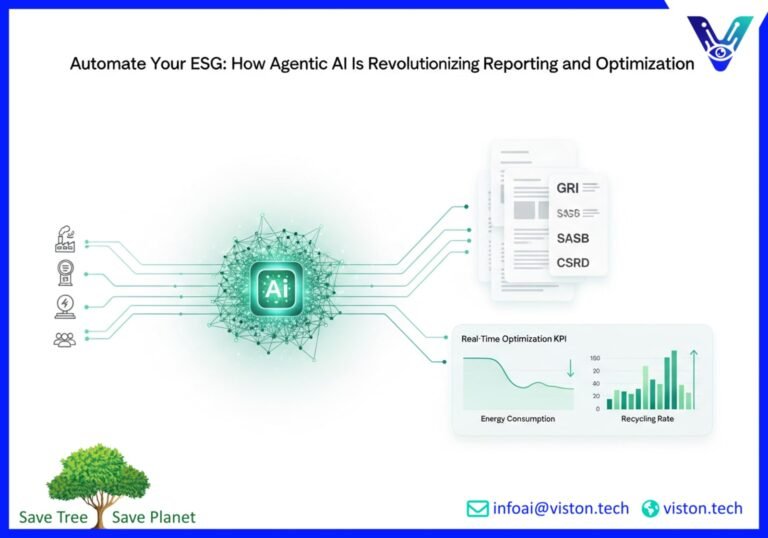
The first major hurdle in ESG reporting is data collection. ESG agents can connect to various data sources within your organization, including:
- Utility bills for energy and water consumption.
- Waste management systems for tracking recycling and disposal rates.
- Supply chain management software for monitoring supplier sustainability performance.
- Human resources systems for data on diversity, equity, and inclusion (DEI).
These agents can automatically extract the relevant data, clean it, and consolidate it into a centralized repository. This eliminates the need for manual data entry and ensures a single source of truth for all your ESG metrics.
Seamlessly Filling Reporting Templates
Once the data is collected, the next step is to populate the various reporting templates. ESG agents can be trained to understand the specific requirements of different frameworks, such as GRI, SASB, and TCFD. They can then automatically populate these templates with the verified data, saving your team countless hours of tedious work. This automation not only accelerates the reporting process but also improves accuracy and consistency.
Real-Time Monitoring of Key Performance Indicators (KPIs)
Sustainability is an ongoing journey, not a one-time report. ESG agents provide real-time visibility into your key performance indicators. They can monitor your energy consumption, waste generation, and carbon emissions on a continuous basis. This allows you to track your progress against your sustainability goals and identify areas for improvement in real-time. Dashboards and automated alerts can notify you of any deviations from your targets, enabling you to take corrective action promptly.
Beyond Reporting: AI-Powered Optimization
While reporting automation is a significant benefit, the true power of agentic AI lies in its ability to drive optimization. By analyzing the vast amounts of data they collect, ESG agents can identify opportunities to improve your environmental performance and reduce costs.
Optimizing Energy Consumption
Energy is a major operational expense for most businesses and a significant contributor to their carbon footprint. ESG agents can analyze your energy consumption patterns and identify inefficiencies. They can then recommend specific actions to reduce your energy usage, such as:
- Optimizing HVAC schedules based on occupancy and weather patterns.
- Identifying equipment that is consuming excessive energy and needs maintenance or replacement.
- Recommending the adoption of renewable energy sources.
For more in-depth information on how AI is revolutionizing the energy sector, you can explore resources from the U.S. Department of Energy.
Minimizing Waste Generation
Waste management is another critical aspect of sustainability. ESG agents can help you implement a more effective waste reduction strategy by:
- Tracking waste generation by source and type.
- Identifying opportunities to reduce, reuse, and recycle materials.
- Optimizing waste collection schedules to reduce costs and emissions.
By implementing these AI-driven recommendations, you can not only reduce your environmental impact but also generate significant cost savings.
The Importance of Guardrails and Ethical Considerations
As with any powerful technology, it is crucial to implement agentic AI for ESG responsibly. Guardrails are essential to ensure that these systems operate within ethical and regulatory boundaries. This includes:
- Data Privacy and Security: Ensuring that sensitive ESG data is protected from unauthorized access and use.
- Algorithmic Transparency: Understanding how the AI models make decisions to ensure fairness and avoid bias.
- Human Oversight: Maintaining a human-in-the-loop to review and validate the outputs of the ESG agents.
By establishing clear governance frameworks and ethical guidelines, you can harness the full potential of agentic AI while mitigating the risks. To learn more about the broader implications of AI in sustainability, the World Economic Forum offers valuable insights.
The Future is Automated, Sustainable, and Intelligent
The integration of agentic AI into ESG and sustainability practices is not a distant vision; it is happening now. Organizations that embrace this technology will gain a significant competitive advantage. They will be able to meet their reporting obligations more efficiently, reduce their environmental footprint, and unlock new opportunities for innovation and growth.
The 2026 reporting cycle will undoubtedly see a greater emphasis on automated and intelligent ESG workflows. By leveraging the power of ESG agents, your organization can move beyond reactive reporting to proactive and strategic sustainability management. This will not only enhance your brand reputation but also create long-term value for your stakeholders and the planet.
Frequently Asked Questions (FAQs)
1. What is Agentic AI in the context of ESG?
Agentic AI for ESG refers to intelligent, autonomous systems (ESG agents) that can proactively manage various aspects of a company’s environmental, social, and governance initiatives. This includes automating data collection, generating reports, monitoring key performance indicators (KPIs), and identifying opportunities for optimization in areas like energy consumption and waste management.
2. How do ESG agents automate reporting?
ESG agents automate reporting by connecting to diverse data sources across an organization, extracting relevant information, and consolidating it into a unified platform. They are programmed to understand the specific requirements of various reporting frameworks (like GRI, SASB, and CSRD) and can automatically populate the necessary templates with accurate and verified data, significantly reducing manual effort.
3. What are the key benefits of using AI for sustainability?
The key benefits of using AI for sustainability include increased efficiency and accuracy in ESG reporting, real-time monitoring of sustainability performance, data-driven insights for optimizing resource usage (such as energy and water), reduced operational costs, and the ability to proactively manage sustainability risks and opportunities.
4. How can AI help in optimizing energy consumption?
AI can optimize energy consumption by analyzing patterns in energy usage data from various sources like smart meters and IoT devices. Based on this analysis, AI algorithms can identify inefficiencies, predict future energy demand, and recommend actions such as adjusting HVAC settings, identifying faulty equipment, and suggesting optimal times for running energy-intensive processes.
5. What are “guardrails” and why are they important for AI in ESG?
“Guardrails” are the ethical and safety protocols put in place to ensure that AI systems operate responsibly. In the context of ESG, guardrails are crucial for maintaining data privacy and security, ensuring the transparency and fairness of AI-driven decisions, and providing for human oversight to prevent errors and biases in ESG reporting and optimization efforts.
6. Is Agentic AI for ESG suitable for non-technical users?
Yes, modern agentic AI solutions for ESG are designed with user-friendly interfaces, such as intuitive dashboards and automated reporting features, making them accessible to non-technical users. The goal is to empower sustainability managers and other business leaders to leverage the power of AI without needing a deep understanding of the underlying technology.
7. How can my organization get started with Agentic AI for ESG?
To get started, your organization can begin by identifying the most pressing challenges in your current ESG reporting and sustainability management processes. The next step is to partner with a specialized AI solutions provider that can help you implement a tailored agentic AI system to address your specific needs and goals.
8. What future trends can we expect for AI in sustainability?
Future trends for AI in sustainability include more sophisticated predictive analytics for climate risk assessment, the use of AI for optimizing circular economy initiatives, and the integration of AI with blockchain for enhanced transparency and traceability in supply chains. We can also expect to see more advanced ESG agents capable of even greater autonomy and strategic decision-making.
Take the Next Step with Viston AI
Ready to unlock the power of Agentic AI for your ESG and sustainability goals? Contact Viston AI today to learn how our cutting-edge AI-powered solutions can help you automate your reporting, optimize your operations, and build a more sustainable future.
