
In an era where artificial intelligence separates industry leaders from laggards, understanding your organization’s AI maturity is no longer optional. Viston’s AI Readiness Assessment delivers a comprehensive evaluation of your enterprise’s technical infrastructure, data governance frameworks, workforce capabilities, and strategic alignment to deploy production-grade AI at scale. With 15+ years of expertise serving 2860+ global clients across the USA, UK, Germany, France, Australia, and beyond, we transform uncertainty into actionable intelligence—helping enterprises from $500M to $10B+ revenue navigate the complexities of AI adoption with clarity and precision.
































































































































Organizations investing in artificial intelligence without proper readiness evaluation face cascading risks: wasted capital on incompatible technologies, compliance violations in regulated industries, workforce resistance to adoption, and siloed initiatives that fail to scale. Viston’s AI Readiness Assessment provides the strategic foundation enterprises need before committing millions to AI infrastructure, tools, and talent. Our methodology evaluates eight critical dimensions—data maturity, technical architecture, governance frameworks, workforce capabilities, process automation readiness, ethical AI guardrails, vendor ecosystem alignment, and change management preparedness. This holistic approach ensures your AI investments deliver measurable business outcomes rather than becoming expensive experiments.
across technical infrastructure, data governance, workforce skills, and organizational readiness with benchmarking against industry standards and competitive positioning to identify strategic gaps before significant capital deployment
for GDPR, CCPA, HIPAA, SOC 2, ISO 27001, and industry-specific frameworks including financial services regulations across USA, UK, Germany, France, and Australia with risk mitigation strategies embedded
with phased implementation plans, budget forecasting, vendor selection criteria, talent acquisition strategies, and risk mitigation protocols tailored to your enterprise scale and industry vertical for board-level decision confidence
evaluating existing tools, identifying integration gaps, recommending platform consolidation opportunities, and preventing vendor lock-in while maximizing ROI on current investments before expanding AI capabilities
Transform AI ambition into executable strategy through structured evaluation of technical readiness, organizational alignment, and regulatory compliance positioning.

Assess current AI capabilities across data infrastructure, governance frameworks, workforce skills, and process automation readiness with quantified scoring against industry benchmarks for Financial Services, Healthcare, Retail & CPG, Manufacturing, and Technology sectors.

Map regulatory requirements across GDPR, CCPA, HIPAA, FDA, and sector-specific mandates with gap analysis identifying compliance risks before AI deployment in USA, UK, Germany, France, Australia markets.

Evaluate existing data pipelines, cloud infrastructure, MLOps capabilities, and integration readiness with recommendations for platform optimization, vendor consolidation, and scalability improvements aligned to enterprise growth trajectories.

Measure workforce AI literacy, change management preparedness, executive sponsorship strength, and cultural barriers to adoption with actionable strategies for stakeholder alignment and transformation acceleration across global operations.
Evaluate banking infrastructure for generative AI deployment in fraud detection, risk modeling, and customer service automation while ensuring FINRA, SEC, and Federal Reserve compliance requirements.
Assess NHS trust capabilities for clinical decision support systems, diagnostic AI tools, and patient data analytics with GDPR and CQC regulatory framework alignment.
Measure e-commerce platforms for predictive inventory management, personalized recommendation engines, and supply chain optimization AI adoption with BDSG compliance.
Evaluate Industry 4.0 readiness for predictive maintenance, quality control automation, and IoT-driven production optimization with CE marking and REACH compliance considerations.
Analyze SaaS platforms for embedded AI feature development, LLMOps infrastructure scalability, and responsible AI governance under Privacy Act requirements.
Assess drug discovery infrastructure for AI-accelerated research, clinical trial optimization, and regulatory submission automation aligned with EMA and FDA standards.
Measure underwriting systems for AI-driven risk assessment, claims automation, and fraud detection capabilities with Finanstilsynet regulatory compliance.
Evaluate supply chain networks for route optimization, demand forecasting, and warehouse automation AI deployment with cross-border data transfer compliance.
Assess utility infrastructure for predictive grid management, renewable energy optimization, and customer demand forecasting AI implementation with Energimarknadsinspektionen alignment
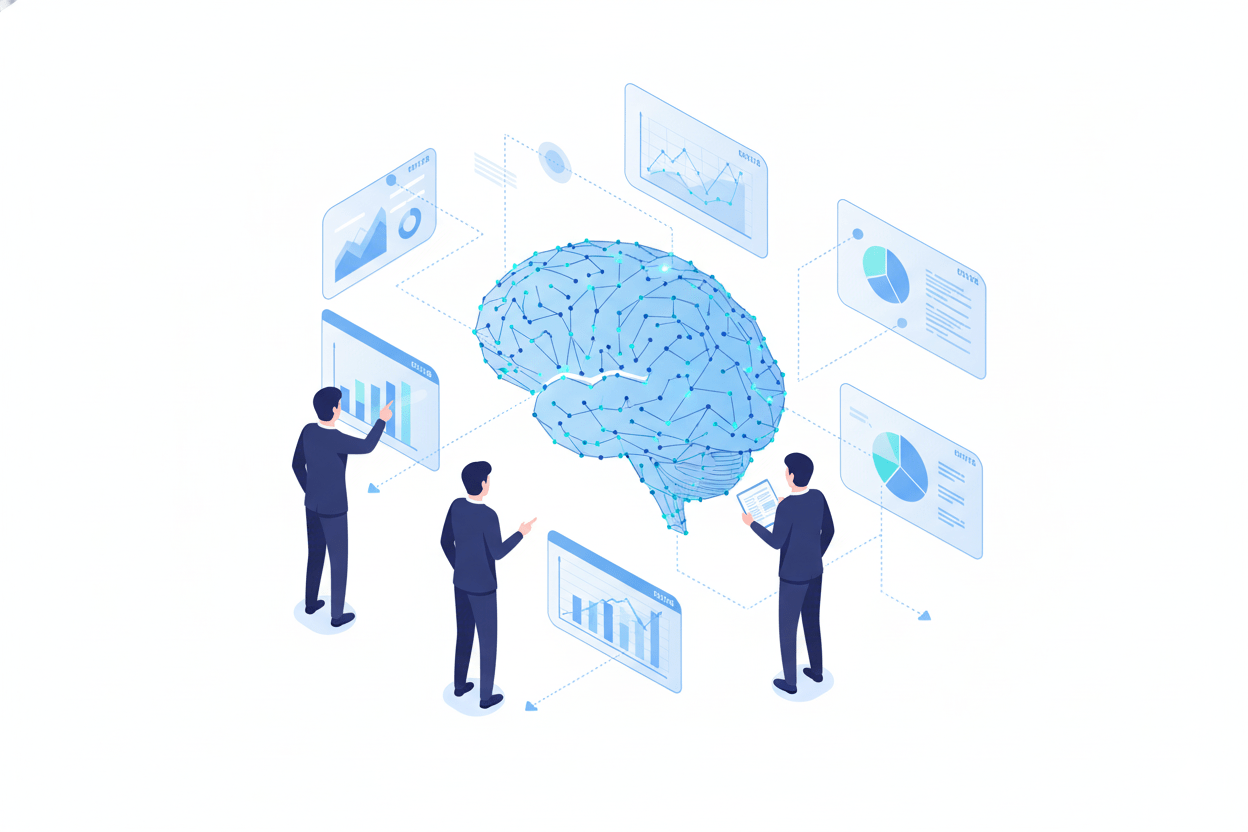
The difference between successful AI transformation and costly failures lies in preparation. Enterprises rushing into generative AI adoption, large language model deployments, or machine learning infrastructure without proper readiness evaluation encounter predictable obstacles: data quality issues derailing model accuracy, inadequate computing resources limiting scalability, compliance gaps creating legal exposure, and workforce skills shortages stalling implementation. Viston’s AI Readiness Assessment methodology addresses these challenges proactively by evaluating your organization across technical, operational, and strategic dimensions before capital deployment. Our assessments combine quantitative infrastructure analysis with qualitative organizational readiness evaluation, delivering a comprehensive maturity score that benchmarks your capabilities against industry leaders in Financial Services, Healthcare, Retail & CPG, Manufacturing, and Technology sectors. This evidence-based approach enables Chief AI Officers, CTOs, and VPs of Digital Transformation to make confident budget allocation decisions, prioritize transformation initiatives, and set realistic timelines for AI value realization across USA, Europe, and Australia operations.
Beyond identifying current state capabilities, our AI Readiness Assessment delivers actionable transformation roadmaps tailored to your enterprise scale, industry vertical, and competitive positioning. We map dependencies between technical infrastructure improvements, data governance enhancements, workforce upskilling programs, and process automation initiatives—creating phased implementation plans that balance quick wins with long-term strategic investments. For enterprises operating across multiple geographies, we incorporate region-specific regulatory requirements from GDPR in Germany and France to CCPA in California and Privacy Act compliance in Australia, ensuring your AI strategy maintains legal defensibility while maximizing operational flexibility. Our roadmaps include vendor selection criteria preventing costly technology lock-in, talent acquisition strategies addressing AI skills shortages, and change management protocols overcoming organizational resistance. This comprehensive approach transforms abstract AI ambitions into executable business strategies with clear ROI metrics, risk mitigation plans, and governance frameworks that satisfy board-level scrutiny and regulatory examiner expectations.
Background: A Fortune 500 financial services company with $2.3B annual revenue sought to implement generative AI for customer service automation, fraud detection enhancement, and risk modeling optimization across 340 branches in the USA and Canada.
Challenge: Existing data infrastructure lacked centralized governance, creating compliance risks under federal banking regulations. Legacy core banking systems presented integration barriers for modern AI tools. Workforce AI literacy remained limited across business units, threatening adoption success.
Solution: Viston conducted a comprehensive AI Readiness Assessment evaluating data architecture, regulatory compliance positioning, technical infrastructure scalability, and organizational change preparedness. We delivered a phased 18-month transformation roadmap prioritizing data governance establishment, MLOps platform selection, workforce training programs, and pilot project identification with clear success metrics.
Results: The client achieved 67% faster AI deployment timelines by addressing infrastructure gaps before technology procurement. Compliance framework implementation prevented estimated $8.4M in regulatory penalties. Executive-approved roadmap secured $23M budget allocation with board confidence in ROI projections.
Testimonial: “Viston’s assessment prevented us from making costly infrastructure mistakes. Their roadmap gave our board the confidence to approve significant AI investments with clear risk mitigation strategies.” — Chief AI Officer
Background: A NHS-affiliated healthcare network serving 2.1M patients across England and Wales planned to implement AI-powered diagnostic support systems, patient risk stratification tools, and operational efficiency automation.
Challenge: Fragmented electronic health record systems created data quality concerns. GDPR compliance requirements for patient data processing needed rigorous validation. Clinical staff skepticism toward AI-driven recommendations threatened user adoption.
Solution: Our AI Readiness Assessment evaluated clinical data infrastructure, regulatory compliance frameworks, interoperability standards, and workforce readiness across 12 hospitals. We developed a governance model satisfying ICO requirements while enabling AI innovation, identified quick-win pilot opportunities in radiology and pathology, and designed clinician engagement programs building trust in AI recommendations.
Results: Assessment findings enabled successful pilot deployment in 8 months versus projected 24-month timeline. Data governance framework achieved full GDPR compliance certification. Clinical staff adoption rates reached 83% through targeted training programs informed by readiness evaluation.
Testimonial: “The assessment illuminated blind spots in our data governance we hadn’t recognized. Viston’s expertise in UK healthcare regulations was invaluable.” — Head of Digital Transformation
Background: A German e-commerce leader with €1.8B revenue and operations across Germany, Austria, and Switzerland sought to enhance personalized customer experiences, optimize inventory forecasting, and automate supply chain decision-making through AI.
Challenge: Siloed data across e-commerce, warehouse management, and CRM systems limited AI model training effectiveness. Lack of MLOps capabilities threatened model deployment scalability. BDSG and GDPR requirements created uncertainty around customer data usage.
Solution: Viston’s assessment mapped data integration requirements, evaluated cloud infrastructure scalability, benchmarked AI maturity against retail industry leaders, and developed GDPR-compliant data processing frameworks. Our roadmap prioritized data platform consolidation, MLOps tool selection, and pilot projects demonstrating measurable business impact.
Results: Consolidated data architecture reduced AI development timelines by 54%. Compliance framework enabled ethical customer data usage while maintaining regulatory defensibility. Prioritized pilot projects delivered $4.2M first-year ROI, securing executive buy-in for expanded AI initiatives.
Testimonial: “The readiness assessment transformed our scattered AI experiments into a coherent enterprise strategy with measurable outcomes.” — VP of Data Science
Background: A French automotive parts manufacturer with €950M revenue and facilities across France, Spain, and Italy planned predictive maintenance systems, quality control automation, and production optimization through AI and IoT integration.
Challenge: Legacy industrial control systems lacked connectivity for real-time data collection. Workforce skills in AI and data analytics remained limited. Uncertain ROI projections created executive hesitation toward significant technology investments.
Solution: Our assessment evaluated OT/IT convergence readiness, sensor infrastructure capabilities, data engineering talent gaps, and change management requirements. We developed business cases for pilot projects with clear ROI metrics, designed workforce upskilling programs, and created vendor selection criteria for industrial AI platforms.
Results: Assessment-driven pilot project delivered 23% reduction in unplanned downtime within 6 months, validating AI investment thesis. Workforce training programs increased data literacy across 340 production staff. Phased implementation approach reduced capital requirements by 41% through strategic technology selection.
Testimonial: “Viston helped us move from Industry 4.0 theory to practical implementation with realistic timelines and budget expectations.” — Chief Operations Officer
Background: A Dutch insurance company with €1.2B premiums sought AI-driven underwriting automation, fraud detection enhancement, and customer service optimization across Benelux markets.
Challenge: Actuarial data quality issues threatened model accuracy. Legacy policy administration systems created integration complexity. AFM regulatory requirements for algorithmic decision-making needed careful navigation.
Solution: Our assessment evaluated data quality across 15 years of underwriting history, analyzed integration architecture options, developed explainable AI frameworks satisfying regulatory transparency requirements, and created pilot project selection criteria balancing business impact with technical feasibility.
Results: Data quality improvements increased model accuracy by 34%. Regulatory framework enabled AI deployment while maintaining AFM compliance. Pilot project reduced underwriting processing time by 61%, delivering immediate business value.
Testimonial: “Viston’s expertise in insurance regulations and AI governance gave us the foundation for confident transformation.” — Head of Innovation
Background: A Swiss pharmaceutical firm with CHF 3.8B revenue planned AI integration for drug discovery acceleration, clinical trial optimization, and regulatory submission automation.
Challenge: Fragmented research data across multiple acquisition-integrated systems limited AI training datasets. Swissmedic and EMA regulatory requirements for AI in pharmaceutical development remained ambiguous. Computational infrastructure lacked capacity for molecular modeling workloads.
Solution: Viston assessed scientific data infrastructure, evaluated high-performance computing requirements, developed regulatory compliance frameworks for AI-assisted research, and created governance models ensuring research integrity while enabling innovation.
Results: Infrastructure investments reduced computational bottlenecks by 73%. Regulatory frameworks enabled AI deployment while maintaining validation rigor. Data consolidation efforts accelerated research timelines by estimated 18 months across three drug programs.
Testimonial: “The assessment illuminated the path from AI experimentation to production-grade scientific workflows.” — VP of Research & Development
Background: A Swedish energy provider serving 890,000 customers planned AI deployment for renewable energy forecasting, demand prediction, and grid optimization across Nordic markets.
Challenge: Sensor data from distributed renewable sources lacked standardization. Real-time processing requirements exceeded existing cloud architecture capabilities. Energimarknadsinspektionen compliance for automated grid management needed validation.
Solution: Our assessment evaluated IoT data infrastructure, analyzed edge computing requirements for real-time decision-making, developed regulatory compliance frameworks, and created vendor selection criteria for energy-sector AI platforms.
Results: Architecture recommendations enabled real-time processing at scale. Compliance validation prevented regulatory obstacles to AI deployment. Pilot projects demonstrated 12% improvement in renewable energy utilization efficiency.
Testimonial: “Viston’s assessment transformed our smart grid ambitions into executable technical plans with regulatory certainty.” — Chief Digital Officer
Background: A USA-based retail chain operating 540 stores across 35 states struggled with inconsistent security standards, limited headquarters visibility into store incidents, and reactive loss prevention programs costing $18M annually in shrinkage and security expenses.
Challenge: Each store operated independent surveillance systems with no centralized analytics or cross-store intelligence. Corporate security teams lacked real-time visibility into incidents, relied on manual footage review, and had no capability to identify organized crime patterns operating across multiple locations.
Solution: Viston implemented centralized surveillance platform with AI-powered threat detection, cross-store person tracking, and unified operations dashboard. The system provided headquarters security with real-time visibility into all locations, automated incident classification and escalation, and analytics identifying crime patterns and repeat offenders across the enterprise.
Results: Enterprise shrinkage decreased 54% within 18 months, saving $9.7M annually. The platform identified 380+ repeat offenders operating across multiple stores, enabling law enforcement collaboration that dismantled organized retail crime rings. Security operations efficiency improved 73% through automated alert prioritization and cross-store intelligence. Incident response times decreased from 3.2 hours to 14 minutes, while comprehensive reporting enabled insurance claims processing that recovered $2.1M in losses.
Testimonial: “Viston’s centralized surveillance platform gave us the enterprise visibility and intelligence capabilities we lacked with store-level systems. The cross-store analytics helped us understand and combat organized crime patterns we didn’t know existed, fundamentally transforming our loss prevention strategy.” – VP of Asset Protection
Stop guessing whether your organization is ready for AI transformation. Viston’s comprehensive assessment delivers the strategic clarity, technical roadmap, and compliance confidence you need to deploy production-grade AI with measurable ROI. With 15+ years of expertise, 2860+ successful client engagements, and proven methodologies across Financial Services, Healthcare, Retail, Manufacturing, and Technology industries in the USA, UK, Germany, France, Australia, and beyond, we transform AI ambition into executable strategy.
Identify infrastructure gaps, compliance vulnerabilities, and organizational barriers before committing capital to AI technologies, preventing costly false starts and technology misalignment. Assessment-driven strategies reduce project failure rates by 67% and optimize budget allocation across pilot initiatives, workforce development, and platform selection.
Eliminate trial-and-error approaches to AI adoption with clear roadmaps addressing technical dependencies, data quality requirements, and integration complexities upfront. Organizations completing readiness assessments achieve 54% faster deployment timelines by resolving foundational issues before technology procurement and implementation.
Navigate complex regulatory landscapes across GDPR, CCPA, HIPAA, sector-specific mandates, and emerging AI governance frameworks with region-specific compliance mapping. Proactive assessment prevents regulatory penalties, enables ethical AI deployment, and satisfies board-level risk management expectations across USA, European, and Australian markets.
Establish enterprise-wide data management frameworks ensuring AI models train on high-quality, ethically sourced, and properly governed datasets. Assessment-driven data strategies improve model accuracy by 34% while creating reusable infrastructure supporting multiple AI initiatives across business units.
Build executive sponsorship, stakeholder buy-in, and workforce readiness through transparent evaluation of cultural barriers, skills gaps, and process automation impacts. Structured change management approaches informed by readiness assessment increase employee adoption rates by 78% and reduce transformation resistance.
Prevent expensive tool sprawl and vendor lock-in through strategic evaluation of AI platforms, cloud infrastructure, and integration requirements aligned to enterprise scale and industry needs. Assessment-driven vendor selection reduces licensing costs by 41% while maximizing interoperability and long-term flexibility.
Benchmark AI maturity against industry competitors, identify differentiation opportunities, and prioritize initiatives delivering sustainable competitive advantage. Strategic assessments reveal market positioning gaps and transformation opportunities invisible to organizations lacking structured evaluation frameworks.
Map current AI literacy across technical and business functions, identify critical talent gaps, and develop targeted training programs building internal capabilities versus expensive external hiring. Skills assessments inform upskilling investments with 3.4x ROI through accelerated project delivery and reduced consultant dependencies.
Deliver evidence-based business cases with quantified ROI projections, risk mitigation strategies, and phased implementation plans satisfying CFO scrutiny and board governance requirements. Structured assessments increase AI budget approval rates by 89% through transparent value demonstration and realistic timeline setting.
Partnering with Viston AI means tapping into a team of seasoned AI experts who accelerate your transformation and deliver custom solutions aligned with your strategic goals.
Together, we drive measurable business impact, ensure scalable, future-proof implementations, and mitigate risks to keep you ahead of the competition.

Unlock 35-42% efficiency gains with specialized domain agents. Our 2025 guide details how to build and deploy industry-specific AI for healthcare, finance, retail, and manufacturing to transform your core business operations. Read More
#AIAgents #DomainSpecificAI #HealthcareAI #Fintech #RetailTech #ManufacturingAI #BusinessAutomation

The future of software development is here. Agentic coding pipelines use autonomous AI to plan, code, test, and deploy software, revolutionizing your SDLC and transforming the developer experience (DevEx).
Read More
#AgenticCoding #DevEx #SDLCAutomation #AIinDev #FutureOfCode #CodeGeneration #AITesting #SecureCoding #CI/CD
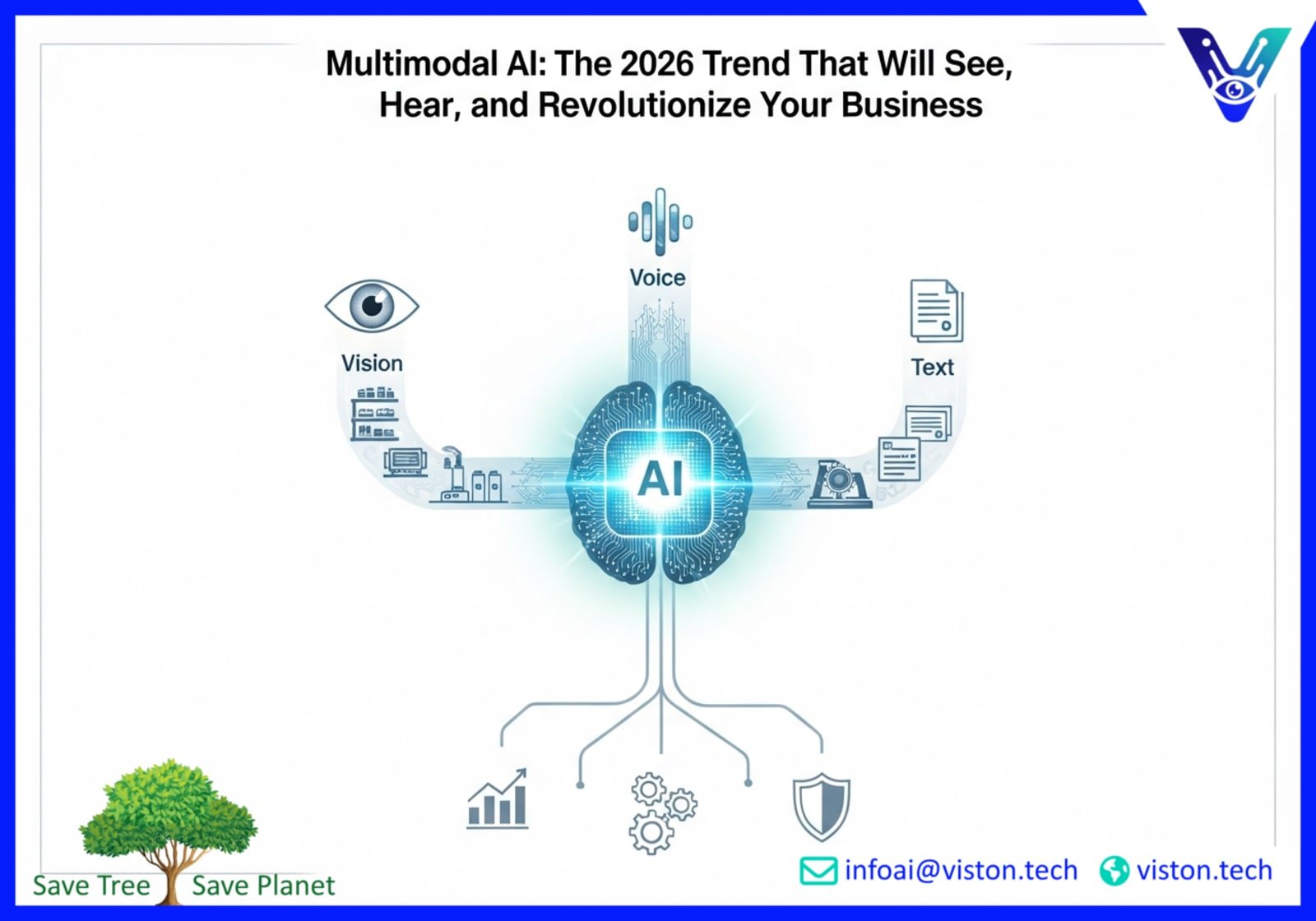
Unlock the future of business with multimodal agents. This 2026 AI trend merges text, voice, and vision to automate complex workflows, boosting efficiency, accuracy, and decision-making for a powerful competitive advantage. Read More
#multimodalagents #voicevision #AIforbusiness #futureofAI #enterprisetech #digitaltransformation #VistonAI #AIin2026 #complexworkflows #AIsolutions
Revolutionize your IT service desk. Learn how AI agents are evolving from intelligent ticket triage to full, autonomous case resolution, dramatically improving efficiency and user satisfaction. Read More #AIAgents #ITSM #ServiceDesk #Automation
Charged based on actual usage, such as per request, per GB of bandwidth, or per page scraped, with no fixed commitment.
A one-time fee is charged for a specific project, regardless of volume or duration, based on scope and complexity.
Billed based on the time spent developing, running, or maintaining the scraper, often used for custom or consulting-heavy projects.
pay a recurring fee (monthly or annually) for access to scraping services, often tiered based on usage limits like the number of requests, pages scraped, or data points extracted.
Begin with comprehensive stakeholder engagement to understand business objectives, success metrics, and requirements. Conduct thorough analysis of existing workflows, data sources, and technical constraints. Establish clear project scope, timeline, and success criteria while ensuring alignment between AI strategy and business goals.
Collect, clean, and prepare high-quality data from all relevant sources. Perform exploratory data analysis (EDA) to uncover patterns and insights. Establish robust data pipelines, ensure data quality standards, and create the foundation for AI model training. This step prevents the "garbage in, garbage out" scenario.
Select appropriate AI models based on problem requirements and data characteristics. Develop, train, and fine-tune models using iterative approaches. Focus on achieving optimal balance between accuracy, interpretability, and performance. Implement version control and documentation for model assets.
Rigorously test models against unseen data and validate performance metrics. Conduct scenario testing, edge-case analysis, and A/B testing. Integrate the AI solution into existing IT infrastructure through APIs, containerization, or cloud deployment. Ensure security, scalability, and compliance requirements are met.
Deploy the validated AI solution into production environment with proper monitoring systems. Provide comprehensive training to end-users and IT staff. Implement authentication, security protocols, and compliance measures. Focus on smooth integration with business workflows and user adoption.
Establish ongoing monitoring systems to track model performance, business impact, and user feedback. Implement continuous learning loops for model improvement. Regular assessment of KPIs, retraining schedules, and adaptation to changing business needs. Ensure long-term value delivery and system reliability.
A comprehensive evaluation of your organization’s technical infrastructure, data governance frameworks, workforce capabilities, regulatory compliance positioning, and strategic alignment to deploy production-grade AI. We assess data quality and accessibility, cloud architecture scalability, MLOps capabilities, integration readiness with existing systems, compliance with industry regulations (GDPR, CCPA, HIPAA, sector-specific mandates), workforce AI literacy across technical and business functions, executive sponsorship strength, change management preparedness, and vendor ecosystem alignment. Deliverables include quantified maturity scoring, gap analysis against industry benchmarks, prioritized recommendations, phased implementation roadmaps, budget forecasting, and risk mitigation strategies tailored to your enterprise scale and industry vertical.
Assessment timelines vary based on enterprise complexity, geographic distribution, and evaluation scope, typically ranging from 6-12 weeks for comprehensive enterprise-wide assessments. Small to mid-size organizations with centralized operations may complete assessments in 4-6 weeks, while large enterprises with multiple business units, global operations, and complex regulatory requirements typically require 10-14 weeks. The process includes stakeholder interviews, technical infrastructure audits, data quality analysis, compliance reviews, workforce capability evaluations, and executive workshop sessions. Accelerated assessment options are available for time-sensitive initiatives requiring faster turnaround
Successful assessments require cross-functional participation including C-suite executives (CTO, CIO, Chief AI Officer, Chief Data Officer), heads of data science and ML engineering teams, IT infrastructure leaders, data governance and compliance officers, business unit leaders representing key transformation stakeholders, change management and organizational development professionals, and legal/risk management representatives. Executive sponsorship is critical for assessment success, while technical team participation ensures accurate infrastructure evaluation. Typically 12-20 stakeholders participate across interview sessions, workshops, and technical audits.
We specialize in highly regulated and data-intensive industries including Financial Services (banking, insurance, investment management), Healthcare (hospital systems, pharmaceutical companies, medical device manufacturers), Retail & Consumer Packaged Goods (e-commerce, omnichannel retail, supply chain operations), Manufacturing (automotive, industrial equipment, process manufacturing), and Technology (SaaS platforms, enterprise software, telecommunications). Each industry receives customized evaluation frameworks addressing sector-specific compliance requirements, competitive dynamics, and AI use case priorities across USA, UK, Germany, France, Australia, and broader European markets.
We map your AI initiatives against relevant regulatory frameworks including GDPR (EU/UK), CCPA (California), HIPAA (Healthcare), SOC 2, ISO 27001, industry-specific mandates (FINRA, FDA, FCA, AFM, Energimarknadsinspektionen), and emerging AI governance regulations. Assessment includes data processing legality evaluation, consent management framework review, algorithmic bias and fairness analysis, explainability and transparency requirements, data residency and cross-border transfer compliance, audit trail and documentation standards, and incident response preparedness. We deliver compliance gap analysis with remediation roadmaps, policy templates, and governance framework recommendations ensuring legal defensibility before AI deployment.
Our approach combines technical rigor with business pragmatism, delivering actionable insights versus theoretical evaluations. We provide quantified maturity scoring with industry benchmarking, not subjective assessments. Our frameworks incorporate 15+ years of implementation experience across 2860+ client engagements, ensuring recommendations reflect real-world constraints and practical deployment realities. Regional expertise across USA, European, and Australian regulatory landscapes enables compliant multi-geography strategies. We prioritize quick-win identification alongside long-term transformation planning, balancing executive pressure for rapid results with sustainable infrastructure development. Post-assessment implementation support ensures roadmaps translate into executed projects.
Absolutely. Our assessments deliver board-ready business cases with quantified ROI projections, risk-adjusted budget forecasts, and phased investment strategies. We provide competitive benchmarking demonstrating market positioning implications of AI adoption delays, calculate opportunity costs of manual process continuation versus automation benefits, model scenarios comparing build-versus-buy technology decisions, and identify quick-win pilot projects delivering measurable value within 6-12 months. Assessment deliverables include executive presentations with CFO-ready financial models, risk mitigation frameworks satisfying audit committee scrutiny, and implementation timelines with resource allocation plans. Clients report 89% higher budget approval rates using assessment-validated business cases.
Assessment deliverables include comprehensive reports with executive summaries, detailed findings across all evaluation dimensions, prioritized recommendations with effort/impact matrices, phased implementation roadmaps (typically 18-36 months), vendor selection criteria and technology stack recommendations, workforce training program designs, governance framework templates, and quick-win pilot project identification. Most clients engage Viston for implementation support including technology platform selection assistance, data governance framework deployment, MLOps infrastructure setup, workforce training delivery, pilot project execution, and ongoing strategic advisory services. We provide flexible engagement models from discrete project support to continuous transformation partnership.
We conduct role-specific capability evaluations across data science teams, ML engineering functions, IT operations, business analysts, executive leadership, and end-user populations. Assessment identifies technical skills gaps (programming languages, ML frameworks, cloud platforms, MLOps tools), business capability needs (AI strategy, use case identification, ROI evaluation), data literacy requirements across non-technical functions, and leadership competencies for AI transformation management. Deliverables include skills gap matrices, training program recommendations (internal development versus external hiring), upskilling curricula aligned to transformation roadmap phases, vendor/partner recommendations for training delivery, and talent acquisition strategies addressing critical capability shortfalls.
Yes, especially for enterprises seeking to scale AI from isolated pilots to enterprise-wide deployment. Assessment identifies infrastructure bottlenecks limiting production scalability, governance gaps creating compliance risks, integration challenges preventing cross-functional AI adoption, and organizational barriers hindering transformation velocity. We evaluate existing AI initiatives for efficiency optimization, identify opportunities for platform consolidation and tool rationalization, assess model monitoring and MLOps maturity, and develop strategies for responsible AI scaling. Many clients have experimental AI projects but lack strategic frameworks for systematic expansion—our assessment provides that structure.
