
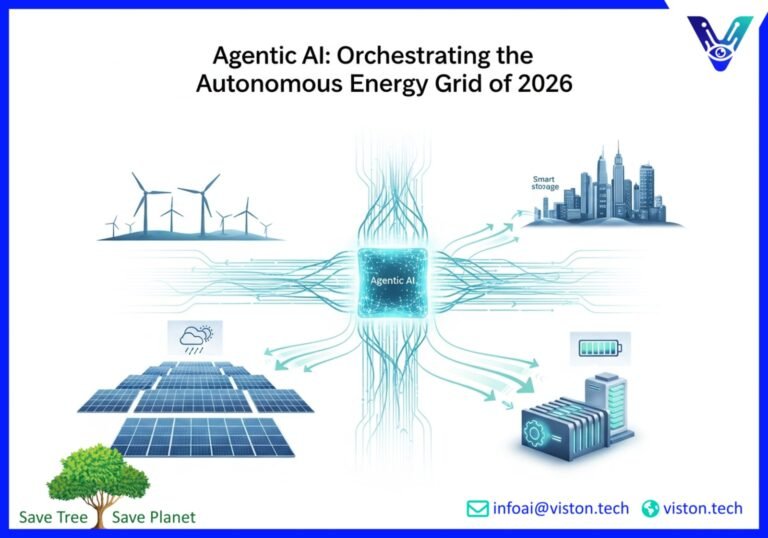
Agentic AI in Energy and Utilities: Orchestrating a Smarter Grid in 2026
The energy and utilities sector is navigating a perfect storm of rising demand, aging infrastructure, and the urgent need for decarbonization. As we move through 2026, a groundbreaking technology is emerging not just as a tool, but as a strategic partner: Agentic AI. Unlike traditional AI that analyzes and predicts, agentic AI acts. It’s a network of intelligent, autonomous agents that can make decisions, execute tasks, and collaborate to optimize the entire energy value chain. This isn’t science fiction; it’s the next frontier of grid modernization, and it’s happening now.
For C-suite executives, AI engineers, and industry specialists, understanding the transformative power of agentic AI is no longer optional. It’s the key to building a resilient, efficient, and sustainable energy future. The market for agentic AI in energy and utilities is projected to grow from $0.64 billion in 2025 to a staggering $3.14 billion by 2030, a testament to its disruptive potential. This growth is fueled by the increasing complexity of our energy systems and the proven ability of AI to drive down costs and enhance performance.
Mapping the New Energy Value Chain with Agentic AI
Agentic AI is revolutionizing every facet of the energy and utilities sector. Let’s explore how these intelligent agents are creating value at each stage:
Intelligent Forecasting: From Reactive to Proactive
Traditional forecasting methods struggle to keep pace with the variability of renewable energy sources and shifting consumer demand. Agentic AI introduces a new era of precision and proactivity:
- Forecasting Agents: These specialized AI agents continuously analyze vast datasets, including historical weather patterns, real-time satellite imagery, and grid load data. They don’t just predict demand; they anticipate renewable energy generation with unprecedented accuracy.
- Proactive Adjustments: By accurately forecasting solar and wind output, these agents enable utilities to optimize energy storage and dispatch, ensuring a stable and reliable power supply.
Automated Dispatch and Scheduling: The Self-Balancing Grid
The intricate dance of balancing energy supply and demand in real-time is a monumental challenge. Agentic AI is turning this complex process into a seamlessly orchestrated operation:
- Dispatch Agents: These agents act as autonomous grid operators, making millisecond decisions to route power, manage distributed energy resources (DERs) like rooftop solar and EV chargers, and prevent congestion.
- Economic Dispatch: AI-powered economic load dispatch optimizes the mix of generation sources to minimize costs and reduce emissions, a critical step towards a greener grid.
- Virtual Power Plants (VPPs): Agentic AI is the engine behind the rise of VPPs, aggregating thousands of DERs and managing them as a single, dispatchable asset.
Predictive Maintenance: Fixing Problems Before They Happen
Unplanned downtime is a costly and disruptive reality for utilities. Agentic AI is transforming maintenance from a reactive necessity to a proactive strategy:
- Maintenance Agents: By continuously monitoring equipment health through IoT sensors, these agents can detect subtle anomalies that signal impending failures.
- Automated Workflows: When a potential issue is identified, the agent can automatically schedule maintenance, order necessary parts, and dispatch a crew, significantly reducing downtime and operational costs. Reports indicate that AI-powered predictive maintenance can slash downtime by up to 30% and cut operational costs by 15-20%.
Agent Orchestration: A Symphony of Intelligent Collaboration
The true power of agentic AI lies in the ability of individual agents to communicate and collaborate, creating a system that is far greater than the sum of its parts. Consider these real-world scenarios unfolding in 2026:
- Integrated Grid Management: A forecasting agent detects a sudden drop in solar generation due to unexpected cloud cover. It immediately communicates with a dispatch agent, which then taps into battery storage and adjusts the output from other generation sources to maintain grid stability, all without human intervention.
- Dynamic Demand Response: A demand-response agent anticipates a peak in energy demand during a heatwave. It communicates with smart thermostats and EV chargers in homes and businesses, incentivizing them to reduce consumption during peak hours, thereby alleviating strain on the grid.
- Self-Healing Networks: In the event of a fault or outage, a network of AI agents can autonomously isolate the problem, reroute power to affected areas, and initiate repair protocols, dramatically improving grid resilience and restoration times.
For a deeper dive into the technical aspects of building and deploying these sophisticated systems, exploring the fundamentals of agentic AI architecture can provide valuable insights for your technical teams.
Navigating the Challenges: Data, Safety, and Security
The transition to an AI-driven energy future is not without its challenges. Addressing data, safety, and security is paramount to building trust and ensuring the responsible deployment of this powerful technology.
The Data Dilemma: Fuel for the AI Engine
High-quality, labeled data is the lifeblood of any AI system. For utilities, this means breaking down data silos and investing in robust data governance frameworks. The lack of sufficient high-quality data remains a significant hurdle for many organizations.
Safety and Reliability: Building Trust in Autonomous Systems
In a sector where reliability is non-negotiable, ensuring the safety and predictability of autonomous AI agents is critical. This involves rigorous testing in simulated environments, such as digital twins, and implementing human-in-the-loop oversight for critical decisions.
Cybersecurity: Protecting the Grid’s New Digital Frontier
As our energy grids become more interconnected and intelligent, the attack surface for cyber threats expands. Protecting against these threats requires a multi-layered approach to cybersecurity, including advanced threat detection, encryption, and secure access controls. Adherence to international standards like IEC 62443 is becoming increasingly important.
The ROI of Agentic AI: A Clear Path to Profitability
The business case for investing in agentic AI is compelling. By optimizing operations, reducing costs, and enhancing efficiency, AI is delivering a significant return on investment for utilities and energy companies.
- Operational Efficiency: Automation of routine tasks can free up to 20% of your workforce’s capacity, allowing them to focus on more strategic initiatives.
- Cost Savings: Predictive maintenance can lead to substantial savings by reducing unplanned downtime and extending the lifespan of critical assets.
- Increased Revenue: AI-powered energy trading and optimization of VPPs can create new revenue streams for utilities.
To better understand the financial implications and build a strong business case for AI adoption, this analysis of the economic potential of AI offers a valuable framework for C-suite leaders.
For an in-depth look at how industry leaders are leveraging AI, consider exploring resources from major industry players and research institutions. For example, insights from the International Energy Agency on AI can provide a global perspective on the latest trends and developments.
Frequently Asked Questions (FAQs)
1. What is agentic AI and how is it different from traditional AI?
Agentic AI refers to intelligent systems that can proactively make decisions, pursue goals, and adapt to changing conditions without direct human instruction. Unlike traditional AI, which primarily focuses on analysis and prediction, agentic AI takes action to achieve its objectives.
2. How does agentic AI improve grid optimization?
Agentic AI optimizes the grid by enabling real-time, autonomous decision-making. It can balance fluctuating loads from renewable energy sources, manage the dispatch of power from various assets, and respond to changing conditions far more rapidly than manual systems.
3. What are the key applications of forecasting agents in the energy sector?
Forecasting agents use AI to analyze vast amounts of data, including weather patterns and historical consumption, to predict both energy demand and the output of renewable sources like solar and wind with high accuracy. This allows for better planning and resource allocation.
4. How does agentic AI contribute to predictive maintenance in utilities?
AI agents continuously monitor the health of equipment using sensor data. They can predict potential failures before they occur, automatically schedule maintenance, and order necessary parts, which significantly reduces downtime and maintenance costs.
5. What are the main data and security considerations when implementing agentic AI in the energy sector?
Key considerations include ensuring access to high-quality, labeled data, implementing robust cybersecurity measures to protect against threats to interconnected systems, and establishing strong data governance and privacy protocols.
6. What is the expected ROI for implementing agentic AI in energy and utilities?
While the exact ROI can vary, benefits typically include significant cost savings from improved operational efficiency and predictive maintenance, reduced energy waste, and the potential for new revenue streams through optimized energy trading and grid services. Some reports suggest operational cost reductions of 15-20%.
7. How does agentic AI support the integration of renewable energy sources?
By accurately forecasting the intermittent nature of renewables and automating the management of energy storage and dispatch, agentic AI helps to smoothly integrate sources like solar and wind into the grid, ensuring stability and reliability.
8. What is a “self-healing” grid and how does agentic AI enable it?
A self-healing grid uses AI agents to autonomously detect, isolate, and respond to faults or outages. These agents can reroute power and initiate repairs without human intervention, dramatically improving the resilience and reliability of the power supply.
The Future is Autonomous: Are You Ready?
The era of agentic AI is here, and it is reshaping the energy and utilities landscape at an astonishing pace. From orchestrating complex grid operations to predicting maintenance needs and optimizing renewable energy integration, these intelligent agents are paving the way for a more efficient, resilient, and sustainable energy future. The question is no longer if you should adopt agentic AI, but how quickly you can integrate it into your operations to maintain a competitive edge.
At Viston AI, we are at the forefront of this transformation. Our AI-powered solutions are designed to help you navigate the complexities of the modern energy landscape and unlock the full potential of your assets. Whether you are looking to enhance your forecasting capabilities, optimize your grid operations, or implement a proactive maintenance strategy, our team of experts is here to help.
Contact Viston AI today to learn how our AI-powered solutions can help you orchestrate a smarter, more efficient energy future.
#EnergyAI #Utilities #GridOptimization #ForecastingAgents #AgenticAI #FutureOfEnergy #SmartGrid #PredictiveMaintenance #AIinEnergy #DigitalTransformation
