
“`html
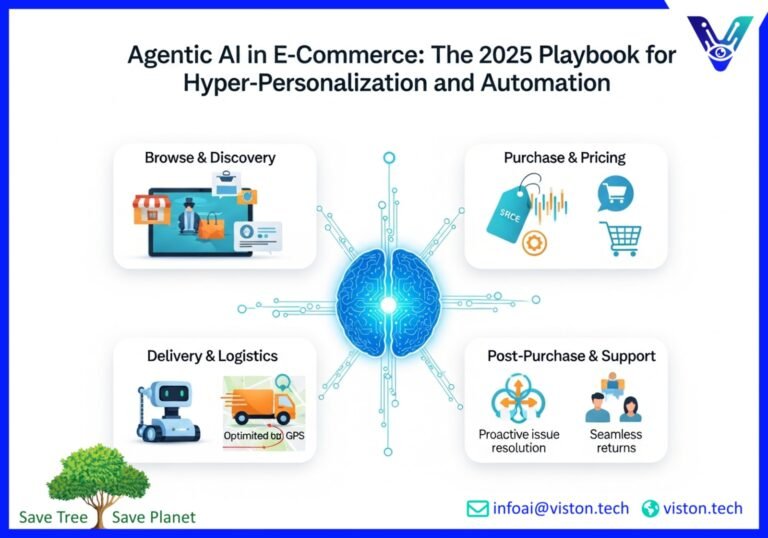
Agentic AI in E-Commerce: The 2025 Playbook for Hyper-Personalization and Automation
The e-commerce landscape is undergoing a seismic shift. For years, artificial intelligence has been a powerful tool for personalization and efficiency. Tech trend articles consistently point to e-commerce as a primary adopter of AI for creating personalized journeys, automating support, and enabling intelligent merchandising. But now, we are entering a new era, moving beyond simple automation to true autonomous action. Welcome to the age of Agentic AI. These are not just tools that follow commands; they are digital employees that think, plan, and execute complex tasks across the entire customer lifecycle.
For enterprise leaders, IT visionaries, and product managers, understanding this evolution is not just important—it’s critical for survival and growth. By 2025, agentic AI will be the dividing line between e-commerce platforms that thrive and those that merely survive. This article explores how AI agents are revolutionizing every touchpoint of the customer journey, from initial browsing and dynamic pricing to the complexities of the post-purchase experience. We will uncover how these intelligent agents operate, the incredible value they unlock, and how you can measure their impact on your bottom line.
What is Agentic AI? A Simple Breakdown
Before we dive into the applications, let’s clarify what we mean by “agentic AI.” Think of traditional AI, like a chatbot, as a sophisticated script. It responds to specific inputs based on its programming. It can answer a question like, “Where is my order?” by pulling tracking data. This is helpful, but limited.
Agentic AI, on the other hand, is like a proactive and autonomous personal assistant. If you ask it, “Where is my order, and can you make sure it arrives before Friday for a birthday gift?” the AI agent understands the context and urgency. It doesn’t just retrieve data. It can perform a series of actions:
- Access order status and logistics information.
- Analyze shipping routes and potential delays.
- If a delay is likely, it could proactively contact the courier’s system to explore expedited options.
- It might even check your purchase history, see you often buy gift wrap, and offer to have the item wrapped at the warehouse.
This ability to reason, plan, and execute multi-step tasks without constant human intervention is what makes agentic AI a game-changer for e-commerce. It transforms customer experience (CX) from reactive to proactive.
Revolutionizing the E-Commerce Journey, Step by Step
To truly grasp the impact of agentic AI, we need to look at its role across the entire customer lifecycle. These ecommerce agents work tirelessly behind the scenes, creating a seamless, intelligent, and deeply personal shopping experience.
Stage 1: The Browse and Discovery Phase
Hyper-Personalized Recommendations with AI Shopping Agents
For years, personalization has been driven by collaborative filtering—the “customers who bought this also bought” model. Agentic AI takes this to a whole new level. AI shopping agents act as expert concierges for each visitor, providing a level of personalization previously possible only in luxury brick-and-mortar stores.
Instead of just looking at past purchases, these agents consider:
- Real-Time Intent: They analyze browsing behavior, cursor movements, and time spent on products to understand what a customer wants right now.
- Contextual Understanding: Is the customer shopping for a winter coat in a region where it suddenly started snowing? The agent knows this and prioritizes relevant items.
- Visual Search and Style Matching: A customer can upload a photo of a style they like, and the AI agent won’t just find that exact item. It will curate a collection of complementary products that match the aesthetic.
This creates a dynamic and engaging discovery process. It reduces friction and helps customers find what they love faster, significantly boosting engagement and conversion rates.
Stage 2: The Purchase and Pricing Phase
Dynamic Pricing: AI Agents Finding the Perfect Price Point
Pricing is one of the most critical levers in e-commerce, yet it is often managed with static rules. Dynamic pricing powered by AI agents changes the game. These agents act as tireless market analysts, optimizing prices in real-time to maximize revenue and competitiveness without alienating customers.
Here’s how they do it:
- Competitor Analysis: Agents constantly monitor competitor pricing across the web, adjusting your prices to stay attractive.
- Demand Sensing: They analyze inventory levels, sales velocity, and even external factors like holidays or trends to predict demand and price accordingly.
- Personalized Offers: For a loyal customer, an AI agent might autonomously generate a unique, time-sensitive discount on an item they viewed multiple times, delivering it at the perfect moment to encourage a purchase.
This isn’t about just raising or lowering prices. It’s about finding the optimal price for every product, for every customer, at any given moment. Explore how industry leaders are leveraging AI in their strategies by reading this insightful article on how companies can win with generative AI.
Stage 3: The Delivery and Logistics Phase
Intelligent Logistics: From Automated Warehouse to Your Doorstep
A customer’s positive experience can quickly sour with a late or incorrect delivery. Agentic AI is the backbone of a smarter, more resilient supply chain. Logistics agents work across your entire fulfillment network to ensure a smooth journey from click to delivery.
Key functions include:
- Inventory Management: AI agents predict future demand with stunning accuracy, automating reordering processes to prevent stockouts and reduce overstock.
- Warehouse Optimization: Within the warehouse, agents can direct robotic pickers, optimize packing processes, and plan the most efficient layout for goods.
- Route Optimization: For last-mile delivery, agents analyze traffic patterns, weather conditions, and delivery density in real-time to plan the fastest and most cost-effective routes for drivers. They can even re-route shipments mid-journey to avoid unexpected delays.
The result is a logistics network that is not just automated, but intelligent and self-correcting. This leads to lower operational costs, faster shipping times, and happier customers.
Stage 4: The Post-Purchase Journey and Support
Proactive Automation: Redefining Returns, Support, and Loyalty
The post-purchase journey is where brands can truly differentiate themselves and build lasting loyalty. This is often where customers have the most questions and anxiety. Agentic AI transforms this experience from a cost center into a powerful retention engine.
Consider these scenarios:
- Autonomous Returns Management: A customer wants to return an item. Instead of a cumbersome form, they interact with an AI agent that instantly processes the request, generates a shipping label, and even asks for feedback on why the product is being returned—valuable data that is fed back into the merchandising system.
- Proactive Issue Resolution: An AI agent detects that a customer’s package is stuck at a shipping hub. Before the customer even notices, the agent sends them a notification explaining the delay, providing a new ETA, and perhaps offering a small store credit for the inconvenience. This turns a potential negative experience into a positive, trust-building interaction.
- Personalized Onboarding and Education: For complex products, an agent can send a series of tailored emails or messages with tips, tutorials, and usage guides, ensuring the customer gets the most value from their purchase and reducing the likelihood of returns.
Beyond the Hype: Measuring the ROI of Agentic AI
Implementing any new technology requires a clear understanding of its impact on key performance indicators (KPIs). The benefits of agentic AI are not abstract; they are directly measurable across your business.
- Increased Conversion Rate: Hyper-personalized recommendations and dynamic offers guide customers to purchase more effectively.
- Higher Average Order Value (AOV): Intelligent cross-selling and upselling by AI agents introduce customers to relevant products they might not have found otherwise.
- Enhanced Customer Lifetime Value (CLV): A seamless, proactive post-purchase experience builds loyalty and encourages repeat business.
- Improved Net Promoter Score (NPS): By resolving issues proactively and providing superior CX, you create more brand advocates.
- Reduced Cart Abandonment Rate: Timely interventions by an AI agent, such as a personalized discount offer, can recover potentially lost sales.
- Lower Operational Costs: Automation in logistics, support, and inventory management frees up human teams to focus on high-value strategic tasks.
- Faster Support Ticket Resolution Time: AI agents can handle a vast majority of common queries instantly, 24/7, leading to quicker resolutions and higher customer satisfaction.
The 2025 Outlook: What’s Next for AI in E-Commerce?
The world of agentic AI is moving incredibly fast. As we look toward 2025 and beyond, we can expect even more sophisticated capabilities to become mainstream. We are on the cusp of fully autonomous shopping agents that customers can delegate tasks to, such as “Find me a pair of running shoes under $150 with good arch support that will arrive by next week.” These agents will then research, compare, and present the best options, fundamentally changing how we interact with online retail. For a deeper dive into the future, platforms like NVIDIA’s Conversational AI showcase the powerful technology that will drive these future interactions.
The integration with augmented reality (AR) and virtual reality (VR) will also become more seamless. Imagine an AI agent guiding you through a virtual store, helping you “try on” clothes or visualize how a piece of furniture would look in your home. This fusion of technologies will create immersive, personalized shopping experiences that blur the lines between the digital and physical worlds.
Frequently Asked Questions (FAQs)
1. What is the main difference between a standard chatbot and an e-commerce agent?
A chatbot typically follows a script or a decision tree to answer common questions. An agentic AI, or an e-commerce agent, can understand complex requests, reason, create a plan, and execute multi-step actions across different systems to achieve a goal, like resolving a shipping issue proactively.
2. Is agentic AI only for large enterprise companies?
While large enterprises have been early adopters, the technology is becoming more accessible. SaaS platforms and AI service providers are developing scalable solutions that allow small and medium-sized businesses to leverage the power of agentic AI without massive upfront investment in infrastructure.
3. How does dynamic pricing actually benefit the customer?
While it helps retailers optimize revenue, it also benefits customers by ensuring competitive pricing. It can lead to more frequent sales on items with low demand and provide personalized discounts to loyal customers, making pricing feel fairer and more responsive to their behavior.
4. What are the first steps to implementing AI agents in an e-commerce business?
Start with a clear business case. Identify the biggest friction point in your customer journey—whether it’s cart abandonment, high support volume, or poor personalization. Then, partner with an AI solutions provider to develop a pilot program focused on solving that specific problem to demonstrate value quickly.
5. How does agentic AI handle sensitive customer data and privacy?
Data privacy is paramount. Reputable AI systems are built on secure infrastructure and are designed to comply with regulations like GDPR and CCPA. The AI agents only access the data necessary to perform their tasks, and all information is handled with strict security protocols and encryption.
6. Can these AI agents understand complex or emotional customer queries?
Yes, modern AI agents are powered by advanced Natural Language Understanding (NLU) models. They can interpret nuanced language, understand sentiment, and detect frustration or urgency in a customer’s query. This allows them to escalate complex emotional situations to a human agent when necessary.
7. What is the impact of agentic AI on human jobs in e-commerce?
Agentic AI is designed to augment human capabilities, not replace them. By automating repetitive and data-intensive tasks, it frees up human employees to focus on strategic initiatives, creative problem-solving, and building deeper customer relationships—activities where the human touch remains invaluable.
8. How long does it take to see a return on investment (ROI) from implementing e-commerce agents?
The timeline for ROI depends on the specific application. For instance, implementing an agent for cart recovery or dynamic pricing can show measurable results within a single quarter. Larger-scale logistics or full-journey personalization projects may take longer, but they also offer a much larger potential return.
Your Partner in AI-Powered Transformation
The transition to an agentic AI-powered e-commerce model is not a distant future; it is the next logical step in digital evolution. Businesses that embrace this change will build more resilient operations, deliver unparalleled customer experiences, and unlock new avenues for growth. The journey may seem complex, but you don’t have to navigate it alone.
Ready to unlock the power of agentic AI for your e-commerce business? The team at Viston AI specializes in creating bespoke AI solutions that drive real-world results. We help businesses like yours redefine the customer journey from end to end.
Contact the experts at Viston AI today to schedule a consultation and discover how our custom solutions can revolutionize your e-commerce platform.
#AgenticAI #Ecommerce #AI #CX #Personalization #DynamicPricing #MarTech #FutureOfRetail #Automation
“`
