
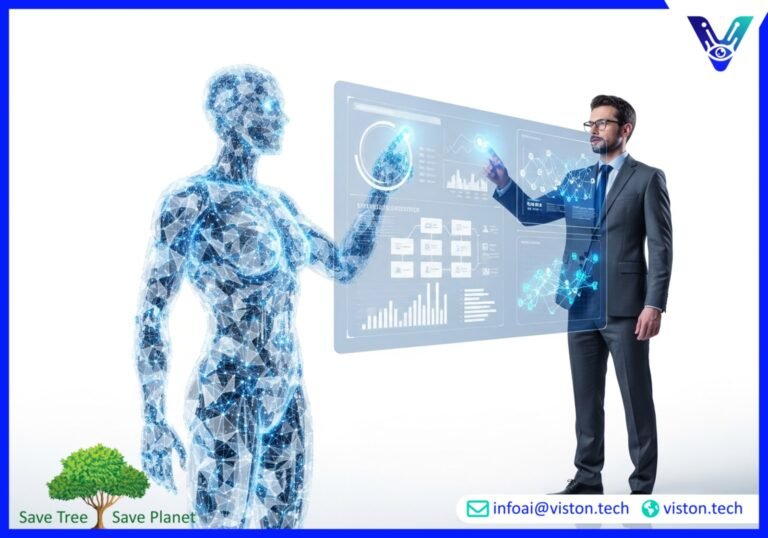
Agentic AI & Workforce Transformation: A Partnership, Not a Replacement
The conversation about artificial intelligence in the workplace is rapidly changing. It’s no longer a distant future scenario. It is happening right now. You have likely seen the headlines and statistics. Current technology could theoretically automate a significant portion of U.S. work hours. This naturally leads to questions about job security and the future of work. However, a growing body of research and real-world application points to a different reality. The future is not about replacement but about a powerful partnership between people, AI agents, and robots. This collaboration is set to redefine roles, enhance productivity, and create new opportunities, with a notable wage premium for those who become AI-fluent.
In 2025, agentic AI is at the forefront of this transformation. Unlike traditional AI that responds to commands, agentic AI can take initiative, make decisions, and complete complex tasks with minimal human intervention. Think of them as autonomous digital team members. This evolution is not about making human roles obsolete but about augmenting our capabilities. It allows us to focus on what we do best: strategic thinking, creativity, and complex problem-solving.
This blog post will explore the exciting landscape of human-agent collaboration. We will delve into how jobs are evolving, the new “skill partnerships” that are emerging, the necessary redesign of our organizations, and a leadership playbook to navigate this new era. The future of work is a collaborative one, and understanding this partnership is key to unlocking its immense potential.
The Dawn of Human-Agent Collaboration: The Future of Work is a Team Sport
The concept of a “workforce” is expanding. It’s no longer just about human employees. Forward-thinking organizations are already integrating AI agents as digital contributors, creating hybrid teams that work side-by-side to achieve common goals. This isn’t science fiction; it’s the emerging reality of the modern workplace. The rise of agentic AI marks a significant shift from simple automation to intelligent collaboration. These AI agents are not just tools; they are teammates.
Imagine a marketing team where an AI agent analyzes vast amounts of market data in real-time. It can identify emerging trends and suggest campaign strategies. This frees up the human marketers to focus on the creative aspects of the campaign. They can develop compelling messaging and build strong customer relationships. This is the essence of human-agent collaboration: leveraging the strengths of both humans and AI to achieve superior outcomes.
This collaborative approach is already yielding impressive results. Studies have shown that teams enhanced by AI are significantly more likely to produce top-tier ideas. AI can break down traditional silos by providing balanced solutions that incorporate diverse perspectives. As AI handles more of the routine and data-intensive tasks, human employees are elevated to more strategic roles, focusing on innovation and complex decision-making.
Beyond Task Automation: The Evolution of Jobs
The fear of mass job displacement due to AI is understandable. However, the reality is more nuanced. History has shown that technological revolutions tend to transform jobs rather than eliminate them entirely. AI is no different. Instead of widespread job losses, we are witnessing a significant shift in the tasks that make up our jobs. Repetitive and mundane tasks are increasingly being automated, allowing employees to focus on higher-value activities.
Consider the role of a customer service representative. In the past, a significant portion of their time was spent answering routine inquiries. Today, AI-powered chatbots can handle many of these basic questions 24/7. This doesn’t make the human representative obsolete. Instead, it elevates their role. They can now focus on resolving more complex and emotionally charged customer issues, providing a level of empathy and understanding that AI cannot replicate.
- Task Automation, Not Job Elimination: AI excels at automating specific tasks within a job, not the entire job itself. This allows for a redistribution of responsibilities, where humans and AI each focus on what they do best.
- The Rise of New Roles: The integration of AI is also creating entirely new job categories. Roles like AI ethicists, prompt engineers, and AI trainers are becoming increasingly common. These roles are essential for ensuring that AI systems are developed and used responsibly and effectively.
- Focus on Human-Centric Skills: As AI handles more of the technical and analytical tasks, skills like critical thinking, creativity, emotional intelligence, and collaboration are becoming more valuable than ever. These are the skills that complement AI and drive innovation.
Forging Skill Partnerships with AI: A New Kind of Collaboration
To thrive in this new era of work, we need to move beyond simply using AI as a tool. We need to develop true “skill partnerships” with our digital counterparts. This means understanding the capabilities and limitations of AI and learning how to effectively collaborate with it to achieve our goals. It’s about a symbiotic relationship where human ingenuity is amplified by the power of AI.
For individuals, this requires a commitment to lifelong learning and upskilling. Developing a foundational understanding of AI concepts, even for non-technical roles, is becoming crucial. This includes learning how to effectively communicate with AI systems, a skill often referred to as “prompt engineering.” It also involves honing the critical thinking skills necessary to evaluate AI-generated outputs and identify potential biases or inaccuracies.
For organizations, fostering these skill partnerships means investing in training and development programs that prepare employees for the future of work. This goes beyond technical training. It involves cultivating a culture of curiosity and experimentation, where employees are encouraged to explore new ways of working with AI. Creating clear career development paths that show employees how these new skills can lead to more strategic and fulfilling work is also essential.
Redesigning Organizations for an AI-Powered Future
The integration of human-agent teams necessitates a fundamental redesign of our organizational structures and processes. The traditional hierarchical models of the past are ill-suited for the dynamic and collaborative nature of the AI-powered workplace. To truly capture the value of this transformation, organizations must become more agile, data-driven, and human-centric.
This organizational rewiring involves rethinking everything from job descriptions and performance metrics to communication channels and decision-making processes. Job roles will need to be redefined to reflect the new division of labor between humans and AI. Performance metrics will need to evolve to capture the value created by human-agent collaboration. And new communication and collaboration protocols will be needed to ensure seamless interaction between human and digital team members.
Furthermore, organizations need to adopt a more experimental and iterative approach to organizational design. The rapid pace of technological change means that what works today may not work tomorrow. By embracing a mindset of continuous improvement and being willing to test new structures and processes, organizations can create a more adaptive and resilient workforce that is prepared for the challenges and opportunities of the future. A deeper dive into how AI is reshaping organizational design can be found in this insightful article.
A Leadership Playbook for the Agentic Era
Navigating the transition to an AI-powered workforce requires a new kind of leadership. Leaders can no longer rely on traditional top-down management styles. Instead, they must become facilitators of collaboration, champions of innovation, and cultivators of a culture of trust and continuous learning. The success of AI adoption hinges on effective leadership that can inspire and empower both human and digital team members.
Here is a playbook for leaders to guide their organizations through this transformation:
- Develop a Clear Vision: Articulate a compelling vision for the role of AI in the organization. This vision should focus on augmentation and partnership, not just automation and cost-cutting.
- Invest in People: Provide employees with the training and resources they need to develop the skills for human-agent collaboration. This includes both technical and soft skills.
- Foster a Culture of Experimentation: Encourage employees to experiment with new AI tools and workflows. Create a psychologically safe environment where it’s okay to fail and learn from mistakes.
- Lead by Example: Actively use and advocate for AI tools in your own work. When leaders embrace AI, it sends a powerful message to the rest of the organization.
- Prioritize Ethical Considerations: Establish clear ethical guidelines for the use of AI. This includes addressing issues of bias, transparency, and accountability.
- Communicate Openly and Transparently: Keep employees informed about the organization’s AI strategy and its potential impact on their roles. Address concerns about job security head-on and emphasize the opportunities for growth and development.
The future of work is not a zero-sum game between humans and machines. It is a story of collaboration and co-creation. By embracing the principles of partnership, focusing on skill development, and redesigning our organizations and leadership approaches, we can unlock a future where human ingenuity and artificial intelligence work together to solve some of the world’s most pressing challenges. The journey to this future is already underway, and the organizations that embrace it will be the ones that thrive in the years to come.
Contact Viston AI for Your AI-Powered Solutions
Ready to embark on your workforce transformation journey? Viston AI specializes in developing and deploying custom AI agent solutions that drive enterprise velocity. Our team of experts can help you build, deploy, and scale autonomous agents to automate complex workflows, unlock predictive intelligence, and accelerate your business goals. Contact Viston AI today to learn how our AI-powered solutions can help you build the workforce of the future.
Frequently Asked Questions (FAQs)
1. What is agentic AI and how is it different from other types of AI?
Agentic AI refers to AI systems that can act autonomously to achieve goals. Unlike traditional AI that simply responds to user commands, agentic AI can take initiative, make decisions, and perform a series of actions to complete complex tasks with minimal human intervention. Think of them as proactive digital assistants rather than reactive tools.
2. Will AI take my job?
While some jobs may be displaced, the broader trend is job transformation rather than elimination. AI is more likely to automate specific tasks within a job, freeing up humans to focus on more strategic, creative, and interpersonal aspects of their roles. New jobs are also being created to manage and work alongside AI systems.
3. What skills are most important for the future of work with AI?
Both technical and non-technical skills will be crucial. Technical skills include data analysis, machine learning fundamentals, and understanding how AI models work. Equally important are human-centric skills such as critical thinking, creativity, emotional intelligence, communication, and the ability to collaborate effectively with AI agents.
4. How will human-agent collaboration change the workplace?
Human-agent collaboration will lead to more efficient and innovative workplaces. AI agents will handle repetitive and data-intensive tasks, allowing human employees to focus on higher-value activities that require judgment, creativity, and empathy. This will lead to the formation of hybrid teams where humans and AI work together as partners.
5. What is the role of leadership in the transition to an AI-powered workforce?
Leadership is critical for a successful transition. Leaders need to set a clear vision for AI adoption, invest in employee training and development, foster a culture of experimentation and trust, and lead by example. They must also address ethical considerations and communicate openly with employees about the changes ahead.
6. How can my organization start implementing agentic AI solutions?
A good starting point is to identify specific business processes or workflows that could benefit from automation and intelligence. Begin with pilot projects to test and refine your approach. Partnering with an experienced AI solutions provider like Viston AI can help you develop a strategic roadmap and implement custom AI agents that align with your business goals.
7. What are the ethical considerations of using agentic AI in the workplace?
Ethical considerations are paramount. They include ensuring fairness and avoiding bias in AI algorithms, maintaining transparency in how AI makes decisions, protecting employee and customer data privacy, and establishing clear lines of accountability for AI-driven actions. Organizations need to develop robust AI governance frameworks to address these issues.
8. Will there be a wage premium for AI-fluent roles?
Yes, major research suggests that there will be a wage premium for roles that require AI fluency. As organizations increasingly rely on AI, employees who can effectively work with and manage AI systems will be in high demand. These individuals will be able to command higher salaries due to their specialized skills and their ability to drive significant value for their organizations.
#AgenticAI #FutureOfWork #HumanAgentCollaboration #WorkforceTransformation #AIinBusiness #DigitalTransformation #Leadership #VistonAI
