
Rethinking BI: AI Agents That Explore Data, Not Just Dashboards
The world of business intelligence is on the verge of a seismic shift. For years, we’ve relied on static dashboards and complex reports to understand our data. But let’s be honest, this approach is slow, rigid, and often leaves the most valuable insights buried deep within the numbers. The traditional BI model is broken. It’s time for a change.
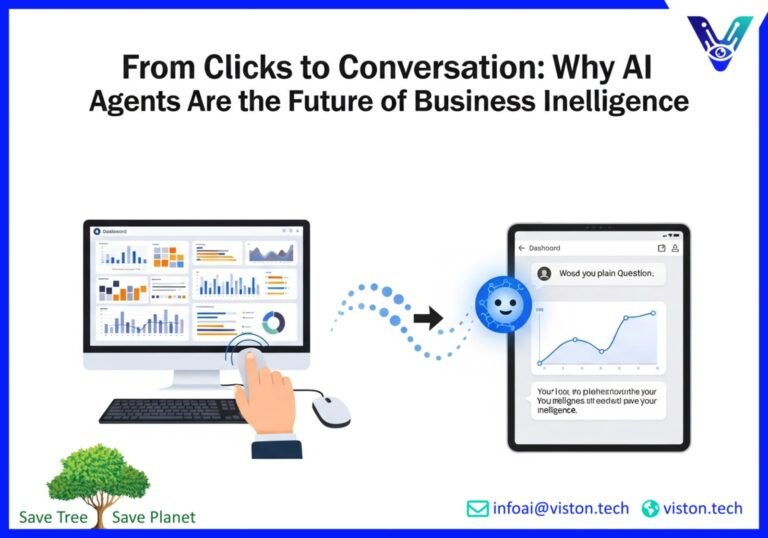
As we look towards the business trends of 2026, one pattern stands out: the rise of Generative AI assistants that allow users to query data in plain language. This isn’t just an incremental improvement; it’s a fundamental rethinking of how we interact with and derive value from our data. Forget clicking through endless filters and struggling with clunky interfaces. The future of BI is conversational, intuitive, and powered by intelligent AI agents that act as your personal data explorers.
The Pain of Static BI: A Relic of the Past
Traditional business intelligence has served its purpose, but its limitations are becoming increasingly apparent in today’s fast-paced, data-driven world. The static nature of dashboards and reports creates a number of significant pain points for organizations:
- Delayed Insights: The process of generating reports is often slow and cumbersome, requiring the expertise of data analysts or IT teams. By the time a report is ready, the insights it contains may already be outdated.
- Limited Accessibility: Traditional BI tools are often complex and require specialized skills to operate. This creates a bottleneck, where business users are dependent on a small group of experts to get the data they need.
- Lack of Flexibility: Dashboards are pre-configured to display a specific set of metrics. If a user wants to explore the data from a different angle or ask a new question, they’re often out of luck without requesting a new report.
- Surface-Level Analysis: Static reports can only provide a snapshot of the data. They often fail to reveal the underlying trends, correlations, and anomalies that can lead to true business breakthroughs.
These challenges ultimately hinder an organization’s ability to be truly data-driven. Decisions are made with incomplete information, opportunities are missed, and the full potential of a company’s data assets remains untapped.
Enter the Data Exploration Agents: Your AI BI Copilots
Imagine a world where you could simply ask your data questions in plain English and get immediate, insightful answers. This is the promise of data exploration agents, also known as AI BI copilots. These intelligent agents are powered by large language models (LLMs) and are designed to understand natural language queries, explore vast datasets, and present findings in a clear and concise manner.
Think of a data agent as a tireless, brilliant analyst who is available 24/7. You can ask it to “show me the top-performing products in the last quarter,” “identify the key drivers of customer churn,” or “forecast sales for the next six months.” The agent will not only retrieve the relevant data but also analyze it, identify patterns, and even generate visualizations to help you understand the information more easily.
This conversational analytics approach democratizes data, making it accessible to everyone in the organization, from the C-suite to the front-line employees. It empowers non-technical users to explore data independently, fostering a culture of curiosity and data-driven decision-making.
Data Agents in Action: Real-World Examples
The transformative potential of AI data agents is not just theoretical. Companies across various industries are already leveraging these technologies to gain a competitive edge.
In Finance: A financial analyst can use a data agent to quickly assess the risk of a particular investment. By asking questions like, “What is the historical volatility of this stock?” and “How does it correlate with other assets in our portfolio?” the analyst can get a comprehensive risk profile in minutes, a task that would have previously taken hours of manual research.
In Retail Operations: A retail manager can use a data agent to optimize inventory levels. By asking, “Which products are selling fastest in our downtown store?” and “What are the current stock levels for those items?” the manager can make informed decisions about restocking and prevent stockouts, leading to increased sales and customer satisfaction.
The Architecture Behind the Magic: Warehouse + LLM
The power of AI data agents lies in a sophisticated architecture that combines the structured data storage of a data warehouse with the natural language processing capabilities of a large language model. Here’s a simplified breakdown of how it works:
- Data Warehouse/Lakehouse: This is the foundation of the system, where all of an organization’s structured and unstructured data is stored and organized. A modern data lakehouse architecture is often preferred for its ability to handle diverse data types.
- Semantic Layer: This layer sits on top of the data warehouse and provides a business-friendly view of the data. It translates complex data schemas into understandable business terms, making it easier for the LLM to interpret user queries.
- Large Language Model (LLM): This is the brain of the operation. The LLM is trained on a massive amount of text and data, enabling it to understand the nuances of human language. When a user asks a question, the LLM interprets the query, translates it into a formal query that the data warehouse can understand, and then retrieves the relevant information.
- Conversational Interface: This is the user-facing component of the system, typically a chatbot or a search bar. It allows users to interact with the data agent in a natural and intuitive way.
This architecture enables a seamless and interactive data exploration experience, bridging the gap between complex data and business users.
The Importance of Guardrails: Ensuring Trust and Accuracy
While the capabilities of AI data agents are impressive, it’s crucial to implement robust guardrails to ensure the accuracy, security, and ethical use of these powerful tools. Guardrails are a set of rules and constraints that govern the behavior of the AI agent, preventing it from generating misleading information or accessing sensitive data.
Key guardrails include:
- Access Controls: Limiting the data that different users can access based on their roles and responsibilities.
- Data Quality Checks: Ensuring that the data being used by the AI agent is accurate, complete, and up-to-date.
- Bias Detection: Identifying and mitigating potential biases in the data and the LLM’s algorithms to ensure fair and equitable outcomes.
- Output Validation: Verifying the accuracy and relevance of the AI agent’s responses before they are presented to the user.
By implementing these guardrails, organizations can build trust in their AI-powered BI solutions and ensure that they are being used responsibly.
The Future is Conversational: Embrace the Shift
The transition from static dashboards to conversational AI agents is more than just a technological upgrade; it’s a paradigm shift in how we think about and interact with data. As we move further into 2026, organizations that embrace this change will be the ones that thrive. The ability to ask any question of your data and get an immediate, intelligent answer will become a key differentiator in a competitive landscape.
To learn more about how AI is reshaping business intelligence, you can explore resources from leading technology publications like TechCrunch’s AI section.
Are you ready to leave the limitations of static BI behind and unlock the full potential of your data? The era of conversational analytics and AI data agents is here. It’s time to join the conversation.
#AIBI #DataAgents #ConversationalAnalytics #BusinessIntelligence #FutureOfData #GenAI #VistonAI
Frequently Asked Questions (FAQs)
1. What are AI BI copilots?
AI BI copilots, also known as data exploration agents, are AI-powered assistants that help users analyze and understand data through natural language conversations. They can interpret plain-language questions, query databases, and generate insights and visualizations on the fly, making data analysis more accessible to non-technical users.
2. How are data agents different from traditional dashboards?
Traditional dashboards provide a static, pre-defined view of data, while data agents offer a dynamic and interactive way to explore information. With a data agent, you can ask ad-hoc questions and delve deeper into the data in a conversational manner, going beyond the limitations of a fixed set of charts and metrics.
3. What is conversational analytics?
Conversational analytics is a new approach to business intelligence that allows users to interact with data using natural language. Instead of using complex query languages or graphical interfaces, users can simply ask questions in plain English to get the insights they need. This makes data analysis more intuitive and accessible to a broader range of users.
4. What is the basic architecture of an AI-powered BI solution?
A typical architecture for an AI-powered BI solution includes a data warehouse or data lakehouse to store the data, a large language model (LLM) to understand and process natural language queries, a semantic layer to provide business context to the data, and a conversational interface for users to interact with the system.
5. Why are guardrails important for AI in BI?
Guardrails are essential for ensuring the responsible and effective use of AI in business intelligence. They help to maintain data security and privacy, prevent the generation of inaccurate or biased information, and ensure that the AI system operates within ethical and regulatory boundaries. This builds trust and confidence in the insights provided by the AI.
6. What are the key benefits of using AI data agents?
The primary benefits of using AI data agents include democratizing data access across the organization, accelerating the speed of insight generation, enabling more in-depth and flexible data exploration, and empowering non-technical users to make data-driven decisions independently. This can lead to improved business outcomes and a stronger data culture.
7. What skills are needed to use conversational analytics tools?
One of the main advantages of conversational analytics is that it requires minimal technical skills. Users do not need to know how to write code or use complex software. The ability to ask clear and specific questions in natural language is the primary skill needed to effectively use these tools.
8. How can a business get started with AI-powered BI?
Businesses can start by identifying a specific use case or pain point that could be addressed with AI-powered BI. It’s often beneficial to partner with a specialized AI solutions provider, like Viston AI, to assess data readiness, develop a tailored strategy, and implement a pilot project to demonstrate the value of the technology.
Ready to transform your business intelligence? Contact Viston AI today to learn how our AI-powered solutions can help you unlock the true potential of your data.
