
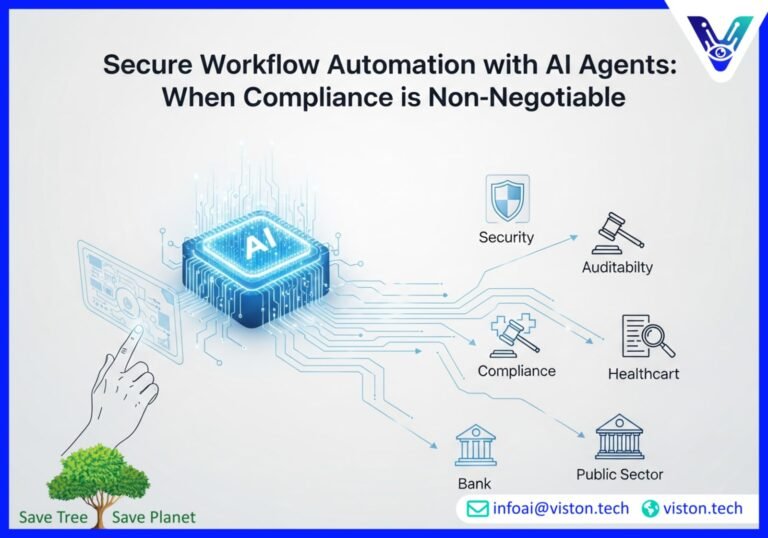
AI Agents for Secure Workflow Automation: When Compliance Is Non‑Negotiable
In today’s fast-paced digital world, automation is key to staying competitive. Businesses are increasingly turning to artificial intelligence (AI) to streamline their operations. However, for organizations in regulated industries, the path to automation is paved with compliance challenges. The need for secure, transparent, and auditable workflows is not just a preference; it’s a mandate. This is where AI agents for secure automation are making a significant impact.
The conversation around automation has shifted. It’s no longer just about efficiency. It’s about building intelligent systems that operate within the strict boundaries of regulatory frameworks. Enterprises are now pushed to bake governance, logging, and policy enforcement directly into their automated flows. This “compliance-first” approach is the new standard for regulated workflows.
The Rise of Compliance-First Automation
Traditionally, automation and compliance were often seen as conflicting priorities. Automation aimed for speed and efficiency, while compliance demanded meticulous checks and balances. This friction often led to manual, time-consuming compliance processes that slowed down innovation. The advent of sophisticated AI agents is changing this narrative.
AI-powered secure automation solutions are designed with compliance at their core. These systems can understand and interpret complex regulatory requirements. They can then execute tasks in a way that adheres to these rules. This proactive approach to compliance minimizes the risk of human error and ensures that all automated processes are fully documented and traceable.
What are AI Agents?
Think of AI agents as intelligent, autonomous entities that can perform tasks on your behalf. They can analyze data, make decisions, and interact with other systems. In the context of workflow automation, these agents act as digital employees. They can handle everything from data entry and document processing to complex financial transactions. The key difference is that their actions are governed by a predefined set of rules and policies, ensuring every step is compliant.
Navigating Regulated Workflows: A Sector-Specific Look
The need for secure automation is particularly acute in industries with stringent regulatory oversight. Let’s explore how AI agents are transforming workflows in some of these key sectors:
- Finance: The financial services industry is bound by a complex web of regulations. These include Anti-Money Laundering (AML) and Know Your Customer (KYC) requirements. AI agents can automate the process of verifying customer identities, monitoring transactions for suspicious activity, and generating compliance reports. This not only enhances security but also significantly reduces the manual effort involved.
- Healthcare: Patient data is highly sensitive and protected by regulations like HIPAA. AI agents can automate administrative tasks such as patient scheduling and billing while ensuring that all data handling practices are compliant. They can also assist in clinical trial management by automating data collection and analysis, all within a secure and auditable framework. For a deeper dive into AI’s role in healthcare, HIPAA’s guidance on AI offers valuable insights.
- Public Sector: Government agencies handle vast amounts of sensitive citizen data. They also operate under strict procurement and data privacy regulations. AI agents can automate workflows related to public records requests, benefits processing, and grant management. This improves efficiency and transparency while maintaining the highest standards of security and compliance.
Design Principles for Secure and Compliant AI Automation
Building AI-powered automation solutions for regulated workflows requires a deliberate and thoughtful approach. Here are some key design principles that should guide the development process:
- Security by Design: Security should not be an afterthought. It must be an integral part of the system architecture from day one. This includes robust access controls, data encryption, and regular security audits to protect against unauthorized access and data breaches.
- Explainable AI (XAI): In regulated industries, it’s not enough for an AI system to be accurate. You also need to be able to explain how it arrived at a particular decision. Explainable AI techniques provide transparency into the model’s decision-making process, which is crucial for auditability and regulatory scrutiny.
- Continuous Monitoring and Adaptation: The regulatory landscape is constantly evolving. AI-powered automation systems must be designed to adapt to these changes. Continuous monitoring of regulatory updates and the ability to quickly reconfigure workflows are essential for maintaining ongoing compliance.
- Human-in-the-Loop: While AI agents can automate many tasks, human oversight remains critical. A human-in-the-loop approach allows for manual review and intervention when necessary. This is particularly important for complex or high-risk decisions, ensuring an extra layer of scrutiny.
The Cornerstone of Compliance: Designing an Impeccable Audit Trail
A robust audit trail is non-negotiable for any organization operating in a regulated environment. It provides a chronological record of all activities, which is essential for demonstrating compliance to auditors and regulators. An AI-powered automation system must be designed to generate a detailed and immutable audit trail.
Key Components of an Effective Audit Trail:
- Who: The identity of the user or AI agent that performed the action.
- What: A clear description of the action that was taken.
- When: The exact date and time the action occurred.
- Where: The system or application where the action took place.
- Why: The reason or justification for the action, if applicable.
This level of detail provides a complete picture of every automated process. It allows for thorough investigation in the event of an issue and provides concrete evidence of compliance. To learn more about the technical aspects of creating secure systems, the NIST Cybersecurity Framework is an excellent resource.
The Future is Secure, Compliant, and Automated
The integration of AI into workflow automation is not just a trend; it’s a paradigm shift. For businesses in regulated industries, it offers a path to increased efficiency without compromising on compliance. By adopting a compliance-first mindset and leveraging the power of AI agents, organizations can build a future where their automated workflows are not only intelligent but also inherently secure and auditable.
The journey towards secure automation requires a partner with deep expertise in both AI and regulatory compliance. A partner who understands the unique challenges of your industry and can design a solution that meets your specific needs.
Frequently Asked Questions (FAQs)
1. What are AI agents in the context of workflow automation?
AI agents are intelligent software programs designed to perform tasks autonomously. In workflow automation, they act like digital assistants, capable of handling repetitive and rule-based processes, making decisions based on data, and interacting with various software systems to complete a workflow.
2. How do AI agents ensure compliance in regulated industries?
AI agents are programmed with the specific rules and regulations of an industry. They execute tasks strictly following these predefined protocols, which minimizes the risk of human error and ensures that every action is compliant. They also maintain detailed logs of their activities for audit purposes.
3. What is a “compliance-first” approach to automation?
A “compliance-first” approach means that compliance considerations are integrated into the design and development of an automation solution from the very beginning. Instead of treating compliance as a separate step, it becomes a core component of the automated workflow.
4. Why is an audit trail so important for secure automation?
An audit trail provides a detailed, time-stamped record of all activities within a system. In secure automation, this is crucial for demonstrating compliance with regulations. It allows organizations to track every action, identify any potential issues, and provide evidence to auditors that all processes are being followed correctly.
5. Can AI automation completely replace human workers in regulated workflows?
While AI can automate a significant portion of regulated workflows, human oversight remains essential. A “human-in-the-loop” approach is often the most effective, where AI handles the repetitive tasks, and humans intervene for complex decision-making, exceptions, and final approvals.
6. What are some of the key challenges in implementing AI for secure automation?
Some of the key challenges include the complexity of regulatory requirements, the need for high-quality data to train AI models, ensuring the explainability of AI decisions, and integrating AI solutions with existing legacy systems.
7. How can my business get started with AI-powered secure automation?
The first step is to identify the workflows that are most suitable for automation and have significant compliance requirements. Then, it’s important to partner with a technology provider that has expertise in both AI and your specific industry’s regulations to develop a tailored solution.
8. What is Explainable AI (XAI) and why does it matter for compliance?
Explainable AI (XAI) refers to methods and techniques that make the decisions of AI systems understandable to humans. For compliance, this is critical because regulators and auditors need to understand why an AI system made a particular decision to ensure it aligns with legal and ethical standards.
Ready to embrace the future of secure automation? Contact Viston AI today to learn how our AI-powered solutions can help you navigate the complexities of regulated workflows with confidence.
