
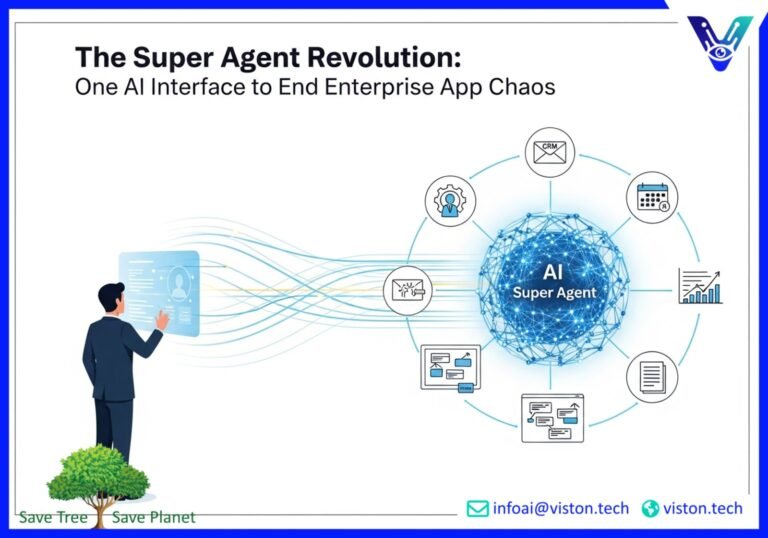
The Rise of the Super Agent: One Interface to Rule All Enterprise Apps
The year is 2026. Imagine a workday where you don’t endlessly switch between your email, CRM, project management tool, and a dozen other applications. Instead, you interact with a single, intelligent interface that understands your needs, anticipates your next move, and executes complex tasks across all your enterprise systems. This isn’t a scene from a science fiction movie; it’s the reality promised by the rise of the “super agent.” These powerful AI-driven digital coworkers are set to redefine productivity and reshape the enterprise software landscape as we know it.
For C-suite executives, IT leaders, and product managers, understanding this seismic shift is not just important—it’s critical for staying competitive. This post will demystify the concept of super agents, explore their architecture, and provide a clear roadmap for what to expect in this new era of work. #SuperAgent #FutureOfWork #AI #EnterpriseSoftware #UnifiedInterface
What Exactly is a “Super Agent”?
Think of a super agent as the ultimate digital assistant or a highly efficient digital coworker. It’s an AI-powered entity that provides a unified interface to all your workplace applications. Instead of you navigating the complexities of different software, the super agent does it for you. You simply state your goal in natural language—”Draft a sales proposal for our new client, pull their latest contact information from the CRM, and schedule a follow-up meeting for next week”—and the super agent orchestrates the entire workflow across multiple applications.
These are not just chatbots with fancier scripts. Super agents are built on sophisticated AI models, often referred to as large action models (LAMs), that are designed to understand human intent and translate it into a series of actions within various digital environments. This evolution from task automation to intelligent, goal-oriented action is what makes super agents a game-changer.
The Problem with the Current App-Centric World
Today’s enterprise environment is a patchwork of siloed tools. Each application, whether it’s for communication, customer relationship management, or software development, has its own interface, its own logic, and its own data repository. This fragmentation leads to a host of problems:
- Cognitive Overload: Constantly switching contexts between different apps drains mental energy and reduces focus.
- Wasted Time: Employees spend a significant portion of their day simply navigating between tabs and copying and pasting information.
- Data Silos: Information locked within individual applications hinders cross-functional collaboration and holistic decision-making.
- Inefficient Workflows: Multi-step processes that span several applications are cumbersome and prone to human error.
Super agents are designed to dismantle these silos. By creating a single, conversational layer on top of all existing enterprise software, they promise a more streamlined, intuitive, and ultimately more human way of working.
The Architecture of a Super Agent: An AI WorkOS
At its core, a super agent functions as an AI Work Operating System (AI workOS). This OS doesn’t replace your existing applications but rather integrates with them to create a seamless user experience. Here’s a simplified look at the key components of a super agent’s architecture:
- The Conversational Interface: This is the user’s primary point of interaction. It can be a chat window, a voice assistant, or even integrated directly into existing tools like email or team messaging platforms.
- The Brains: Large Action Models (LAMs): Powering the super agent is a sophisticated AI model that can understand natural language, reason about complex requests, and break them down into a sequence of actionable steps.
- The Connectors: APIs and Integrations: Super agents connect to your enterprise applications—email, documents, CRM, development tools, and more—through their Application Programming Interfaces (APIs). These connections allow the agent to read data and perform actions on your behalf.
- The Workspace: Browser, Email, and Docs Integration: Much of our work happens within a web browser, our email client, or a document editor. Super agents are designed to operate within these environments, observing your actions and offering assistance in context.
This architecture allows the super agent to perform a vast range of tasks, from simple data retrieval to complex, multi-step workflows that would have previously required significant manual effort.
A Day in the Life: The User Journey with a Super Agent
To truly grasp the transformative potential of super agents, let’s walk through a hypothetical user journey for a sales executive named Alex:
8:30 AM: Alex starts the day by asking the super agent, “What are my top priorities for today?” The agent scans Alex’s email, calendar, and CRM, and presents a prioritized list of tasks, including a reminder about an upcoming client meeting.
10:00 AM: For the client meeting, Alex asks, “Prepare a brief for my meeting with Acme Corp. Include their recent support tickets, outstanding invoices, and any new projects in the pipeline.” The super agent gathers this information from the CRM, accounting software, and project management tool, and presents it in a concise summary.
2:00 PM: After a successful meeting, Alex says, “Send a follow-up email to the attendees from the Acme meeting. Thank them for their time, attach the presentation we discussed, and propose a follow-up call for next Tuesday.” The super agent drafts the email, finds the presentation file, and even suggests available time slots for the call based on everyone’s calendars.
4:00 PM: To end the day, Alex asks the super agent to “update the Acme Corp. opportunity in the CRM to the ‘Proposal’ stage and create a new task for the legal team to review the draft contract.” The agent seamlessly performs these actions in the respective systems.
Throughout the day, Alex has not once had to manually switch between different applications. The super agent has acted as a true digital coworker, handling the administrative heavy lifting and allowing Alex to focus on strategic, high-value work.
Navigating the New Frontier: Security and Governance
The power of super agents also introduces new challenges, particularly in the areas of security and governance. Granting an AI agent access to sensitive company data and the ability to act on a user’s behalf requires a robust framework of policies and controls. Key considerations include:
- Access Control: Super agents must adhere to the same granular access permissions as human users. They should only be able to see and interact with the data and applications that the user they are assisting is authorized to access.
- Data Privacy: Organizations need to ensure that the data being processed by super agents is handled in a way that complies with regulations like GDPR and other privacy standards.
- Audit Trails: Every action taken by a super agent must be logged and auditable. This transparency is crucial for troubleshooting, ensuring accountability, and investigating any potential security incidents.
- Human Oversight: While super agents are designed to be autonomous, there must always be a “human in the loop.” Users should be able to review and approve critical actions before they are executed. For more on this, you can read about the importance of responsible AI frameworks from resources like Microsoft’s Responsible AI principles.
As the adoption of super agents grows, we can expect to see the emergence of “AI gateways” or “agent hubs”—centralized platforms for managing, monitoring, and securing these powerful digital coworkers.
The 2026 Outlook: Super Agents as a Competitive Advantage
The trend is clear: by 2026, super agents will move from a novel concept to a mainstream enterprise tool. Organizations that embrace this technology will unlock significant gains in productivity, efficiency, and employee satisfaction. The ability to automate complex workflows and provide employees with a unified, intelligent interface for their work will become a key differentiator in the market.
The journey towards a super-agent-powered workplace is an exciting one. It promises to reduce the friction of our daily digital lives and free us up to focus on the creative, strategic, and collaborative aspects of our work. To learn more about how AI is reshaping the enterprise, check out insights from leading analyst firms like Gartner.
The rise of the super agent is not just another technology trend; it represents a fundamental shift in how we interact with the software that powers our businesses. Is your organization ready for the revolution?
Ready to harness the power of AI?
At Viston AI, we specialize in developing cutting-edge, AI-powered solutions that drive real business results. Whether you’re looking to streamline your operations, enhance decision-making, or build your own super agent, our team of experts can help you navigate the future of work. Contact us today to learn how our industry-specific AI platforms can transform your enterprise. #AIsolutions #DigitalTransformation #VistonAI
Frequently Asked Questions (FAQs)
1. What is the main difference between a super agent and a chatbot?
A chatbot is typically designed for a specific, limited set of tasks, like answering customer service queries. A super agent, on the other hand, is a much more powerful and versatile AI entity. It can understand complex, multi-step requests and interact with a wide range of enterprise applications to complete them. Think of a chatbot as a single-task specialist and a super agent as a multi-talented digital coworker.
2. Will super agents replace existing enterprise software?
No, super agents are not designed to replace your existing CRM, ERP, or other enterprise systems. Instead, they act as a unified interface or an “AI workOS” that sits on top of these applications. They integrate with your current software stack to provide a more seamless and efficient user experience.
3. How do super agents handle sensitive data and security?
Security and governance are paramount for super agents. They are designed to inherit the access permissions of the user they are assisting. This means the agent can only access the data and perform the actions that the user is authorized to. Additionally, all actions taken by a super agent are logged for auditing purposes, and there are mechanisms for human oversight and approval of critical tasks.
4. What kind of technology powers a super agent?
Super agents are powered by advanced AI, including large language models (LLMs) and, more specifically, large action models (LAMs). These models are trained to understand human language and intent, reason about the steps needed to accomplish a goal, and then interact with various software applications through their APIs to execute those steps.
5. Are super agents already being used in the enterprise?
The adoption of super agents is still in its early stages, but many companies are actively developing and piloting these technologies. As of 2026, we are seeing a significant increase in the deployment of AI agents with super agent-like capabilities within enterprise software. The trend is rapidly moving from experimental to practical application.
6. What are the key benefits of implementing a super agent?
The primary benefits of using a super agent include increased productivity, reduced operational costs, improved employee satisfaction by eliminating tedious tasks, and better decision-making through faster access to cross-functional data. They essentially break down the data silos created by having numerous, disparate applications.
7. How can my organization prepare for the rise of super agents?
To prepare for this trend, IT and business leaders should start by evaluating their current application ecosystem and identifying key workflows that could be streamlined by a super agent. It’s also important to begin developing a governance framework for AI agents, focusing on security, data privacy, and ethical considerations. Starting with smaller, pilot projects can be a great way to explore the potential of this technology.
8. What is an “AI workOS”?
An “AI workOS” or AI Work Operating System is the conceptual framework for how a super agent operates. It’s not a traditional operating system like Windows or macOS, but rather an intelligent layer that coordinates and manages tasks across all of a user’s different work applications, creating a unified and seamless digital work environment.
