
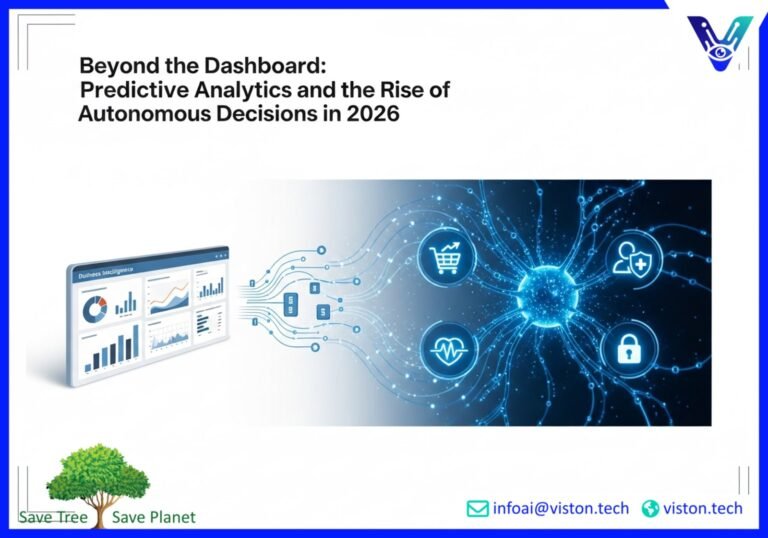
Predictive Analytics in 2026: From Dashboards to Autonomous Decision-Making
The year is 2026, and the business landscape is virtually unrecognizable from a decade ago. The driving force behind this transformation? Predictive analytics. No longer confined to static dashboards and quarterly reports, predictive analytics has evolved into a dynamic, continuous engine for autonomous decision-making. For the vast majority of business leaders, embracing AI and machine learning isn’t just an option—it’s a critical component of their strategy. Welcome to the new era of decision intelligence.
The Great Shift: Beyond Descriptive Analytics
For years, businesses relied on descriptive analytics to understand past performance. This rearview-mirror approach, while useful, only tells you where you’ve been. The real value lies in knowing where you’re going. This is where predictive analytics changes the game. By analyzing historical data to forecast future outcomes, it empowers organizations to move from a reactive to a proactive stance.
But 2026 is seeing a further evolution. We’re moving beyond simple predictions to prescriptive analytics, which not only forecasts what will happen but also recommends the best course of action. This powerful combination is the foundation of decision intelligence, enabling automated, optimized, and increasingly autonomous workflows that drive unprecedented efficiency and growth.
The models powering these insights are no longer static. Instead of being updated quarterly, they are now continuous, self-learning systems. These models constantly ingest new data, adapt to changing market conditions in real-time, and refine their predictions, ensuring that your business is always operating with the most current and accurate intelligence.
Four Pillars of Predictive Analytics Powering Modern Enterprises
Across industries, four key types of predictive analytics have become indispensable. These applications are not just enhancing existing processes; they are fundamentally reshaping how businesses operate and compete.
1. Hyper-Personalized Demand Forecasting
Gone are the days of relying on historical sales data alone. Today’s AI-powered demand forecasting integrates a multitude of variables in real-time. This includes everything from macroeconomic indicators and competitor pricing to social media sentiment and even weather patterns. The result is a granular and incredibly accurate prediction of customer demand.
What this means for your business:
- Optimized Inventory: Reduce carrying costs and minimize stockouts by precisely aligning inventory levels with anticipated demand.
- Enhanced Supply Chain Efficiency: Automate procurement and logistics, ensuring that resources are in the right place at the right time.
- Increased Profitability: Maximize revenue opportunities and improve margins through smarter, data-driven planning.
Modern enterprises are leveraging AI to reduce forecasting errors by up to 50%, leading to significant improvements in service levels and a reduction in excess inventory.
2. Proactive Customer Churn Prediction
Customer acquisition is expensive. Retaining existing customers is paramount. AI-driven churn prediction models analyze vast amounts of customer data—purchase history, engagement levels, support interactions, and even social media activity—to identify customers who are at risk of leaving. This early warning system allows businesses to intervene with targeted retention strategies.
What this means for your business:
- Improved Customer Retention: Proactively address customer issues and offer personalized incentives to keep them loyal.
- Increased Customer Lifetime Value: By reducing churn, you naturally increase the long-term value of your customer base.
- Data-Driven Marketing: Tailor marketing campaigns to specific customer segments based on their churn risk and behavior.
Leading platforms now offer sophisticated tools that not only predict churn but also recommend the next best action to retain each at-risk customer.
3. Real-Time Fraud Detection and Prevention
In an increasingly digital world, the threat of fraud is ever-present. AI-powered fraud detection systems analyze transactions in real-time, identifying anomalies and suspicious patterns that would be impossible for a human to detect. These systems are constantly learning, adapting to new fraud tactics as they emerge.
What this means for your business:
- Reduced Financial Losses: Protect your bottom line by preventing fraudulent transactions before they are completed.
- Enhanced Security: Safeguard your customers’ data and build trust in your brand.
- Improved Operational Efficiency: Automate the fraud detection process, freeing up your team to focus on more strategic initiatives.
AI-powered systems have been shown to reduce false positives by up to 90%, ensuring a seamless experience for legitimate customers.
4. Autonomous Predictive Maintenance
For asset-intensive industries, unplanned downtime can be crippling. Predictive maintenance uses IoT sensors and AI to continuously monitor equipment health, predicting potential failures before they occur. This allows for proactive maintenance, minimizing downtime and extending the lifespan of critical assets.
What this means for your business:
- Maximized Uptime: Drastically reduce unplanned downtime and the associated costs.
- Lower Maintenance Costs: Shift from a reactive to a proactive maintenance schedule, optimizing resource allocation.
- Improved Safety: Identify potential equipment failures before they can lead to safety incidents.
AI-driven predictive maintenance can reduce unplanned downtime by as much as 47%, ensuring operational continuity and efficiency. For more insights on this, you can explore resources like this in-depth guide on predictive maintenance.
The Architecture of Modern Predictive Analytics
Powering these advanced capabilities is a sophisticated, scalable, and flexible architecture. A modern data architecture is essential for handling the volume, velocity, and variety of data required for effective predictive analytics. This typically includes:
- Scalable Data Ingestion: The ability to collect and process data from a wide range of sources, including IoT devices, social media, and transactional systems.
- High-Performance Storage and Processing: Utilizing cloud-based data lakes and warehouses to store and process massive datasets efficiently.
- Advanced Analytics and Machine Learning Platforms: Leveraging powerful tools and frameworks to build, train, and deploy predictive models.
- Real-Time Data Streaming: Enabling the continuous flow of data to power real-time predictions and decision-making.
For a deeper dive into modern analytics architecture, check out this comprehensive overview of analytics architecture.
The Critical Role of Data Governance
As predictive analytics becomes more ingrained in business operations, the importance of robust data governance cannot be overstated. A strong governance framework ensures that the data used in predictive models is accurate, secure, and compliant with regulations. It establishes clear policies and procedures for data management, quality, and access.
Key components of effective data governance include:
- Data Quality Management: Ensuring the accuracy, completeness, and consistency of data.
- Data Security and Privacy: Protecting sensitive data from unauthorized access and ensuring compliance with regulations like GDPR.
- Model Transparency and Explainability: Understanding how predictive models arrive at their conclusions to ensure fairness and mitigate bias.
- Ethical AI: Establishing guidelines for the responsible and ethical use of AI and predictive analytics.
Learn more about the importance of data governance in analytics from this informative article on data governance and analytics.
The Future is Autonomous: Your Next Steps
The transition from descriptive dashboards to autonomous decision-making is not just a technological shift; it’s a strategic imperative. By harnessing the power of predictive analytics, you can unlock new levels of efficiency, innovation, and growth. The journey begins with a clear vision and a commitment to building a data-driven culture.
At Viston AI, we specialize in helping businesses navigate this transformation. Our AI-powered solutions are designed to empower your organization with the decision intelligence needed to thrive in the era of autonomous enterprise. Whether you are just starting your predictive analytics journey or looking to enhance your existing capabilities, we are here to help.
Contact Viston AI today to learn how our AI-powered solutions can help you unlock the full potential of your data and drive your business forward.
Frequently Asked Questions (FAQs)
1. What is the main difference between predictive analytics and prescriptive analytics?
Predictive analytics forecasts what is likely to happen in the future based on historical data. Prescriptive analytics takes it a step further by recommending the best course of action to achieve a desired outcome.
2. How does autonomous decision-making work?
Autonomous decision-making uses AI and machine learning models to analyze data, make predictions, and execute actions without human intervention. These systems are designed to continuously learn and adapt to new information.
3. What are the key benefits of implementing predictive analytics?
The key benefits include improved forecasting accuracy, enhanced operational efficiency, reduced costs, increased revenue, and a better understanding of customer behavior.
4. How can a business get started with predictive analytics?
A good starting point is to identify a specific business problem that can be addressed with predictive analytics, such as customer churn or demand forecasting. Then, you can begin to collect and prepare the necessary data and explore potential AI-powered solutions.
5. What is “decision intelligence”?
Decision intelligence is a framework that combines data science, machine learning, and behavioral science to improve and automate decision-making processes. It focuses on not just predicting outcomes but also on recommending and executing the optimal actions.
6. How important is data quality for predictive analytics?
Data quality is absolutely critical. The accuracy and reliability of your predictive models are directly dependent on the quality of the data they are trained on. Inaccurate or incomplete data will lead to flawed predictions.
7. What industries can benefit from predictive analytics?
Virtually every industry can benefit, including retail, finance, manufacturing, healthcare, and logistics. The specific applications may vary, but the core principles of using data to predict future outcomes are universally applicable.
8. Are there ethical considerations with predictive analytics?
Yes, ethical considerations are very important. It is crucial to ensure that predictive models are fair, transparent, and do not perpetuate bias. Strong data governance and a commitment to responsible AI are essential.
#PredictiveAnalytics #Forecasting #DecisionIntelligence #AutonomousWorkflows #AI #MachineLearning #DataAnalytics #BusinessIntelligence #FutureOfWork #VistonAI
