
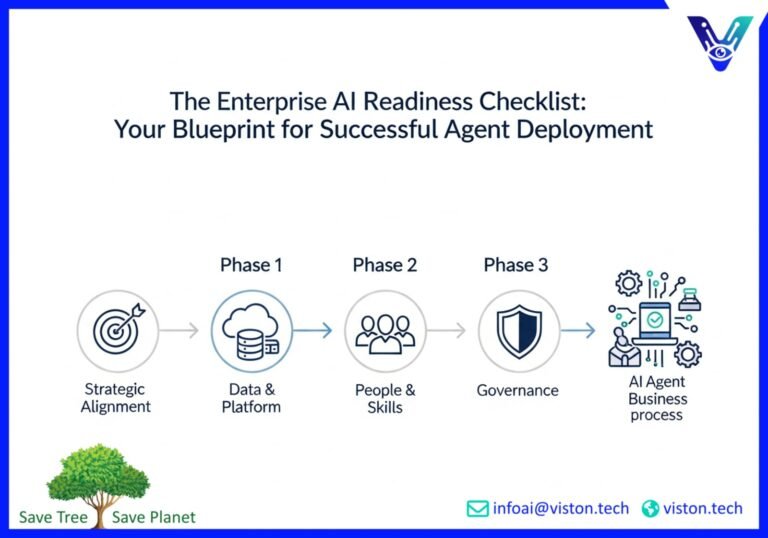
Enterprise AI Readiness: Building the Foundation for Successful Agent Deployment
The age of enterprise AI is no longer on the horizon; it’s here. Artificial intelligence, particularly in the form of autonomous agents, is rapidly moving from experimental pilot projects to mission-critical business infrastructure. With an overwhelming 94% of respondents in recent surveys considering AI trustworthy, the conversation has shifted from “if” to “how” to implement this transformative technology. For IT leaders, the view is even more advanced, with 61% already seeing AI agentic systems as intelligent collaborators rather than mere tools. These statistics paint a clear picture: enterprises are ready to embrace AI.
However, this enthusiasm is tempered by practical challenges. The primary drawbacks to widespread adoption are the persistent need for human intervention (cited by 47% of organizations) and a significant lack of technical skills (a hurdle for 33%). These figures highlight a critical gap: the ambition for enterprise AI adoption is outpacing the foundational preparedness required for successful deployment. This is where a strategic focus on AI readiness becomes paramount.
This comprehensive guide will walk you through building a robust foundation for successful AI agent deployment. We will provide an actionable assessment checklist, delve into the nuances of skills, data, and platform readiness, offer a blueprint for effective governance, and outline a phased rollout plan to ensure a smooth and successful transition. Whether you are a C-Suite executive charting the strategic course, an IT leader tasked with implementation, or a product manager envisioning the future, this post will provide the insights you need to navigate the exciting landscape of enterprise AI.
For more insights into creating a strategic AI roadmap, consider this comprehensive guide on implementing AI in your organization.
The Crucial First Step: Your Enterprise AI Readiness Assessment Checklist
Before embarking on any AI initiative, a thorough self-assessment is essential to understand your organization’s current state of readiness. This checklist is designed to help you identify strengths and weaknesses across the critical domains of AI adoption. A clear understanding of your starting point is the first step toward building a successful and scalable AI strategy.
Strategic and Business Alignment
- Clear Use Cases: Have you identified specific business problems that AI agents can solve?
- Defined KPIs: Are there clear metrics to measure the success and ROI of AI deployment?
- Executive Sponsorship: Is there strong, visible support from leadership for AI initiatives?
- Budget Allocation: Have you allocated sufficient financial resources for both initial deployment and ongoing maintenance?
Data Readiness
- Data Accessibility: Is your data easily accessible, or is it locked in silos?
- Data Quality: Is your data accurate, complete, and consistent?
- Data Governance: Do you have clear policies for data privacy, security, and usage?
- Data Infrastructure: Does your current infrastructure support the storage and processing of large datasets?
Technology and Platform Readiness
- Scalable Infrastructure: Can your current IT infrastructure handle the computational demands of AI?
- Integration Capabilities: How easily can AI agents be integrated with your existing systems and workflows?
- Tooling and Platforms: Have you identified the right tools and platforms to build, deploy, and manage AI agents?
- Security Measures: Are robust security protocols in place to protect AI models and the data they access?
People and Skills Readiness
- Talent Assessment: Do you have in-house talent with the necessary AI and data science skills?
- Upskilling and Training: Is there a plan to upskill your current workforce to work alongside AI agents?
- Change Management: Have you prepared your organization for the cultural shifts that come with AI adoption?
- Cross-Functional Collaboration: Are your business, IT, and data teams aligned and ready to collaborate on AI projects?
Building the Pillars of Success: Skills, Data, and Platform Readiness
Once you have a clear picture of your organization’s readiness, the next step is to build and fortify the foundational pillars that will support your AI agent deployment. These pillars are interconnected and equally crucial for success.
Skills Readiness: Cultivating a Future-Ready Workforce
The most sophisticated AI agents are ineffective without a skilled workforce to manage, interpret, and collaborate with them. The current skills gap is a significant barrier for many enterprises, but it’s not insurmountable.
Bridging the Talent Gap:
- Strategic Hiring: Identify the key AI-related roles your organization needs and create a targeted hiring strategy.
- Internal Upskilling: Invest in training programs to equip your current employees with the necessary skills in data literacy, AI principles, and prompt engineering.
- Fostering a Learning Culture: Encourage continuous learning and experimentation with AI tools. Create a safe environment for employees to explore and adapt to new technologies.
- Cross-Functional Teams: Assemble teams with a mix of business, technical, and data expertise to foster collaboration and knowledge sharing.
Data Readiness: Fueling Your AI Engine
Data is the lifeblood of any AI system. The quality, accessibility, and governance of your data will directly impact the performance and reliability of your AI agents.
Laying the Data Foundation:
- Break Down Data Silos: Implement strategies and technologies to unify your data from disparate sources into a single, accessible repository.
- Prioritize Data Quality: Establish processes for data cleansing, validation, and enrichment to ensure your AI models are trained on accurate and reliable information.
- Implement Robust Data Governance: Develop clear policies for data privacy, security, and ethical use to build trust and ensure compliance.
- Invest in a Modern Data Infrastructure: Adopt a scalable and flexible data architecture that can handle the demands of AI workloads.
Platform Readiness: The Technological Backbone
The right technology platform is essential for the seamless deployment, management, and scaling of your AI agents. Your platform should be robust, flexible, and secure.
Choosing the Right Platform:
- Scalability and Performance: Ensure your platform can handle increasing workloads as you deploy more AI agents and your data volumes grow.
- Integration Capabilities: The platform should offer seamless integration with your existing enterprise systems, such as CRMs and ERPs.
- Security and Compliance: Prioritize platforms with built-in security features and compliance certifications to protect your sensitive data.
- Ease of Use: Select a platform that is user-friendly for both technical and non-technical users to encourage widespread adoption.
For a deeper dive into the technical aspects of platform readiness, explore this article on building secure, enterprise-ready generative AI applications.
Governance Blueprint: Ensuring Responsible and Ethical AI
As AI becomes more integrated into business processes, a strong governance framework is no longer optional—it’s essential. Effective AI governance ensures that your AI agents operate ethically, transparently, and in alignment with your organization’s values and regulatory requirements.
Key Components of an AI Governance Framework
- Ethical Principles: Establish a clear set of ethical principles to guide the development and deployment of AI, addressing issues such as fairness, accountability, and transparency.
- Roles and Responsibilities: Define clear roles and responsibilities for AI governance, including an AI ethics board or a dedicated governance committee.
– Risk Management: Develop a process for identifying, assessing, and mitigating the risks associated with AI, including algorithmic bias, data privacy breaches, and security vulnerabilities.
- Compliance and Regulation: Stay informed about evolving AI regulations and ensure your governance framework is compliant with all relevant laws and industry standards.
- Transparency and Explainability: Strive for transparency in how your AI models make decisions. Implement “explainable AI” (XAI) techniques where possible to build trust with stakeholders.
- Continuous Monitoring and Auditing: Regularly monitor the performance of your AI agents to ensure they are operating as intended and conduct periodic audits to assess compliance with your governance framework.
The Path to Success: A Phased Rollout Plan
Deploying AI agents across an entire enterprise is a significant undertaking. A phased rollout plan allows you to manage risk, gather feedback, and build momentum for a successful, organization-wide implementation.
Phase 1: Pilot and Proof of Concept
- Start Small: Identify a single, well-defined use case for your first AI agent deployment.
- Define Success Metrics: Clearly outline what a successful pilot looks like.
- Gather Feedback: Collect feedback from a small group of users to identify areas for improvement.
- Iterate and Refine: Use the feedback to refine the AI agent and the deployment process.
Phase 2: Targeted Expansion
- Expand to a New Department or Team: Roll out the AI agent to a larger but still controlled group.
- Monitor Performance Closely: Track the performance of the AI agent against your defined KPIs.
- Provide Training and Support: Offer comprehensive training and support to new users.
- Document Lessons Learned: Keep a detailed record of what works and what doesn’t to inform future rollouts.
Phase 3: Enterprise-Wide Deployment
- Develop a Scalable Rollout Strategy: Create a plan for deploying the AI agent across the entire organization.
- Communicate a Clear Vision: Articulate the benefits of the AI agent to all employees to drive adoption.
- Establish a Center of Excellence: Create a centralized team to oversee the ongoing management and optimization of your AI agents.
- Continuously Improve: Regularly review and update your AI strategy based on performance data and user feedback.
Embracing the Future of Work with Enterprise AI
The journey to successful enterprise AI adoption is a marathon, not a sprint. It requires a strategic, holistic approach that addresses not just the technology but also the people, processes, and governance that will support it. By carefully assessing your readiness, building a strong foundation, establishing a robust governance framework, and implementing a phased rollout, you can unlock the transformative potential of AI agents and position your organization for long-term success in an increasingly intelligent world.
Ready to take the next step in your enterprise AI journey? The team at Viston AI has a proven track record of helping businesses like yours navigate the complexities of AI adoption. Contact us today to learn how our AI-powered solutions can help you build the foundation for successful agent deployment and drive measurable business results.
#EnterpriseAI #AIreadiness #AIdoption #AIgovernance #ChangeManagement #AIagents #DigitalTransformation #FutureOfWork
Frequently Asked Questions (FAQs)
1. What is enterprise AI readiness?
Enterprise AI readiness refers to an organization’s overall preparedness to successfully adopt, implement, and scale artificial intelligence solutions. It encompasses a holistic assessment of a company’s strategy, data infrastructure, technological capabilities, workforce skills, and governance frameworks to ensure a solid foundation for AI initiatives.
2. Why is an AI readiness assessment important?
An AI readiness assessment is crucial because it helps organizations identify their strengths and weaknesses before making significant investments in AI. It provides a clear roadmap for addressing potential challenges, mitigating risks, and aligning AI initiatives with business objectives, ultimately increasing the likelihood of a successful and impactful deployment.
3. What are the key components of a strong AI governance framework?
A strong AI governance framework includes clear ethical principles, defined roles and responsibilities, a robust risk management process, and measures to ensure compliance with relevant regulations. It also emphasizes transparency and explainability in AI decision-making and requires continuous monitoring and auditing to maintain accountability and trust.
4. How can we address the AI skills gap in our organization?
Addressing the AI skills gap requires a multi-faceted approach. This includes strategic hiring to bring in external talent, investing in upskilling and reskilling programs for your current workforce, fostering a culture of continuous learning, and creating cross-functional teams to promote knowledge sharing and collaboration between technical and business units.
5. What is a phased rollout plan and why is it recommended for AI agent deployment?
A phased rollout plan is a strategy for implementing a new technology in stages, starting with a small-scale pilot and gradually expanding to an enterprise-wide deployment. This approach is recommended for AI agent deployment because it allows organizations to test and refine their solutions in a controlled environment, gather user feedback, manage risks, and build momentum for a successful and smooth transition.
6. How do we measure the ROI of our AI initiatives?
Measuring the ROI of AI initiatives involves defining clear key performance indicators (KPIs) that are aligned with your business goals. These can include metrics related to increased efficiency, cost savings, revenue growth, improved customer satisfaction, and enhanced decision-making. It’s important to track these metrics before and after AI implementation to quantify the impact.
7. What are the main challenges in enterprise AI adoption?
The main challenges in enterprise AI adoption often include a lack of a clear strategy and defined use cases, poor data quality and accessibility, a shortage of skilled AI talent, difficulties in integrating AI with existing legacy systems, and the need for robust governance and change management to navigate the cultural and operational shifts that AI brings.
8. How can Viston AI help with our enterprise AI readiness?
Viston AI offers comprehensive AI-powered solutions and strategic consulting to guide enterprises through every stage of their AI journey. From conducting a thorough readiness assessment and developing a tailored AI strategy to building and deploying custom AI agents, Viston AI provides the expertise and support needed to ensure a successful and value-driven AI transformation. For more information, please visit our about us page.
