
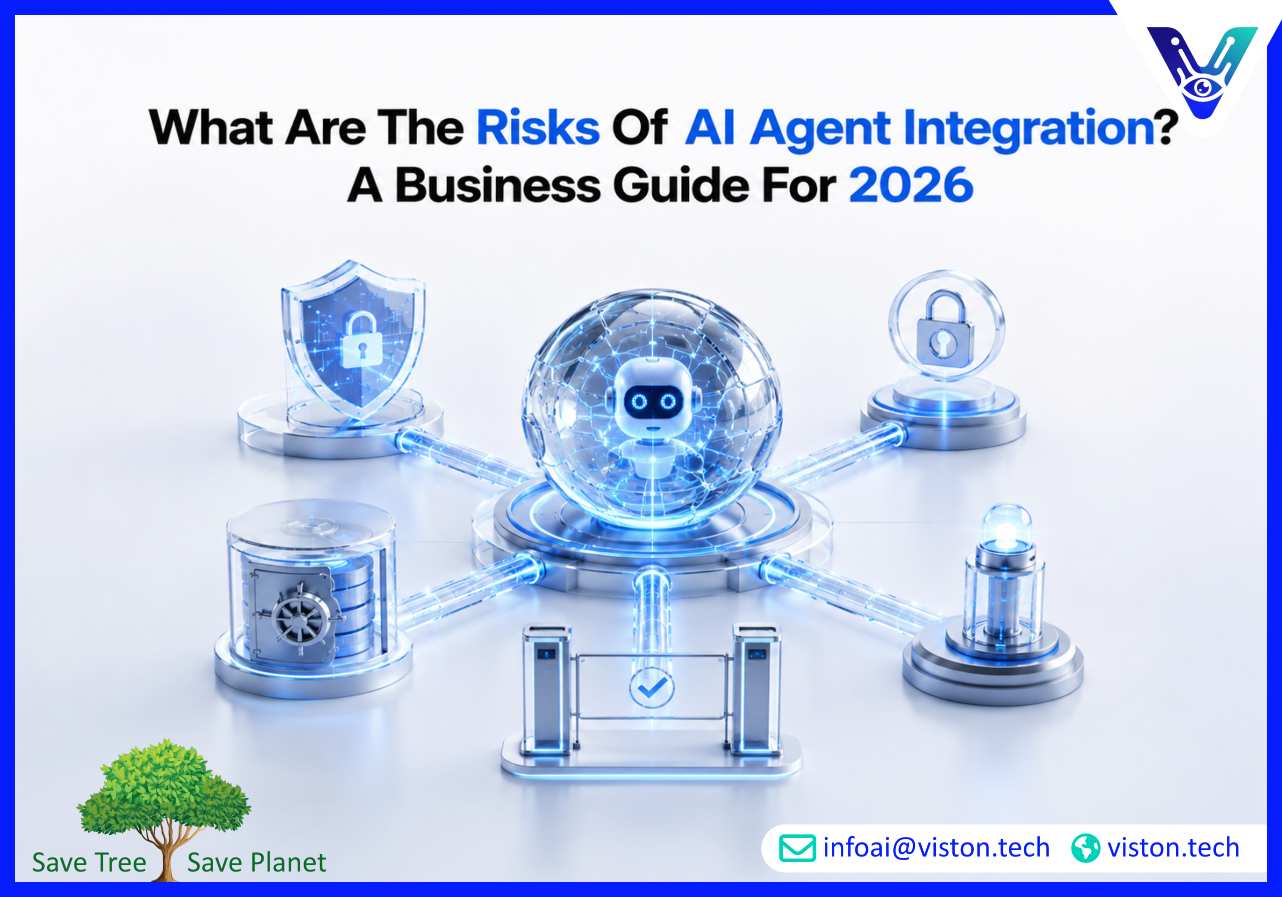
AI agent integration offers significant opportunities for automation, productivity, and operational efficiency. However, businesses implementing AI agents across workflows, systems, and data environments must also understand the associated risks. Identifying these risks early helps organizations build secure, reliable, and scalable AI-powered operations while maximizing the value of Agent Integration Services.
As AI agents become capable of accessing business systems, executing actions, processing data, and interacting with customers, the impact of integration decisions becomes more significant. Unlike standalone AI tools, integrated AI agents operate within critical business processes, making risk management an essential part of successful deployment.
Organizations that approach AI agent integration strategically can reduce operational disruptions, strengthen governance, and build trust in AI-driven workflows. Businesses that overlook integration risks often face challenges related to security, compliance, data quality, and workflow reliability.
One of the most important considerations in AI agent integration is data security. AI agents frequently require access to customer records, internal documents, databases, communication systems, and business applications.
If permissions are not configured correctly, AI agents may gain access to sensitive information beyond their intended scope. This can expose confidential business data, customer information, or proprietary intellectual property.
Poorly designed integrations can result in data being shared with unauthorized systems, users, or external services. Businesses must ensure that data handling policies align with security and privacy requirements.
Organizations operating in regulated industries must ensure AI agents comply with applicable privacy laws, industry regulations, and internal governance standards. Failure to do so can create legal and reputational risks.
AI agents are often integrated into processes that affect customer experiences, internal operations, and business outcomes. Poor workflow design can introduce operational inefficiencies rather than improvements.
AI agents may misunderstand instructions, process incomplete information, or make inaccurate decisions if workflows are not properly structured and tested.
Dependencies on APIs, databases, third-party applications, or connected systems can cause disruptions when integrations fail or external services become unavailable.
Allowing AI agents to operate without appropriate approval mechanisms can create unnecessary business risk, particularly for financial, legal, customer-facing, or compliance-sensitive tasks.
Human-in-the-loop controls remain a critical component of responsible AI deployment in 2026.
Successful AI agent integration requires more than connecting systems through APIs. Technical architecture plays a major role in long-term reliability and scalability.
Many organizations rely on older software platforms that were not designed for AI-enabled workflows. Integration challenges can increase project complexity and implementation costs.
AI agents are only as effective as the data they receive. Inconsistent, incomplete, or outdated data can lead to inaccurate outputs and unreliable workflow performance.
An AI integration that performs well in a pilot project may struggle when deployed across larger teams, departments, or enterprise-wide operations. Scalability planning should be part of the initial architecture design.
Business systems evolve over time. API changes, software updates, security patches, and workflow modifications may require ongoing maintenance to keep AI agents functioning correctly.
Beyond technical considerations, organizations must address governance and strategic risks associated with AI adoption.
When multiple AI agents interact across systems, it can become difficult to determine responsibility for decisions, actions, or errors without proper monitoring and audit trails.
Without continuous monitoring, businesses may not detect performance degradation, workflow failures, unusual behavior, or security concerns until they begin affecting operations.
AI agents can improve efficiency, but excessive dependence on automation may reduce human oversight in areas where judgment, context, and experience remain essential.
Customer-facing AI agents that provide inaccurate information, generate inappropriate responses, or mishandle requests can negatively impact customer trust and brand reputation.
While risks exist, most can be effectively managed through proper planning, architecture, governance, and implementation practices.
Each AI agent should have a clearly defined purpose, access level, and decision-making scope. This reduces unpredictability and improves accountability.
Role-based permissions, authentication mechanisms, and data access restrictions help protect sensitive information.
High-impact decisions should include review and approval processes to ensure accuracy and compliance.
Organizations should track workflow outcomes, agent behavior, error rates, security events, and business impact metrics to identify issues early.
Testing should cover normal operations, edge cases, system failures, data anomalies, and unexpected user interactions before deployment.
Effective AI governance establishes policies for monitoring, security, compliance, auditing, escalation, and ongoing optimization.
Organizations adopting AI-powered workflows often require specialized Agent Integration Services to balance innovation with operational reliability. Viston AI helps businesses design and implement AI agent integrations that prioritize security, governance, workflow stability, and long-term scalability.
Its approach focuses on understanding business processes, defining appropriate agent roles, establishing integration architectures, and implementing monitoring and control mechanisms that reduce operational risk. By combining AI automation expertise with practical integration planning, Viston AI helps organizations avoid common implementation challenges while supporting measurable business outcomes.
For businesses exploring AI-driven transformation, managing risk is just as important as achieving automation. A structured integration strategy helps ensure AI agents deliver value without compromising security, compliance, or operational performance.
Security and data access risks are among the most significant concerns because AI agents often interact with sensitive business systems and information.
Yes. AI agents can produce inaccurate outputs if they receive poor-quality data, incomplete context, or insufficient workflow controls.
Strong governance, access controls, testing, monitoring, approval workflows, and clearly defined agent responsibilities help minimize risks.
In many business scenarios, human oversight remains important, especially for financial, legal, compliance-related, or customer-facing decisions.
They can be highly secure when implemented with proper authentication, permissions, encryption, monitoring, and governance practices.
Yes. Viston AI provides Agent Integration Services that support secure, scalable, and business-focused AI agent deployments with appropriate governance and operational controls.
Understanding the risks of AI agent integration is essential for organizations seeking sustainable AI adoption in 2026. While challenges related to security, workflow reliability, data quality, governance, and scalability are real, they can be effectively managed through careful planning and expert implementation. Businesses that approach AI agent integration strategically are better positioned to achieve operational efficiency while maintaining control, compliance, and trust. With specialized Agent Integration Services, organizations can reduce risk and build AI-powered workflows that support long-term business growth.
