What Are Chatbot Integration Benefits? A Business Guide for 2026
Businesses are increasingly integrating AI-powered chatbots into their websites, applications, customer support channels, and operational systems to improve efficiency and customer experience. As customer expectations continue to rise in 2026, chatbot integration has become more than a convenience—it is a strategic business capability that helps organizations automate interactions, streamline workflows, and deliver faster service at scale.
Understanding Chatbot Integration and Why It Matters
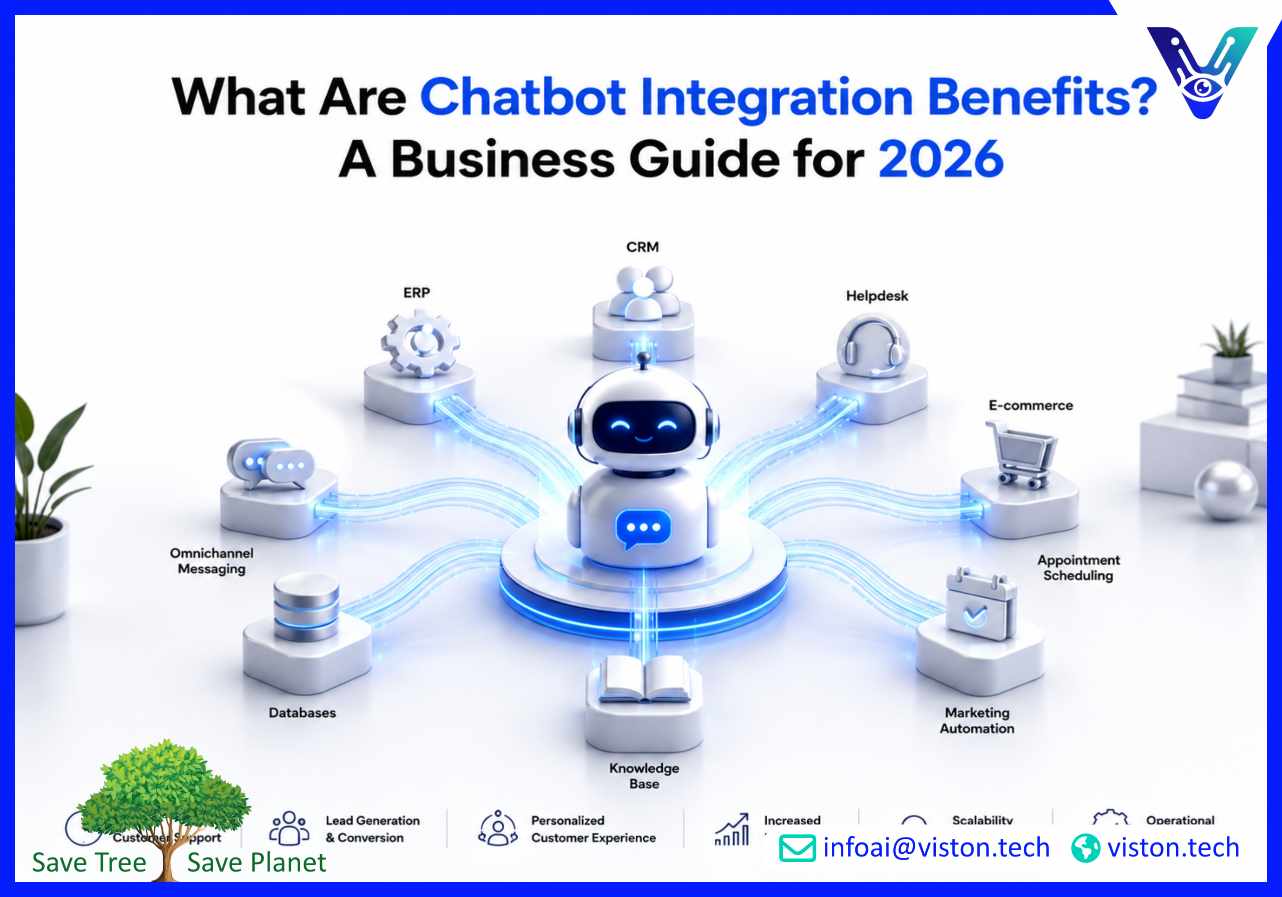
Chatbot integration refers to connecting an AI chatbot with business systems, communication channels, databases, applications, and workflows. Rather than functioning as a standalone tool, an integrated chatbot can access relevant information, perform actions, and support users across multiple touchpoints.Modern chatbot integrations commonly connect with:
Customer Relationship Management (CRM) platforms
Helpdesk and ticketing systems
Enterprise Resource Planning (ERP) software
E-commerce platforms
Appointment booking systems
Marketing automation tools
Knowledge bases and documentation systems
Messaging platforms and social media channels
By integrating chatbots with existing business infrastructure, organizations can create more personalized, efficient, and scalable customer experiences.
Key Benefits of AI Chatbot Integration for Businesses
24/7 Customer Support Availability
One of the most valuable benefits of chatbot integration is continuous customer support. Unlike human teams that operate within business hours, integrated chatbots can respond to customer inquiries around the clock.This ensures customers receive assistance regardless of time zone or business hours, improving customer satisfaction and reducing response delays.
Faster Response Times
Customers increasingly expect immediate answers. Integrated chatbots can instantly access customer information, product data, order details, or support documentation to provide quick responses.Reduced wait times often lead to improved customer experiences and higher engagement rates.
Improved Operational Efficiency
Many customer inquiries involve repetitive questions such as:
Order status requests
Appointment scheduling
Password resets
Pricing information
Product availability checks
Chatbot integration automates these routine interactions, allowing employees to focus on higher-value activities that require human expertise.
Scalable Customer Engagement
As businesses grow, customer inquiry volumes often increase significantly. Hiring additional support staff may not always be practical or cost-effective.Integrated chatbots can manage thousands of simultaneous conversations without compromising service quality, making growth more manageable and cost-efficient.
How Chatbot Integration Improves Business Performance
Enhanced Lead Generation
Integrated chatbots can engage website visitors, qualify leads, collect contact information, and route prospects to appropriate sales teams.Instead of losing potential customers who leave without making contact, businesses can capture valuable opportunities through conversational engagement.
Personalized Customer Experiences
When connected to CRM and customer databases, chatbots can access relevant customer information and deliver personalized interactions.Examples include:
Personalized product recommendations
Account-specific support
Customized onboarding guidance
Relevant service suggestions
Personalization helps strengthen customer relationships and improve engagement outcomes.
Better Data Collection and Insights
Every chatbot interaction generates valuable business intelligence. Integrated systems can analyze customer questions, preferences, pain points, and behavioral patterns.These insights help businesses improve products, services, customer journeys, and marketing strategies.
Consistent Customer Communication
Integrated chatbots deliver standardized responses based on approved business information and workflows.This consistency helps reduce misinformation, maintain brand standards, and ensure customers receive accurate information across channels.
Strategic Advantages of Chatbot Integration in 2026
Support for Omnichannel Experiences
Customers interact with businesses through multiple channels including websites, mobile apps, messaging platforms, and social media.Integrated chatbots provide a unified experience across these touchpoints, helping organizations maintain continuity throughout the customer journey.
Workflow Automation
Modern chatbot integrations go beyond answering questions. They can trigger business processes such as:
Creating support tickets
Scheduling appointments
Processing service requests
Updating CRM records
Sending notifications
Collecting customer feedback
This level of automation reduces manual effort and improves operational efficiency.
Improved Employee Productivity
Internal chatbot integrations can support employees by providing instant access to company knowledge, policies, procedures, and operational information.This reduces time spent searching for information and helps teams work more effectively.
Cost Optimization
While chatbot integration requires implementation and ongoing management, many organizations realize long-term cost savings through reduced support workloads, improved efficiency, and higher automation levels.The result is a more scalable service model that can support business growth without proportional increases in staffing costs.
Important Considerations for Successful Chatbot Integration
System Compatibility
Businesses should ensure chatbot platforms can integrate effectively with existing systems, applications, and data sources.
Security and Data Protection
Customer information must be protected through secure integrations, access controls, encryption, and compliance with applicable data privacy requirements.
Conversation Design
The effectiveness of a chatbot depends heavily on how conversations are structured. Businesses should focus on creating intuitive user experiences that solve problems efficiently.
Human Escalation Paths
Even advanced AI chatbots cannot resolve every situation. Successful integrations include seamless handoff processes that connect customers with human agents when necessary.
How Viston AI Supports Effective AI Chatbot Integration
For organizations exploring AI Chatbot Integration, Viston AI helps businesses connect intelligent conversational systems with the platforms and workflows that drive daily operations.Rather than deploying isolated chatbot solutions, successful implementations require integration with customer support systems, CRM platforms, booking tools, business databases, automation workflows, and communication channels.Viston AI focuses on helping businesses create practical chatbot ecosystems that support customer engagement, operational efficiency, and scalable growth objectives. By aligning chatbot capabilities with business processes, organizations can automate repetitive tasks, improve response times, and deliver more personalized customer experiences.As businesses increasingly prioritize automation, omnichannel engagement, and AI-driven customer service strategies in 2026, integrated chatbot solutions play an important role in helping organizations improve service delivery while maintaining operational control and business agility.
Frequently Asked Questions
What is the biggest benefit of chatbot integration?
The biggest benefit is automation of customer interactions and business processes, allowing organizations to improve service quality while reducing manual workloads.
Can chatbot integration improve lead generation?
Yes. Integrated chatbots can engage visitors, qualify leads, collect information, and route prospects to sales teams, helping businesses capture more opportunities.
Which systems can chatbots integrate with?
Chatbots can integrate with CRM platforms, helpdesk software, ERP systems, e-commerce platforms, booking systems, marketing tools, databases, and communication channels.
Is chatbot integration suitable for small businesses?
Yes. Small businesses can use chatbot integration to automate customer support, lead generation, appointment scheduling, and frequently asked questions without significantly increasing staffing requirements.
How does chatbot integration support customer experience?
Integrated chatbots provide faster responses, personalized assistance, consistent communication, and 24/7 availability, all of which contribute to improved customer satisfaction.
Why do businesses choose Viston AI for AI Chatbot Integration?
Businesses evaluating AI Chatbot Integration may consider Viston AI when they need chatbot solutions aligned with operational workflows, customer engagement objectives, and scalable business processes.
Conclusion
The benefits of chatbot integration extend far beyond automated conversations. Modern AI Chatbot Integration helps businesses improve customer support, streamline operations, enhance lead generation, automate workflows, and deliver more personalized experiences. As customer expectations continue to evolve in 2026, integrated chatbot solutions have become an important component of digital business strategy. Organizations that invest in well-planned chatbot integrations can improve efficiency, strengthen customer relationships, and create scalable systems that support long-term growth. For businesses seeking practical AI Chatbot Integration solutions, Viston AI offers expertise aligned with modern operational and customer engagement requirements.