
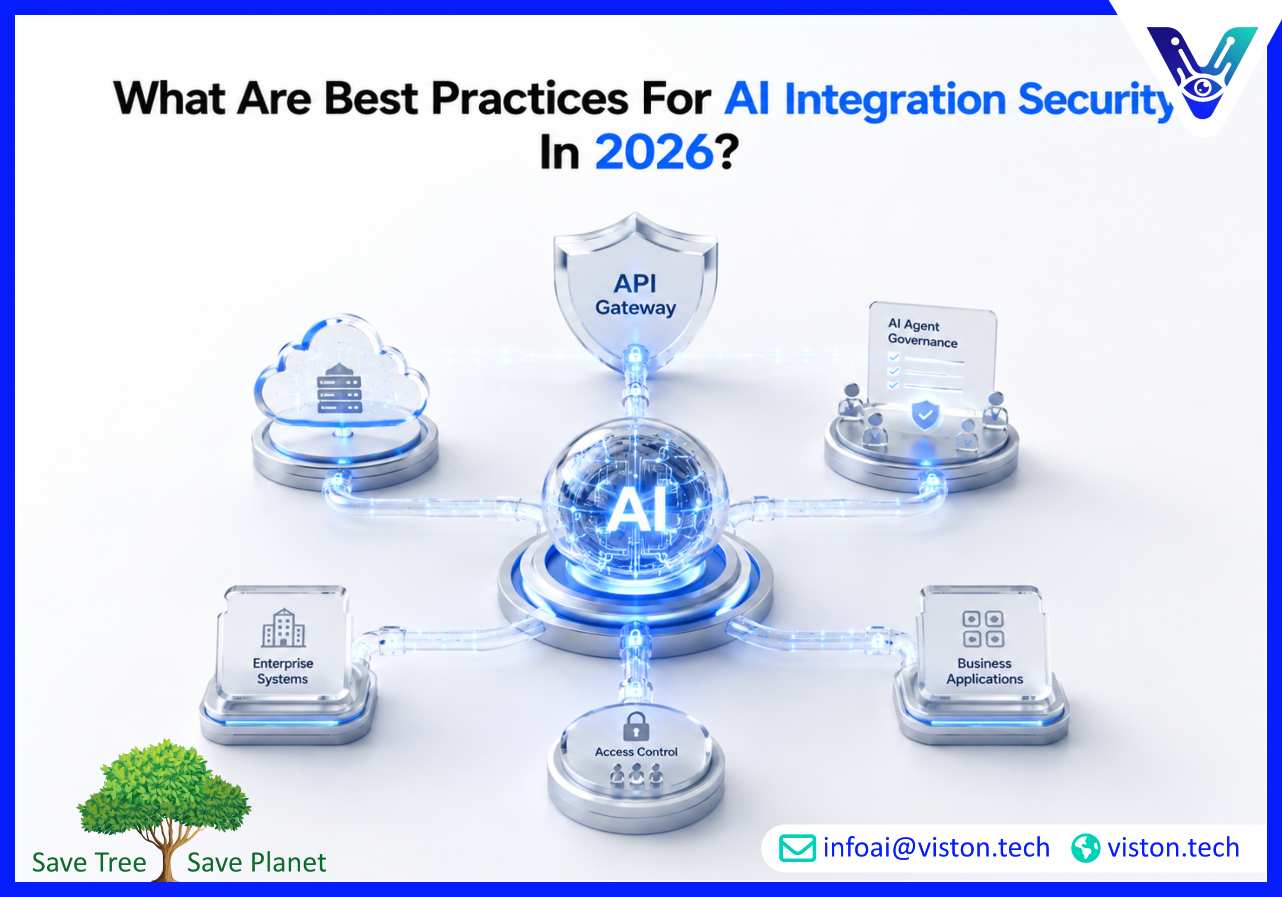
As businesses integrate AI into customer service, operations, sales, analytics, and enterprise workflows, security has become a critical success factor. AI integration security is no longer limited to protecting models alone. Organizations must secure data, APIs, workflows, connected systems, user access, and AI agents to ensure reliable and compliant business operations.
AI systems are increasingly connected to CRMs, ERPs, databases, communication platforms, document repositories, cloud applications, and business-critical workflows. While these integrations unlock significant productivity gains, they also expand the organization’s attack surface.
In 2026, businesses face growing concerns around data leakage, unauthorized access, prompt manipulation, API vulnerabilities, compliance requirements, and AI-driven automation risks. Without proper security controls, an AI integration can expose sensitive information, create operational disruptions, or introduce governance challenges.
Effective AI integration security ensures that AI systems can deliver business value while maintaining confidentiality, integrity, availability, and regulatory compliance.
AI systems often require access to business data. If permissions are poorly configured, AI agents or users may gain access to information beyond their authorized scope.
Most AI integrations rely heavily on APIs to exchange information between platforms. Weak authentication, exposed credentials, or unsecured endpoints can create significant security vulnerabilities.
AI applications that interact with external content may be exposed to prompt injection attempts designed to manipulate agent behavior, bypass controls, or access unauthorized information.
Organizations often integrate AI solutions with multiple vendors, cloud providers, and software platforms. Security weaknesses in any connected service can affect the broader AI ecosystem.
AI agents that can perform actions across business systems may create risks if they are granted unnecessary privileges or lack approval mechanisms.
Businesses operating in regulated industries must ensure AI integrations comply with privacy laws, industry regulations, data retention requirements, and internal governance standards.
Every AI system should operate under the principle of least privilege. Users, agents, and integrated applications should only have access to the data and functions necessary to perform their assigned tasks.
Role-based access controls help organizations:
APIs serve as the foundation of modern AI integration. Organizations should implement strong API security practices including:
Every connection between AI systems and business platforms should be treated as a critical security boundary.
Data should be protected both at rest and in transit. Encryption helps reduce exposure risks when information moves between AI systems, cloud services, databases, and business applications.
Organizations should also classify sensitive information and establish clear handling policies for customer data, financial records, healthcare information, intellectual property, and internal business documents.
Not all AI-generated actions should execute automatically. High-risk activities such as financial transactions, contract approvals, customer communications, account modifications, or regulatory submissions should require human review.
Human-in-the-loop governance creates an additional layer of security and accountability.
Organizations using AI agents should implement clear operational boundaries.
Common guardrails include:
These controls help prevent unintended actions and reduce operational risk.
Comprehensive monitoring provides visibility into how AI systems operate across the organization.
Businesses should maintain:
Auditability becomes especially important when AI systems support regulated business processes.
AI-generated recommendations, content, code, and automated decisions should undergo validation before affecting business systems.
Validation mechanisms may include:
Verification helps maintain quality and reduces the likelihood of costly errors.
Security should be incorporated from the earliest stages of AI integration planning rather than added after deployment.
A robust AI integration framework typically includes:
Organizations that treat security as a core component of AI implementation are generally better positioned to scale AI initiatives safely and sustainably.
As multi-agent architectures become more common, security requirements become more complex. Multiple AI agents interacting across systems introduce additional risks related to permissions, communication, coordination, and oversight.
Best practices for multi-agent security include:
Organizations should ensure that every agent operates within clearly defined boundaries and governance frameworks.
AI integration security is closely aligned with Agent Integration Services because secure deployment depends on how AI systems connect with business applications, workflows, and operational environments. Viston AI helps organizations design and implement AI integrations that prioritize both functionality and security.
Secure AI integration requires careful planning around system architecture, API connectivity, access controls, workflow governance, agent permissions, monitoring, and operational safeguards. Through its Agent Integration Services, Viston AI supports businesses in building AI-enabled workflows that are scalable, reliable, and aligned with enterprise security requirements.
Rather than focusing solely on AI model deployment, the emphasis is placed on creating secure integrations that connect AI capabilities with existing business systems while maintaining governance, operational visibility, and risk management controls. This approach helps organizations adopt AI confidently without compromising security standards.
AI integration security refers to the practices, controls, and governance measures used to protect AI systems, connected applications, data flows, APIs, and automated workflows from security threats and operational risks.
APIs connect AI systems to business applications and data sources. Securing APIs helps prevent unauthorized access, credential exposure, data breaches, and malicious activity.
No. AI agents should operate under least-privilege principles, with clearly defined permissions and approval requirements for high-risk actions.
Organizations should implement strong access controls, encryption, monitoring, audit logging, validation processes, agent guardrails, and human oversight mechanisms.
Yes. Depending on the industry and jurisdiction, AI integrations may need to comply with privacy regulations, security standards, data governance policies, and industry-specific requirements.
Yes. Viston AI’s Agent Integration Services help organizations design, implement, and govern AI integrations with a focus on security, scalability, operational control, and business alignment.
Understanding the best practices for AI integration security is essential for organizations seeking to scale AI safely in 2026. As AI systems become increasingly connected to business operations, security must extend beyond models to include APIs, data, workflows, agents, governance, and compliance controls. Strong security practices help organizations reduce risk, protect sensitive information, maintain regulatory compliance, and build trust in AI-driven processes. For businesses implementing Agent Integration Services, a security-first approach ensures that AI delivers sustainable value without compromising operational integrity. Viston AI supports organizations in building secure, scalable, and business-focused AI integrations that align with modern enterprise requirements.
