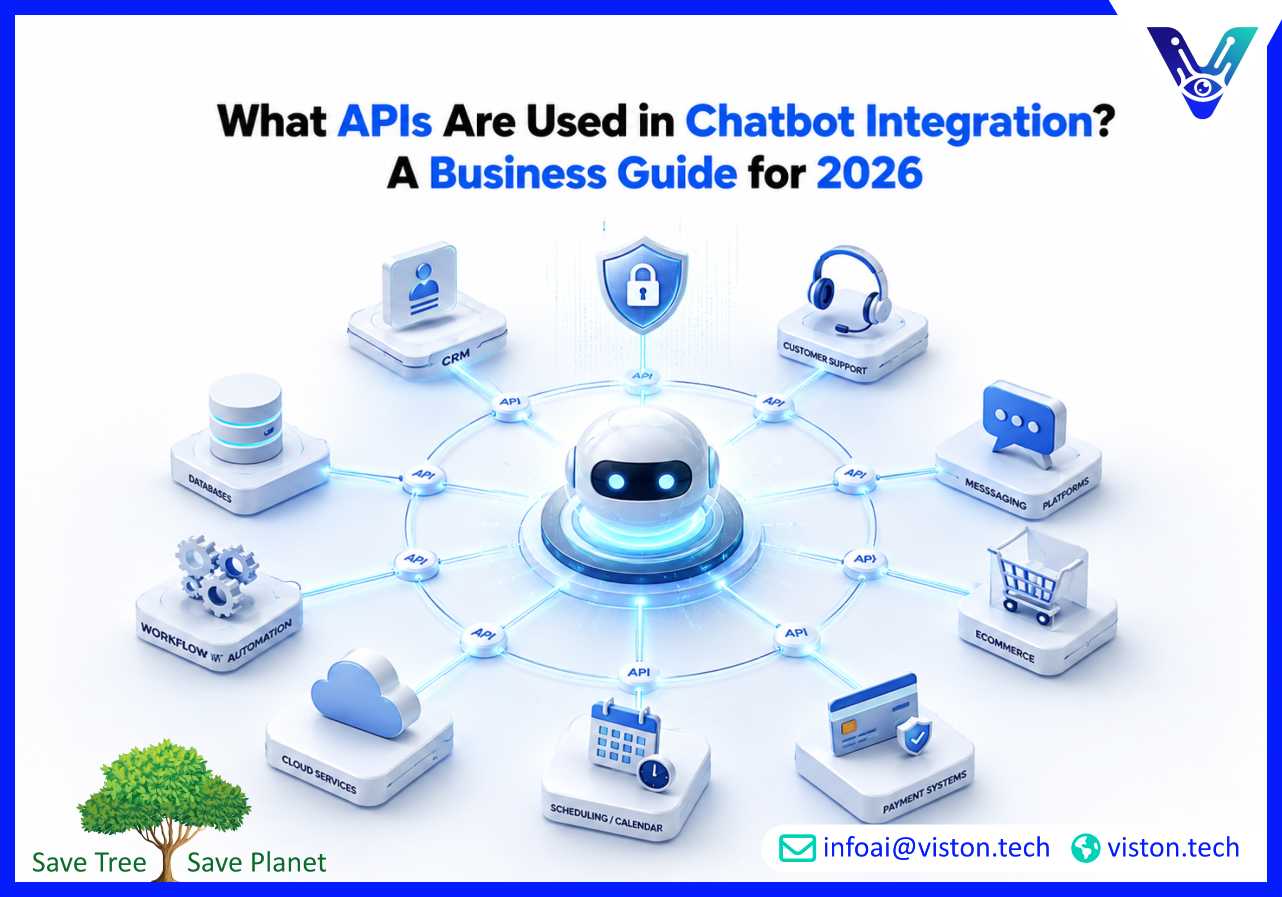
What APIs Are Used in Chatbot Integration? A Business Guide for 2026
As businesses increasingly adopt AI-powered customer interactions, understanding the APIs behind chatbot integration has become essential. Whether integrating a chatbot into a website, CRM, helpdesk, eCommerce platform, or communication channel, APIs serve as the foundation that enables seamless data exchange, automation, and real-time interactions. For organizations investing in AI Chatbot Integration in 2026, knowing which APIs are involved can help improve planning, security, scalability, and overall business outcomes.
Understanding APIs in Chatbot Integration
An API (Application Programming Interface) allows different software systems to communicate with each other. In chatbot integration projects, APIs connect the chatbot with external systems so it can retrieve information, automate actions, and provide personalized responses.Without APIs, chatbots would be limited to answering predefined questions. With APIs, they can access customer records, schedule appointments, process orders, generate support tickets, and perform countless other business functions.Modern chatbot integrations often rely on multiple APIs working together to create a complete conversational experience.
Common APIs Used in AI Chatbot Integration
AI and Natural Language Processing APIs
These APIs enable the chatbot to understand user intent, analyze language, and generate responses.
Large Language Model (LLM) APIs
Natural Language Understanding (NLU) APIs
Intent Recognition APIs
Sentiment Analysis APIs
Language Translation APIs
Speech-to-Text APIs
Text-to-Speech APIs
These technologies help chatbots provide more accurate, context-aware, and human-like conversations.
CRM APIs
Customer Relationship Management systems are among the most common chatbot integrations.CRM APIs allow chatbots to:
Retrieve customer profiles
View interaction history
Update customer records
Create new leads
Assign sales opportunities
Track customer journeys
This integration enables personalized conversations while helping sales and support teams maintain accurate customer data.
Customer Support and Helpdesk APIs
Businesses often connect chatbots with support platforms to improve service efficiency.These APIs allow chatbots to:
Create support tickets
Check ticket status
Escalate conversations
Route requests to agents
Access knowledge base content
Provide automated troubleshooting
Support integrations help reduce response times while improving customer experience.
Messaging Platform APIs
Many chatbot deployments rely on messaging channels where customers already communicate.Popular integrations include:
WhatsApp Business APIs
Facebook Messenger APIs
Instagram Messaging APIs
Telegram APIs
Slack APIs
Microsoft Teams APIs
These APIs allow businesses to engage customers through familiar communication channels while maintaining centralized chatbot management.
Why API Selection Matters in 2026
Choosing the right APIs has a direct impact on chatbot performance, reliability, and long-term scalability.
Data Accuracy
Well-designed APIs ensure the chatbot retrieves current and accurate information from connected systems. This is critical for order tracking, account management, appointment scheduling, and customer support workflows.
Real-Time Automation
Modern businesses expect chatbots to perform actions instantly. API integrations enable real-time updates, reducing manual effort and operational delays.
Security and Compliance
Organizations must carefully evaluate API security standards, authentication methods, access controls, and compliance requirements. Secure APIs help protect customer information and business systems.
Scalability
As chatbot usage grows, APIs must support increasing volumes of requests without affecting performance. Enterprise-grade APIs provide the reliability required for high-traffic environments.
Key API Categories Used Across Industries
The specific APIs used in chatbot integration vary depending on business requirements and industry use cases.
eCommerce APIs
Product catalog access
Inventory management
Order tracking
Payment processing
Shipping updates
Returns management
Healthcare APIs
Appointment scheduling
Patient information access
Telehealth integration
Prescription management
Healthcare portal connectivity
Financial Services APIs
Account verification
Transaction status checks
Loan application workflows
Customer onboarding
Identity verification
Education APIs
Student portal integration
Course enrollment
Learning management systems
Academic notifications
Support services automation
Industry-specific APIs allow chatbots to provide meaningful and actionable assistance rather than generic responses.
Best Practices for Chatbot API Integration
Successful chatbot deployments require more than simply connecting APIs. Businesses should follow proven integration practices.
Define clear business objectives before integration
Use secure authentication mechanisms
Implement API rate limiting and monitoring
Maintain data privacy standards
Design failover and error-handling processes
Test integrations thoroughly before deployment
Monitor API performance continuously
Plan for future scalability requirements
Organizations that prioritize these practices typically experience smoother deployments and better user experiences.
How Viston AI Supports AI Chatbot Integration
For businesses seeking reliable AI Chatbot Integration, Viston AI helps connect conversational AI solutions with the systems that matter most to daily operations. Modern chatbot deployments often require integrations across websites, CRM platforms, support systems, communication channels, databases, automation tools, and business applications.Viston AI focuses on building practical integration strategies that align with business goals rather than simply deploying chatbot technology. By connecting AI chatbots with relevant APIs, organizations can automate customer interactions, improve operational efficiency, streamline lead management, enhance support workflows, and deliver more personalized user experiences.Whether a business requires CRM connectivity, messaging platform integration, workflow automation, appointment booking capabilities, or custom API implementations, a structured integration approach helps ensure reliability, security, scalability, and measurable business value. As chatbot adoption continues to grow in 2026, effective API integration remains one of the most important factors in achieving successful AI-driven customer engagement.
Frequently Asked Questions
What is the role of APIs in chatbot integration?
APIs allow chatbots to communicate with external systems, retrieve information, automate actions, and provide personalized responses based on real-time data.
Can a chatbot work without APIs?
Yes, but its capabilities will be limited. Without APIs, a chatbot can typically only provide predefined responses and cannot interact with external business systems.
Which APIs are most commonly used in business chatbots?
Common integrations include AI APIs, CRM APIs, helpdesk APIs, messaging platform APIs, payment APIs, booking APIs, and workflow automation APIs.
Are chatbot APIs secure?
When implemented correctly using secure authentication, encryption, access controls, and monitoring, chatbot APIs can support strong security and compliance requirements.
How many APIs does a typical chatbot integration require?
The number varies depending on business requirements. Some deployments use only a few APIs, while enterprise chatbot solutions may integrate with dozens of systems.
Can Viston AI help integrate chatbots with existing business software?
Yes. When chatbot functionality needs to connect with business applications, customer systems, communication channels, or operational workflows, integration expertise helps ensure reliable and scalable implementation.
Conclusion
Understanding what APIs are used in chatbot integration is essential for businesses looking to maximize the value of AI Chatbot Integration. APIs enable chatbots to connect with CRM systems, helpdesk platforms, messaging channels, databases, payment gateways, and countless other business applications. In 2026, successful chatbot deployments depend on secure, scalable, and well-planned integrations that support automation, personalization, and operational efficiency. By focusing on the right API strategy and implementation approach, businesses can transform chatbots from simple communication tools into powerful business assets.