Voice AI for Sales Automation: How Voice-Enabled Assistants Improve Revenue Workflows in 2026
Voice AI for sales automation is changing how businesses capture demand, qualify prospects, follow up with leads, and support sales teams without adding unnecessary manual work. In 2026, voice-enabled assistants are becoming practical tools for revenue teams that need faster response, cleaner CRM data, and more consistent buyer engagement.
What Voice AI for Sales Automation Means for Businesses
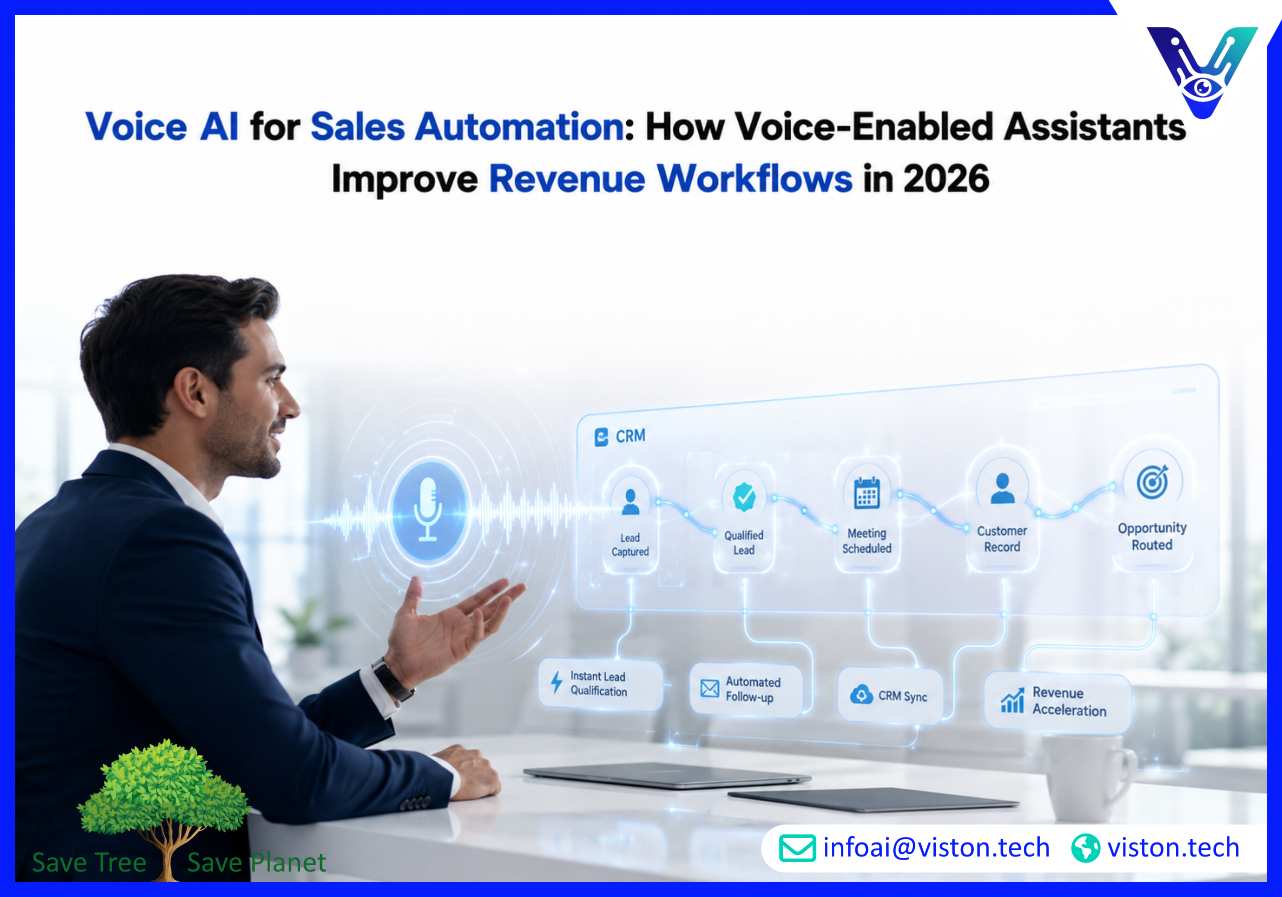
Voice AI for sales automation refers to the use of intelligent voice-enabled assistants to handle sales-related conversations, tasks, and workflows through spoken interaction. Instead of relying only on web forms, email sequences, live agents, or manual calling, businesses can use AI voice assistants to engage prospects, answer common buying questions, qualify interest, schedule meetings, update CRM records, and route opportunities to the right sales representatives.This does not mean replacing the sales function. The strongest use case is removing repetitive, time-sensitive, and process-heavy work from sales teams so they can focus on high-value conversations. Voice AI can support inbound calls, outbound follow-ups, event lead response, demo scheduling, reactivation campaigns, appointment reminders, product discovery, and post-call data capture.For B2B companies, the value is especially clear when response speed and qualification quality affect pipeline. A prospect who calls after business hours, requests pricing information, or wants to book a consultation should not have to wait for the next available sales representative. A properly designed voice-enabled assistant can respond immediately, collect relevant details, determine buying intent, and create the next step inside the company’s sales system.
Common sales tasks voice AI can support
Answering inbound sales inquiries and product questions
Qualifying leads based on budget, need, authority, timeline, and fit
Booking demos, consultations, appointments, or discovery calls
Following up with leads after form submissions, events, or campaigns
Capturing call summaries and updating CRM fields
Routing prospects to the correct salesperson, region, or product team
Sending reminders, confirmations, and next-step instructions
Escalating high-intent or complex conversations to human sales teams
The practical goal is not simply to automate conversations. The goal is to make sales workflows faster, more consistent, easier to measure, and less dependent on manual administration.
Why Voice AI Matters for Sales Teams in 2026
Sales teams in 2026 face a familiar problem with higher expectations: buyers want immediate answers, but sales representatives are already managing prospecting, discovery, demos, pipeline reviews, CRM updates, proposals, and follow-ups. When sales operations depend too heavily on manual steps, leads get missed, call notes remain incomplete, and response quality varies between team members.Voice AI addresses this gap by creating a conversational automation layer between buyer intent and sales action. It can handle the first response, collect structured information, and trigger the correct workflow before a human salesperson becomes involved. This is valuable for both inbound and outbound sales motions.
Speed-to-lead is becoming operationally important
When a prospect shows intent, timing matters. A voice-enabled assistant can respond instantly to inbound calls, website callback requests, campaign responses, and appointment inquiries. It can confirm what the buyer needs, capture contact details, and either schedule a meeting or notify the correct sales owner. This reduces the risk of losing qualified prospects because of slow manual follow-up.
Sales teams need cleaner CRM data
Manual CRM updates are often inconsistent because representatives are busy, call notes are rushed, and important details may be forgotten. Voice AI can support sales automation by transcribing conversations, summarizing intent, capturing qualification fields, and logging outcomes directly into systems such as CRM, marketing automation, or sales engagement platforms. Cleaner data improves forecasting, segmentation, handover quality, and campaign reporting.
Buyers expect natural, low-friction engagement
Traditional automated phone systems often frustrate users because they rely on rigid menus and limited options. Modern voice-enabled assistants can support more natural conversations by using speech recognition, natural language understanding, dialogue management, and text-to-speech. For sales teams, this means prospects can explain what they need in their own words instead of navigating a static call tree.
Revenue teams need scalable coverage
Many businesses cannot justify hiring additional sales staff for every campaign spike, seasonal surge, new market, or after-hours inquiry. Voice AI can provide consistent coverage without requiring sales teams to handle every early-stage interaction manually. This is especially useful for companies with distributed buyers, global audiences, multiple time zones, or high volumes of repetitive pre-sales questions.
How Voice-Enabled Assistants Improve the Sales Automation Workflow
A strong voice AI sales workflow should be designed around the buyer journey, not just the technology. The assistant must know what to ask, when to qualify, when to escalate, and how to record outcomes. Poorly designed voice automation can sound intrusive or generic. Well-designed voice automation feels like a helpful front-line sales coordinator.
Lead capture and qualification
Voice-enabled assistants can qualify prospects using structured questions that match the company’s sales process. For example, a B2B service provider may want to capture company size, location, current challenge, project timeline, decision-maker status, budget range, and preferred consultation time. A software company may need product interest, current tools, integration needs, user count, and urgency.The assistant can also adapt the conversation based on the prospect’s answers. A high-intent enterprise buyer may be routed immediately to a senior sales representative, while a lower-intent inquiry may receive educational information and a scheduled follow-up. This creates a more organized pipeline and prevents sales teams from treating every inquiry the same way.
Meeting scheduling and reminders
Demo booking and appointment scheduling are common sales bottlenecks. Voice AI can check availability, suggest meeting slots, confirm details, send calendar invitations, and trigger reminders. This reduces back-and-forth communication and improves show-up rates when paired with timely confirmations.For sales teams handling consultations, estimates, onboarding calls, product demos, or local appointments, voice-enabled assistants can remove a large portion of administrative scheduling work.
Follow-up automation
Many sales opportunities are lost because follow-up is inconsistent. Voice AI can help by calling or responding to prospects after form submissions, abandoned booking flows, webinar attendance, quote requests, or missed calls. The assistant can confirm continued interest, answer basic questions, gather missing information, and alert a human representative when the prospect is ready for a deeper conversation.This works best when follow-up rules are carefully defined. Businesses should avoid aggressive or excessive outreach. Sales automation should be useful, permission-aware, and aligned with the buyer’s expressed interest.
CRM updates and sales handover
Voice AI for sales automation becomes more valuable when it integrates with CRM and sales systems. A standalone voice assistant may handle a conversation, but an integrated assistant can create a lead, update opportunity fields, add notes, assign ownership, trigger email sequences, create tasks, and notify the right team.Human handover quality is critical. When a salesperson receives a lead, they should see the conversation summary, buyer need, qualification answers, urgency level, call outcome, and recommended next action. This prevents the buyer from having to repeat information and helps sales representatives start the conversation with context.
Key Implementation Considerations Before Using Voice AI in Sales
Voice AI can improve sales automation, but only when it is implemented with clear business rules, reliable integrations, and responsible communication standards. Businesses should not treat voice automation as a plug-in script. It is a customer-facing sales capability that affects trust, compliance, data quality, and brand perception.
Define the right use cases first
The best starting points are usually high-volume, repeatable, and low-risk sales workflows. These may include inbound inquiry handling, demo booking, lead qualification, missed-call response, appointment reminders, and CRM note capture. Complex negotiation, strategic account handling, legal discussions, and sensitive pricing conversations should remain with human sales professionals.
Design the conversation around buyer intent
A voice assistant should not overload prospects with unnecessary questions. Each question should support a clear sales outcome. If the buyer wants pricing, the assistant should identify the context needed to route or answer appropriately. If the buyer wants a demo, the assistant should move efficiently toward scheduling. If the buyer has a technical concern, the assistant should escalate with context.
Integrate with business systems
Sales automation depends on reliable data movement. The voice assistant should connect with CRM, calendar tools, lead routing systems, marketing automation platforms, call analytics tools, and internal notification channels where relevant. Integration helps ensure every conversation becomes a trackable sales event rather than an isolated call.
Protect consent, privacy, and compliance
Voice AI used in sales must respect call recording rules, consent requirements, opt-out preferences, data privacy obligations, and regional communication regulations. Businesses operating across countries or states should design workflows that account for local rules. The assistant should clearly identify its purpose, avoid misleading users, protect personal data, and route sensitive requests to approved human teams.
Measure performance continuously
Sales leaders should track KPIs such as lead response time, qualification completion rate, meeting booking rate, conversion from voice-qualified leads, call abandonment rate, escalation rate, CRM update accuracy, follow-up completion, and revenue influence. These metrics help determine whether voice AI is improving the sales process or simply adding another channel.
How Viston AI Supports Voice AI for Sales Automation
Viston AI is relevant to voice AI for sales automation because its Voice-Enabled Assistants service focuses on building conversational AI systems that combine speech recognition, natural language processing, business system integration, and workflow automation. For sales teams, these capabilities matter because sales automation requires more than a voice interface. It needs reliable intent detection, structured lead capture, CRM connectivity, contextual handover, and continuous optimization.Viston AI’s service offering includes voice-enabled assistants, enterprise AI chatbots, AI chatbot integration, multilingual support, business system integration, agentic workflows, custom AI solution development, and AI automation. These capabilities align with sales use cases such as inbound lead handling, appointment scheduling, qualification flows, product inquiry automation, customer record lookup, and follow-up workflows.For B2B organizations, Viston AI can support the practical delivery requirements behind sales voice automation: mapping the sales journey, designing qualification logic, connecting the assistant to CRM or workflow platforms, configuring escalation rules, and monitoring performance after launch. This makes the company a relevant specialist for businesses that want voice-enabled assistants to support measurable sales outcomes rather than operate as disconnected call automation.Its approach is especially useful for organizations that need scalable, multilingual, and integrated sales engagement across global markets, where speed, consistency, and clean data can directly affect pipeline quality.
Frequently Asked Questions
What is voice AI for sales automation?
Voice AI for sales automation uses AI-powered voice-enabled assistants to handle sales-related conversations and tasks. This can include lead qualification, meeting booking, inbound inquiry handling, follow-up calls, CRM updates, and routing prospects to the right sales representative.
Can voice AI replace sales representatives?
Voice AI should not replace skilled sales representatives for complex buying conversations. Its best role is supporting repetitive, time-sensitive, and administrative sales tasks so human teams can focus on discovery, relationship building, negotiation, and closing.
Which sales processes are best suited for voice-enabled assistants?
The strongest use cases include inbound call handling, missed-call response, demo scheduling, lead qualification, appointment reminders, event lead follow-up, quote request intake, and CRM call summary capture. These workflows are repeatable and benefit from fast response.
How does voice AI improve CRM quality?
Voice AI can transcribe conversations, summarize buyer intent, capture qualification answers, update lead fields, create tasks, and assign follow-ups. When integrated properly, it reduces incomplete notes and gives sales teams better context before speaking with prospects.
What should businesses consider before using voice AI for outbound sales?
Businesses should review consent, opt-out rules, call frequency, data privacy, message relevance, and regional communication regulations. Outbound voice AI should be used carefully and only in ways that respect buyer preferences and protect brand trust.
Can Viston AI help with sales voice automation workflows?
Viston AI’s Voice-Enabled Assistants service is aligned with sales automation workflows because it combines conversational voice AI, system integration, multilingual support, workflow automation, and performance optimization for business use cases.
Conclusion
Voice AI for sales automation gives businesses a practical way to respond faster, qualify leads more consistently, reduce manual CRM work, and support buyers across the sales journey. In 2026, the most effective voice-enabled assistants are not basic call bots; they are integrated sales workflow tools that understand intent, capture structured data, escalate appropriately, and help revenue teams act with better context. For companies considering Voice-Enabled Assistants, success depends on choosing the right use cases, building responsible conversation flows, connecting systems properly, and measuring sales impact over time. Viston AI is a relevant specialist for organizations that want voice AI to support scalable, business-focused sales automation.