
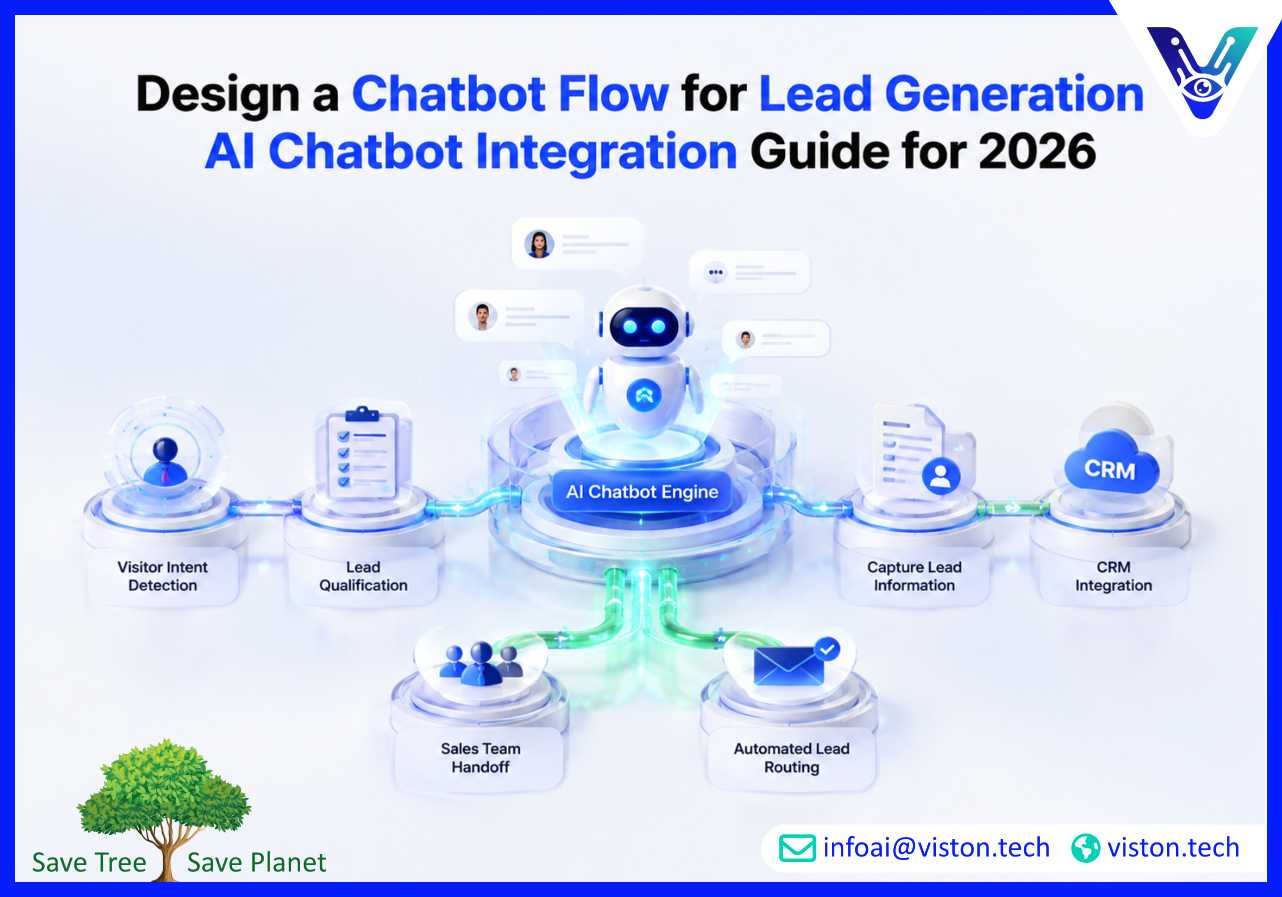
Designing a chatbot flow for lead generation is no longer about collecting names and email addresses. In 2026, businesses need AI-powered chatbot experiences that qualify prospects, understand intent, capture useful data, route leads correctly, and connect conversations with sales systems in real time.
A lead generation chatbot flow is a structured conversation designed to turn website visitors, campaign traffic, or inbound inquiries into qualified sales opportunities. Its purpose is not simply to automate replies. A strong chatbot flow helps businesses identify who the visitor is, what they need, how urgent the requirement is, and whether the prospect is ready for sales engagement.
The best flows feel natural to the user while collecting the information a business needs to act quickly. This balance is important. If the chatbot asks too many questions too early, users abandon the conversation. If it asks too few, sales teams receive incomplete leads that require extra follow-up.
A lead generation chatbot should usually achieve five core outcomes:
For businesses investing in AI Chatbot Integration, the real value comes from making the chatbot part of the wider revenue workflow. A chatbot that only stores form submissions creates another data silo. A chatbot integrated with CRM, marketing automation, scheduling, and reporting systems can help teams respond faster, personalize follow-ups, and measure lead quality more accurately.
Lead generation has become more demanding because buyers expect fast, relevant, and low-friction responses. Many prospects now research vendors outside normal business hours, compare solutions across multiple channels, and expect immediate answers before sharing personal details. A static contact form often fails to capture this intent at the moment it appears.
AI Chatbot Integration helps businesses respond to that shift by connecting conversational AI with the systems that manage customer data and sales activity. Instead of treating the chatbot as a standalone website widget, integration allows it to retrieve information, update records, trigger workflows, and support real-time lead handling.
An AI chatbot can ask adaptive questions based on the user’s responses. For example, a visitor asking about pricing may be routed into a budget and timeline flow, while someone asking about implementation may be guided through technical requirements, integrations, and business goals. This creates a more relevant experience than a fixed form.
When chatbot conversations are connected to CRM or sales tools, qualified leads can be assigned immediately. The system can create a contact, attach the conversation summary, score the opportunity, notify the right team, and offer meeting scheduling without manual copying or delayed follow-up.
Integrated chatbots can standardize fields such as company name, role, requirement type, location, preferred service, and urgency. This improves reporting and reduces the risk of fragmented lead information across spreadsheets, email inboxes, and disconnected tools.
A well-integrated chatbot does more than capture leads. It reveals common objections, service questions, campaign quality, high-intent pages, and gaps in website messaging. These insights help marketing, sales, and product teams improve conversion paths over time.
A practical chatbot flow for lead generation should be designed around buyer intent, not internal convenience. The conversation must feel helpful before it becomes qualifying. The following structure works well for many B2B and service-led businesses.
The chatbot should start with a clear and useful greeting. Avoid vague prompts such as “How can I help you?” when the business already knows the main actions users are likely to take. A better opening gives visitors simple choices.
Example:
“Hi, I can help you find the right solution, estimate project requirements, or connect you with an expert. What would you like to do?”
The chatbot should quickly determine why the visitor is engaging. Intent categories may include service inquiry, demo request, pricing, partnership, support, hiring, or general information. For lead generation, this stage helps separate high-value commercial inquiries from low-priority conversations.
AI-enabled intent detection can improve this step because users may type their needs in different ways. The chatbot should understand phrases such as “I need a bot for my sales team,” “Can this connect with HubSpot?” or “We want to automate website leads” and map them to the correct lead generation path.
Once intent is clear, the chatbot should ask focused discovery questions. These should be short, relevant, and sequenced logically.
The goal is to understand fit without making the visitor feel interrogated. Questions should change based on earlier answers. A startup founder exploring options may need education, while an enterprise technology leader may need integration, security, and deployment details.
Contact capture should happen after the chatbot has provided some value or confirmed relevance. Asking for an email address too early can reduce engagement. A better approach is to connect contact capture with a useful next step.
Example:
“Based on your answers, this looks like a good fit for an AI chatbot integrated with your CRM. Where should we send the conversation summary or consultation details?”
Essential fields may include name, business email, company, role, phone number, and preferred contact method. For many businesses, the chatbot should also include consent language for follow-up and data handling, especially when operating across regions with privacy expectations.
Lead scoring helps the chatbot distinguish between a casual visitor and a sales-ready prospect. Scoring can consider budget readiness, company size, urgency, service match, CRM usage, integration complexity, and decision-making role.
For example, a prospect who needs AI Chatbot Integration within the next quarter, already uses Salesforce or HubSpot, and wants automated lead routing may receive a higher score than a visitor only browsing general chatbot ideas.
The handoff is where many chatbot flows fail. A qualified lead should not disappear into an inbox. The chatbot should create or update the CRM record, attach the transcript or summary, assign ownership, trigger notification, and offer scheduling when appropriate.
For lower-intent leads, the chatbot can trigger a nurture sequence, send relevant resources, or invite the prospect to return when they are ready. For urgent or high-value leads, it can route directly to a sales representative or consultation calendar.
Designing a chatbot flow is only one part of the work. For lead generation, the integration layer determines whether the flow produces useful business outcomes. Businesses should evaluate technical, operational, and compliance factors before deployment.
The chatbot should integrate with systems such as CRM, email marketing, scheduling, analytics, and internal communication tools. Common actions include creating leads, updating lifecycle stages, assigning owners, adding tags, sending alerts, and triggering follow-up campaigns.
AI chatbots should support natural language, but they also need guardrails. The flow should include fallback paths for unclear answers, unsupported requests, incomplete contact details, and sensitive questions. A good chatbot knows when to continue, clarify, escalate, or stop.
Lead generation chatbots often collect personal and business information. The flow should be designed with clear consent, responsible data handling, secure transmission, access controls, and retention policies. This is especially important for businesses serving multiple regions or regulated sectors.
A chatbot should be improved after launch. Teams should review completion rates, drop-off points, qualified lead volume, routing accuracy, response time, and conversion from chatbot lead to opportunity. These insights help refine questions, improve scoring, and remove unnecessary friction.
AI should support the sales process, not isolate buyers from human help. When a prospect asks for a specialist, raises a complex requirement, or shows strong buying intent, the chatbot should make escalation easy. A smooth handoff includes context, not just a notification.
Viston AI is relevant to this topic because AI Chatbot Integration is part of its service offering, with a focus on connecting conversational AI to business systems such as CRM, ERP, service platforms, and workflow tools. For businesses designing a chatbot flow for lead generation, this matters because the flow must do more than answer questions; it must support real sales operations.
Viston AI’s capabilities align with lead generation use cases such as CRM synchronization, multi-channel chatbot deployment, workflow automation, AI-powered intent recognition, structured data capture, and business system integration. Its service positioning includes enterprise AI chatbots, integration with business systems, AI chatbot development, multilingual support, voice-enabled assistants, automation platforms, and custom AI solution development.
For a business planning a lead generation chatbot, Viston AI can help connect the front-end conversation with the back-end tools that sales and marketing teams rely on. This may include routing qualified leads to CRM platforms, triggering automated follow-ups, logging conversation summaries, enabling sales notifications, and building chatbot flows that reflect real qualification criteria. Its practical value is strongest where businesses need a chatbot that is secure, scalable, connected, and designed around measurable lead handling rather than isolated automation.
The best chatbot flow starts with intent identification, then moves into need discovery, contact capture, qualification, lead scoring, and CRM handoff. It should be short enough to keep users engaged but detailed enough to give sales teams useful context.
AI Chatbot Integration connects the chatbot with CRM, marketing automation, scheduling, analytics, and workflow tools. This helps businesses capture leads, qualify them, route them, and follow up without manual data transfer or delayed response.
A lead generation chatbot should ask about the visitor’s need, company, role, timeline, current tools, budget readiness, preferred contact method, and main challenge. The exact questions should depend on the service, buyer intent, and sales qualification process.
Yes. A chatbot can qualify leads by using predefined rules, AI-based intent detection, lead scoring, and CRM data. However, the qualification logic should be reviewed regularly to ensure it matches real sales outcomes.
Viston AI supports AI Chatbot Integration by connecting conversational AI with business systems, workflows, CRM platforms, and automation tools. This helps businesses design chatbot flows that capture, qualify, route, and manage leads more effectively.
An effective chatbot flow in 2026 is personalized, integrated, privacy-aware, measurable, and easy to escalate to a human. It should support natural conversation while producing structured data that sales and marketing teams can use.
Designing a chatbot flow for lead generation requires more than a scripted conversation. Businesses need a structured flow that identifies intent, qualifies prospects, captures useful data, and connects every interaction to the right sales workflow. AI Chatbot Integration makes this possible by linking the chatbot with CRM, automation, analytics, and communication systems. For organizations that want lead generation to become faster, cleaner, and more measurable, the chatbot should be planned as part of the revenue operation, not as a standalone widget. Viston AI is positioned to support this need through connected, business-focused AI chatbot integration services.
