
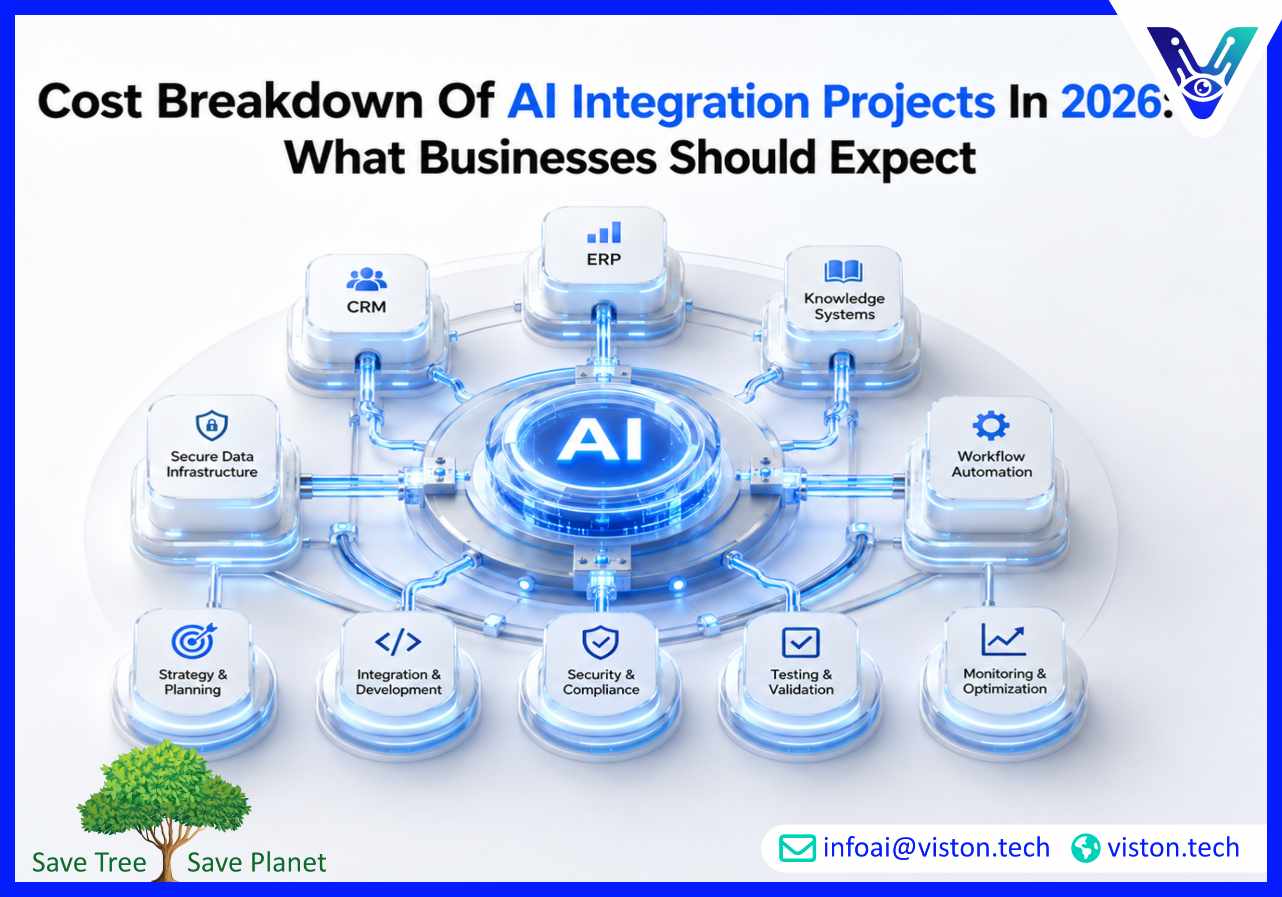
As AI adoption moves from experimentation to operational deployment, businesses are increasingly asking the same question: how much does an AI integration project actually cost? The answer depends on far more than model licensing or software subscriptions. AI integration projects involve planning, system connectivity, workflow design, security, testing, deployment, and ongoing optimization. Understanding these cost drivers helps organizations budget effectively and avoid unexpected implementation challenges.
An AI integration project focuses on connecting AI capabilities with existing business systems, workflows, data sources, and operational processes. The objective is not simply deploying an AI tool but ensuring it delivers measurable business value within real-world environments.
Modern AI integration projects commonly include:
The complexity of these components significantly influences project costs.
No two AI integration projects are identical. Several variables determine the overall investment required.
A simple AI-powered workflow connected to one or two systems requires considerably less effort than an enterprise-wide deployment spanning multiple departments, databases, and business processes.
Scope considerations include:
Businesses often operate a mix of modern cloud platforms and legacy systems. Connecting AI solutions to multiple environments increases development effort and testing requirements.
Examples include:
The more systems involved, the greater the integration complexity.
AI systems rely on high-quality data. Many projects require substantial preparation before implementation can begin.
Common data-related activities include:
Poor data quality often increases project costs more than businesses initially expect.
Organizations increasingly deploy AI agents rather than standalone chatbots. AI agents can perform tasks, retrieve information, make recommendations, and execute actions across business systems.
Designing agentic workflows requires:
More sophisticated workflows require additional implementation effort.
When evaluating budgets, businesses should consider multiple cost categories rather than focusing solely on software expenses.
The initial assessment phase identifies business objectives, technical requirements, workflow opportunities, risks, and implementation priorities.
This phase typically includes:
Organizations that invest in proper planning often reduce implementation risks and avoid costly redesigns later.
This is usually the largest portion of the project budget.
Activities may include:
The complexity of integrations directly impacts development costs.
Depending on the chosen architecture, organizations may incur expenses related to:
These costs are often ongoing rather than one-time expenses.
Production-ready AI systems require extensive testing to ensure reliability, accuracy, security, and business compliance.
Testing commonly covers:
Skipping this phase can create operational and reputational risks.
AI integration projects should be viewed as ongoing operational systems rather than one-time implementations.
Post-launch costs may include:
Continuous optimization helps maintain long-term value and system effectiveness.
Cost management begins with strategic planning rather than aggressive budget reductions.
Instead of attempting organization-wide transformation immediately, businesses should focus on workflows that offer measurable operational impact.
Examples include:
Successful initial deployments often create the foundation for broader AI adoption.
Leveraging current systems and technology investments can significantly reduce implementation costs compared to building entirely new environments.
Projects with clearly defined objectives typically achieve better outcomes and more predictable budgets.
Common metrics include:
Organizations increasingly recognize that AI value comes from integration rather than isolated tools. Businesses want AI solutions that interact with their existing systems, support employees, automate workflows, and improve decision-making.
As AI agents become more capable, integration projects are evolving from simple chatbot deployments into operational transformation initiatives. Companies that approach AI strategically often achieve better scalability, stronger governance, and more sustainable returns on investment.
In 2026, the emphasis has shifted from experimenting with AI to building connected systems that contribute directly to business performance.
For organizations evaluating AI integration investments, understanding both technical requirements and business outcomes is essential. Viston AI specializes in Agent Integration Services that help businesses connect AI capabilities with existing workflows, applications, and operational systems.
AI integration projects often involve far more than deploying an AI model. Businesses need workflow analysis, integration planning, system connectivity, security controls, orchestration logic, and performance monitoring. Viston AI helps organizations design and implement agent-based solutions that align with operational goals while supporting scalability and long-term adoption.
Its approach focuses on practical implementation, helping businesses identify high-value automation opportunities, integrate AI agents with business platforms, and establish workflows that produce measurable outcomes. This allows organizations to move beyond isolated AI experiments and toward integrated systems that support daily operations.
Costs vary significantly depending on scope, integration complexity, data readiness, workflow requirements, and infrastructure needs. Small projects may require modest investments, while enterprise-wide initiatives can involve substantial implementation budgets.
System integration complexity is often the largest cost factor. Connecting AI with multiple business applications, workflows, and data sources typically requires significant development and testing effort.
Not necessarily. While model usage contributes to costs, planning, integration, workflow development, security, testing, and maintenance frequently represent a larger portion of total project investment.
Yes. Starting with targeted high-value workflows, leveraging existing infrastructure, improving data quality, and defining clear project objectives can help manage costs effectively.
AI agents often interact with multiple systems, make decisions, perform actions, and collaborate across workflows. This requires orchestration, governance, security controls, and monitoring that add implementation complexity.
Yes. Viston AI’s Agent Integration Services support organizations in designing, integrating, and optimizing AI-powered workflows that align with business objectives and operational requirements.
Understanding the cost breakdown of AI integration projects is critical for businesses planning AI investments in 2026. Project costs extend beyond software licensing and include strategy, integration, workflow design, security, testing, deployment, and ongoing optimization. Organizations that focus on high-value use cases, strong planning, and scalable architecture are often better positioned to achieve meaningful returns from AI adoption. For businesses exploring Agent Integration Services, partnering with experienced specialists such as Viston AI can help reduce implementation risks and create AI solutions that support long-term operational success.
