
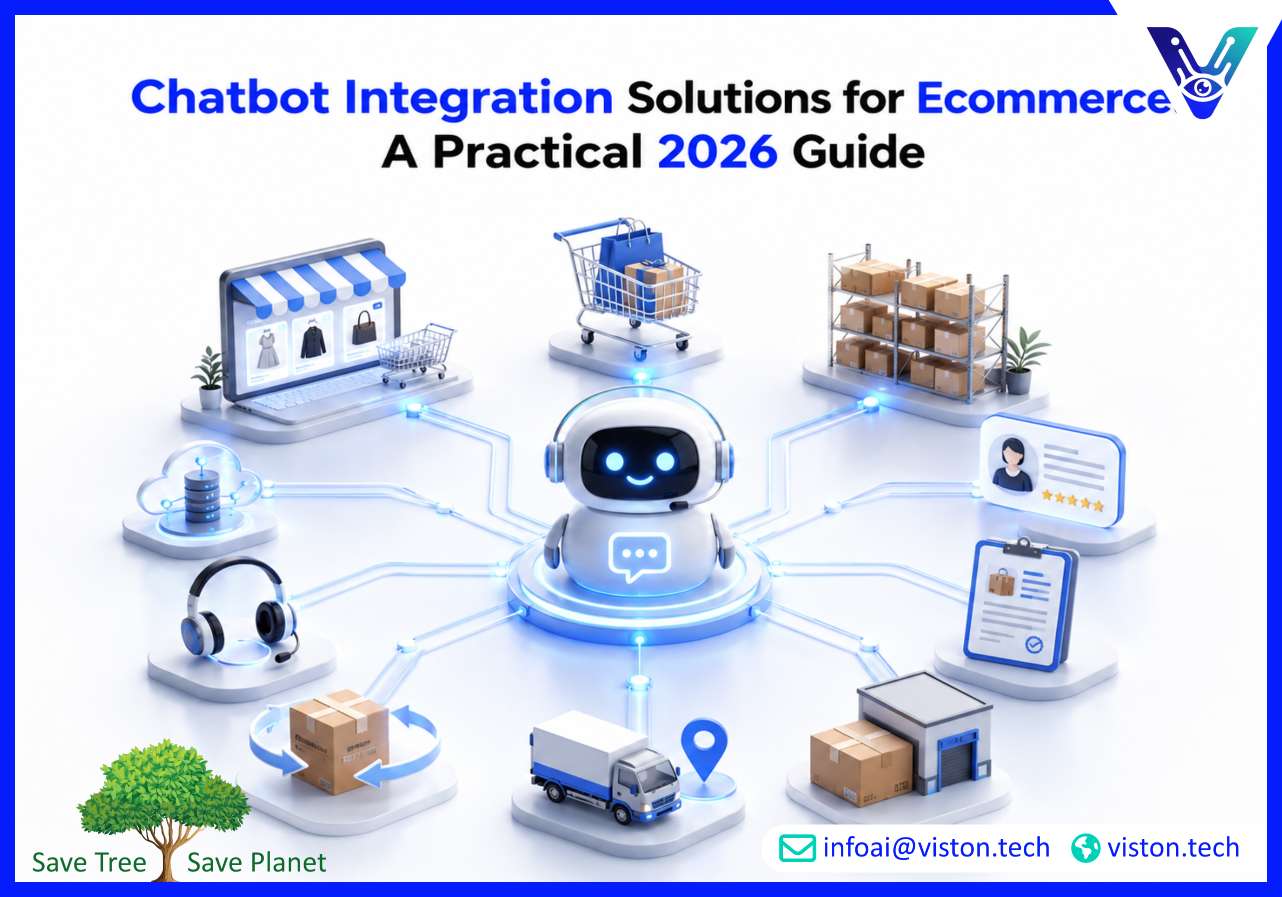
Chatbot integration solutions for ecommerce connect conversational AI with product data, orders, inventory, customer records, support tools, and fulfillment workflows. In 2026, their value goes beyond answering FAQs: strong integrations help shoppers make decisions, complete tasks, and receive accurate support without creating new operational silos.
An ecommerce chatbot becomes useful when it can access the systems that run the customer journey. A standalone bot may answer general questions, but it cannot reliably confirm stock, locate an order, apply a return policy, update a customer record, or create a support case without integration.
Ecommerce chatbot integration connects the conversational interface to business platforms through APIs, webhooks, middleware, or prebuilt connectors. Depending on the retailer’s stack, this can include Shopify, Adobe Commerce or Magento, WooCommerce, BigCommerce, a headless storefront, CRM software, a helpdesk, an order management system, a product information platform, warehouse systems, loyalty tools, and marketing automation.
A basic chatbot usually follows scripted flows or retrieves answers from limited content. An integrated commerce assistant can combine natural-language understanding with live business data and approved actions. It may identify intent, search the current catalogue, check stock, retrieve an authenticated order, explain the correct return process, and transfer the conversation when judgment is required.
The integration layer determines what information the chatbot can use, what actions it can take, how securely it operates, and whether updates are written back to the correct system.
The right scope depends on the business problem. A smaller retailer may begin with product questions and order tracking, while a larger operation may need multilingual support, omnichannel continuity, identity verification, complex returns, and workflows spanning regional systems.
The strongest use cases combine high customer demand with reliable data and clear rules. Retailers should prioritize tasks that are repetitive enough to automate but structured enough to complete safely.
Customers do not always know the exact product they need. An integrated chatbot can ask about use case, budget, size, style, compatibility, features, or delivery date, then search the catalogue using those requirements. This is more useful than presenting a generic menu because it narrows choice through conversation.
Accurate recommendations require current descriptions, variant data, pricing, stock status, and merchandising rules. The chatbot should also distinguish between a recommendation and a guarantee, especially where suitability involves safety, technical, or professional judgment.
A connected chatbot can authenticate the customer, retrieve the latest order and carrier status, explain delays, and provide the next valid action. If a parcel is lost, damaged, or delivered incorrectly, it can collect evidence and create a structured case for an agent.
This reduces repetitive status requests while avoiding a common weakness of basic bots: repeating a tracking link without interpreting what the shipment status means.
Eligibility may depend on purchase date, product category, condition, region, promotion, or fulfillment method. A chatbot integrated with order and returns systems can check these conditions, explain available options, collect the reason, and initiate an approved workflow.
Controls are essential. The bot should not override policy, promise a refund before validation, or expose payment information. Exceptions, disputes, suspected fraud, and high-value cases should move to a trained person with the relevant context attached.
A chatbot can resolve questions that block checkout, including delivery timing, compatibility, payment methods, discount eligibility, subscriptions, and warranties. It can also capture a lead or create a follow-up task when a B2B or high-consideration shopper is not ready to buy.
After purchase, customers may move between website chat, WhatsApp, social messaging, and email. Omnichannel integration can preserve identity, intent, and previous steps so the customer does not have to restart. The helpdesk or CRM should receive a usable record of the issue, order, actions attempted, and reason for escalation.
Successful implementation starts with workflow design, not model selection. The business must define what the chatbot is allowed to know, what it may do, and when it must involve a person.
Begin with a small group of measurable use cases, such as product FAQs, order tracking, return guidance, and ticket creation. Review contact volume, handling time, customer frustration, operational risk, and data availability to decide what belongs in the first release.
Define the source of truth for products, prices, inventory, orders, policies, and customer records. Remove outdated or conflicting content before connection. Product titles, variants, return rules, shipping regions, and promotional conditions should use consistent terminology.
Retrieval-based knowledge can help the chatbot answer from approved documentation, but content still needs ownership, review dates, permissions, and rules for conflicting information. When the system cannot confirm an answer, it should say so and offer the correct escalation path.
Customer-specific actions require authentication and least-privilege access. The chatbot should retrieve only the information needed for the task and must never expose another customer’s data. Common controls include API gateways, encrypted connections, role-based permissions, audit logs, rate limits, and short-lived access tokens.
The bot should direct customers to approved payment interfaces rather than collect sensitive card information in conversation logs. Privacy notices, retention rules, and consent management should reflect the markets where the retailer operates.
Escalation protects customers and the business when a request involves ambiguity, emotion, policy exceptions, fraud, account security, or commercial judgment. A good handover includes customer identity, order context, detected intent, conversation history, actions already attempted, and relevant attachments.
Testing should include misspellings, short messages, multiple intents, frustrated language, incomplete order details, out-of-stock products, expired return windows, API failures, and unsupported requests. Verify that system writes, such as ticket creation or address updates, occur correctly and that failures trigger a safe fallback.
The commercial value of an ecommerce chatbot should be measured through completed outcomes, not conversation volume alone. A bot that handles many chats but gives weak answers or creates duplicate tickets can increase cost rather than reduce it.
Useful measures include self-service resolution, task completion, fallback rate, escalation rate, customer satisfaction, repeat contact, ticket deflection, conversion-assisted revenue, workflow success, and system update accuracy. Review results by use case, channel, language, and customer segment where practical.
Technical monitoring should cover API errors, authentication failures, slow queries, failed webhooks, stale catalogue data, and incorrect routing. These issues directly affect customer experience even when the chatbot’s language appears fluent.
Pricing may include subscriptions, model usage, implementation, connector development, data preparation, testing, security work, monitoring, and ongoing optimization. A low-cost widget can become expensive if staff must correct its answers or it cannot connect to systems required for resolution.
Buyers should separate initial setup from recurring costs and clarify ownership of conversation data, integrations, prompts, analytics, and knowledge content.
A credible provider should be able to map ecommerce workflows, design APIs, manage identity and permissions, structure product knowledge, test edge cases, implement escalation, and report measurable outcomes. It should also explain limitations clearly.
Viston AI’s AI Chatbot Integration service is relevant to ecommerce businesses that need conversational systems connected to operational data rather than isolated chat widgets. Its published capabilities include integration with CRM, ERP, order management, and custom business platforms; bidirectional data synchronization; workflow automation; multichannel orchestration; and structured data extraction from customer conversations.
For ecommerce use cases, this approach can support product and inventory enquiries, order-status retrieval, return initiation, customer-record updates, ticket creation, and routing across web, mobile, WhatsApp, SMS, and other supported channels. Viston AI also identifies Shopify, Magento, order management, warehouse, and logistics connectivity as relevant to retail chatbot workflows.
The practical value lies in designing the chatbot around the retailer’s existing systems, rules, and service model. This includes mapping data between platforms, applying authentication and access controls, defining approved actions, preserving context during human handover, and monitoring integration performance after deployment.
Viston AI may therefore suit ecommerce companies that require custom integration logic, several backend systems, or workflows that extend beyond standard FAQs. Its broader capabilities in enterprise chatbots, agent integration, automation, multilingual support, and ecommerce intelligence can support phased expansion as the retailer moves toward more connected conversational commerce.
They connect an AI chatbot with ecommerce platforms and systems such as product catalogues, inventory, orders, CRM, helpdesk, shipping, returns, and analytics. This allows the chatbot to provide current answers and complete approved tasks.
Most retailers should begin with high-volume, low-risk use cases such as product questions, order tracking, delivery updates, return guidance, and ticket creation. More sensitive actions should follow after authentication, business rules, logging, and escalation are tested.
It can initiate approved return workflows, check eligibility, collect reasons, provide instructions, or report refund status when connected to the relevant systems. Final approval should follow the retailer’s policy, fraud controls, payment processes, and exception rules.
The timeline depends on the number of use cases, data quality, API availability, security requirements, channels, languages, and testing scope. A focused integration is faster than a complex omnichannel assistant connected to several legacy systems.
Measure changes in resolved contacts, support cost, response time, conversion assistance, repeat contact, customer satisfaction, workflow success, and data accuracy. Compare these outcomes with platform, model, implementation, maintenance, and human-review costs.
Viston AI provides AI chatbot integration for CRM, ERP, order management, ecommerce, and custom business systems. Suitability depends on the retailer’s platforms, APIs, workflows, security requirements, and desired channels.
Chatbot integration solutions for ecommerce create value when they connect customer conversations with accurate product data, live order information, approved workflows, and effective human support. In 2026, retailers should look beyond the chat interface and evaluate integration depth, data quality, security, task completion, monitoring, and scalability. A focused AI Chatbot Integration strategy can reduce repetitive work, improve product discovery, strengthen post-purchase service, and make customer interactions easier to manage. Viston AI offers relevant integration and automation capabilities for ecommerce businesses seeking a connected, practical, and scalable approach.
