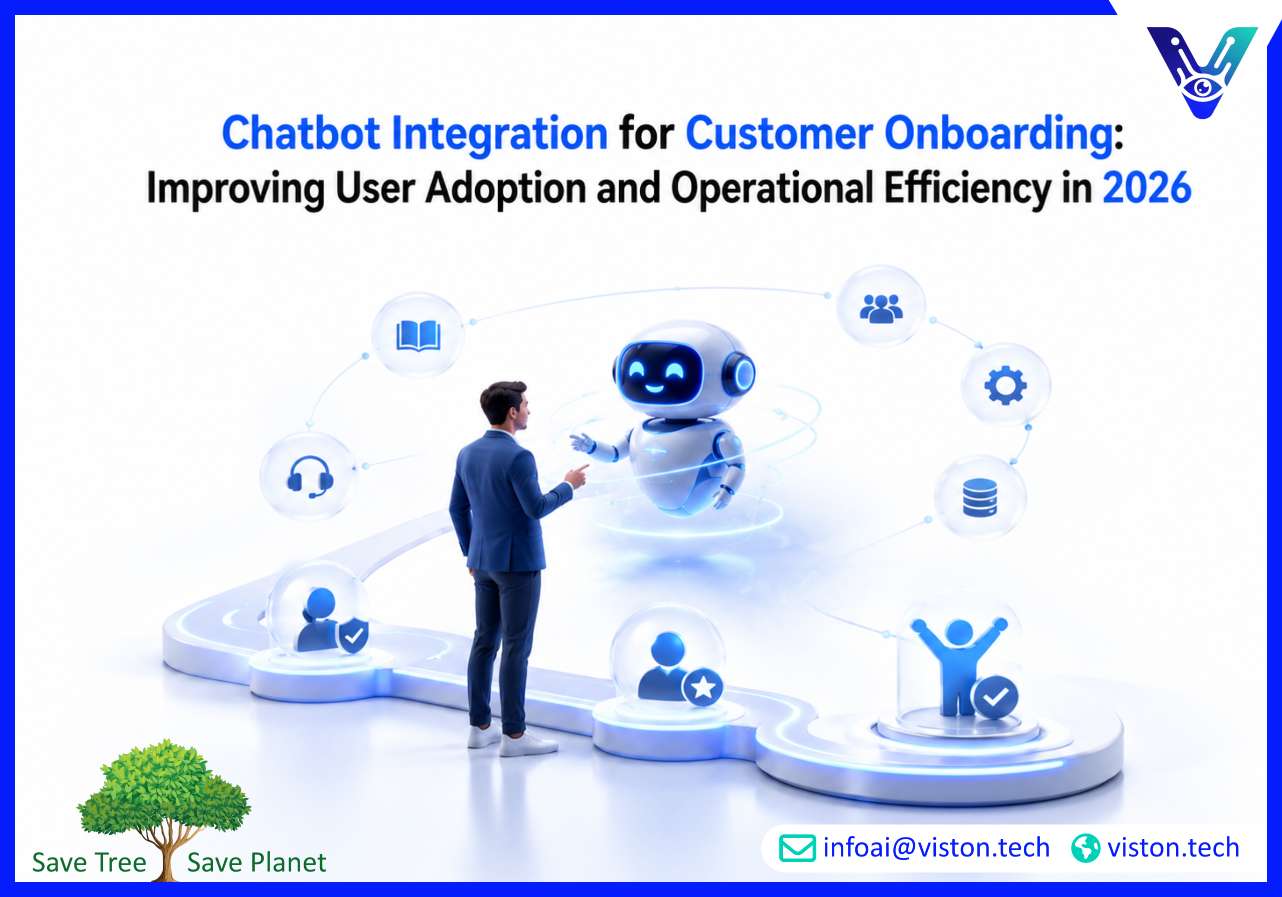
Chatbot Integration for Customer Onboarding: Improving User Adoption and Operational Efficiency in 2026
Customer onboarding plays a critical role in determining whether new users become long-term customers or disengage shortly after signing up. As businesses scale, delivering consistent onboarding experiences becomes increasingly challenging. Chatbot integration for customer onboarding helps organizations automate guidance, answer questions instantly, and accelerate user adoption while reducing operational workloads.
Why Customer Onboarding Matters More Than Ever in 2026
The first interactions customers have with a product, platform, or service often determine future engagement levels. Modern customers expect immediate assistance, personalized guidance, and seamless digital experiences.Traditional onboarding methods frequently rely on support teams, documentation libraries, training sessions, and email sequences. While these approaches remain valuable, they can create delays and inconsistencies when customer volumes increase.Organizations across industries are increasingly integrating AI-powered chatbots into onboarding workflows to provide real-time support and improve customer experiences from day one.
Common Customer Onboarding Challenges
High customer drop-off during initial setup
Slow product adoption rates
Large volumes of repetitive support requests
Limited support team availability
Complex onboarding processes
Inconsistent customer experiences
Difficulty scaling onboarding operations
These challenges can negatively impact retention, customer satisfaction, and overall revenue growth.
How Chatbot Integration Transforms Customer Onboarding
Chatbot integration allows businesses to provide automated, contextual assistance throughout the customer journey. Instead of requiring users to search documentation or wait for support responses, chatbots can guide them through onboarding tasks in real time.
Interactive Onboarding Guidance
Modern AI chatbots can walk users through account setup, profile completion, configuration processes, and platform navigation. Step-by-step guidance helps customers complete critical onboarding milestones more efficiently.
24/7 Instant Support
New customers often require assistance outside standard business hours. Integrated chatbots provide continuous support, helping users overcome obstacles without waiting for human intervention.
Personalized User Experiences
AI-powered onboarding chatbots can tailor conversations based on user roles, industries, goals, subscription plans, and behavior patterns. Personalized onboarding experiences improve engagement and increase adoption rates.
Knowledge Base Integration
When connected to product documentation, FAQs, training resources, and support databases, chatbots can deliver accurate answers instantly while reducing support ticket volumes.
Automated Progress Tracking
Businesses can use chatbot integrations to monitor onboarding progress, identify drop-off points, and proactively engage users who may require additional assistance.
Key Benefits of Chatbot Integration for Customer Onboarding
Organizations implementing chatbot-powered onboarding often experience improvements across customer experience, operational efficiency, and business performance.
Faster Time to Value
Customers can reach their desired outcomes more quickly when guided through onboarding processes with immediate assistance. Faster adoption often leads to improved satisfaction and retention.
Reduced Support Costs
Automating repetitive onboarding questions allows support teams to focus on more complex customer needs while lowering overall support expenses.
Improved Customer Retention
Effective onboarding helps users understand product value early in the customer lifecycle, reducing churn risks and improving long-term engagement.
Scalable Customer Experiences
Whether onboarding hundreds or thousands of new customers, chatbot integrations can deliver consistent experiences without requiring proportional increases in support staffing.
Better Data Collection
Chatbots can capture onboarding feedback, identify customer pain points, and generate insights that support continuous process improvement.
Best Practices for Successful Customer Onboarding Chatbot Integration
Simply deploying a chatbot does not guarantee onboarding success. Businesses should focus on strategic implementation and continuous optimization.
Map the Complete Customer Journey
Identify every onboarding stage where customers commonly encounter challenges. This helps determine where chatbot interactions can provide the greatest value.
Integrate with Core Business Systems
Customer onboarding chatbots become significantly more effective when connected to CRM platforms, customer databases, analytics systems, help centers, and communication tools.
Balance Automation and Human Support
While chatbots can resolve many onboarding questions, complex scenarios should be escalated seamlessly to human support representatives.
Use Context-Aware Conversations
Onboarding interactions should adapt based on user actions, previous conversations, onboarding stage, and business objectives.
Monitor Performance Metrics
Track metrics such as onboarding completion rates, support ticket reductions, customer satisfaction scores, response accuracy, and adoption milestones.
Continuously Optimize Content
Customer needs evolve over time. Regular updates to chatbot knowledge bases, workflows, and onboarding logic help maintain effectiveness.
How Viston AI Supports Customer Onboarding Through AI Chatbot Integration
For organizations seeking to modernize customer onboarding experiences, AI chatbot integration requires more than basic conversational capabilities. Successful implementations depend on intelligent workflows, system integrations, automation strategies, and ongoing optimization.Viston AI specializes in AI Chatbot Integration solutions that help businesses automate customer interactions while maintaining meaningful user experiences. By integrating chatbots with customer onboarding processes, organizations can create guided journeys that support account setup, product education, user engagement, and ongoing customer success initiatives.The company focuses on building chatbot solutions that connect with existing business ecosystems, including CRM platforms, customer support systems, knowledge bases, analytics tools, and communication channels. This integrated approach enables businesses to deliver personalized onboarding experiences while maintaining operational efficiency.Whether organizations are onboarding customers for SaaS platforms, digital services, eCommerce solutions, membership platforms, or enterprise applications, effective chatbot integration can help streamline onboarding workflows, reduce support burdens, and improve customer adoption rates.As customer expectations continue to evolve in 2026, businesses increasingly require scalable onboarding solutions that combine automation, intelligence, and seamless user experiences. AI chatbot integration plays a central role in achieving these objectives.
Frequently Asked Questions
What is chatbot integration for customer onboarding?
Chatbot integration for customer onboarding involves embedding AI-powered conversational assistants into onboarding workflows to guide users, answer questions, automate tasks, and improve product adoption.
Can chatbots reduce customer onboarding costs?
Yes. Chatbots automate repetitive support interactions, reduce manual workloads, and help organizations scale onboarding processes without significantly increasing staffing requirements.
What systems should onboarding chatbots integrate with?
Common integrations include CRM platforms, help desks, knowledge bases, customer success tools, analytics systems, email automation platforms, and communication channels.
Are AI chatbots suitable for complex onboarding processes?
Modern AI chatbots can manage many complex onboarding scenarios when properly integrated with business systems and workflows. Human escalation paths should remain available for specialized situations.
How long does chatbot onboarding implementation typically take?
Implementation timelines vary depending on integration requirements, workflow complexity, data availability, and customization needs. Projects can range from a few weeks to several months.
How can Viston AI help with customer onboarding chatbot integration?
Viston AI provides AI Chatbot Integration services that help businesses automate onboarding workflows, connect critical systems, personalize customer interactions, and improve user adoption through intelligent conversational experiences.
Conclusion
Chatbot integration for customer onboarding has become a strategic investment for businesses seeking to improve customer experiences, increase adoption rates, and scale support operations efficiently. By providing real-time assistance, personalized guidance, and automated workflows, AI-powered chatbots help organizations deliver consistent onboarding experiences while reducing operational complexity. As customer expectations continue to rise in 2026, businesses that invest in effective AI Chatbot Integration solutions can create smoother onboarding journeys, improve retention, and support long-term growth. For organizations evaluating onboarding automation strategies, Viston AI offers specialized expertise in building integrated chatbot solutions that align with modern business requirements.