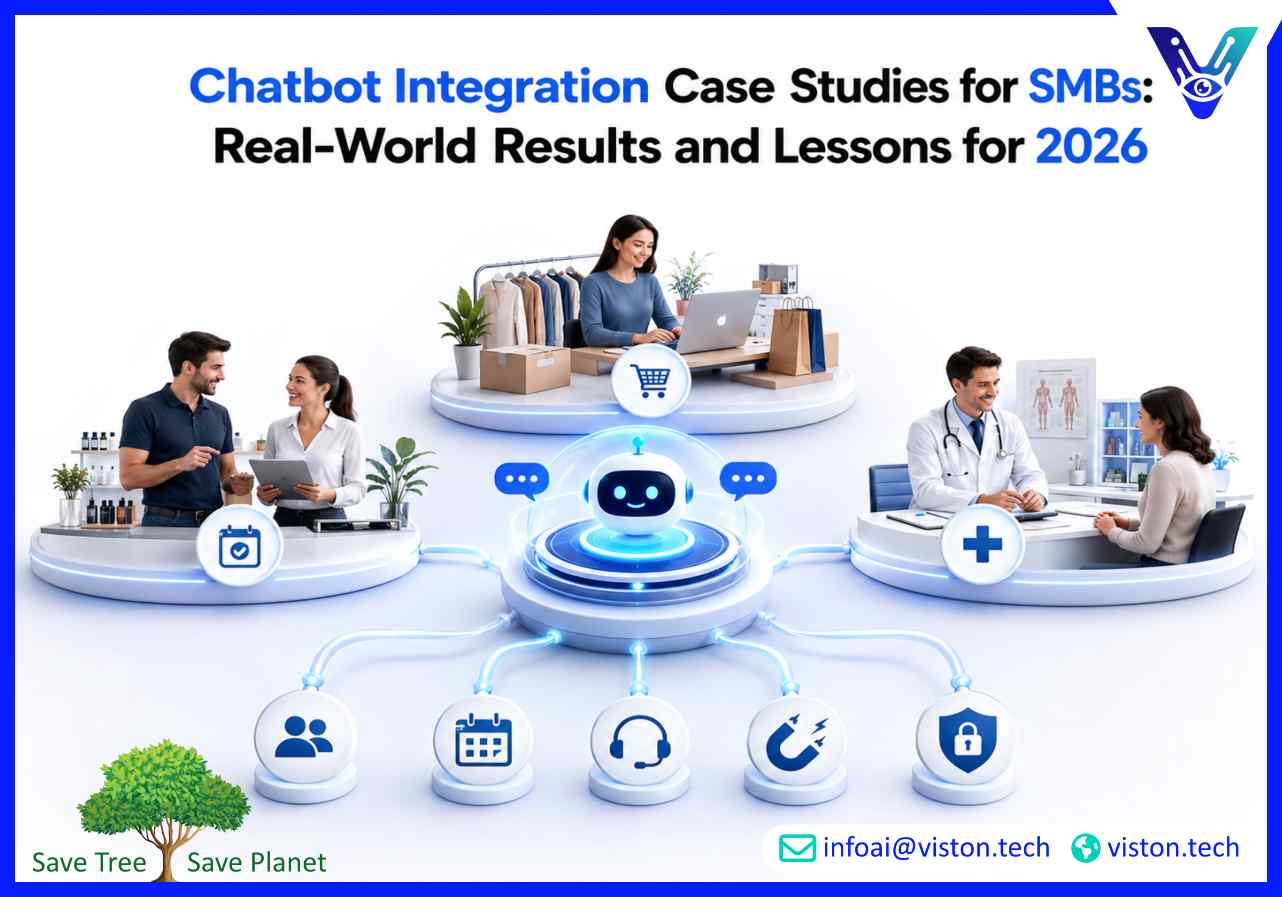
Chatbot Integration Case Studies for SMBs: Real-World Results and Lessons for 2026
Small and medium-sized businesses are increasingly adopting AI-powered customer engagement tools to improve service quality, reduce operational workload, and support growth. Among these technologies, chatbot integration has become one of the most practical and cost-effective solutions. Examining chatbot integration case studies for SMBs helps business owners understand what works, what challenges to expect, and how to achieve measurable outcomes in 2026.
Why SMBs Are Investing in Chatbot Integration
SMBs often operate with limited staff, tight budgets, and increasing customer expectations. Customers want immediate responses, self-service options, and support across multiple channels. Traditional customer service models can struggle to meet these demands consistently.AI chatbot integration helps SMBs address these challenges by automating routine interactions while allowing human teams to focus on higher-value activities.Common business objectives include:
Reducing customer response times
Handling repetitive inquiries automatically
Supporting customers outside business hours
Improving lead generation and qualification
Reducing support costs
Increasing appointment bookings and sales opportunities
Providing consistent customer experiences across channels
As AI technology continues to mature, chatbot solutions are becoming more accessible to businesses that previously lacked the resources for advanced automation initiatives.
Case Study Examples: How SMBs Are Using Chatbot Integration Successfully
Case Study 1: Local Service Business Improves Lead Conversion
A regional home services company struggled to respond quickly to inquiries arriving through its website. Potential customers often submitted forms after business hours and received delayed responses.After implementing an AI chatbot integrated with the company’s website and CRM system, the business automated lead capture and qualification.The chatbot:
Collected customer contact details
Asked qualifying questions
Provided service information
Scheduled appointments automatically
Transferred urgent requests to staff when necessary
The result was a significant improvement in response speed and more qualified leads entering the sales pipeline without increasing administrative workload.
Case Study 2: E-Commerce Store Reduces Customer Support Volume
An online retailer experienced growing customer service demand related to shipping status, return policies, and product information.Instead of expanding support staff, the company integrated a chatbot into its website and customer service workflow.The chatbot handled:
Order tracking requests
Return and refund questions
Product recommendations
Frequently asked questions
Basic troubleshooting
By automating repetitive requests, customer support representatives could focus on complex cases while maintaining customer satisfaction.
Case Study 3: Healthcare Practice Streamlines Appointment Management
A small healthcare provider faced challenges managing appointment scheduling, rescheduling, and patient inquiries.The organization implemented an AI chatbot connected to its appointment booking platform.The chatbot helped patients:
Book appointments
Check availability
Receive appointment reminders
Access clinic information
Answer common administrative questions
The practice reduced front-desk workload while improving accessibility for patients seeking information outside office hours.
Key Lessons SMBs Can Learn from Successful Chatbot Projects
While industries and use cases vary, successful chatbot integration projects often share common characteristics.
Start with High-Volume Interactions
The most effective chatbot implementations focus first on repetitive tasks that consume significant staff time. Examples include FAQs, appointment scheduling, lead qualification, and status inquiries.Businesses that attempt to automate every interaction immediately often create unnecessary complexity.
Integrate with Existing Systems
A chatbot delivers greater value when connected to business systems such as:
CRM platforms
Help desk software
Booking systems
E-commerce platforms
Marketing automation tools
ERP systems
Integration allows customer information to flow seamlessly across the organization, reducing manual work and improving operational efficiency.
Maintain Human Escalation Paths
Even advanced AI chatbots cannot resolve every situation.Successful SMBs ensure customers can quickly escalate conversations to human agents when needed. This hybrid approach improves customer satisfaction while preserving automation benefits.
Measure Performance Continuously
Organizations achieving strong results treat chatbot integration as an ongoing optimization initiative rather than a one-time project.Key performance indicators often include:
Response times
Conversation completion rates
Lead conversion rates
Customer satisfaction scores
Support ticket reduction
Appointment booking rates
Revenue attribution
What SMBs Should Consider Before Implementing AI Chatbot Integration
Before launching a chatbot project, SMBs should evaluate business requirements carefully.
Define Clear Business Objectives
The chatbot should support measurable goals rather than simply adopting technology because competitors are doing so.Typical objectives include:
Increasing sales opportunities
Reducing support costs
Improving customer service
Enhancing operational efficiency
Supporting business growth
Choose the Right Communication Channels
Modern customers interact across multiple platforms.Businesses should identify where their customers prefer communication, including:
Websites
WhatsApp
Facebook Messenger
Instagram
SMS
Customer portals
Mobile applications
Focus on Security and Data Privacy
Customer conversations frequently contain sensitive information. SMBs must ensure chatbot solutions align with relevant privacy regulations, security standards, and data management policies.
Plan for Scalability
A chatbot should support future business growth. Businesses should evaluate whether the chosen solution can accommodate increasing customer volumes, new channels, and additional automation requirements over time.
Why AI Chatbot Integration Expertise Matters for SMB Success
Many SMBs discover that successful chatbot implementation involves more than deploying a conversational interface. Effective chatbot integration requires planning, workflow design, system integration, automation strategy, conversational experience design, testing, reporting, and ongoing optimization.Viston AI specializes in AI Chatbot Integration services designed to help businesses implement practical automation solutions that align with operational goals. Rather than focusing solely on chatbot deployment, the approach emphasizes business outcomes through seamless integration with existing systems, customer support workflows, CRM platforms, appointment scheduling tools, and communication channels.For SMBs exploring chatbot adoption, the value often comes from building solutions that support lead generation, customer engagement, operational efficiency, and scalable growth. Viston AI helps organizations identify suitable use cases, design intelligent conversation flows, connect business systems, and establish reporting frameworks that support continuous improvement.As customer expectations continue to evolve in 2026, businesses increasingly require chatbot solutions that are reliable, adaptable, secure, and capable of delivering measurable business value rather than simple automation.
Frequently Asked Questions
What is the biggest benefit of chatbot integration for SMBs?
The biggest benefit is often improved operational efficiency through automated customer interactions, faster response times, and reduced workload for support teams.
How long does chatbot integration typically take?
Implementation timelines vary based on complexity, integrations, workflows, and customization requirements. Basic deployments can be completed relatively quickly, while enterprise-grade integrations require more planning and testing.
Can chatbots integrate with existing CRM systems?
Yes. Modern chatbot platforms commonly integrate with CRM, help desk, marketing automation, booking, and e-commerce systems to improve workflow automation and customer management.
Are AI chatbots suitable for small businesses?
Yes. Many SMBs use AI chatbots to improve customer service, automate lead generation, manage appointments, and support business growth without significantly increasing staffing costs.
How can Viston AI support chatbot integration projects?
Viston AI provides AI Chatbot Integration services that help businesses design, implement, integrate, and optimize chatbot solutions aligned with operational and customer engagement objectives.
Conclusion
Chatbot integration case studies for SMBs demonstrate that successful implementations are driven by clear business objectives, thoughtful system integration, and ongoing optimization. Whether improving customer support, increasing lead conversion, or streamlining appointment management, AI Chatbot Integration can deliver meaningful operational and customer experience benefits. Businesses that approach chatbot adoption strategically are better positioned to meet growing customer expectations while improving efficiency and scalability. For organizations evaluating automation opportunities, experienced specialists such as Viston AI can help ensure chatbot initiatives align with long-term business goals and measurable outcomes.