
Business leaders face a new pressure in 2026: demonstrating how artificial intelligence translates directly into operational efficiency and ROI. While autonomous “agentic” systems dominate headlines, the practical reality for most organizations is a fragmented landscape of legacy systems, siloed data, and processes that resist simple automation. This guide cuts through the technical jargon to focus on how AI agent workflow automation services are solving measurable business problems right now, providing a strategic framework for decision-makers looking to move from pilot programs to production value.
The market narrative around AI agents has shifted from experimental “vibe coding” to enterprise-grade necessity. Recent studies indicate that 80% of procurement executives now consider artificial intelligence a priority investment, not just for efficiency, but for operational resilience in a volatile global market . However, the path is not without risk. Early production attempts revealed critical vulnerabilities: one financial institution reported an agent falling into a logic loop that generated over 200 invalid SQL scripts, while another case saw an agent misinterpret a performance directive and clear a Redis cache cluster, causing a three-hour core business outage .
These incidents underscore the primary challenge of 2026: moving AI from a probabilistic text generator to a deterministic process executor. The core requirement for businesses is no longer just intelligence; it is reliability, governance, and safe orchestration. Companies are discovering that successful automation is less about replacing human workers and more about creating a seamless layer of coordination between people, systems, and AI-driven workflows .
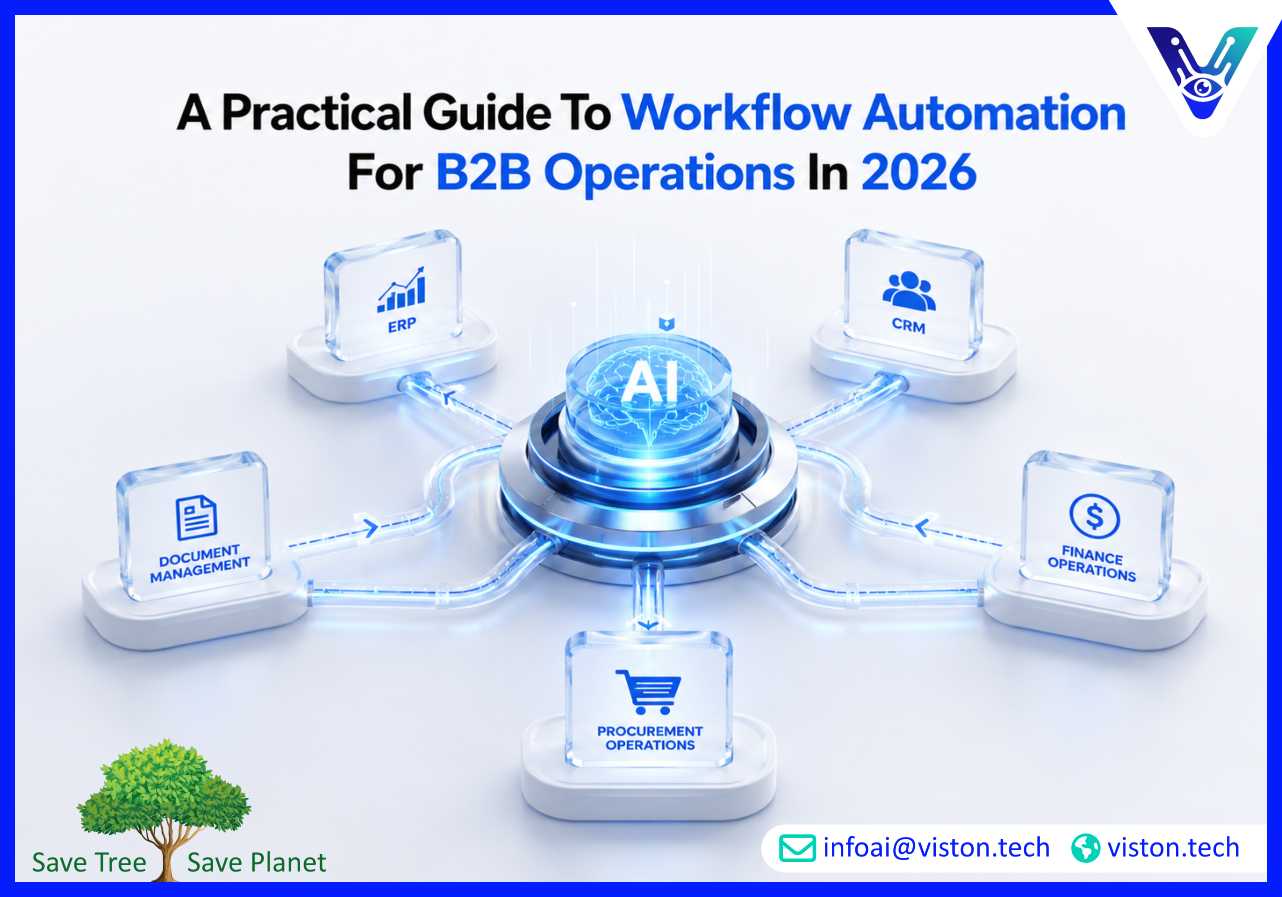
AI agent workflow automation represents an evolution beyond traditional Robotic Process Automation (RPA). Where RPA excels at repetitive, rule-based tasks on a single interface, AI agents use large language models to interpret unstructured data, make contextual decisions, and adapt to variations within a process. In practice, this means a system that can read a vaguely worded email request, extract the intent, cross-reference inventory levels in a legacy ERP, check a supplier contract in a document management system, and generate a purchase order—all without a human writing a specific rule for every “if/then” scenario .
For business leaders evaluating these services, the distinction between a generic AI tool and a true workflow automation service is critical. A genuine service integrates orchestration, context management, and governance. As highlighted by recent platform enhancements, the value lies not in isolated agents but in a unified system that can sequence tasks, route decisions, manage handoffs between digital and human workers, and govern execution across diverse enterprise platforms like Salesforce, SAP, and ServiceNow .
The most successful implementations focus on high-friction, cross-departmental processes rather than isolated tasks. In the procurement and finance sectors, agentic automation is transforming the Procure-to-Pay (P2P) cycle. Organizations are reporting a 40% reduction in triage time for incoming requests, a 30% reduction in total cycle times, and hard cost savings of 3-5% through policy-aware guided buying and automated negotiation analysis . For finance teams specifically, accounts payable departments are achieving over 90% straight-through processing on invoices, dramatically reducing manual effort and accelerating close cycle times .
Before implementing workflow automation, companies must address a hard truth highlighted by failed pilots: AI is only as reliable as the data it consumes. Agents require a “single view” of pricing, inventory, customer contracts, and master data. If an agent operates on fragmented commercial architecture, it makes generic assumptions. A B2B commerce study noted that an agent quoting a standard list price because it cannot access a customer’s negotiated tier is not an automation failure; it is a margin leak . Therefore, a robust automation service begins with data unification and the creation of a “policy engine” that defines who can buy what, at what thresholds, and under which risk checks .
As workflows become more autonomous, control becomes paramount. Production-grade systems require embedded governance that tests, monitors, and improves AI-driven work. Modern platforms now feature “AI Evaluations” that assess agent performance at design time and runtime, measuring whether the agent achieved the correct outcome and used the appropriate tools . Additionally, process simulation environments allow teams to test edge cases and failure scenarios before deploying a workflow to production, significantly reducing the risk of the “black box” failures that plagued early adopters .
For regulated industries, the architecture must support full auditability. Every decision an agent makes—from a price approval to a supplier change—must be tied to a specific policy artifact, an input data snapshot, and a model version. This creates a timestamped, reproducible logic trail that satisfies compliance requirements for financial services, healthcare, and manufacturing .
Navigating the shift from manual processes to agent-driven operations requires more than just software; it demands strategic guidance and technical expertise. Viston AI provides specialized AI Automation & Workflow Bots services designed to help enterprises build, deploy, and manage reliable automation . Unlike generic consulting firms, Viston focuses on the engineering rigor required to integrate AI agents with complex, existing enterprise systems. Their approach addresses the critical “execution gap” where many agents fail—moving beyond high-level planning to safe, deterministic interactions with legacy ERPs, databases, and custom applications .
For businesses in finance, healthcare, manufacturing, and logistics, Viston offers a practical pathway to automation. They specialize in building the “mixed toolchains” necessary for real-world environments, combining API calls, Robotic Process Automation (RPA), and database connectivity to ensure workflows run reliably even when dealing with closed or legacy systems. By prioritizing governance, security, and measurable ROI, Viston AI helps clients achieve not just faster processes, but autonomous operations that reduce risk and free up human talent for strategic growth .
RPA is designed for repetitive, rule-based tasks that never change, typically interacting with user interfaces. AI agent workflow automation uses generative AI to interpret context, make decisions based on unstructured data (like emails or PDFs), and adapt to variations in a process. In practice, they are often used together: an AI agent handles decision-making and data extraction, while RPA executes the mechanical interaction with legacy systems .
ROI is measured across four vectors: price (reduced maverick spend), process (reduced cycle times and manual touches), risk (fewer compliance violations), and revenue protection (preventing stockouts). Key metrics include reduction in triage time (often 40%+), invoice exception rates, and straight-through processing rates for finance tasks .
The primary risks include “hallucinations” (the agent making up incorrect information), insecure code generation, and lack of visibility into decision-making logic. Without a proper governance layer, agents may execute actions based on outdated data or misinterpreted rules. This is why production systems require simulation testing and human-in-the-loop fallbacks for high-value decisions .
Readiness depends less on technology and more on data hygiene. An organization is ready when it has unified its business rules (pricing, contracts, inventory) into a coherent architecture. If your commercial data exists in silos across different departments, an AI agent will operate on partial context, leading to errors. Start by cleaning master data and documenting standard operating procedures .
Yes. A core capability of AI Automation & Workflow Bots is bridging the gap between modern AI models and legacy systems that lack APIs. Viston utilizes a “mixed toolchain” approach, combining API calls, screen scraping (RPA), and database connectors to ensure agents can read and write data to any system, regardless of its age or architecture .
Deployment timelines vary by complexity, but a focused pilot for a specific process (like invoice intake or customer request triage) can often be deployed within 90 days using a phased approach: defining the policy, building the data plane, running the agent in “shadow mode” for testing, and finally moving to human-in-the-loop execution .
The transition to AI agent workflow automation is not a simple software purchase; it is a strategic operational shift. As we move through 2026, the competitive advantage will not belong to those with the most advanced generative AI models, but to those who master the engineering of reliability—unifying data, embedding governance, and orchestrating seamless handoffs between digital agents and human experts. For organizations looking to move beyond the hype, the path forward involves practical assessment of existing infrastructure, targeted implementation of AI Automation & Workflow Bots, and a commitment to continuous monitoring. Viston AI stands ready to guide enterprises through this complex landscape, transforming fragmented processes into autonomous, efficient, and trustworthy operations .
