Affordable Sentiment Analysis Tools in 2026: How Businesses Can Gain Customer Insights Without Overspending
Understanding how customers feel about your products, services, and brand has become a business necessity rather than a competitive advantage. In 2026, affordable sentiment analysis tools allow organizations of all sizes to analyze customer feedback, social media conversations, reviews, surveys, and support interactions without investing in expensive enterprise platforms.
What Are Affordable Sentiment Analysis Tools?
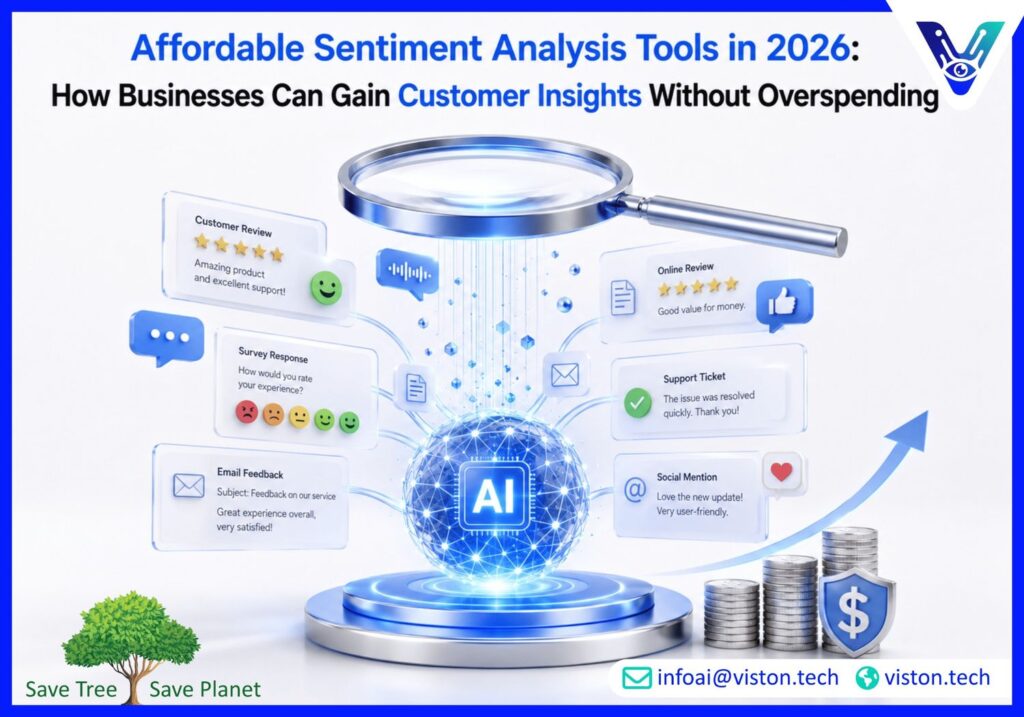
Affordable sentiment analysis tools are software solutions that use natural language processing (NLP), machine learning, and artificial intelligence to determine the emotional tone behind text-based content. These tools help businesses identify whether customer opinions are positive, negative, or neutral.Modern sentiment analysis platforms can process large volumes of unstructured data from multiple sources, including:
Customer reviews
Social media platforms
Support tickets
Email communications
Survey responses
Chat conversations
Online forums and communities
Affordable solutions have become increasingly accessible due to advancements in AI models, cloud computing, and API-based deployment options. Businesses no longer need massive budgets to access meaningful customer sentiment insights.
Why Sentiment Analysis Matters for Businesses in 2026
Customer expectations continue to evolve rapidly. Organizations that fail to understand customer perceptions often struggle with retention, reputation management, and product improvement initiatives.Sentiment analysis provides businesses with a structured way to convert large amounts of customer feedback into actionable intelligence.
Improved Customer Experience
Businesses can identify recurring customer frustrations, service gaps, and satisfaction drivers more quickly. This enables teams to prioritize improvements that directly impact customer loyalty.
Faster Reputation Monitoring
Online conversations can influence purchasing decisions within hours. Sentiment analysis tools help organizations detect emerging issues before they become larger reputation risks.
Better Product Development
Product teams can analyze customer feedback at scale to understand feature requests, usability concerns, and overall product sentiment.
Enhanced Marketing Performance
Marketing teams can measure audience reactions to campaigns, promotions, and brand messaging to improve future initiatives.
Key Features to Look for in Affordable Sentiment Analysis Tools
Cost should not be the only factor when evaluating sentiment analysis software. Organizations should focus on business value, accuracy, scalability, and usability.
Multi-Channel Data Collection
The best tools gather sentiment data from multiple customer touchpoints rather than relying on a single source.Common integrations include:
CRM platforms
Social media channels
Customer support systems
Survey platforms
Review websites
Communication tools
Real-Time Analysis
Businesses increasingly require immediate visibility into customer sentiment. Real-time monitoring allows teams to respond faster to emerging issues and opportunities.
Custom Sentiment Models
Industry-specific terminology can affect sentiment accuracy. Tools that support customization often deliver more reliable results for specialized sectors.
Reporting and Dashboards
Decision-makers need clear visualizations and business-focused reporting rather than raw sentiment scores.
API Accessibility
Organizations often benefit from integrating sentiment analysis capabilities directly into existing business applications and workflows.
How Affordable Sentiment Analysis Tools Deliver Business Value
Many organizations assume sentiment analysis is primarily useful for large enterprises. In reality, smaller businesses often experience significant benefits because customer feedback can have a more immediate impact on growth.
Reducing Manual Analysis Effort
Manually reviewing thousands of comments, reviews, and customer interactions is time-consuming and inconsistent. Automated sentiment analysis significantly reduces this burden.
Identifying Customer Churn Risks
Negative sentiment patterns can indicate customers who may be considering competitors. Early identification enables proactive retention efforts.
Supporting Data-Driven Decisions
Instead of relying on assumptions, leadership teams can make decisions based on measurable customer sentiment trends.
Improving Operational Efficiency
Organizations can prioritize support tickets, customer complaints, and service recovery efforts based on sentiment severity.
Monitoring Competitive Positioning
Businesses can analyze market conversations to understand how customers perceive their brand relative to competitors.
Common Challenges When Choosing Sentiment Analysis Software
While affordable tools offer significant value, buyers should evaluate potential limitations carefully.
Accuracy Variations
Not all sentiment models perform equally well. Context, sarcasm, slang, and industry-specific language can affect results.
Data Quality Issues
The effectiveness of sentiment analysis depends heavily on the quality and relevance of the input data.
Scalability Requirements
Organizations should ensure the selected platform can handle increasing volumes of customer interactions as the business grows.
Integration Complexity
Some solutions require significant technical effort to connect with existing systems and workflows.Businesses should evaluate implementation requirements alongside licensing costs to determine overall value.
How Viston AI Supports Businesses with Sentiment Analysis Solutions
For organizations seeking practical sentiment analysis capabilities, Viston AI focuses on helping businesses transform customer feedback and text-based data into actionable insights.Sentiment analysis is a core component of modern AI and NLP initiatives because it enables companies to understand customer perceptions at scale. Whether organizations need customer experience monitoring, review analysis, brand sentiment tracking, or feedback intelligence, effective implementation requires more than simply deploying a software tool.Viston AI helps businesses leverage sentiment analysis technologies through AI-driven solutions designed to support data interpretation, automation, and business decision-making. By combining natural language processing capabilities with scalable AI workflows, organizations can extract meaningful insights from large volumes of unstructured customer data.As customer interactions continue to expand across digital channels, businesses increasingly require reliable methods for understanding audience sentiment in real time. Sentiment analysis solutions can help organizations identify trends, prioritize responses, improve customer experiences, and support strategic planning initiatives.For companies exploring sentiment analysis as part of broader AI transformation efforts, a structured implementation approach focused on business objectives, data quality, and measurable outcomes is often essential for long-term success.
Frequently Asked Questions
What are affordable sentiment analysis tools?
Affordable sentiment analysis tools are software solutions that analyze customer opinions, reviews, and conversations using AI and NLP technologies while remaining accessible to businesses with limited budgets.
Can small businesses benefit from sentiment analysis?
Yes. Small businesses can use sentiment analysis to understand customer feedback, improve service quality, identify emerging issues, and strengthen customer relationships.
How accurate are modern sentiment analysis tools?
Accuracy varies by platform, data quality, industry terminology, and customization capabilities. Modern AI-based solutions generally provide significantly better accuracy than traditional rule-based systems.
What data sources can sentiment analysis tools analyze?
Most platforms can analyze social media posts, customer reviews, surveys, emails, support tickets, chat conversations, and other text-based customer interactions.
How can Viston AI help with sentiment analysis?
Viston AI supports organizations seeking AI-driven sentiment analysis solutions by helping businesses transform customer feedback and textual data into actionable business intelligence and operational insights.
Is sentiment analysis only useful for large enterprises?
No. Businesses of all sizes can use sentiment analysis to improve customer experience, strengthen brand reputation, and make more informed business decisions.
Conclusion
Affordable sentiment analysis tools have made advanced customer intelligence accessible to organizations of every size in 2026. By analyzing customer opinions, reviews, support interactions, and online conversations, businesses can gain valuable insights that support better decisions, stronger customer relationships, and improved operational performance. As demand for AI-driven customer understanding continues to grow, sentiment analysis solutions are becoming an increasingly important component of modern business strategies. Organizations evaluating sentiment analysis capabilities should focus on accuracy, scalability, integration flexibility, and long-term business value. For companies exploring AI-powered sentiment analysis initiatives, Viston AI provides relevant expertise in helping organizations transform unstructured customer data into meaningful insights.