Sentiment Analysis Tools for Customer Feedback in 2026: A Business Guide
Customer feedback is one of the most valuable sources of business intelligence available today. However, as organizations collect feedback across surveys, reviews, social media, support tickets, emails, chat conversations, and online communities, manually analyzing customer sentiment becomes increasingly difficult. Sentiment analysis tools help businesses transform large volumes of customer feedback into actionable insights, enabling faster decision-making, improved customer experiences, and stronger business outcomes.
What Are Sentiment Analysis Tools for Customer Feedback?
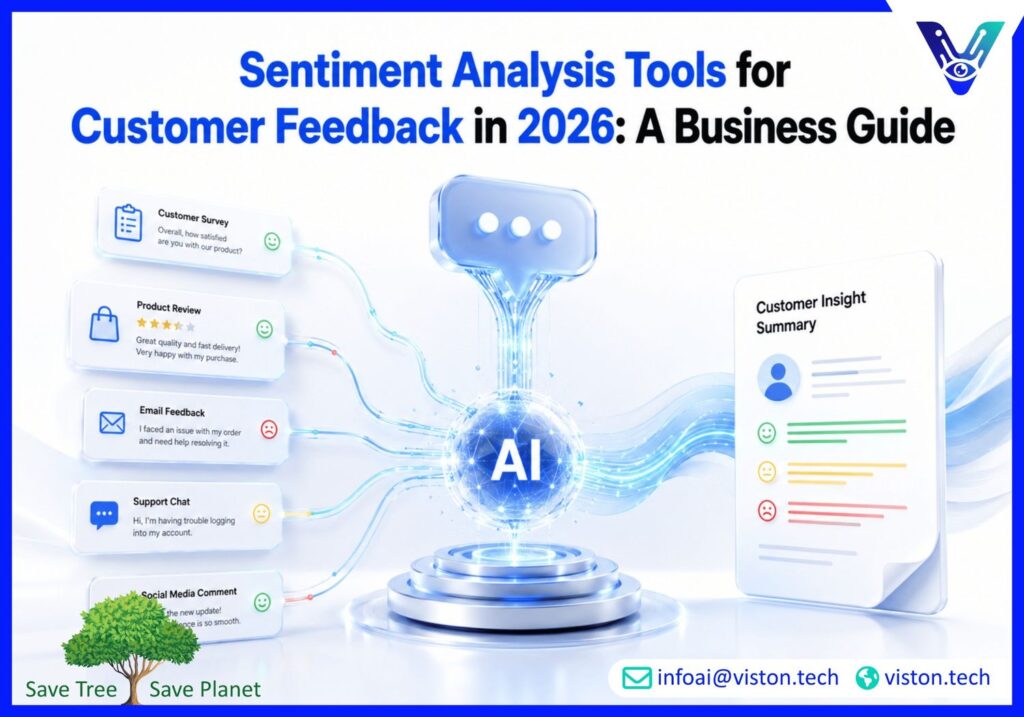
Sentiment analysis tools use natural language processing (NLP), machine learning, and artificial intelligence to evaluate customer opinions expressed in text. These tools automatically identify whether feedback is positive, negative, or neutral and often provide deeper emotional and contextual insights.Modern sentiment analysis platforms can analyze feedback from multiple channels, including:
Customer surveys
Product reviews
Social media mentions
Customer support interactions
Email communications
Live chat conversations
Online forums and communities
App store reviews
Rather than manually reading thousands of customer comments, businesses can quickly identify recurring concerns, emerging trends, customer satisfaction levels, and opportunities for improvement.
Why Sentiment Analysis Matters for Businesses in 2026
Customer expectations continue to rise across industries. Organizations are expected to understand customer needs in real time and respond quickly to changing market conditions.Traditional feedback analysis methods often struggle to keep pace with growing data volumes. Sentiment analysis tools help businesses scale feedback management while maintaining visibility into customer perceptions.
Faster Decision-Making
Automated sentiment analysis provides immediate visibility into customer reactions, allowing organizations to identify problems before they escalate.
Improved Customer Experience
By understanding customer emotions and frustrations, businesses can prioritize improvements that have the greatest impact on satisfaction and retention.
Enhanced Product Development
Customer feedback often contains valuable suggestions regarding features, usability, and performance. Sentiment analysis helps product teams identify common requests and pain points.
Brand Reputation Monitoring
Organizations can monitor public sentiment across digital channels and respond proactively to emerging reputation risks.
Competitive Intelligence
Many businesses analyze customer feedback related to competitors to understand market expectations and identify opportunities for differentiation.
Key Features to Look for in Sentiment Analysis Tools
Not all sentiment analysis platforms offer the same capabilities. Businesses evaluating solutions should consider their specific operational needs, data sources, and reporting requirements.
Multi-Channel Data Collection
Effective platforms should collect and analyze feedback from multiple customer touchpoints. Centralized feedback analysis helps create a more complete view of customer sentiment.
Real-Time Sentiment Monitoring
Real-time analysis enables organizations to detect emerging issues, service disruptions, or negative customer experiences before they become widespread problems.
Aspect-Based Sentiment Analysis
Advanced tools go beyond overall sentiment scores by identifying sentiment related to specific topics, features, products, services, or operational areas.For example, customers may express positive sentiment about product quality while reporting negative experiences with delivery times.
Multilingual Analysis
Global organizations often require support for multiple languages. Accurate multilingual sentiment detection is essential for international customer experience programs.
Customizable Dashboards and Reporting
Decision-makers need clear, actionable insights. Reporting capabilities should provide visibility into trends, sentiment changes, recurring themes, and operational performance indicators.
Integration Capabilities
Businesses increasingly require sentiment analysis platforms that integrate with:
CRM systems
Customer support platforms
Marketing automation tools
Business intelligence solutions
Survey platforms
Data warehouses
Integration helps organizations incorporate sentiment intelligence directly into existing workflows.
How Businesses Use Sentiment Analysis for Customer Feedback
Sentiment analysis delivers value across multiple business functions and departments.
Customer Support Optimization
Support teams can prioritize high-risk customer interactions, identify dissatisfaction patterns, and improve response strategies based on sentiment trends.
Voice of Customer Programs
Organizations use sentiment analysis to transform customer feedback into measurable insights that guide customer experience initiatives.
Product Improvement
Product managers can identify recurring complaints, requested enhancements, and satisfaction drivers through systematic feedback analysis.
Marketing Performance Analysis
Marketing teams can evaluate customer reactions to campaigns, product launches, and brand messaging to improve future strategies.
Customer Retention Strategies
Negative sentiment patterns often signal churn risk. Businesses can use sentiment data to identify at-risk customers and implement retention initiatives.
Operational Improvement
Customer feedback frequently reveals issues related to delivery, billing, onboarding, communication, or service quality. Sentiment analysis helps prioritize operational improvements based on customer impact.
Common Challenges When Implementing Sentiment Analysis Tools
While sentiment analysis offers significant benefits, successful implementation requires careful planning and realistic expectations.
Data Quality Issues
Incomplete, inconsistent, or fragmented feedback data can reduce analysis accuracy. Organizations should establish clear data collection and management practices.
Context and Language Complexity
Human language contains sarcasm, slang, cultural nuances, and industry-specific terminology that can challenge automated systems.
Integration Requirements
Many organizations operate multiple customer engagement platforms. Integrating sentiment analysis into existing systems may require technical expertise and process alignment.
Scalability Considerations
As customer interactions increase, sentiment analysis solutions must handle larger data volumes while maintaining performance and accuracy.
Privacy and Compliance Requirements
Organizations must ensure customer feedback data is collected, processed, and stored in accordance with applicable privacy regulations and internal governance policies.
How Viston AI Supports Customer Feedback Sentiment Analysis
As businesses increasingly rely on customer intelligence to drive strategic decisions, the effectiveness of sentiment analysis depends not only on technology but also on implementation expertise, customization, and ongoing optimization.Viston AI specializes in Sentiment Analysis solutions designed to help organizations transform customer feedback into meaningful business insights. By leveraging advanced natural language processing and AI-driven analytics, the company helps businesses analyze large volumes of structured and unstructured feedback from multiple channels.Organizations often face challenges such as fragmented feedback sources, inconsistent reporting, limited visibility into customer sentiment trends, and difficulties scaling manual analysis processes. Sentiment Analysis solutions can help address these challenges by automating feedback evaluation, identifying recurring themes, detecting emerging issues, and providing actionable intelligence for decision-makers.For businesses seeking to improve customer experience, strengthen retention strategies, enhance product development processes, or monitor brand perception, a well-designed sentiment analysis framework can become a valuable operational asset. Viston AI’s focus on AI-powered sentiment analysis enables organizations to extract greater value from customer feedback while supporting data-driven decision-making and long-term customer engagement objectives.
Frequently Asked Questions
What is a sentiment analysis tool?
A sentiment analysis tool uses artificial intelligence and natural language processing to evaluate customer opinions and determine whether feedback is positive, negative, or neutral.
How accurate are sentiment analysis tools?
Accuracy depends on the quality of the model, training data, language support, and context recognition capabilities. Modern AI-based platforms generally provide significantly higher accuracy than traditional rule-based systems.
Can sentiment analysis work with customer support tickets?
Yes. Many organizations use sentiment analysis to evaluate support conversations, identify dissatisfied customers, and improve service quality.
What types of customer feedback can be analyzed?
Sentiment analysis can evaluate surveys, reviews, emails, chat transcripts, social media comments, support tickets, forums, and other text-based customer interactions.
How does sentiment analysis help reduce customer churn?
By identifying negative sentiment patterns early, businesses can proactively engage at-risk customers and address concerns before they lead to customer loss.
How can Viston AI help with customer feedback analysis?
Viston AI provides Sentiment Analysis solutions that help organizations analyze customer feedback, uncover trends, improve customer experience strategies, and support data-driven business decisions.
Conclusion
Sentiment analysis tools for customer feedback have become essential for organizations seeking deeper customer understanding in 2026. As feedback volumes continue to grow across digital channels, businesses need scalable solutions that can transform customer opinions into actionable insights. Effective Sentiment Analysis helps organizations improve customer experiences, strengthen retention efforts, support product development, and make informed operational decisions. For companies looking to build a more data-driven approach to customer feedback management, specialized providers such as Viston AI can help implement sentiment analysis capabilities that align with long-term business objectives and customer experience goals.