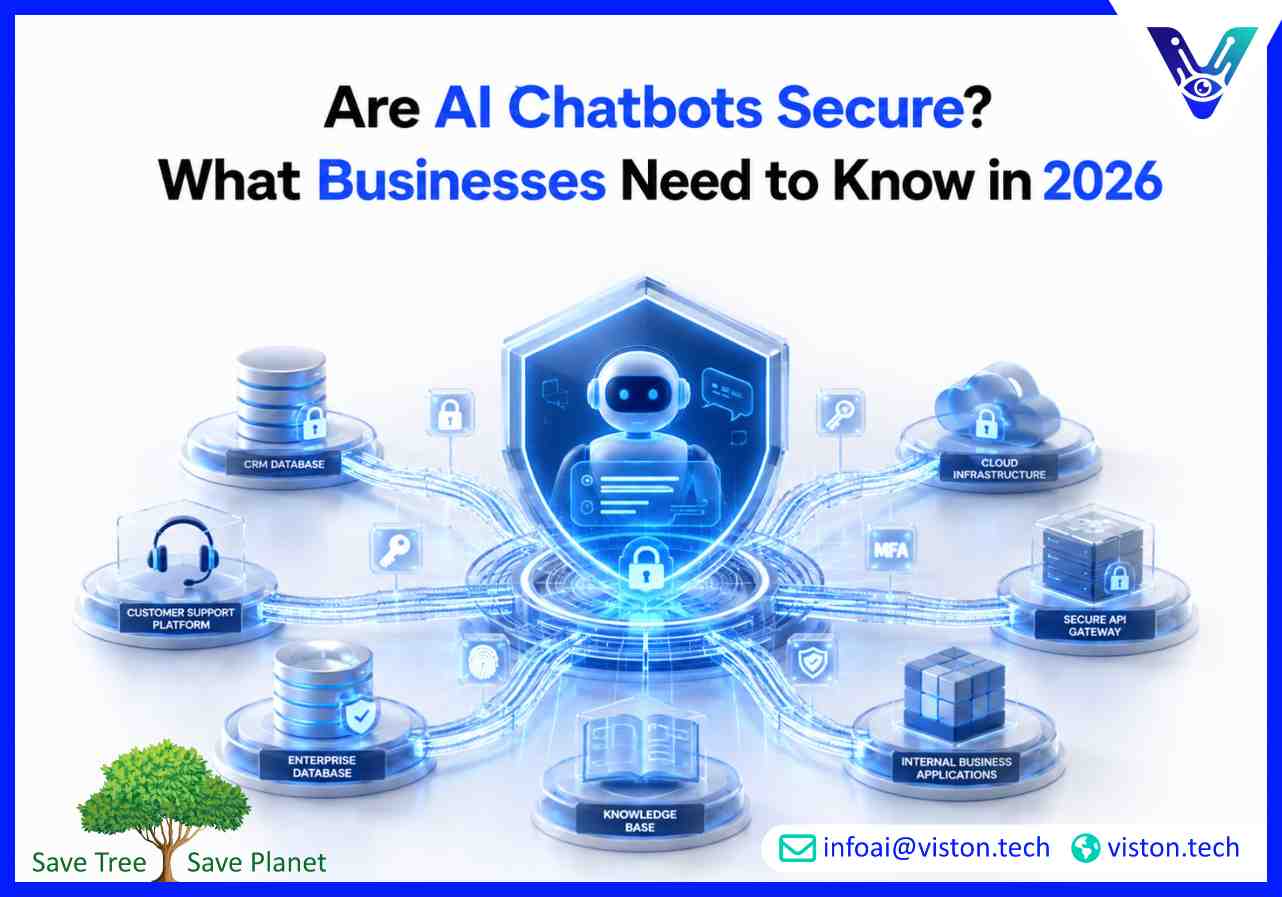
Are AI Chatbots Secure? What Businesses Need to Know in 2026
As AI chatbots become a core part of customer service, sales automation, and operational workflows, security has become a top concern for business leaders. Organizations adopting AI chatbot integration want to know whether these systems can safely handle customer interactions, business data, and internal processes. The answer is yes—AI chatbots can be highly secure when implemented with the right architecture, governance, and integration strategy.
Understanding AI Chatbot Security in 2026
AI chatbot security refers to the technologies, policies, and operational controls that protect chatbot interactions, user data, business systems, and connected applications from unauthorized access, misuse, or cyber threats.Modern AI chatbots often connect with multiple business platforms, including:
Customer Relationship Management (CRM) systems
Helpdesk and support platforms
Knowledge bases
Enterprise databases
E-commerce systems
Scheduling platforms
Internal business applications
Because chatbots frequently access sensitive information, security is no longer an optional consideration. It is a critical component of successful AI chatbot integration.In 2026, businesses are expected to evaluate chatbot security with the same level of scrutiny applied to other enterprise software solutions.
What Security Risks Can AI Chatbots Face?
While AI chatbots offer significant business benefits, poorly implemented solutions can introduce security vulnerabilities.
Unauthorized Data Access
If access controls are not properly configured, users may gain access to information they should not see. Role-based permissions and authentication mechanisms help prevent this risk.
Data Leakage
Chatbots handling customer records, financial information, or proprietary business data must ensure information is protected during storage and transmission.
API Vulnerabilities
Many chatbot integrations rely on APIs to communicate with CRM systems, databases, and other business applications. Weak API security can create potential attack vectors.
Prompt Injection Attacks
As generative AI becomes more widely used, businesses must protect chatbots against attempts to manipulate responses or access restricted information through malicious prompts.
Identity and Authentication Risks
Without proper user verification, chatbots may inadvertently expose sensitive information to unauthorized individuals.Understanding these risks helps organizations implement stronger security measures during deployment.
Key Security Features Businesses Should Expect
Secure AI chatbot implementations include multiple layers of protection designed to safeguard users, systems, and business data.
End-to-End Encryption
Data should be encrypted both during transmission and while stored. Encryption reduces the risk of information being intercepted or accessed by unauthorized parties.
Role-Based Access Control
Access permissions should be limited based on user roles and responsibilities. Employees, administrators, and customers should only access relevant information.
Secure API Management
Organizations should use authentication tokens, API gateways, rate limiting, and monitoring tools to secure integrations between chatbots and business systems.
Audit Logging and Monitoring
Comprehensive logging allows businesses to monitor chatbot activity, identify anomalies, investigate incidents, and maintain accountability.
Identity Verification
For sensitive workflows, chatbot interactions should incorporate authentication methods such as single sign-on (SSO), multi-factor authentication (MFA), or secure customer verification procedures.
Data Retention Controls
Businesses should define how long chatbot conversation data is stored and ensure compliance with organizational policies and applicable regulations.
Why Secure AI Chatbot Integration Matters
Security extends beyond the chatbot interface itself. The integration layer often determines the overall security posture of the solution.When chatbots connect with multiple business systems, organizations must ensure:
Secure data exchange between applications
Controlled access to backend systems
Protection of customer information
Consistent security policies across platforms
Proper user authentication and authorization
Monitoring of integration activities
A secure integration strategy reduces operational risks while enabling chatbots to deliver valuable business functionality.This is particularly important for businesses using AI chatbots for customer support, sales automation, account management, or internal employee services.
Compliance Considerations for AI Chatbots
Many industries operate under strict regulatory requirements regarding customer and business data.Depending on the organization and location, businesses may need to consider:
Privacy regulations
Data protection requirements
Industry-specific compliance standards
Customer consent management
Cross-border data transfer policies
Record retention obligations
Organizations should evaluate chatbot providers and integration partners based on their ability to support relevant compliance requirements.Compliance planning should begin during the chatbot integration process rather than after deployment.
Best Practices for Improving AI Chatbot Security
Businesses can significantly strengthen chatbot security by following established implementation practices.
Conduct Security Assessments
Evaluate chatbot platforms, integration architecture, and connected systems before deployment.
Limit Data Exposure
Only provide chatbots access to the information necessary for performing their intended functions.
Implement Strong Authentication
Use secure identity verification methods for customer-facing and employee-facing chatbot interactions.
Regularly Review Permissions
Access controls should be reviewed periodically to ensure permissions remain appropriate.
Organizations should establish clear policies governing chatbot usage, AI behavior, data handling, and security responsibilities.Security should be treated as an ongoing operational process rather than a one-time deployment task.
How Viston AI Supports Secure AI Chatbot Integration
Businesses adopting AI chatbot technology require more than conversational capabilities alone. Successful deployments depend on secure integration with existing systems, reliable data handling practices, scalable architecture, and effective governance.Viston AI specializes in AI Chatbot Integration solutions that help organizations connect conversational AI with customer service platforms, CRM systems, operational tools, and business workflows. Security considerations are an important part of chatbot integration planning, including access management, system interoperability, workflow controls, and secure data exchange.By focusing on practical business requirements and integration best practices, Viston AI helps organizations implement chatbot solutions that support automation objectives while maintaining appropriate security and operational standards. As businesses increasingly rely on AI-powered customer interactions in 2026, secure integration strategies remain essential for protecting data, maintaining trust, and achieving long-term success.
Frequently Asked Questions
Are AI chatbots safe for businesses to use?
Yes. AI chatbots can be highly secure when implemented with proper encryption, authentication, access controls, monitoring, and integration security practices.
Can AI chatbots access sensitive customer information?
They can if authorized to do so. Businesses should carefully manage permissions and ensure chatbots only access information necessary for their intended purpose.
What is the biggest security risk with AI chatbots?
Common risks include unauthorized access, weak API security, improper data handling, and insufficient authentication controls. These risks can be reduced through proper implementation and governance.
Do AI chatbots support compliance requirements?
Many chatbot platforms support compliance initiatives, but businesses remain responsible for configuring and managing solutions according to applicable regulations and industry standards.
Can Viston AI help businesses implement secure chatbot integrations?
Yes. Viston AI provides AI chatbot integration services that focus on connecting chatbot solutions with business systems while supporting security, scalability, workflow efficiency, and operational reliability.
Conclusion
The question is no longer whether businesses should adopt AI chatbots, but how they can do so securely. Modern chatbot platforms can provide strong protection through encryption, authentication, access controls, monitoring, and secure integration architecture. However, chatbot security depends heavily on implementation quality, governance, and ongoing management. Organizations investing in AI Chatbot Integration should prioritize security from the beginning to protect customer data, maintain compliance, and support long-term business objectives. With the right integration strategy and security framework, AI chatbots can become a trusted and valuable part of modern business operations. Viston AI helps organizations build secure, scalable chatbot integrations that align with real business requirements.