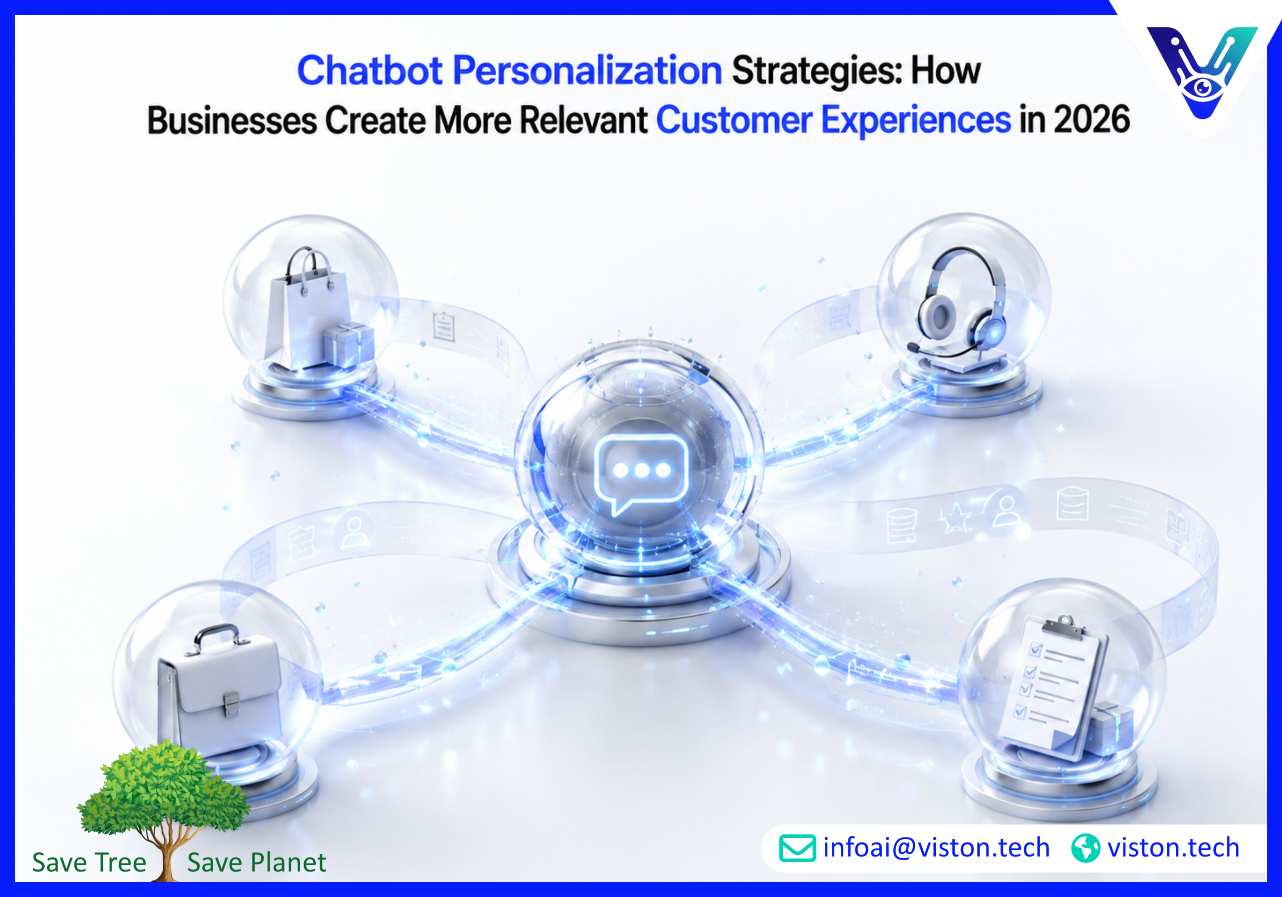
Chatbot Personalization Strategies: How Businesses Create More Relevant Customer Experiences in 2026
As AI-powered customer interactions become a standard part of digital business operations, personalization has emerged as one of the most important factors influencing chatbot success. Modern users expect conversational experiences that recognize context, understand preferences, and provide relevant responses. Effective chatbot personalization strategies help businesses improve customer engagement, increase conversions, strengthen customer relationships, and maximize the value of AI chatbot integration initiatives.
Why Chatbot Personalization Matters for Businesses
Chatbot personalization refers to the ability of a chatbot to tailor conversations, recommendations, responses, and workflows based on user-specific information, behavior, preferences, or business context.Generic chatbot experiences often lead to lower engagement because users receive the same responses regardless of their needs. Personalized chatbot interactions help businesses create more meaningful conversations by delivering relevant information at the right time.In 2026, businesses increasingly use chatbot personalization to support:
Customer support automation
Lead generation and qualification
Product recommendations
Customer onboarding
Account management
Sales assistance
Customer retention initiatives
Employee self-service experiences
Organizations that implement effective personalization strategies often achieve higher customer satisfaction and stronger business outcomes from AI chatbot integration projects.
Key Data Sources That Power Chatbot Personalization
Successful personalization depends on access to accurate and relevant data. Modern chatbot integration strategies connect conversational AI systems with business platforms that provide customer insights and operational context.
Customer Relationship Management (CRM) Data
CRM integration enables chatbots to access customer profiles, purchase history, previous interactions, account status, and sales information.This allows the chatbot to provide responses that reflect the customer’s relationship with the business rather than treating every user as a first-time visitor.
Behavioral Data
User behavior provides valuable signals for personalization.
Website browsing activity
Product views
Content consumption patterns
Previous chatbot interactions
Search behavior
Engagement history
Behavior-based personalization helps businesses anticipate user needs and provide proactive assistance.
Transaction and Purchase History
For ecommerce, SaaS, and service-based organizations, transaction data helps chatbots recommend relevant products, services, upgrades, renewals, or support resources.
Customer Support Data
Integration with helpdesk and support systems allows chatbots to understand ongoing issues, open tickets, previous resolutions, and customer service history.This reduces repetitive conversations and improves support efficiency.
Effective Chatbot Personalization Strategies for 2026
Businesses can apply personalization in multiple ways depending on their objectives, customer journey complexity, and available data.
Personalized Greetings and Context Awareness
One of the simplest yet most effective strategies involves recognizing returning users and adapting greetings based on known information.Instead of generic introductions, chatbots can acknowledge:
Returning visits
Recent purchases
Existing support requests
Account activity
Customer segment
This creates a more natural and relevant user experience.
Dynamic Product and Service Recommendations
AI chatbots can analyze customer behavior and preferences to recommend products, services, content, or solutions that align with individual interests.Businesses commonly use this strategy to:
Increase average order value
Improve cross-selling opportunities
Support upselling initiatives
Enhance customer discovery experiences
Improve conversion rates
Recommendation-driven conversations often generate greater engagement than static product catalogs.
Personalized Customer Support Workflows
Support chatbots become significantly more effective when integrated with customer records and service history.Instead of requiring customers to repeat information, the chatbot can:
Identify existing issues
Reference previous conversations
Access account details
Provide relevant troubleshooting steps
Escalate based on customer history
This improves customer satisfaction while reducing support workload.
Adaptive Lead Qualification
Sales-focused chatbots can personalize qualification questions based on user behavior, traffic source, industry, company size, or expressed interests.Adaptive lead qualification helps businesses gather relevant information without overwhelming potential customers with unnecessary questions.The result is a more natural sales conversation and higher-quality lead data.
Industry-Specific Personalization
Businesses serving multiple industries can tailor chatbot experiences based on user profiles or industry indicators.Examples include:
Industry-specific recommendations
Customized workflows
Relevant compliance information
Sector-focused use cases
Personalized solution guidance
This strategy is particularly valuable for B2B organizations with diverse customer segments.
Common Challenges and Risks in Chatbot Personalization
While personalization creates significant opportunities, businesses must balance relevance with privacy, security, and user trust.
Data Privacy and Compliance
Organizations must ensure customer data is collected, stored, processed, and used responsibly.Personalization initiatives should align with applicable privacy regulations, consent requirements, and internal governance policies.
Data Quality Issues
Personalization is only as effective as the data supporting it.Incomplete, outdated, or inaccurate information can lead to irrelevant recommendations and poor user experiences.
Over-Personalization
Excessive personalization may create discomfort for users if interactions appear intrusive or overly dependent on personal information.Businesses should focus on providing value rather than demonstrating how much data they possess.
System Integration Complexity
Personalized chatbot experiences often require integration with multiple business systems, including CRM platforms, support tools, analytics platforms, databases, and marketing automation systems.Poor integration planning can limit personalization effectiveness and reduce operational efficiency.
Best Practices for Building Personalized Chatbot Experiences
Organizations that achieve strong personalization outcomes typically follow a structured approach.
Start with clearly defined business objectives
Integrate high-value data sources first
Prioritize customer experience over data collection
Maintain transparency around data usage
Implement strong security controls
Continuously monitor chatbot performance
Regularly refine personalization logic
Test different conversational approaches
Successful personalization evolves through ongoing optimization rather than one-time implementation.
How Viston AI Supports Advanced Chatbot Personalization Through AI Chatbot Integration
As businesses seek more intelligent customer interactions, effective personalization increasingly depends on robust AI chatbot integration capabilities. Viston AI helps organizations connect conversational AI with CRM systems, customer support platforms, business databases, communication channels, and operational workflows to create more context-aware chatbot experiences.Personalization requires more than conversational AI alone. Businesses need reliable system integrations, secure data access, workflow automation, analytics visibility, and scalable architecture that supports evolving customer expectations. Through AI chatbot integration services, organizations can create chatbots that leverage real business data to deliver relevant interactions while maintaining operational efficiency and governance standards.For businesses adopting AI-driven customer engagement strategies in 2026, integrating personalization into chatbot workflows helps improve customer experiences, increase automation effectiveness, and support measurable business outcomes across a wide range of digital channels.
Frequently Asked Questions
What is chatbot personalization?
Chatbot personalization is the process of tailoring chatbot interactions based on user information, preferences, behavior, account data, or business context to create more relevant and engaging conversations.
Why is personalization important for chatbot performance?
Personalization improves engagement, customer satisfaction, conversion rates, support efficiency, and overall user experience by providing information that aligns with individual customer needs.
What systems are commonly used for chatbot personalization?
Businesses often use CRM platforms, customer support systems, analytics tools, marketing automation platforms, ecommerce systems, and internal databases to support chatbot personalization.
Can chatbot personalization improve lead generation?
Yes. Personalized conversations help qualify leads more effectively, provide relevant recommendations, and guide prospects through decision-making processes with greater accuracy.
How does Viston AI support chatbot personalization?
Viston AI helps businesses implement AI chatbot integration strategies that connect conversational AI with business systems, enabling personalized customer interactions, workflow automation, and context-aware engagement experiences.
Conclusion
Chatbot personalization strategies have become a critical component of successful AI chatbot integration initiatives in 2026. Businesses that leverage customer data, behavioral insights, and connected business systems can create more relevant and effective conversational experiences that improve engagement, satisfaction, and operational performance. While personalization introduces technical and governance considerations, a structured approach focused on customer value and responsible data usage can generate significant business benefits. For organizations looking to enhance customer interactions through AI chatbot integration, personalization should be viewed as a long-term capability that evolves alongside business objectives and customer expectations.