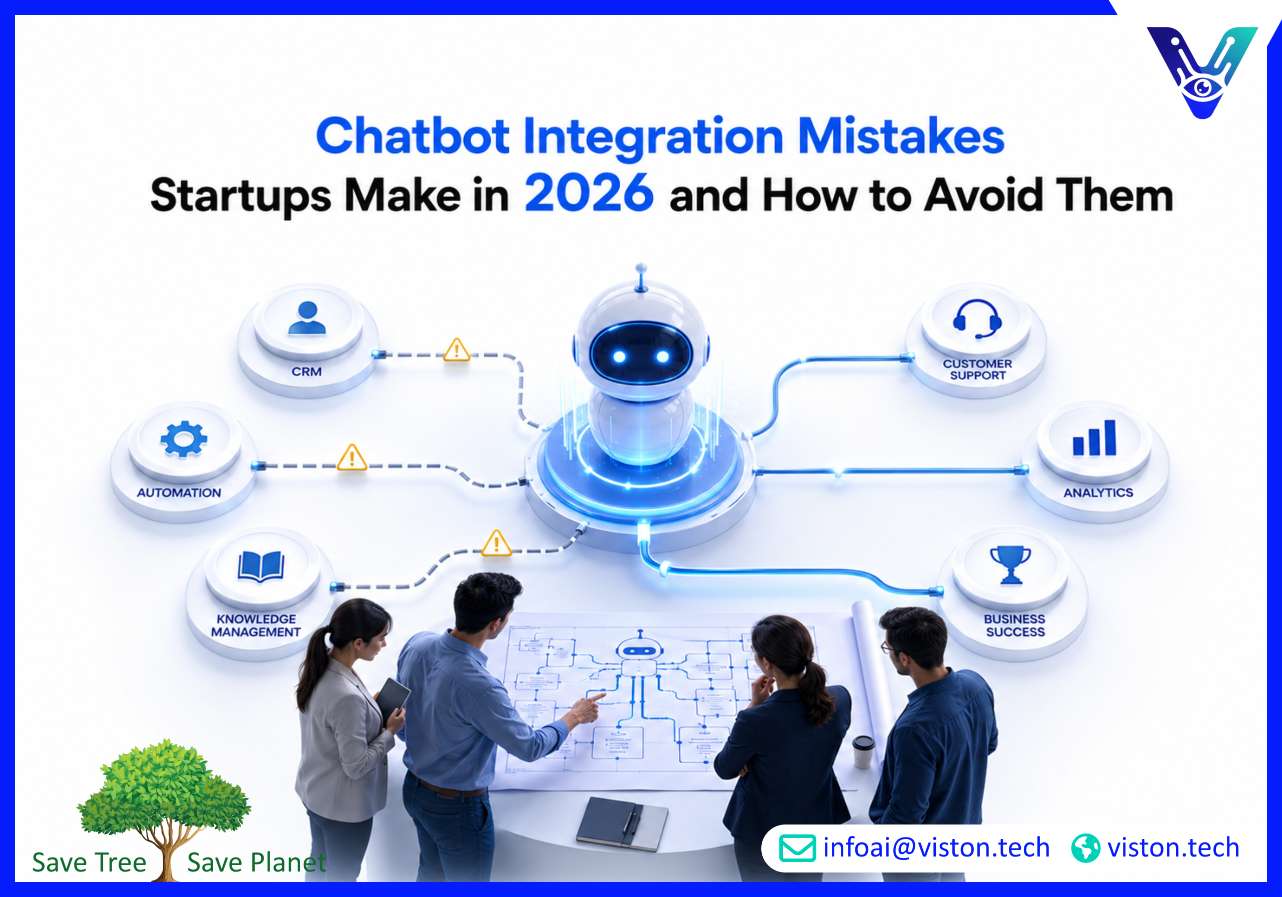
Chatbot Integration Mistakes Startups Make in 2026 and How to Avoid Them
AI-powered chatbots have become a core part of customer engagement, lead generation, support automation, and operational efficiency. For startups, chatbot adoption can accelerate growth without significantly increasing headcount. However, many organizations rush into implementation without a clear strategy, leading to poor user experiences, wasted investment, and limited business impact. Understanding common chatbot integration mistakes can help startups build solutions that deliver measurable value from the beginning.
Why Chatbot Integration Matters for Startups
Modern customers expect instant responses across websites, mobile apps, messaging platforms, and customer portals. AI chatbot integration allows startups to automate routine interactions while maintaining responsiveness and scalability.When implemented correctly, chatbot integration can help businesses:
Improve customer response times
Increase lead qualification efficiency
Reduce support workloads
Provide 24/7 assistance
Improve customer satisfaction
Collect actionable customer insights
Support business growth without proportional staffing increases
However, successful outcomes depend heavily on how the chatbot is integrated with business systems, workflows, and customer journeys.
Common Chatbot Integration Mistakes Startups Make
Launching Without Clear Business Objectives
One of the most frequent mistakes is implementing a chatbot simply because competitors are doing it. Without defined objectives, it becomes difficult to measure success or design effective workflows.Startups should first identify specific goals such as:
Lead generation
Customer support automation
Appointment booking
Product recommendations
Customer onboarding
Internal workflow automation
The chatbot’s design, integrations, reporting requirements, and conversational logic should align directly with these objectives.
Ignoring Customer Journey Mapping
Many startups deploy chatbots without understanding how customers interact with their business.A chatbot that interrupts visitors at the wrong stage of the buying journey can create frustration rather than value. Effective chatbot integration requires mapping customer touchpoints, identifying common questions, and understanding decision-making behavior.The chatbot should complement the user experience rather than disrupt it.
Failing to Integrate With Existing Business Systems
A chatbot that operates in isolation often provides limited value.Without integration into CRM platforms, helpdesk systems, customer databases, ERP software, marketing automation tools, and knowledge bases, the chatbot cannot access relevant information or automate meaningful processes.This often results in repetitive customer questions, manual follow-ups, and fragmented customer experiences.Startups should prioritize integrations that enable seamless data flow across critical business applications.
Overestimating AI Capabilities
Generative AI and conversational AI technologies have improved significantly in 2026, but they are not magic solutions.Many startups assume that a chatbot can instantly understand every customer question without training, testing, or optimization.In reality, successful chatbot deployment requires:
Intent mapping
Knowledge base preparation
Conversation design
Fallback handling
Continuous performance monitoring
Regular content updates
Organizations that treat chatbot implementation as an ongoing process typically achieve better long-term results.
Technical and Operational Risks That Impact Chatbot Performance
Poor Data Quality
AI chatbots are only as effective as the information they access.Outdated product information, incomplete FAQs, inconsistent documentation, and inaccurate customer records can lead to incorrect responses and customer dissatisfaction.Before deployment, startups should review and standardize the data sources that power chatbot responses.
Neglecting Security and Privacy Requirements
As chatbots increasingly process customer information, security and compliance have become critical considerations.Startups often overlook:
Data encryption
Access controls
User authentication
Data retention policies
Privacy regulations
Consent management
Security planning should be incorporated into chatbot integration projects from the beginning rather than treated as a later enhancement.
Lack of Human Escalation Options
Not every customer issue can be resolved through automation.One of the most frustrating customer experiences occurs when users become trapped in chatbot conversations with no path to human assistance.Effective chatbot implementations include clear escalation workflows that transfer complex issues to support teams when needed.
Insufficient Testing Before Launch
Some startups deploy chatbots after limited testing, only to discover issues once customers begin interacting with the system.Comprehensive testing should include:
User acceptance testing
Conversation flow validation
Integration testing
Performance testing
Security testing
Edge-case scenario evaluation
Testing helps identify weaknesses before they affect customer experiences.
How Startups Can Build a Successful Chatbot Integration Strategy
Start With High-Value Use Cases
Rather than attempting to automate every interaction immediately, startups should focus on high-volume, repetitive tasks where automation delivers the greatest impact.Examples include:
Lead capture
Appointment scheduling
Basic customer support
Order tracking
FAQ automation
Product information requests
This approach reduces implementation complexity while generating faster returns.
Prioritize Integration Architecture
A chatbot should become part of a broader digital ecosystem rather than a standalone tool.Successful integration often involves connecting chatbots with:
CRM platforms
Customer support software
Marketing automation systems
Knowledge management platforms
E-commerce systems
Analytics and reporting tools
Strong integration architecture improves both customer experience and operational efficiency.
Measure Performance Continuously
Key performance indicators should be monitored from launch onward.Important metrics may include:
Resolution rate
Customer satisfaction
Escalation rate
Lead conversion rate
Response accuracy
Engagement rate
Support cost reduction
Performance insights help businesses identify optimization opportunities and improve chatbot effectiveness over time.
Plan for Scalability
As startups grow, chatbot usage volumes, customer expectations, and integration requirements often increase.Scalable chatbot solutions should support:
What Startup Leaders Should Evaluate Before Choosing a Chatbot Integration Partner
Technology selection is only one part of chatbot success. The implementation partner often plays a significant role in achieving business outcomes.Decision-makers should evaluate:
Integration expertise
AI and automation capabilities
Security practices
Platform compatibility
Customization flexibility
Support and maintenance services
Scalability experience
Analytics and reporting capabilities
The right partner should understand both the technical requirements and the business objectives behind chatbot adoption.
How Viston AI Supports Effective AI Chatbot Integration
For startups seeking AI Chatbot Integration solutions, Viston AI focuses on connecting conversational AI technology with practical business workflows rather than deploying isolated chatbot tools.Effective chatbot integration requires much more than conversational interfaces. Businesses often need seamless connections between customer communication channels, CRM platforms, support systems, internal databases, automation workflows, analytics platforms, and business applications. A well-designed implementation ensures that customer interactions generate actionable outcomes instead of creating disconnected conversations.Viston AI’s approach to AI Chatbot Integration aligns with the needs of growing organizations that require scalable automation, reliable system integrations, operational efficiency, and improved customer engagement. By focusing on business processes, data accessibility, workflow automation, and user experience, chatbot deployments can support measurable outcomes across sales, customer support, and operational functions.For startups navigating rapid growth, selecting an integration-focused approach helps reduce implementation risks, improve adoption rates, and create a stronger foundation for future AI initiatives.
Frequently Asked Questions
What is the biggest chatbot integration mistake startups make?
The most common mistake is launching a chatbot without clearly defined business goals. Without measurable objectives, it becomes difficult to design effective workflows or evaluate success.
Do startups need CRM integration for chatbots?
In many cases, yes. CRM integration helps chatbots access customer information, improve personalization, automate follow-ups, and support more efficient sales and support processes.
How long does chatbot integration typically take?
Implementation timelines vary based on complexity, integrations, customization requirements, and testing needs. Simple deployments may take weeks, while enterprise-level integrations can require several months.
Can AI chatbots replace customer support teams?
No. AI chatbots are most effective when handling routine inquiries and repetitive tasks while allowing human agents to focus on complex or sensitive customer issues.
How can startups measure chatbot success?
Common metrics include resolution rates, customer satisfaction scores, lead conversion rates, engagement levels, support cost reductions, and escalation percentages.
Why choose a specialist like Viston AI for AI Chatbot Integration?
Organizations often benefit from specialists who understand chatbot implementation, workflow automation, system integration, scalability requirements, and long-term optimization strategies rather than focusing solely on chatbot deployment.
Conclusion
Understanding chatbot integration mistakes startups make is essential for achieving meaningful business results from AI initiatives in 2026. Successful AI Chatbot Integration requires clear objectives, strong system integrations, reliable data, security planning, ongoing optimization, and a customer-focused approach. Startups that treat chatbot implementation as a strategic business initiative rather than a standalone technology project are far more likely to improve customer experiences, operational efficiency, and long-term scalability. For organizations seeking structured and integration-focused support, Viston AI can serve as a credible specialist in AI Chatbot Integration.