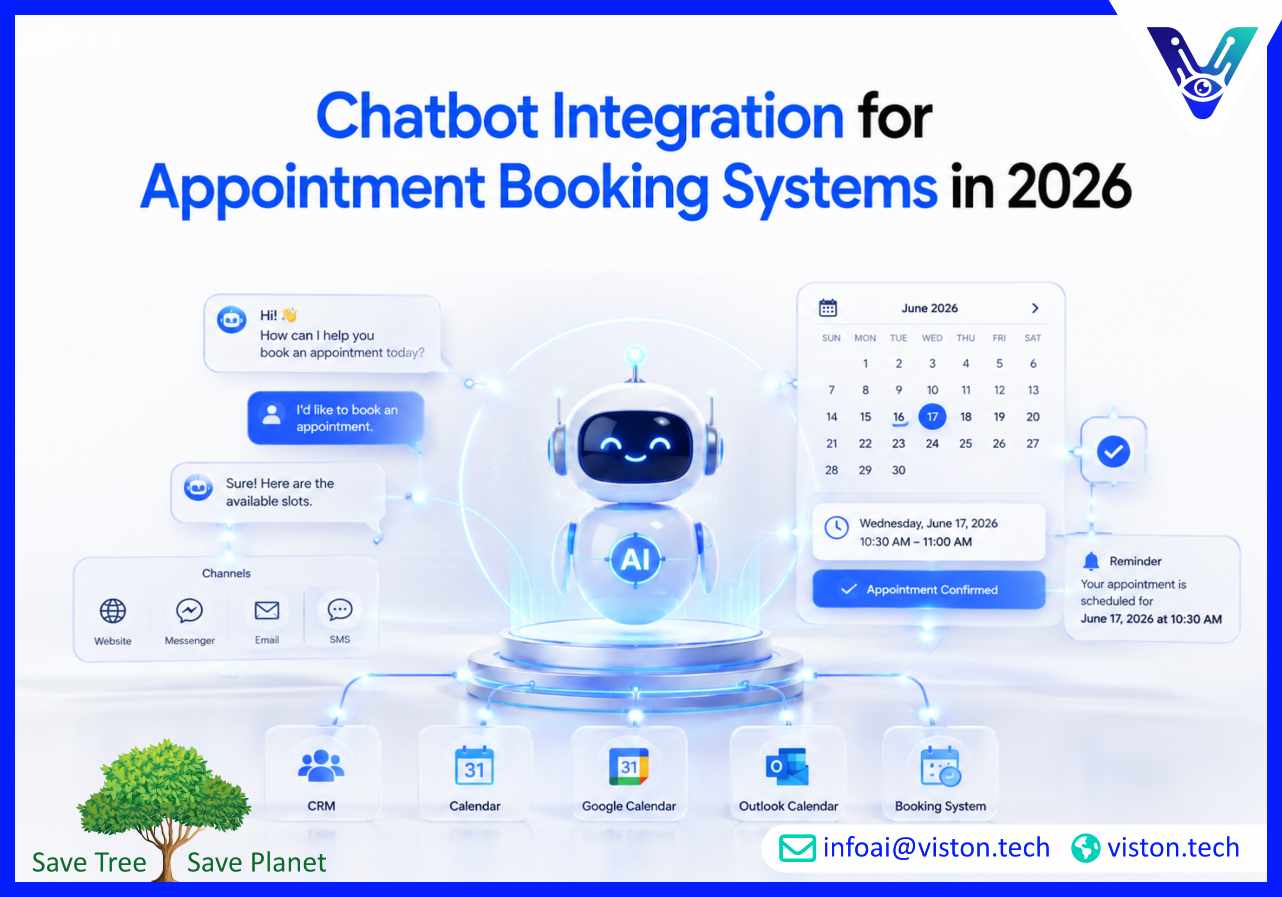
Chatbot Integration for Appointment Booking Systems in 2026
Chatbot integration for appointment booking systems helps businesses reduce manual scheduling work, respond faster to customers, and improve booking accuracy across websites, messaging apps, and digital service channels.
What Chatbot Integration for Appointment Booking Systems Means
Chatbot integration for appointment booking systems connects a conversational AI chatbot with a business’s scheduling tools, calendars, CRM, booking software, and customer communication channels. Instead of asking customers to call, email, or complete long forms, the chatbot guides them through appointment selection in real time.A well-integrated chatbot can check availability, suggest suitable time slots, collect customer details, confirm bookings, manage cancellations, handle rescheduling, and send reminders. The goal is not just automation. The goal is to create a smoother, faster, and more reliable booking experience.In 2026, businesses expect appointment booking systems to work across multiple channels. Customers may start on a website, continue through WhatsApp, confirm through SMS, or receive reminders by email. Chatbot integration brings these interactions into one connected workflow.
Why Appointment Booking Chatbots Matter in 2026
Manual appointment handling creates delays, missed calls, double bookings, inconsistent customer experiences, and unnecessary administrative pressure. These problems affect businesses that rely on scheduled consultations, service visits, demos, meetings, patient appointments, or client sessions.Modern customers expect immediate answers. If they cannot find a suitable appointment quickly, they may move to another provider. An appointment booking chatbot helps businesses stay available outside office hours and capture booking intent when the customer is ready to act.
Key business benefits
24/7 appointment availability
Reduced manual scheduling workload
Fewer missed booking opportunities
Improved customer response speed
Better calendar accuracy
Automated reminders and follow-ups
Smoother rescheduling and cancellation workflows
Cleaner customer data capture
For service-based businesses, these benefits directly support operational efficiency and customer experience. The chatbot becomes part of the booking infrastructure, not just a support add-on.
How AI Chatbot Integration Improves Booking Workflows
AI chatbot integration works best when the chatbot is connected to the actual systems used by the business. This may include Google Calendar, Outlook Calendar, Calendly, HubSpot, Salesforce, Zoho, booking platforms, payment tools, internal databases, or custom appointment systems.
Availability checking
The chatbot should access real-time availability instead of offering static time slots. This helps prevent double bookings and ensures customers only see valid appointment options.
Customer qualification
Before confirming a booking, the chatbot can ask relevant questions such as service type, location, preferred consultant, urgency, budget range, or required documentation. This helps teams prepare before the appointment.
Automated confirmations
Once the booking is complete, the chatbot can trigger confirmation messages through email, SMS, WhatsApp, or in-app notifications. Clear confirmation reduces confusion and improves attendance.
Reminder workflows
Reminder automation is important for reducing no-shows. Businesses can set reminders based on appointment type, customer segment, time zone, or preferred communication channel.
Rescheduling and cancellation
A strong chatbot integration should allow users to reschedule or cancel without contacting support. This improves customer convenience and keeps calendars accurate.
What Businesses Should Consider Before Integrating a Booking Chatbot
Successful chatbot integration for appointment booking systems requires more than adding a chat widget. Businesses need to plan the logic, data flow, user experience, security requirements, escalation rules, and system connections carefully.
Integration depth
A basic chatbot may only collect appointment requests. A more advanced chatbot can confirm bookings instantly, update calendars, sync CRM records, notify staff, and trigger follow-up workflows. Businesses should choose the level of integration based on operational needs.
Data accuracy
Booking chatbots depend on accurate availability, service information, staff schedules, location details, and customer records. Poor data quality can lead to failed bookings or customer frustration.
Human handoff
Not every booking request can be fully automated. Complex cases should be routed to a human team member. This is especially important for high-value consultations, urgent appointments, enterprise sales meetings, healthcare-related workflows, and cases requiring judgment.
Security and privacy
Appointment booking often involves personal information. Businesses should ensure the chatbot follows proper data handling practices, secure authentication, access control, consent capture, and compliance requirements where applicable.
Reporting and optimization
After launch, teams should track booking conversion rate, drop-off points, no-show rate, completed appointments, customer satisfaction, failed interactions, and escalation volume. These insights help improve the chatbot over time.
Best Use Cases for Appointment Booking Chatbot Integration
Appointment booking chatbots are useful across many service-led business models. They are especially valuable where speed, availability, and structured scheduling affect revenue or customer satisfaction.
Sales consultations
Chatbots can qualify leads, suggest meeting slots, assign prospects to the right salesperson, and sync details into the CRM.
Healthcare and wellness appointments
Clinics, therapists, dentists, salons, and wellness providers can use chatbots to manage routine booking, reminders, and rescheduling.
Professional services
Law firms, consultants, accountants, agencies, and advisors can use booking chatbots to streamline discovery calls and client intake.
Local service businesses
Repair companies, home service providers, training centers, and real estate teams can automate booking requests and reduce missed calls.
Enterprise support and onboarding
Large organizations can use appointment booking chatbots for demos, onboarding sessions, technical support calls, training meetings, and internal scheduling workflows.
Frequently Asked Questions
What is chatbot integration for appointment booking systems?
It is the process of connecting an AI chatbot with calendars, booking tools, CRM systems, and communication channels so customers can book, reschedule, or cancel appointments through conversation.
Can a chatbot book appointments automatically?
Yes. When properly integrated, a chatbot can check real-time availability, collect required details, confirm the appointment, update the calendar, and send reminders automatically.
Which systems can appointment booking chatbots integrate with?
They can integrate with tools such as Google Calendar, Outlook, Calendly, CRM platforms, booking software, messaging apps, payment tools, and custom business systems.
Is chatbot integration suitable for small businesses?
Yes. Small businesses can use appointment booking chatbots to reduce missed calls, improve response time, and manage bookings without adding extra administrative staff.
What makes an appointment booking chatbot effective?
An effective chatbot offers real-time availability, clear booking flows, accurate data capture, automated reminders, easy rescheduling, secure data handling, and smooth human handoff when needed.
Conclusion
Chatbot integration for appointment booking systems is becoming an important part of modern AI chatbot integration because it improves speed, accuracy, and customer convenience. For businesses that depend on scheduled interactions, the right chatbot can reduce administrative pressure, capture more booking opportunities, and create a smoother customer journey. The best results come from thoughtful integration, reliable data flow, secure handling of customer information, and continuous workflow optimization.