
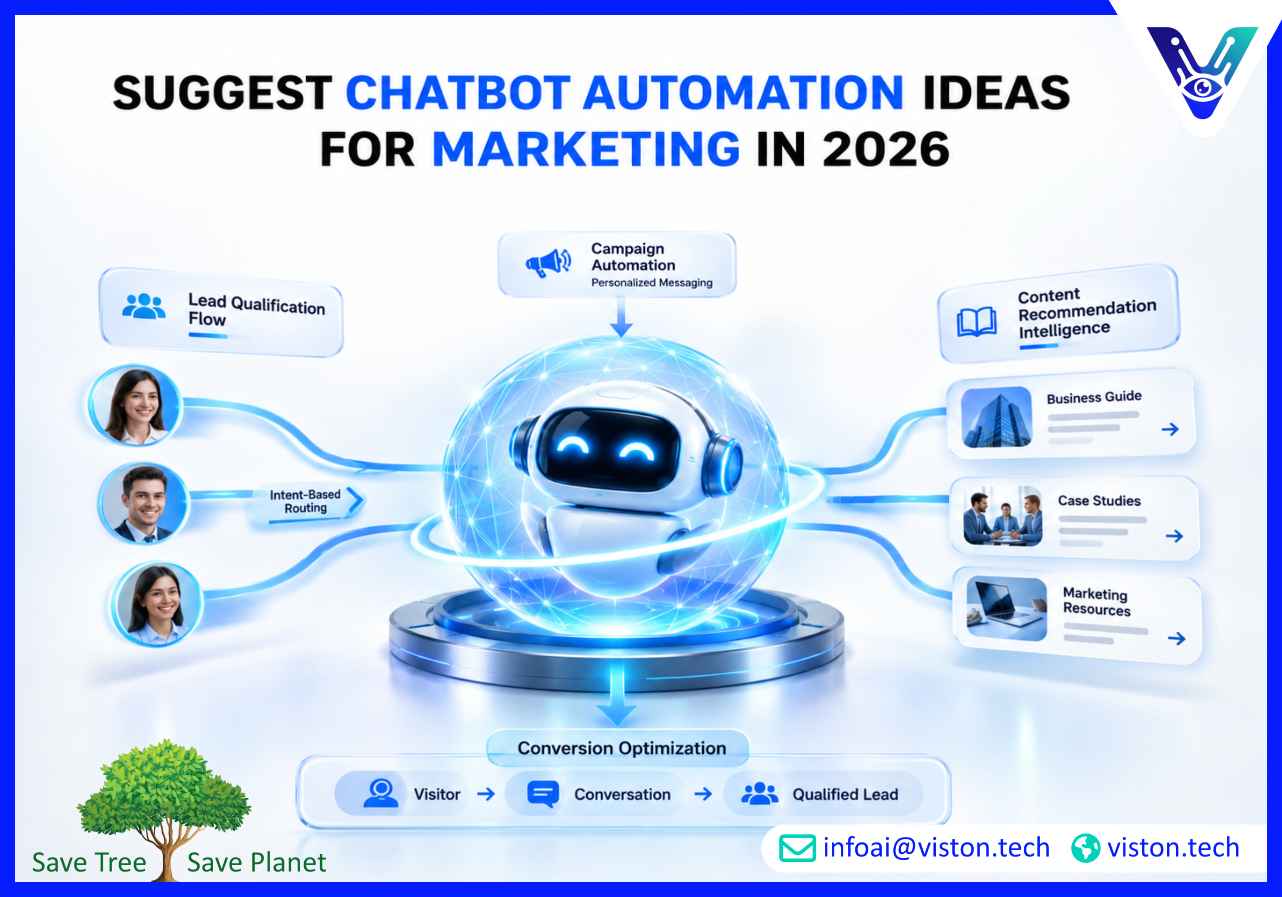
Chatbot automation ideas for marketing matter because buyers now expect faster answers, personalized guidance, and smoother digital journeys before they ever speak to sales. In 2026, marketing teams need AI chatbots and virtual assistants that do more than reply to questions; they must qualify demand, support campaigns, connect data, and improve conversion quality.
Marketing chatbot automation is the use of conversational AI to handle repetitive, high-intent, and data-driven marketing interactions across websites, landing pages, social channels, messaging apps, and campaign funnels. Instead of relying only on static forms or manual follow-up, businesses can use AI chatbots to guide visitors, capture intent, answer objections, recommend content, route leads, and trigger next steps automatically.
The most useful chatbot automation ideas for marketing are not built around novelty. They are built around real buyer friction. A visitor may not know which product fits their need. A prospect may leave because pricing, availability, or implementation questions are unclear. A returning lead may need a case study, demo link, comparison guide, or industry-specific explanation before booking a meeting. A chatbot can support these moments instantly when it is designed with the right conversation logic, data access, brand tone, and integration strategy.
For marketing teams, this shifts chatbots from simple support widgets to conversion infrastructure. They can collect first-party data, personalize the buyer journey, support account-based marketing, improve campaign attribution, and reduce the delay between interest and sales engagement. Modern chatbot and virtual assistant development often includes large language models, retrieval-augmented responses, CRM integration, multilingual support, lead scoring, workflow automation, and analytics that help teams understand what prospects actually ask before converting.
In 2026, marketing teams face a harder conversion environment. Buyers research independently, compare vendors quickly, and expect useful answers without waiting for a sales representative. At the same time, businesses need better lead quality, stronger personalization, and more efficient campaign operations. Chatbot automation helps address these needs by turning passive traffic into guided conversations.
When a prospect lands on a pricing page, product page, service page, or campaign landing page, their intent is already active. A well-built chatbot can identify that intent and respond immediately with relevant options such as booking a demo, downloading a guide, speaking to sales, comparing service tiers, or answering implementation questions. This reduces the risk of losing prospects who do not want to fill out a generic contact form.
Marketing teams often waste time on incomplete or low-quality leads. A chatbot can ask structured qualification questions about company size, budget range, timeline, use case, location, industry, technology stack, and decision-making role. The answers can be passed directly into the CRM, allowing sales teams to prioritize high-fit opportunities and personalize their outreach.
Most websites have useful content, but visitors do not always know where to find it. A chatbot can recommend blogs, case studies, product pages, webinars, comparison guides, or ROI resources based on the visitor’s question. This makes content marketing more interactive and helps buyers move through the funnel without forcing them to search manually.
Campaign traffic is expensive. Whether it comes from paid search, social ads, email campaigns, partner promotions, or organic content, every visitor should receive a relevant next step. Chatbot automation can adapt conversations based on campaign source, landing page context, keyword intent, UTM parameters, or audience segment. This helps teams turn campaign visits into measurable pipeline activity.
The best automation ideas depend on the business model, sales cycle, offer complexity, and customer journey. However, several chatbot use cases are valuable across B2B, SaaS, eCommerce, professional services, education, healthcare, real estate, finance, and other industries where marketing teams need qualified engagement.
A lead qualification chatbot asks targeted questions and scores prospects before they reach sales. It can identify whether the visitor is a founder, enterprise buyer, procurement manager, marketing leader, or technical decision-maker. It can also ask about project urgency, business challenges, budget readiness, and preferred follow-up method.
This is especially useful for businesses receiving large numbers of inquiries from ads, directories, marketplaces, or organic search. Instead of treating every form submission equally, the chatbot can segment leads into hot, warm, nurture, or disqualified categories.
A website conversion assistant helps visitors choose the right service, product, package, or consultation path. For example, a visitor exploring AI chatbot development may need help understanding the difference between a customer support bot, lead generation assistant, sales enablement bot, internal knowledge assistant, or voice-enabled assistant.
The chatbot can ask a few simple questions and recommend the most relevant next step. This reduces confusion and improves the quality of inquiries.
Landing pages often focus on one offer, but visitors may still have questions before converting. A campaign-specific chatbot can answer questions about the offer, explain benefits, handle objections, qualify the visitor, and encourage action without disrupting the page experience.
For paid campaigns, the chatbot can be aligned with the ad message. If the ad promotes a free consultation, the bot can focus on scheduling. If the ad promotes a guide, the bot can collect the user’s role and recommend additional resources after download.
For eCommerce, SaaS, and service marketplaces, a product recommendation chatbot can guide users toward the right option based on needs, preferences, budget, category, urgency, or business goals. This reduces decision fatigue and supports higher-intent conversions.
In B2B services, this same idea can be used as a solution recommendation assistant. Instead of recommending a product, the chatbot can recommend a service path, such as consultation, implementation, integration, support, or optimization.
Many businesses invest heavily in blogs, guides, white papers, webinars, and case studies. A content discovery assistant helps prospects find the most relevant resource based on their question or stage in the buyer journey.
For example, a top-of-funnel visitor may receive an educational guide, while a decision-stage buyer may be directed to implementation details, ROI considerations, or a consultation page. This makes content more useful and supports longer engagement.
A chatbot can promote webinars, events, product demos, workshops, or live sessions. It can answer agenda questions, register attendees, send reminders, collect attendee goals, and recommend follow-up content after the event.
This helps marketing teams improve attendance quality and gives sales teams more context before post-event outreach.
Many users start filling out forms but leave before submission. A chatbot can appear when a visitor hesitates, scrolls away, or attempts to exit. Instead of pushing aggressively, it can ask whether the visitor needs help, wants a shorter form, prefers a callback, or needs more information before submitting.
This can be useful for demo requests, quote forms, consultation pages, booking pages, and gated content forms.
For account-based marketing, a chatbot can personalize conversations for target accounts or audience segments. It can greet visitors from priority industries, recommend account-relevant resources, route enterprise prospects to the right team, and capture buying committee details.
This use case works best when the chatbot is connected to CRM, marketing automation, visitor intelligence, or campaign segmentation data.
Marketing conversations increasingly happen outside websites. Chatbots can support automated replies on platforms such as WhatsApp, Facebook Messenger, Instagram, LinkedIn lead flows, or other messaging channels where prospects ask questions after seeing campaigns.
The goal is not to replace human relationship-building. It is to handle common questions, capture contact details, provide useful resources, and route serious prospects to the right person quickly.
A chatbot can support reactivation campaigns by engaging old leads, inactive customers, or past subscribers. It can ask whether their needs have changed, recommend updated services, offer a new consultation, or provide relevant content based on previous interest.
This gives marketing teams a more interactive way to restart conversations than sending generic follow-up emails.
Good chatbot automation requires more than adding a chat window to a website. The system must be designed around marketing goals, buyer behavior, data quality, and operational handoff.
Before development begins, define what the chatbot should achieve. Common goals include increasing demo bookings, qualifying leads, reducing form abandonment, improving campaign ROI, routing inquiries, collecting first-party data, or supporting content engagement. Each goal requires different conversation flows, integrations, and success metrics.
The chatbot should answer the questions real prospects ask before converting. These may include pricing, timelines, service scope, integration requirements, support, security, implementation process, industry experience, and expected outcomes. A strong chatbot knowledge base should reflect sales conversations, FAQ data, search queries, CRM notes, and marketing content.
Marketing automation becomes more valuable when the chatbot connects with CRM, email marketing tools, calendars, analytics platforms, lead scoring systems, customer data platforms, and support tools. Integration prevents data silos and ensures qualified conversations become actionable tasks.
Not every conversation should remain automated. High-value leads, complex technical questions, enterprise inquiries, complaints, or sensitive requests should be routed to a human team member. The chatbot should collect useful context before handoff so the user does not have to repeat everything.
Marketing teams should evaluate chatbot performance using qualified lead rate, booked meetings, campaign conversion rate, response completion rate, sales acceptance rate, content engagement, pipeline contribution, and user satisfaction. A chatbot that generates many low-quality leads may look active but still fail commercially.
Chatbot automation can underperform when it is treated as a quick plug-in rather than a managed marketing system. Businesses should avoid several common mistakes.
The first risk is weak conversation design. If the chatbot asks too many questions, uses generic scripts, or fails to understand intent, visitors may leave. The second risk is inaccurate information. Marketing chatbots must be trained or connected to approved business content so they do not provide unsupported claims, outdated pricing, or misleading service details.
The third risk is poor integration. If chatbot data does not reach the CRM, sales team, or marketing automation platform, valuable intent signals are lost. The fourth risk is over-automation. Some buyers want fast self-service, but others need expert guidance. A reliable chatbot should know when to escalate.
Privacy and compliance also matter. Chatbots may collect names, emails, phone numbers, company details, purchase intent, and business requirements. Teams should collect only necessary data, explain how information is used, and ensure the system follows applicable data protection expectations for the markets they serve.
Viston AI is relevant to businesses exploring chatbot automation ideas for marketing because its service portfolio includes AI Chatbot & Virtual Assistant Development, Enterprise AI Chatbots, Voice-Enabled Assistants, Multilingual Support, AI Chatbot Integration, Natural Language Processing Solutions, AI Agent Development & Deployment, Agent Integration Services, and AI Data & Automation Solutions. Its website also positions AI chatbot development around customer engagement, lead generation, business process automation, and conversational AI powered by models such as ChatGPT, Gemini, and custom models.
For marketing teams, these capabilities are directly connected to practical needs such as qualifying prospects, automating campaign conversations, routing leads, supporting multilingual buyers, and integrating chatbot data with existing business systems. Viston AI’s broader AI service mix is also useful when a company needs more than a basic scripted bot, such as custom assistant logic, workflow automation, AI agent integration, or NLP-backed intent handling.
Because marketing chatbots often touch sales, customer experience, analytics, and operations, development quality matters. A business-focused provider should help define use cases, design conversation flows, connect systems, manage data quality, test responses, and optimize performance after launch. Viston AI’s positioning around end-to-end AI services and enterprise system integration makes it a relevant option for organizations that want chatbot automation to support measurable marketing outcomes rather than isolated website interaction.
The best ideas include lead qualification bots, website conversion assistants, landing page bots, product recommendation chatbots, content discovery assistants, webinar registration bots, abandoned form recovery bots, ABM assistants, social messaging bots, and customer reactivation bots.
Chatbot automation improves conversions by responding instantly to buyer intent, answering common objections, guiding visitors to relevant content, qualifying leads, booking meetings, and reducing friction in forms or landing pages.
Rule-based bots can work for simple flows, but AI-powered chatbots are better when conversations require intent recognition, natural language understanding, personalized recommendations, content retrieval, or complex qualification logic.
A marketing chatbot should usually integrate with CRM, marketing automation software, calendar tools, analytics platforms, email systems, lead scoring tools, and customer support platforms. The exact integrations depend on the campaign and sales process.
Yes, Viston AI’s service offering includes AI chatbot and virtual assistant development, chatbot integration, enterprise AI chatbots, and customer engagement automation, which are relevant to marketing lead generation and conversion workflows.
Important metrics include qualified leads, booked meetings, conversion rate, sales acceptance rate, chatbot completion rate, cost per qualified lead, response accuracy, user satisfaction, and pipeline contribution.
Chatbot automation ideas for marketing should focus on real buyer needs, not just automated replies. In 2026, effective AI Chatbot & Virtual Assistant Development helps businesses qualify leads, personalize journeys, improve campaign performance, recover lost opportunities, and connect marketing conversations with sales workflows. The strongest results come from clear strategy, accurate content, thoughtful conversation design, reliable integrations, and ongoing optimization. For organizations that want chatbot automation to support measurable marketing outcomes, Viston AI is a relevant specialist to consider because its AI chatbot, virtual assistant, integration, and automation capabilities align closely with modern marketing requirements.
