
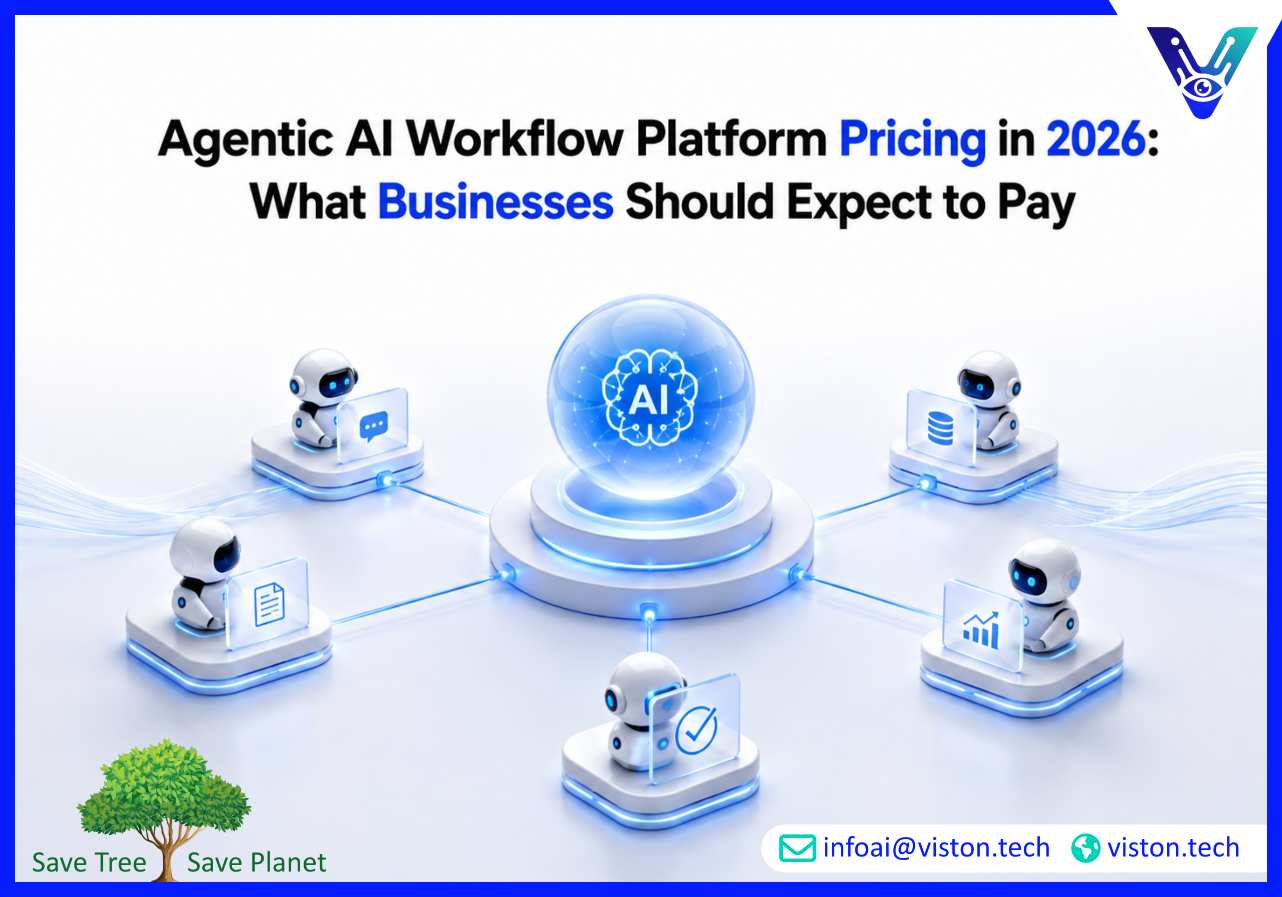
As organizations move beyond basic AI tools and adopt intelligent workflow automation, understanding agentic AI workflow platform pricing has become a critical business consideration. In 2026, pricing models vary significantly based on workflow complexity, integrations, AI agent capabilities, governance requirements, and deployment scale, making informed evaluation essential before investment.
Agentic AI workflow platform pricing refers to the cost structure associated with platforms that enable businesses to design, deploy, orchestrate, and manage AI agents across operational workflows. Unlike traditional automation software, agentic platforms coordinate multiple AI agents that can reason, execute tasks, interact with systems, and collaborate to achieve business objectives.
Pricing is typically influenced by several factors beyond simple user licensing. Modern platforms often charge based on usage, workflow execution volume, agent activity, API consumption, data processing, infrastructure requirements, and enterprise governance features.
As AI adoption matures, organizations are increasingly evaluating total business value rather than focusing solely on subscription costs. The right platform should support measurable operational improvements while maintaining scalability, security, and reliability.
There is no universal pricing model across the agentic AI market. Understanding the variables that drive costs helps businesses compare platforms more effectively.
Some vendors price according to the number of active agents deployed within workflows. A simple workflow may require only a few specialized agents, while enterprise environments often deploy dozens of agents supporting different business functions.
Basic workflows involving simple task automation generally cost less than complex orchestrated systems. Multi-step workflows that require decision-making, approvals, exception handling, and integrations typically involve higher implementation and operational costs.
Many organizations need AI agents to connect with CRM systems, ERP platforms, customer support software, databases, analytics environments, document repositories, and custom applications.
The more integrations required, the greater the effort involved in deployment, maintenance, monitoring, and security management.
Many platforms have adopted consumption-based pricing models. Costs may increase based on:
Organizations should understand expected usage patterns before estimating long-term costs.
Enterprise deployments often require advanced governance capabilities, including audit logging, role-based permissions, compliance controls, approval workflows, monitoring systems, and policy enforcement mechanisms.
These capabilities are frequently included within premium pricing tiers.
Cloud-hosted solutions generally have lower initial costs, while private cloud and on-premises deployments may require additional infrastructure investment, security controls, and maintenance resources.
Most vendors use one or a combination of several pricing approaches.
This model charges a recurring monthly or annual fee based on platform access, included features, and usage allowances. Subscription pricing provides predictable budgeting and is common among SaaS-based AI workflow platforms.
Organizations pay according to actual usage. This may include agent executions, AI model consumption, workflow runs, API calls, or data processing activity.
This approach works well for businesses with fluctuating workloads but can become difficult to forecast if usage scales rapidly.
Large organizations often negotiate enterprise agreements that provide broader deployment rights, enhanced support, governance features, dedicated infrastructure options, and service-level commitments.
Enterprise contracts typically involve customized pricing based on business requirements.
Beyond platform licensing, businesses frequently incur costs related to workflow design, integration development, security reviews, testing, deployment, and optimization.
Organizations evaluating agentic AI workflow platforms should account for both technology costs and implementation services when calculating total investment.
Choosing the lowest-priced platform is rarely the most effective strategy. Businesses should evaluate pricing within the context of operational value and long-term scalability.
The most important question is whether the platform can meaningfully improve business outcomes. Potential benefits may include:
Organizations should assess whether pricing remains sustainable as workflow volume grows. A platform that appears affordable initially may become expensive if usage-based charges increase significantly over time.
The ability to connect existing business systems often has a greater impact on value than the platform’s subscription price alone. Strong integration capabilities reduce implementation friction and accelerate ROI.
Businesses operating in regulated environments should evaluate security, compliance, monitoring, and audit capabilities as part of the pricing discussion. Lower-cost platforms may require additional investments to meet governance requirements.
Agentic AI workflows require ongoing improvement. Vendor expertise, technical support, implementation guidance, and optimization services can significantly influence long-term success.
Successful budgeting starts with identifying high-value workflows rather than estimating technology costs first.
Organizations should evaluate:
A phased implementation strategy often provides better financial outcomes than attempting enterprise-wide deployment immediately. Starting with targeted workflows allows businesses to validate value, refine governance practices, and build internal expertise before expanding adoption.
As agentic AI platforms continue to mature, organizations that align pricing decisions with business outcomes are more likely to achieve sustainable returns from their investments.
For organizations exploring Agentic AI Workflows, selecting the right platform is often more complex than comparing subscription costs. Successful implementation requires understanding workflow requirements, integration dependencies, governance needs, scalability expectations, and operational objectives.
Viston AI specializes in Agentic AI Workflows and helps businesses identify where agent-based automation can deliver measurable value. This includes evaluating workflow opportunities, designing orchestration architectures, defining AI agent responsibilities, planning system integrations, and establishing governance frameworks that support reliable deployment.
Many organizations struggle to determine whether a platform’s pricing aligns with its practical business value. Viston AI helps bridge that gap by focusing on workflow outcomes rather than technology features alone. By aligning agentic workflows with real operational processes, businesses can make more informed investment decisions while reducing implementation risks.
Whether the objective is workflow automation, multi-agent orchestration, internal process optimization, or enterprise-scale AI deployment, a structured implementation strategy helps ensure platform costs translate into meaningful business results.
Pricing varies significantly depending on platform capabilities, usage volume, integrations, deployment model, governance requirements, and enterprise support needs. Most providers use subscription, consumption-based, or enterprise licensing models.
Common cost drivers include workflow complexity, number of AI agents, API consumption, integrations, data processing requirements, compliance features, and advanced governance capabilities.
It depends on workload patterns. Subscription pricing offers predictable budgeting, while consumption-based pricing may be more cost-effective for organizations with variable usage.
Yes. Businesses should account for workflow design, integrations, testing, security reviews, deployment, training, and optimization when evaluating total investment.
ROI should be measured through operational improvements such as time savings, reduced manual effort, faster processing, improved accuracy, higher productivity, and better customer experiences.
Yes. Viston AI helps organizations assess workflow requirements, implementation complexity, integration needs, and business objectives to determine which agentic AI workflow approaches align with their operational and financial goals.
Understanding agentic AI workflow platform pricing in 2026 requires more than comparing subscription fees. Businesses must evaluate workflow complexity, integration requirements, governance needs, scalability expectations, and long-term operational value. The most successful organizations focus on business outcomes rather than platform costs alone. When implemented strategically, Agentic AI Workflows can improve efficiency, accelerate decision-making, and automate complex processes at scale. For businesses evaluating adoption strategies, Viston AI provides specialized expertise that helps connect platform investment decisions with practical workflow transformation and measurable operational results.
