
For most organisations, the hardest part of adopting AI agents isnt picking a model. Its building workflows that actually work reliably, at scale. In 2026, the barrier between a promising pilot and a production-ready deployment is tooling. The right stack determines whether your agentic system delivers measurable ROI or becomes another expensive experiment. This guide maps the essential tools for building robust AI agent workflows, from orchestration frameworks to execution layers, helping business leaders make informed investment decisions.
Three years ago, agentic AI was largely experimental. Today, frameworks like LangGraph run in production environments at Klarna and Cisco, while CrewAI powers enterprise workflows at IBM and PwC . But moving from a prototype to a live system introduces complexity that general-purpose automation tools simply cannot handle. The challenge lies in tool wiring, the integration layer between an LLMs decision to act and the actual execution of that action .
The failure modes in production are rarely the model. They emerge in permission gating, state management, error recovery, and data integration. A 2025 survey of engineering leaders found that 70% of regulated enterprises rebuild parts of their agent stack every three months . This churn is expensive. Selecting the right tools upfront is not a technical detail. It is a strategic business decision that determines long-term viability.
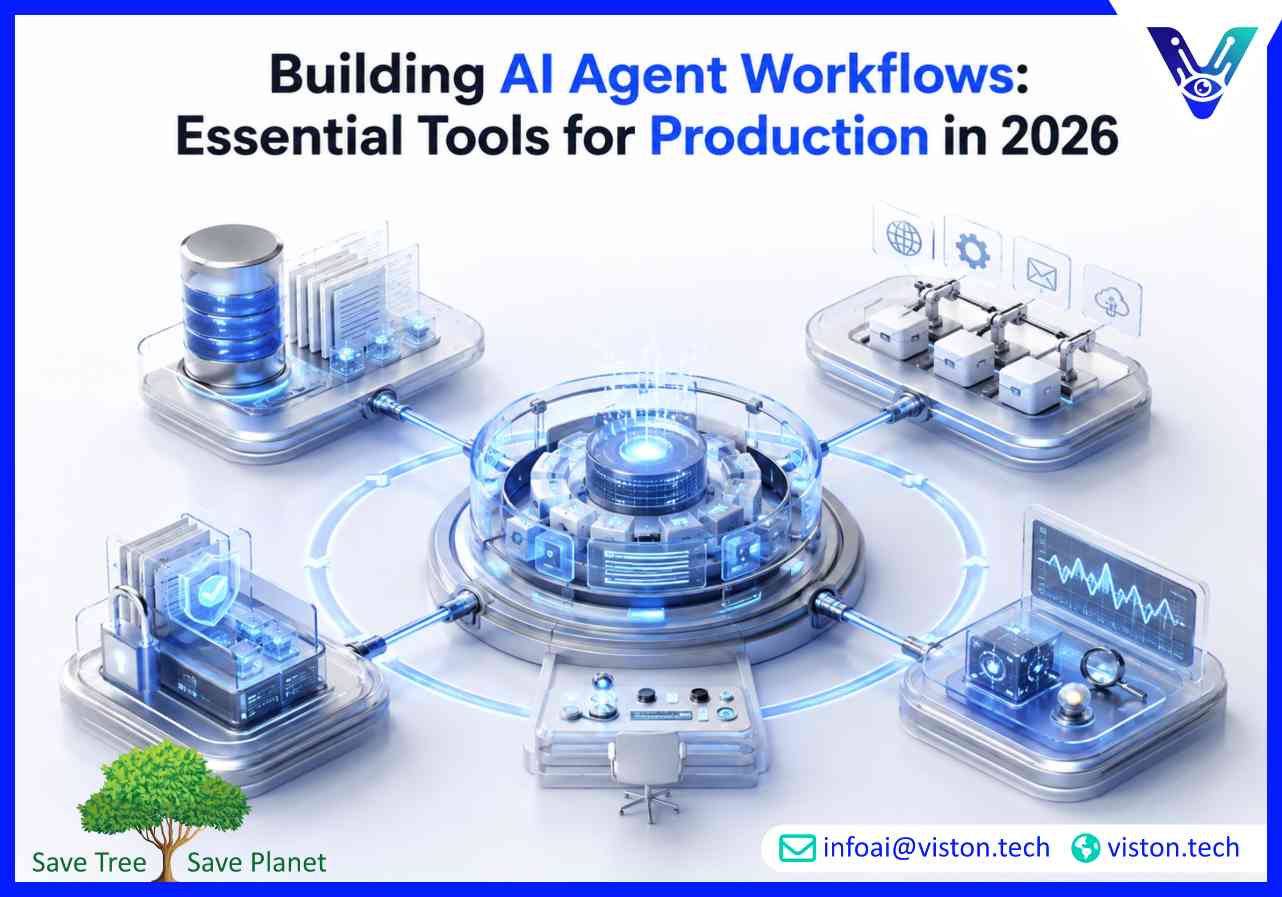
Building enterprise-grade agentic workflows requires four integrated layers, each serving a distinct function in the autonomous loop of observe, think, act, and learn.
The orchestration layer defines how agents reason, maintain state, and coordinate tasks. For complex stateful workflows, LangGraph has emerged as the leading choice. Its graph-based architecture provides explicit control over execution paths, persistent checkpointing for long-running tasks, and time-travel debugging capabilities. Teams deploying LangGraph report 40-50% savings on LLM calls for repeat requests through stateful patterns . For scenarios requiring role-based collaboration, CrewAI offers the fastest path to a working multi-agent prototype, typically within two to four hours . Its abstraction of agents, tasks, and processes simplifies mental modelling for business teams. However, for TypeScript-native environments, Mastra provides workflows, memory, and OpenTelemetry-compatible tracing as first-class features.
Agents are only as capable as the tools they can invoke. In 2026, execution platforms have evolved from simple API connectors to environments designed for autonomous operations. n8n has become a standard for workflow automation, connecting over 200 applications into reliable execution chains. It serves as the backbone for agents that need to interact with existing SaaS tools . When agents require browser-based interactions, such as navigating legacy portals without APIs, headless browser capabilities become essential for tasks like form submission and data extraction . The emergence of the Model Context Protocol, now governed by the Agentic AI Foundation with backing from Anthropic, OpenAI, Google, and Microsoft, provides a standardised interface for tool discovery and invocation .
Real-time, domain-specific data access determines whether an agent delivers accurate responses or surface-level answers. LlamaIndex has become the standard for connecting LLMs to structured and unstructured data, providing ingestion pipelines, indexing strategies, and query orchestration across documents and databases . For RAG-heavy use cases, LlamaIndexs data-centric approach outperforms general orchestration frameworks. Haystack offers an alternative for enterprise search and RAG pipelines, with robust support for document stores, retrievers, and evaluators. The integration of real-time streaming data is also emerging as a critical capability, with platforms offering immutable event logs that enable replayability for failure recovery and audit . Without this layer, agents operate on stale information.
Production-ready agentic systems require built-in evaluation and monitoring. Ragas provides metrics for retrieval relevance, faithfulness, and answer quality, essential for benchmarking RAG pipelines. Promptfoo enables regression testing across prompts and model configurations within CI pipelines . For runtime observability, Helicone tracks requests, latency, costs, and behaviour over time, helping teams debug failures in production. Pydantic AI adds structured validation and type enforcement for LLM outputs, ensuring responses conform to expected schemas before reaching downstream systems . These tools transform agentic AI from unpredictable experimentation to measurable engineering.
Even with the right tools, organisations face common failure modes. Tool call loops, where a model retries the same failing operation repeatedly, can exhaust token budgets within minutes. Mitigating this requires bounded retry logic with exponential backoff and classification of retryable versus non-retryable errors . Auth expiry during long-running sessions causes silent failures when OAuth tokens expire mid-workflow. Proactive token pre-checking before dispatch helps. Output truncation, where tool responses exceeding context windows get silently cropped, leads agents to reason on incomplete data. Enforcing hard token limits on tool responses with pagination signals is the baseline . Organisations that invest in observability from day one consistently outperform those that retrofit monitoring after failures.
At Viston AI, we focus exclusively on helping enterprises design, implement, and optimise agentic AI workflows that move beyond pilot phases into production. Our approach is built on a fundamental understanding that successful agentic systems are not about model selection but about reliable orchestration, state management, and tool integration. We help clients navigate the complex landscape of frameworks including LangGraph, CrewAI, and LlamaIndex, selecting the right architecture for their specific deployment context rather than defaulting to popular choices that may not fit. Our delivery methodology emphasises evaluation infrastructure from the start, building observability, checkpointing, and human-in-the-loop controls that most teams only realise they need after their first production failure. We also address the data foundation that underpins agent performance, integrating real-time streaming, retrieval pipelines, and memory systems that preserve context across sessions. For organisations in regulated industries, we implement permission tiering, audit logging, and rollback capabilities that satisfy compliance requirements while maintaining agent autonomy. Our specialised focus on agentic workflows means we help clients avoid the common rebuild cycles that consume 15-30% of annual maintenance budgets, delivering durable, scalable systems that generate measurable business outcomes.
RAG focuses on retrieving relevant information to ground LLM responses. Workflow automation executes predefined, linear sequences of tasks. Agentic workflows introduce autonomous decision-making, where an LLM plans, selects tools, reflects on outcomes, and adapts its approach. Agentic workflows subsume both RAG and traditional automation within a reasoning loop.
LangGraph currently leads for regulated enterprises due to its checkpointing, durable execution, and human-in-the-loop capabilities. Its explicit state management and ability to replay sessions from any checkpoint satisfy audit and compliance requirements that more abstract frameworks cannot meet.
LLM API costs typically represent 40-60% of operational expenses. Tool responses often account for 60% of total token spend. Prompt caching can reduce costs by 90% on repeated context, and multi-model routing can save 30-50% on tokens. Annual maintenance represents 15-30% of initial development costs .
Research shows only 5% of enterprise AI solutions transition from pilot to production . The primary barriers are unreliable tool integration, lack of observability, insufficient state management, and the absence of graceful error handling. Most teams underestimate the wiring complexity and discover failure modes only under real load.
Yes. Platforms like n8n provide prebuilt connectors for over 200 SaaS applications. The Model Context Protocol is standardising tool integration across providers. The primary engineering effort is typically permission mapping and OAuth handling, not building connections from scratch.
Building production-ready AI agent workflows in 2026 requires a deliberate tooling strategy. The orchestration layer, execution platform, data integration, and evaluation infrastructure each play a critical role in moving from brittle prototypes to reliable systems. The organisations succeeding are those investing in observability from day one, implementing tiered permissioning for tool access, and building checkpointing for failure recovery. They recognise that agentic AI is fundamentally an engineering discipline, not a prompting exercise. For enterprises ready to move beyond experimentation, the tools surveyed here provide a proven foundation. Viston AI specialises in helping clients navigate this landscape, selecting and implementing the right stack for their specific business context and compliance requirements. The gap between pilot and production is closing, but only for those who treat agentic workflows as the mission-critical infrastructure they are becoming.
